Advanced Copper Processing Technology and Equipment Integration Strategies
Modern copper mining operations represent sophisticated industrial ecosystems where equipment selection determines operational viability across decades-long mine lifecycles. The Harmony Metso Eva Copper Mine equipment delivery exemplifies contemporary best practices in processing technology integration, extending far beyond simple machinery procurement to encompass real-time analytical systems, automated process optimization, and comprehensive service support frameworks. Furthermore, copper and uranium investment opportunities continue expanding globally as demand for critical minerals intensifies.
The complexity of contemporary copper concentrator design reflects ore grade variability, environmental compliance requirements, and energy efficiency mandates that shape equipment specifications. Processing plants must accommodate fluctuating copper concentrations while maintaining consistent recovery rates, requiring dynamic control systems capable of real-time parameter adjustment based on instantaneous ore characteristics.
Understanding Modern Copper Processing Technology Integration
Critical Equipment Specifications for Large-Scale Operations
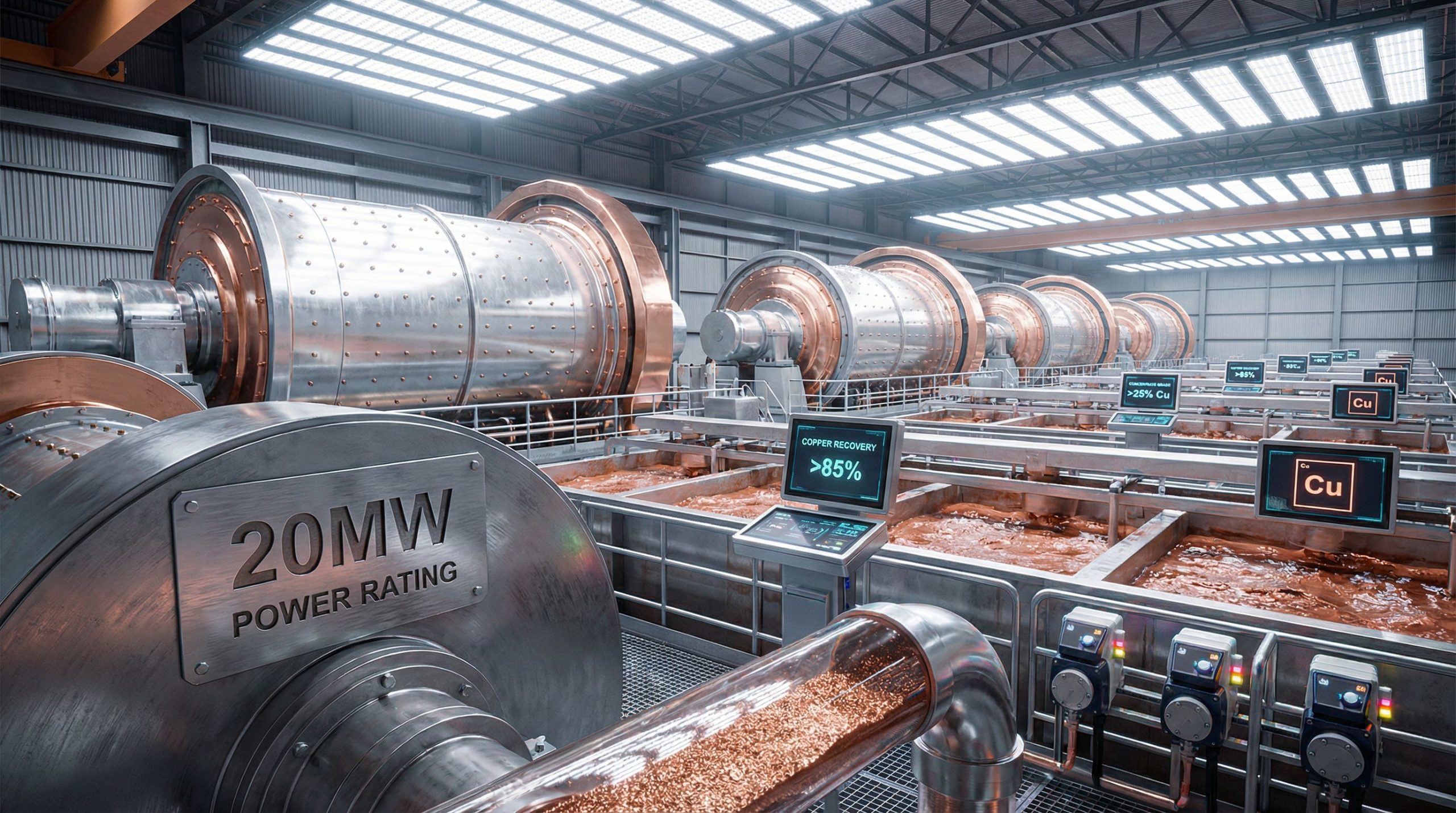
Equipment selection in large-scale copper projects revolves around throughput capacity optimization and operational efficiency maintenance across varying ore characteristics. The Harmony Metso Eva Copper Mine equipment delivery configuration demonstrates contemporary best practices, incorporating a 24MW gearless Premier SAG mill combined with an 18MW Premier twin pinion ball mill for primary and secondary grinding operations. This 42MW combined grinding capacity exemplifies the substantial power requirements outlined in industry specifications exceeding 20MW for primary grinding systems.
Processing equipment integration extends beyond mechanical specifications to encompass real-time monitoring and control systems. The Eva Copper configuration incorporates Metso PSI 500i Particle Size Analyzers for grinding circuit optimization and Metso Courier 6X SL slurry analyzers providing real-time copper assay data within flotation circuits. These analytical systems enable continuous process optimization rather than static operational parameters.
Performance Benchmarking Standards:
- Primary grinding systems: 20MW+ power ratings with gearless drive technology
- Multi-stage flotation: 15+ cell configurations for rougher, scavenger, and cleaner circuits
- Real-time monitoring: Particle size analysis and slurry assaying capabilities
- Concentrate processing: Automated thickening and filtration with 20-30% copper grade targets
Operational Efficiency and Recovery Rate Optimization
Modern copper concentrator design prioritises metal recovery optimization through integrated process control systems. The 15 TankCell flotation cells specified for Eva Copper enable multi-stage separation processes optimised for different particle sizes and mineral liberation characteristics. This configuration supports the industry benchmark recovery rates of 87-92% copper recovery outlined in performance specifications.
Automated process control extends to concentrate product quality management. The fully automated Metso Larox PF filter specified for Eva Copper ensures consistent product specifications through automated filtration cycle adjustments, maintaining 25-30% copper concentrate grades without manual operator intervention. This automation reduces operational variability and ensures specification compliance across production cycles.
Equipment Procurement and Supplier Evaluation Frameworks
Strategic Supplier Selection Methodologies
Equipment procurement for Australian copper projects involves comprehensive supplier capability assessment extending beyond technical specifications to encompass service infrastructure and long-term operational support. The Harmony Metso Eva Copper Mine equipment delivery valued at €55 million ($64.2 million AUD) demonstrates integrated procurement strategies combining equipment supply with multi-year service agreements.
Supplier evaluation criteria prioritise proven performance records and regional service infrastructure. Metso's selection for Eva Copper reflected demonstrated capability through sample test-work at Perth Technology Centre and equipment optimization collaboration, indicating modern procurement emphasises practical validation over theoretical specifications. The supplier's approximately 17,000 employees across approximately 50 countries provides global service infrastructure supporting operational continuity requirements.
Procurement Decision Factors:
- Equipment reliability through reference installation performance data
- Regional service infrastructure with local technician availability
- Technology centre access for ore-specific optimization testing
- Multi-year service agreement integration with equipment supply contracts
Supply Chain Risk Mitigation Strategies
International equipment procurement faces extended lead times and logistics complexity requiring strategic planning coordination. The Eva Copper equipment order placement in Q3 2025 for project development following Harmony's December 2022 acquisition demonstrates the extended planning horizons required for specialised processing equipment procurement with 12-18 month manufacturing lead times.
Service infrastructure integration represents critical risk mitigation for equipment availability and operational continuity. The multi-year major goods support agreement negotiated alongside equipment supply ensures local service support both on-site and through Metso's Australian service centres and spare parts facilities. This integrated approach addresses supply chain disruption risks through regional inventory management and technical support capabilities.
Processing Plant Configuration and Technology Integration
Advanced Grinding and Classification Systems
Contemporary copper concentrator design incorporates integrated grinding circuits with real-time optimization capabilities. In addition to traditional mechanical specifications, these systems now incorporate advanced automation features. The Eva Copper grinding configuration demonstrates optimal practice through gearless Premier SAG mill (24MW) primary grinding combined with Premier twin pinion ball mill (18MW) secondary grinding, supported by two MP800 cone crushers for pebble recirculation. This configuration optimises energy efficiency while maintaining target particle size distribution for flotation circuit feed.
Real-time process optimization requires continuous monitoring systems integrated throughout grinding operations. The Metso PSI 500i Particle Size Analyzer provides instantaneous grind size distribution data enabling dynamic mill speed and classification adjustments. Combined with MillSense grinding mill performance monitoring, operators can optimise energy consumption while maintaining flotation feed specifications across varying ore hardness characteristics.
Flotation Circuit Design and Automation
Modern flotation circuit design emphasises multi-stage separation optimization with automated reagent control systems. The 15 TankCell flotation cells configuration at Eva Copper enables rougher, scavenger, and cleaner flotation stages optimised for varying particle sizes and copper mineral liberation characteristics. This multi-stage approach supports target copper recovery rates exceeding 85% specified in industry benchmarks.
Automated process control extends throughout flotation operations through integrated analytical systems. The Metso Courier 6X SL slurry analyzer provides real-time copper concentration data within circulating flotation slurry, enabling automated reagent dosing adjustments and pH control optimization. This real-time feedback eliminates manual sampling delays and supports continuous process optimization across varying ore grades.
Flotation Circuit Performance Targets:
| Performance Metric | Target Range | Industry Benchmark |
|---|---|---|
| Copper Recovery Rate | >85% | 87-92% |
| Concentrate Grade | >25% Cu | 25-30% Cu |
| Mill Availability | >90% | 92-95% |
| Energy Consumption | <15 kWh/tonne | 12-18 kWh/tonne |
Automation Technology and Process Control Systems
Real-Time Monitoring and Process Optimization
Advanced automation in copper processing represents fundamental operational philosophy shifting from static parameters toward dynamic, real-time optimization. The Eva Copper analytical equipment suite incorporates particle size analysers, slurry assaying systems, and mill performance monitoring enabling continuous adjustment of grinding fineness, flotation conditions, and concentrate dewatering based on instantaneous ore characteristics rather than predetermined operational settings. Furthermore, AI mill drive optimization technologies are revolutionising how mining operations approach equipment efficiency.
Process automation extends to environmental performance and resource optimization. The Reactorwell technology in concentrate and tailings thickeners automatically optimises flocculant usage while maximising water recovery, directly supporting cost reduction and environmental sustainability objectives. This automation demonstrates technology integration addressing both operational efficiency and regulatory compliance requirements.
Integrated Control System Capabilities
Contemporary copper processing facilities utilise integrated control platforms combining mechanical equipment operation with analytical data management. The Eva Copper control system architecture integrates:
- Grinding Circuit Control: PSI 500i particle size analysis with MillSense performance data for automatic mill speed and classification optimization
- Flotation Management: Courier 6X SL real-time copper assaying enabling automated reagent dosing and pH adjustment
- Product Quality Control: Automated Larox PF filtration ensuring consistent concentrate specifications across production cycles
This integrated approach eliminates operational silos between grinding, flotation, and concentrate processing stages, enabling system-wide optimization rather than individual equipment operation.
Supply Chain Logistics and Project Implementation
International Equipment Procurement Challenges
Global equipment supply chains for copper processing projects require comprehensive logistics coordination across manufacturing, shipping, and installation phases. The Harmony Metso Eva Copper Mine equipment delivery demonstrates typical complexity with €55 million equipment orders requiring coordination between Finnish headquarters (Espoo), regional service centres, and Australian installation sites near Cloncurry, Queensland.
Manufacturing lead times for specialised equipment create critical path dependencies in project development schedules. The 24MW gearless SAG mills and 18MW ball mills require extended manufacturing periods typically spanning 12-18 months from order placement to delivery. Project planning must accommodate these timeframes alongside construction scheduling and commissioning requirements.
Service Infrastructure and Support Systems
Equipment suppliers increasingly differentiate through service infrastructure rather than equipment specifications alone. The Eva Copper service framework encompasses on-site technical support combined with Australian service centres and spare parts facilities, ensuring fast response times and operational continuity throughout project lifecycle. This distributed service model mitigates supply chain disruption risks while reducing equipment downtime.
Long-term service agreements integrate equipment procurement with operational support commitments. The multi-year major goods support agreement negotiated for Eva Copper represents contemporary procurement strategies bundling equipment supply with performance guarantees and service level agreements extending across mine life expectations.
Performance Metrics and Operational Benchmarking
Equipment Effectiveness Measurement Frameworks
Processing equipment performance evaluation encompasses throughput capacity, recovery efficiency, energy consumption, and equipment availability metrics enabling operational optimization identification. The Eva Copper project targets demonstrate industry benchmark alignment with expected annual production of approximately 60,000 tonnes copper and 14,000 ounces gold over an estimated 15-year mine life.
Energy efficiency represents critical performance measurement given substantial power requirements for grinding operations. The 42MW combined grinding capacity (24MW SAG + 18MW ball mill) at Eva Copper must operate within 12-18 kWh per tonne energy consumption benchmarks to maintain competitive operational costs throughout mine life. However, major copper system insights from other global operations provide valuable benchmarking data for optimization strategies.
Continuous Improvement and Optimization Protocols
Modern copper processing operations implement systematic performance monitoring enabling continuous process optimization. Real-time analytical systems provide operators with instantaneous feedback on grinding efficiency, flotation performance, and concentrate quality, supporting immediate operational adjustments rather than batch-based optimization cycles.
Key Performance Indicators:
- Throughput Optimization: Real-time grinding circuit analysis supporting feed rate adjustments
- Recovery Maximisation: Flotation circuit monitoring enabling reagent and conditioning optimization
- Quality Assurance: Automated concentrate filtration maintaining specification compliance
- Energy Efficiency: Mill performance monitoring supporting power consumption optimization
Environmental Sustainability and Technology Integration
Water Management and Recovery Systems
Contemporary processing technology incorporates comprehensive water recycling and environmental compliance features addressing regulatory requirements and operational cost optimization. The Reactorwell technology specified for Eva Copper thickeners demonstrates automated systems reducing flocculant chemical consumption while boosting water recovery, supporting both environmental compliance and operational cost reduction objectives.
Tailings management technology represents critical environmental compliance requirements in modern copper processing. The 65-meter tailings thickener with automated chemical dosing systems ensures proper tailings consolidation and water recovery while minimising environmental impact through controlled discharge management.
Energy Efficiency and Emission Reduction
Advanced processing equipment incorporates energy-efficient technologies reducing operational carbon footprint and power consumption costs. The gearless drive technology in the Eva Copper SAG mill represents contemporary energy efficiency improvements over conventional gear-driven systems, reducing maintenance requirements while improving energy transmission efficiency. Additionally, decarbonisation benefits across mining operations are driving increased adoption of energy-efficient technologies.
Emission control systems integrated throughout processing operations address air quality and dust management requirements. Processing plants incorporate dust suppression systems, ventilation optimization, and emission monitoring equipment ensuring regulatory compliance while maintaining operational safety standards.
Future Technology Trends and Industry Evolution
Artificial Intelligence and Process Automation
Emerging artificial intelligence applications in copper processing focus on predictive optimization and automated decision-making systems. Future processing facilities will incorporate machine learning algorithms analysing real-time operational data to predict optimal grinding parameters, flotation reagent dosing, and maintenance scheduling requirements before operational issues develop. Moreover, mining industry trends indicate continued acceleration toward fully automated operations.
Advanced sensor technologies enable comprehensive monitoring capabilities extending beyond current analytical systems. Internet of Things (IoT) integration will provide detailed equipment performance data, predictive maintenance alerts, and automated optimization recommendations supporting fully autonomous processing operations.
Digitalization and Remote Operations Capabilities
Contemporary copper processing technology development emphasises remote operation capabilities and digital twin technologies enabling centralised monitoring and control of geographically distributed mining operations. These systems support operational expertise consolidation while reducing on-site staffing requirements in remote mining locations.
Blockchain technology integration offers supply chain transparency and product provenance tracking supporting responsible sourcing requirements and environmental sustainability verification throughout copper supply chains. These technologies address increasing market demand for sustainable and traceable mineral production. For instance, Harmony's Eva Copper project exemplifies modern approaches to responsible mining practices.
This analysis is based on publicly available information and industry benchmarking data. Operational performance may vary based on ore characteristics, operational practices, and equipment configuration specifics. Investment decisions should incorporate comprehensive technical and financial due diligence appropriate to specific project circumstances.
Readers interested in detailed technical specifications for copper processing equipment and optimization strategies can explore industry publications and equipment manufacturer technical resources for comprehensive operational guidance.
Are You Tracking the Latest Copper Processing Breakthroughs?
Discovery Alert's proprietary Discovery IQ model delivers immediate notifications on significant copper and mineral processing technology developments across ASX-listed companies, helping investors identify actionable opportunities before the broader market. Begin your 30-day free trial today to discover why major mineral discoveries and technological advancements can generate substantial market returns and secure your competitive advantage in the evolving copper sector.