
May 8, 2026
Advanced Filtration Technology: Transforming Iron Ore Processing
Dewatering technology represents a fundamental bottleneck in iron ore processing operations worldwide, with moisture content directly determining pelletizing efficiency and downstream steel production yields. Traditional vacuum filtration systems struggle to achieve the moisture reduction standards required for high-grade concentrates, particularly in high-volume operations where throughput demands clash with quality requirements. This technical challenge has driven mining companies to explore Metso filters for iron ore filtration in India as sophisticated pressure filtration solutions that can deliver consistent performance while maintaining operational reliability.
The integration of sophisticated filtration systems into iron ore processing facilities involves complex engineering considerations that extend beyond simple moisture removal. Particle size distribution, concentrate characteristics, and processing volume requirements all influence equipment selection and configuration decisions. Understanding these technical fundamentals becomes critical as India's expanding steel sector demands increasingly efficient mineral processing capabilities, particularly when considering current iron ore price trends that impact processing economics.
When big ASX news breaks, our subscribers know first
Understanding Iron Ore Dewatering Fundamentals
What Makes Effective Concentrate Filtration Critical for Iron Ore Operations?
Iron ore concentrate filtration serves as a critical control point in mineral processing operations, where moisture content directly impacts downstream production efficiency. The dewatering process determines whether concentrates meet specifications for pelletizing operations or direct reduction iron (DRI) production, both essential components of integrated steel manufacturing.
Effective filtration systems must handle varying feed characteristics while maintaining consistent product quality. Particle size distribution in iron ore concentrates typically ranges from fine particles under 100 microns to coarser materials, each requiring different dewatering approaches. The presence of fine particles creates challenges for conventional filtration methods, as these materials tend to create low-permeability filter cakes that resist moisture removal.
Process engineers focus on achieving optimal cake formation during filtration cycles. This involves balancing filtration pressure, cycle time, and membrane technology performance to maximize moisture reduction while maintaining filter availability. The relationship between these parameters determines overall system efficiency and operating costs.
How Do Moisture Levels Impact Pelletizing and Steel Production Efficiency?
Pelletizing operations require iron ore concentrates with specific moisture content ranges to ensure proper green ball formation and adequate strength characteristics. Furthermore, modern iron ore demand insights reveal that excessive moisture in feed materials creates several operational challenges:
• Binder distribution problems that result in inconsistent pellet quality
• Increased energy consumption during the pelletizing and firing processes
• Material handling difficulties including conveyor belt slippage and storage issues
• Reduced throughput capacity due to extended processing times
DRI production faces similar constraints, as moisture content affects reduction efficiency in rotary kilns and shaft furnaces. High moisture levels require additional thermal energy to drive off water vapor before reduction reactions can proceed effectively. This energy penalty directly impacts production costs and carbon footprint calculations.
Quality specifications for export markets typically demand moisture content below 8-10% for iron ore concentrates, with premium grades requiring even lower levels. Achieving these targets consistently requires advanced dewatering technology that can operate reliably across varying feed conditions.
Why Traditional Filtration Methods Fall Short in High-Volume Operations
Vacuum filtration systems, historically used in mineral processing applications, face several limitations when applied to modern high-volume iron ore operations. These systems struggle with fine particle retention, leading to product losses and inconsistent moisture reduction performance.
Traditional drum filters and belt filters often experience:
• Limited pressure differential capabilities restricting dewatering effectiveness
• High maintenance requirements due to moving parts and belt tracking issues
• Inconsistent cake discharge resulting in product quality variations
• Energy inefficiency from continuous vacuum pump operation
The evolution toward pressure filtration systems addresses these limitations by providing higher driving forces for moisture removal and more precise process control. Pressure differential capabilities significantly exceed vacuum system limitations, enabling better dewatering performance with finer particle sizes.
Advanced Pressure Filtration Systems: Technical Deep Dive
What Are Fast-Opening Filter Press (FFP) Technologies?
Fast-opening filter press technology represents a significant advancement in industrial dewatering applications, combining automated operation with enhanced moisture removal capabilities. These systems utilize hydraulically operated plate mechanisms that enable rapid cycle times while maintaining precise process control.
The FFP design incorporates several key technical features that differentiate it from conventional filter press systems. Automated plate opening and closing mechanisms reduce cycle times and eliminate manual intervention requirements. This automation capability becomes particularly important in high-volume operations where consistent performance and minimal operator involvement are essential.
Modern FFP systems integrate sophisticated control systems that monitor filtration parameters in real-time. Pressure sensors, flow meters, and moisture detection equipment provide continuous feedback for process optimization. This data enables operators to adjust filtration cycles based on feed characteristics and product quality requirements.
Membrane Technology Integration and Performance Advantages
Advanced membrane technology enhances dewatering performance by providing additional compression during the final stages of the filtration cycle. After initial cake formation, pressurized air or water inflates flexible membranes that compress the filter cake, expressing additional moisture.
The membrane compression process typically achieves:
• 3-5% additional moisture reduction compared to conventional filtration alone
• Improved cake uniformity through even pressure distribution
• Reduced filter cloth blinding by preventing particle penetration
• Extended filter cloth service life through protective membrane action
This two-stage dewatering approach proves particularly effective with fine particle concentrates where conventional pressure alone cannot achieve target moisture levels. The membrane compression cycle can be adjusted based on feed characteristics and required product specifications.
Holeless Filter Cloth Innovations and Durability Metrics
Holeless filter cloth technology eliminates the perforation-based filtration approach used in traditional systems. Instead, these cloths rely on controlled porosity structures that provide selective permeability while maintaining particle retention capabilities.
The engineering advantages of holeless filter cloths include:
• Uniform pore size distribution that prevents particle migration
• Reduced blinding tendency compared to woven filter media
• Enhanced chemical resistance for challenging process environments
• Longer service intervals reducing maintenance downtime
Service life improvements with holeless filter cloths often exceed conventional media by 50-100%, depending on application conditions. This durability enhancement reduces operating costs and improves system availability through extended maintenance intervals.
Automated Operation Cycles and Throughput Optimization
Automated FFP systems execute programmed filtration cycles that optimize throughput while maintaining product quality standards. These cycles typically include filling, filtration, membrane compression, air blow, cake discharge, and cleaning phases.
Cycle optimization involves balancing several competing factors:
| Parameter | Impact on Throughput | Impact on Quality |
|---|---|---|
| Filtration Time | Longer cycles reduce throughput | Extended filtration improves dewatering |
| Compression Pressure | Higher pressure extends cycles | Increased pressure reduces moisture |
| Discharge Method | Automated discharge speeds cycles | Proper discharge prevents product contamination |
| Cleaning Frequency | More frequent cleaning reduces capacity | Regular cleaning maintains performance |
Advanced control systems continuously adjust these parameters based on real-time performance data, maximizing throughput while ensuring product specifications are met consistently.
India's Iron Ore Processing Landscape: Market Analysis
Which Regions Drive India's Iron Ore Filtration Demand?
Maharashtra's Mining Corridor: Chandrapur District Operations
Chandrapur District in Maharashtra has emerged as a significant iron ore processing hub, hosting integrated facilities that combine mining, beneficiation, and steel production operations. The region benefits from proximity to coal resources and established transportation infrastructure that supports large-scale industrial development.
The district's iron ore processing facilities focus primarily on DRI production and pelletizing operations. Companies operating in this region have invested substantially in modernizing their mineral processing capabilities to meet evolving quality standards for both domestic consumption and export markets.
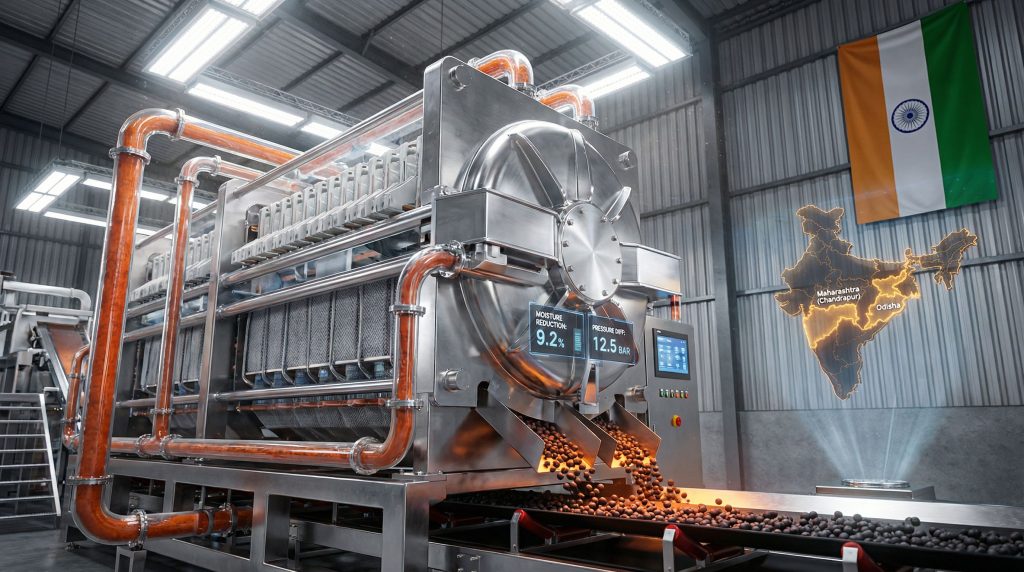
Lloyds Metals & Energy exemplifies the expansion occurring in Chandrapur District, with integrated operations spanning iron ore mining, sponge iron production, and steelmaking. The company operates facilities in Ghugus, Manikgarh, and Konsari, representing the geographic distribution of processing activities across the district. Recent developments include Metso's supply of advanced filtration equipment to support enhanced concentrate processing capabilities.
Infrastructure advantages in Chandrapur District include established rail connections to major ports and industrial centers. This connectivity enables efficient raw material transport and finished product distribution, making the region attractive for large-scale processing investments.
Eastern India Developments: Odisha and Jharkhand Expansion Projects
Odisha and Jharkhand states contain some of India's largest iron ore mines and processing facilities. These regions have witnessed significant investment in beneficiation and pelletizing capacity as mining companies seek to add value to raw ore production.
The eastern states benefit from:
• Abundant high-grade iron ore reserves reducing transportation costs for raw materials
• Established mining infrastructure including rail networks and port facilities
• Skilled workforce with extensive experience in mineral processing operations
• Government support for industrial development and export promotion
Major steel producers and mining companies have established processing facilities throughout these states, creating demand for advanced filtration equipment to support expanded production capacity.
Central India Growth Hubs: Infrastructure and Logistics Advantages
Central India regions, particularly in Chhattisgarh and parts of Madhya Pradesh, have developed as important iron ore processing centers. These areas offer strategic advantages including proximity to coal resources, established industrial infrastructure, and favorable logistics for both domestic and export markets.
The concentration of steel production facilities in central India creates synergies between iron ore processing and downstream manufacturing. Integrated facilities can optimize logistics and quality control across the entire production chain.
What Scale of Operations Require Industrial Filtration Solutions?
Integrated Steel Plant Requirements: DRI and Pellet Production
Large-scale steel production facilities typically require sophisticated filtration systems to support their iron ore processing needs. DRI plants processing several hundred thousand tons annually need filtration systems capable of handling corresponding concentrate volumes while maintaining consistent quality standards.
The scale considerations include:
• Processing capacity thresholds where automated filtration becomes economically justified
• Product quality requirements for different steel production processes
• Integration complexity with existing plant infrastructure and utilities
• Operational reliability demands to avoid production disruptions
DRI facilities often require concentrates with moisture content below 8% to ensure efficient reduction reactions. Achieving this consistently at high throughput rates requires industrial-scale filtration equipment with automated operation capabilities.
Concentrate Quality Specifications for Export Markets
Export market requirements drive quality specifications that influence filtration system selection. International buyers typically specify moisture content, particle size distribution, and chemical composition parameters that must be met consistently.
Premium market positioning requires:
• Moisture content below 8-10% for most concentrate grades
• Consistent particle size distribution to meet customer specifications
• Chemical purity standards including limits on silica and other gangue minerals
• Documentation and quality assurance systems for export certification
Achieving these specifications reliably requires filtration systems with precise process control and monitoring capabilities.
Processing Capacity Thresholds for Automated Systems
The economic justification for automated filtration systems typically emerges when processing capacity exceeds certain threshold levels. Manual or semi-automated systems may suffice for smaller operations, but high-volume facilities require automated solutions to maintain efficiency and consistency.
Capacity thresholds generally align with:
• Annual processing volumes exceeding 500,000 tons of concentrate
• Continuous operation requirements with minimal operator intervention
• Quality consistency demands that exceed manual system capabilities
• Labor cost considerations where automation provides economic advantages
Filtration Equipment Selection Criteria
How Do Mining Companies Evaluate Filtration Technology Providers?
Technical Performance Benchmarks: Moisture Reduction Targets
Mining companies establish specific performance criteria when evaluating filtration technology providers. Moisture reduction capabilities represent the primary technical benchmark, with systems evaluated based on their ability to consistently achieve target moisture levels across varying feed conditions.
Performance evaluation typically includes:
• Baseline moisture reduction capability under standard operating conditions
• Performance consistency across different concentrate types and particle sizes
• Adaptation capability for varying feed characteristics and process demands
• Energy efficiency compared to alternative filtration technologies
Demonstration testing often forms part of the evaluation process, allowing companies to assess equipment performance with their specific concentrate characteristics before making investment decisions.
Operational Reliability Metrics and Uptime Guarantees
Equipment reliability directly impacts plant productivity and operating costs. Mining companies evaluate filtration systems based on demonstrated availability rates and maintenance requirements.
Reliability assessment focuses on:
• Historical performance data from similar installations and operating conditions
• Component reliability including wear parts and critical system elements
• Maintenance requirements and associated downtime for routine servicing
• Failure mode analysis to understand potential operational risks
Many equipment suppliers provide performance guarantees that specify minimum availability rates and maximum allowable downtime for scheduled maintenance activities.
Service Network Coverage and Spare Parts Availability
Ongoing service support becomes critical for maintaining filtration system performance throughout the equipment lifecycle. Companies evaluate suppliers based on their local service capabilities and parts availability.
Service evaluation criteria include:
• Geographic coverage of service technician networks
• Response time commitments for emergency service calls
• Spare parts inventory maintained locally to minimize procurement delays
• Technical training programs for plant maintenance personnel
Companies operating multiple facilities often prefer suppliers with comprehensive service networks that can support all their locations efficiently.
What Determines Optimal Filter Configuration for Iron Ore Applications?
Feed Material Characteristics and Particle Size Distribution
Iron ore concentrate characteristics significantly influence optimal filter configuration selection. Particle size distribution, mineral composition, and moisture content of feed materials determine appropriate filtration technology and sizing requirements.
Key material characteristics include:
• Particle size distribution ranging from sub-10 micron fines to +150 mesh particles
• Mineralogy and liberation characteristics affecting filtration behavior
• Initial moisture content and water quality parameters
• Chemical composition including presence of clays or other problematic minerals
Laboratory testing typically precedes equipment selection to characterise filtration behaviour and optimise system configuration for specific application requirements.
Production Volume Requirements and Batch Processing Cycles
Production volume requirements drive filter sizing and configuration decisions. High-volume operations may require multiple parallel units or larger individual systems to achieve required throughput rates.
Volume considerations include:
| Production Rate | Typical Configuration | Key Considerations |
|---|---|---|
| <100 tph | Single filter unit | Cost optimization, simple operation |
| 100-300 tph | Multiple parallel units | Redundancy, maintenance flexibility |
| >300 tph | Large-scale automated systems | Maximum efficiency, minimal labour |
Batch processing cycles must be optimised to balance throughput with product quality requirements. Longer cycles may improve dewatering but reduce overall capacity.
Integration with Existing Plant Infrastructure and Utilities
Successful filtration system implementation requires careful integration with existing plant infrastructure. Utility requirements, material handling systems, and control system compatibility all influence equipment selection and configuration.
Integration considerations include:
• Electrical power requirements and voltage compatibility with plant systems
• Compressed air supply for pneumatic operations and membrane systems
• Water supply and drainage for filter washing and process requirements
• Material handling interfaces with upstream and downstream equipment
Retrofit installations often face additional constraints compared to greenfield projects, requiring customised solutions to work within existing facility limitations.
Economic Impact Assessment
What Are the Cost-Benefit Dynamics of Advanced Filtration Systems?
Capital Investment versus Operational Efficiency Gains
Advanced filtration systems require substantial capital investment but can deliver significant operational efficiency improvements that justify the expenditure over time. The economic analysis must consider both direct cost savings and productivity improvements.
Capital cost components typically include:
• Equipment purchase price for filtration systems and auxiliary equipment
• Installation and commissioning costs including civil works and utilities
• Engineering and project management expenses for system integration
• Training and startup support to ensure optimal operation
Operational efficiency gains offset these capital costs through multiple mechanisms. Moreover, the ongoing mining industry evolution demands improved moisture reduction which reduces energy consumption in downstream processes like pelletizing and DRI production. Consistent product quality enables premium pricing and reduces reprocessing requirements.
Water Recovery and Environmental Compliance Benefits
Advanced filtration systems often incorporate water recovery capabilities that provide both cost savings and environmental benefits. Process water recycling reduces fresh water consumption and minimises wastewater discharge volumes.
Environmental compliance benefits include:
• Reduced freshwater consumption lowering utility costs and environmental impact
• Minimised wastewater discharge reducing treatment costs and regulatory compliance expenses
• Improved dust control through better moisture management in product handling
• Lower carbon footprint from reduced energy consumption in downstream processes
These environmental benefits become increasingly important as regulatory standards tighten and companies face carbon reduction targets through mining sustainability transformation initiatives.
Labour Cost Reduction through Automation Implementation
Automated filtration systems significantly reduce labour requirements compared to manual or semi-automated alternatives. Labour cost savings accumulate over the equipment lifecycle and can represent substantial economic benefits.
Automation advantages include:
• Reduced operator requirements for routine filtration operations
• Improved safety by minimising personnel exposure to equipment hazards
• Consistent operation independent of operator skill levels and availability
• Enhanced data collection enabling better process optimisation
Labour savings must be balanced against higher maintenance skill requirements for automated systems, but the net effect typically favours automation for large-scale operations.
How Does Filtration Technology Affect Overall Plant Economics?
Downstream Processing Efficiency Improvements
Improved concentrate quality from advanced filtration directly enhances downstream processing efficiency across multiple stages of steel production. Lower moisture content reduces energy requirements in pelletizing and DRI operations while improving product quality consistency.
Downstream benefits include:
• Reduced energy consumption in thermal processing operations
• Improved pellet quality with better strength characteristics and reducibility
• Enhanced DRI production efficiency through optimised reduction conditions
• Reduced maintenance requirements in downstream equipment due to improved feed quality
These efficiency improvements accumulate throughout the production chain, often providing returns that exceed the direct benefits of the filtration system alone.
Product Quality Premiums and Market Positioning
Consistent high-quality concentrate production enables companies to command premium pricing in both domestic and export markets. Quality premiums can provide substantial revenue enhancement that justifies filtration system investments.
Market positioning advantages include:
• Premium pricing opportunities for high-quality concentrate products
• Preferred supplier status with steel producers demanding consistent quality
• Export market access requiring strict quality specifications
• Brand reputation enhancement supporting long-term market positioning
The ability to meet stringent quality specifications consistently often determines market access and pricing power in competitive environments.
Maintenance Cost Optimisation and Equipment Lifecycle Management
Modern filtration systems incorporate design features that optimise maintenance costs and extend equipment service life. Predictive maintenance capabilities and improved component reliability reduce total cost of ownership.
Maintenance optimisation includes:
• Predictive maintenance scheduling based on actual equipment condition rather than time intervals
• Improved component reliability reducing frequency of replacement parts requirements
• Simplified maintenance procedures through better equipment design and accessibility
• Extended service intervals for major maintenance activities
Lifecycle cost analysis often shows that higher initial investment in advanced filtration technology provides lower total cost of ownership through reduced maintenance requirements and improved reliability.
The next major ASX story will hit our subscribers first
Technology Trends and Future Developments
What Innovations Are Shaping Iron Ore Filtration Technology?
Smart Monitoring Systems and Predictive Maintenance Capabilities
The integration of smart monitoring systems represents a significant advancement in filtration technology, enabling real-time performance optimisation and predictive maintenance scheduling. These systems utilise sensors, data analytics, and machine learning algorithms to continuously assess equipment condition and process performance.
Smart monitoring capabilities include:
• Real-time performance tracking of key filtration parameters including pressure, flow, and moisture content
• Automated alarm systems that alert operators to developing issues before they impact production
• Trend analysis identifying gradual performance degradation that may indicate maintenance needs
• Performance optimisation algorithms that automatically adjust operating parameters for optimal efficiency
Predictive maintenance systems analyse equipment vibration, temperature, and performance data to forecast when maintenance interventions will be required. This approach minimises unplanned downtime while optimising maintenance scheduling for operational efficiency.
Energy Efficiency Improvements and Sustainability Metrics
Energy efficiency has become a critical focus area for filtration technology development, driven by both cost considerations and environmental sustainability objectives. Modern systems incorporate various energy-saving features that reduce operational costs and carbon footprint.
Energy efficiency improvements include:
• Variable frequency drives that adjust pump and compressor speeds based on actual demand
• Heat recovery systems that capture waste heat from compression operations
• Optimised control algorithms that minimise energy consumption while maintaining performance
• Advanced membrane materials requiring lower pressure for equivalent dewatering performance
Sustainability metrics increasingly influence equipment selection decisions as mining companies adopt carbon reduction targets and environmental stewardship commitments.
Modular Design Approaches for Scalable Operations
Modular filtration system designs provide flexibility for capacity expansion and operational optimisation. These systems can be configured in parallel arrangements to meet varying production requirements while providing redundancy for critical operations.
Modular design advantages include:
• Scalable capacity allowing incremental expansion as production requirements grow
• Operational flexibility enabling selective operation based on production needs
• Maintenance advantages allowing continued operation while individual modules undergo servicing
• Standardised components reducing spare parts inventory requirements and simplifying maintenance procedures
This approach particularly benefits facilities with varying production schedules or planned capacity expansions over time.
How Will India's Growing Steel Demand Influence Filtration Requirements?
Capacity Expansion Projections and Technology Scaling Needs
India's projected steel demand growth will drive substantial expansion in iron ore processing capacity, creating increased demand for advanced filtration systems. Government initiatives promoting infrastructure development and manufacturing sector growth support continued steel consumption expansion.
Capacity expansion drivers include:
• Infrastructure development programmes requiring substantial steel consumption for construction projects
• Manufacturing sector growth demanding higher steel production to support industrial expansion
• Export market opportunities as Indian steel producers seek international market share
• Technology modernisation as existing facilities upgrade to improve efficiency and environmental performance
These growth projections indicate substantial investment opportunities for filtration equipment suppliers as mining and steel companies expand their processing capabilities.
Quality Standards Evolution and Processing Precision Requirements
Evolving quality standards in both domestic and export markets will require more precise control of concentrate specifications. Advanced filtration systems provide the control capabilities necessary to meet these tightening requirements consistently.
Quality standard evolution includes:
• Tighter moisture content specifications for pelletizing and DRI applications
• Improved particle size distribution control for optimal downstream processing
• Enhanced chemical purity requirements for premium steel grades
• Documentation and traceability standards for quality assurance and regulatory compliance
Meeting these evolving standards will require filtration systems with enhanced monitoring and control capabilities to ensure consistent compliance.
Environmental Regulations and Water Conservation Mandates
Strengthening environmental regulations will influence filtration system selection toward technologies that minimise water consumption and environmental impact. Water scarcity concerns in many mining regions add urgency to conservation initiatives.
Environmental drivers include:
• Water conservation mandates requiring reduced freshwater consumption and increased recycling
• Wastewater discharge restrictions limiting volumes and quality of process water releases
• Carbon emission reduction targets favouring energy-efficient processing technologies
• Dust control regulations requiring improved moisture management in materials handling
Advanced filtration systems that incorporate water recovery and recycling capabilities will become increasingly important for regulatory compliance and operational sustainability.
Implementation Best Practices
What Factors Ensure Successful Filtration System Installation?
Pre-installation Site Preparation and Utility Requirements
Successful filtration system installation requires thorough site preparation and utility infrastructure development. Proper planning during the pre-installation phase prevents delays and ensures optimal system performance once operational.
Site preparation requirements typically include:
• Foundation design and construction sized for equipment loads and vibration control
• Electrical infrastructure providing adequate power capacity and voltage characteristics
• Compressed air systems sized for pneumatic operation requirements and membrane compression
• Water supply and drainage accommodating process needs and emergency requirements
• Material handling integration connecting filtration systems with upstream and downstream equipment
Utility requirements must consider both normal operation and peak demand conditions. Emergency backup systems for critical utilities ensure continued operation during utility interruptions.
Commissioning Protocols and Performance Validation Testing
Systematic commissioning protocols ensure filtration systems achieve design performance specifications before entering full production service. Performance validation testing documents system capabilities and establishes baseline metrics for ongoing performance monitoring.
Commissioning procedures include:
• System functionality testing verifying all mechanical and electrical components operate correctly
• Performance testing with actual process materials to validate dewatering capabilities
• Safety system verification ensuring all protective devices and emergency procedures function properly
• Documentation completion including operating manuals, maintenance procedures, and performance records
Performance validation testing typically extends over several weeks to capture system performance across varying operating conditions and feed characteristics.
Operator Training Programmes and Knowledge Transfer Processes
Comprehensive operator training ensures plant personnel can operate filtration systems safely and efficiently. Knowledge transfer from equipment suppliers to plant operators is critical for achieving optimal long-term performance.
Training programmes typically cover:
• System operation procedures including normal startup, operation, and shutdown sequences
• Process optimisation techniques for adjusting parameters based on feed characteristics and product requirements
• Maintenance procedures for routine servicing and component replacement
• Troubleshooting methods for identifying and resolving common operational issues
• Safety protocols for working around filtration equipment and associated utilities
Ongoing training support ensures operators remain current with best practices and system updates throughout the equipment lifecycle.
How Can Mining Operations Optimise Filtration Performance?
Process Parameter Optimisation and Control Strategies
Continuous optimisation of filtration process parameters maximises system performance while minimising operating costs. Effective control strategies adapt to varying feed conditions and production requirements.
Key optimisation parameters include:
| Parameter | Optimisation Target | Control Method |
|---|---|---|
| Filtration Pressure | Maximum dewatering with minimal energy | Automatic pressure control based on feed characteristics |
| Cycle Time | Optimal balance of throughput and quality | Dynamic adjustment based on moisture targets |
| Membrane Compression | Effective moisture reduction without over-compression | Pressure and time control based on cake properties |
| Wash Water Usage | Adequate cleaning with minimal consumption | Flow control based on filter condition monitoring |
Advanced control systems continuously adjust these parameters based on real-time feedback from moisture sensors, pressure monitors, and flow measurement devices.
Preventive Maintenance Scheduling and Component Replacement
Systematic preventive maintenance programmes maximise equipment availability while minimising maintenance costs. Proper scheduling balances maintenance frequency with production requirements.
Maintenance scheduling considerations include:
• Component service life tracking based on operating hours and performance data
• Predictive maintenance indicators from vibration analysis and performance monitoring
• Production schedule coordination to minimise impact on plant operations
• Spare parts inventory management ensuring critical components are available when needed
Preventive maintenance programmes typically reduce unplanned downtime by 60-80% compared to reactive maintenance approaches.
Performance Monitoring and Continuous Improvement Methodologies
Ongoing performance monitoring enables continuous improvement of filtration system efficiency and reliability. Data collection and analysis identify optimisation opportunities and potential issues before they impact production.
Performance monitoring includes:
• Key performance indicators tracking moisture reduction, throughput, and availability
• Trend analysis identifying gradual performance changes requiring attention
• Benchmark comparisons with design specifications and industry standards
• Root cause analysis for performance deviations and equipment issues
Continuous improvement methodologies apply lean manufacturing principles to filtration operations, systematically identifying and eliminating sources of waste and inefficiency.
Comparative Analysis: Global Filtration Market Positioning
How Does India's Filtration Technology Adoption Compare Internationally?
Technology Penetration Rates versus Major Mining Regions
India's adoption of advanced filtration technology has accelerated significantly in recent years, though penetration rates still lag behind established mining regions in Australia and Canada. The rapid expansion of India's steel sector has driven increased investment in modern processing equipment.
Global adoption patterns show:
• Australia and Canada leading in advanced filtration adoption due to stringent environmental regulations and labour cost pressures
• Brazil and Chile implementing modern systems for large-scale iron ore and copper operations
• China rapidly modernising existing facilities while building new processing capacity
• India experiencing rapid growth in advanced system adoption driven by export market requirements
Technology penetration differences often reflect regulatory environments, labour costs, and market quality requirements rather than technical capabilities or awareness.
Equipment Supplier Market Share and Competitive Landscape
The global filtration equipment market features several major suppliers competing across different technology segments. Market leadership varies by geographic region and application type, with established suppliers maintaining strong positions in developed markets while emerging suppliers gain share in developing regions.
Competitive factors include:
• Technology leadership in moisture reduction performance and automation capabilities
• Service network coverage providing local support and rapid response
• Application experience with specific mineral types and operating conditions
• Total cost of ownership including initial investment and lifecycle costs
Market dynamics continue evolving as mining companies increasingly prioritise lifecycle value over initial purchase price in equipment selection decisions.
Innovation Adoption Timelines and Technology Transfer Patterns
Technology transfer patterns typically see innovations developed in mature mining markets gradually adopted in emerging regions. India has compressed this timeline significantly by engaging directly with technology leaders and implementing modern systems in new facilities.
Innovation adoption patterns include:
• Advanced process control adopted rapidly due to labour cost advantages
• Predictive maintenance systems gaining acceptance as reliability requirements increase
• Environmental technologies driven by regulatory requirements and sustainability commitments
• Digital integration accelerating as mining companies pursue operational optimisation
Technology transfer acceleration in India reflects the industry's focus on rapid modernisation and competitive positioning in global markets.
What Lessons Can Be Applied from International Best Practices?
Australian Iron Ore Operations: Efficiency Benchmarks
Australian iron ore operations have established global benchmarks for processing efficiency and automation implementation. These operations demonstrate the benefits of fully integrated automation systems and predictive maintenance programmes.
Australian best practices include:
• Comprehensive automation minimising labour requirements while maximising consistency
• Integrated maintenance programmes combining predictive and preventive approaches
• Environmental management systems achieving strict regulatory compliance while maintaining profitability
• Continuous improvement cultures systematically optimising all aspects of operation
The scale and efficiency of Australian operations provide valuable insights for Indian facilities seeking to achieve similar performance levels.
Brazilian Mining Sector: Large-Scale Implementation Strategies
Brazil's mining sector demonstrates effective strategies for implementing advanced filtration systems across large-scale operations. The integration of multiple processing facilities under centralised management provides economies of scale and operational consistency.
Brazilian implementation strategies include:
• Standardised equipment selection across multiple facilities reducing complexity and costs
• Centralised technical support providing specialised expertise across the operation
• Integrated logistics optimising material flow between processing stages
• Technology partnerships with equipment suppliers for ongoing optimisation support
These approaches offer valuable lessons for Indian companies operating multiple facilities or planning significant capacity expansions.
Nordic Countries: Environmental Compliance and Sustainability Focus
Nordic mining operations lead globally in environmental compliance and sustainability practices. Their experience demonstrates how advanced filtration systems contribute to environmental stewardship while maintaining economic viability.
Nordic sustainability practices include:
• Water conservation systems achieving high recycling rates and minimal freshwater consumption
• Energy efficiency optimisation reducing carbon footprint through advanced process control
• Waste minimisation maximising resource recovery and minimising environmental impact
• Community engagement building social licence through transparent environmental management
These practices increasingly influence global mining standards and provide guidance for Indian operations seeking sustainable development approaches.
Strategic Equipment Partnerships: Case Study Analysis
How Are Major Projects Shaping India's Filtration Landscape?
Jindal Steel & Power Integration
Recent developments demonstrate the growing adoption of advanced Metso filters for iron ore filtration in India through major project implementations. Metso's filtration equipment order for Jindal Steel's iron ore project exemplifies the scale and sophistication of modern installations in India's mining sector.
The Jindal Steel project showcases several key trends:
• Sustainable filtration technology focusing on energy efficiency and water conservation
• Large-scale automated systems designed for high-capacity pellet plant operations
• Integrated project approach combining equipment supply with technical support
• Performance-based partnerships ensuring long-term operational success
These developments reflect the maturation of India's mineral processing sector and the increasing emphasis on operational excellence and environmental stewardship.
Technology Transfer and Local Adaptation
The successful implementation of international filtration technology in Indian operations requires careful adaptation to local conditions and requirements. Projects involving Metso filters for iron ore filtration in India demonstrate how global expertise can be effectively localised.
Key adaptation factors include:
• Climate considerations addressing high temperatures and monsoon conditions
• Local skill development training Indian technicians and operators
• Supply chain localisation establishing service and parts networks
• Regulatory compliance meeting Indian environmental and safety standards
This localisation process ensures that advanced filtration technology can operate effectively within India's unique operating environment.
The evolution of iron ore filtration technology in India reflects broader trends toward automation, environmental stewardship, and operational optimisation. Advanced pressure filtration systems offer substantial benefits over traditional approaches, but successful implementation requires careful attention to system selection, installation practices, and ongoing optimisation. As India's steel sector continues expanding, the demand for sophisticated filtration solutions will drive further technological advancement and market development.
Investment in modern filtration technology represents a strategic decision that influences facility competitiveness, environmental compliance, and long-term operational sustainability. Companies that embrace these technologies position themselves advantageously for India's growing steel market while meeting evolving quality and environmental standards.
Disclaimer: This analysis is based on publicly available information and industry observations. Investment decisions should consider comprehensive due diligence including technical evaluation, financial analysis, and risk assessment. Equipment performance may vary based on specific application conditions and operating practices.
Ready to Invest in the Next Major Mineral Discovery?
Discovery Alert instantly alerts investors to significant ASX mineral discoveries using its proprietary Discovery IQ model, turning complex mineral data into actionable insights. Understand why historic discoveries can generate substantial returns by visiting Discovery Alert's dedicated discoveries page, showcasing historic examples of exceptional outcomes, and begin your 14-day free trial today to position yourself ahead of the market.

