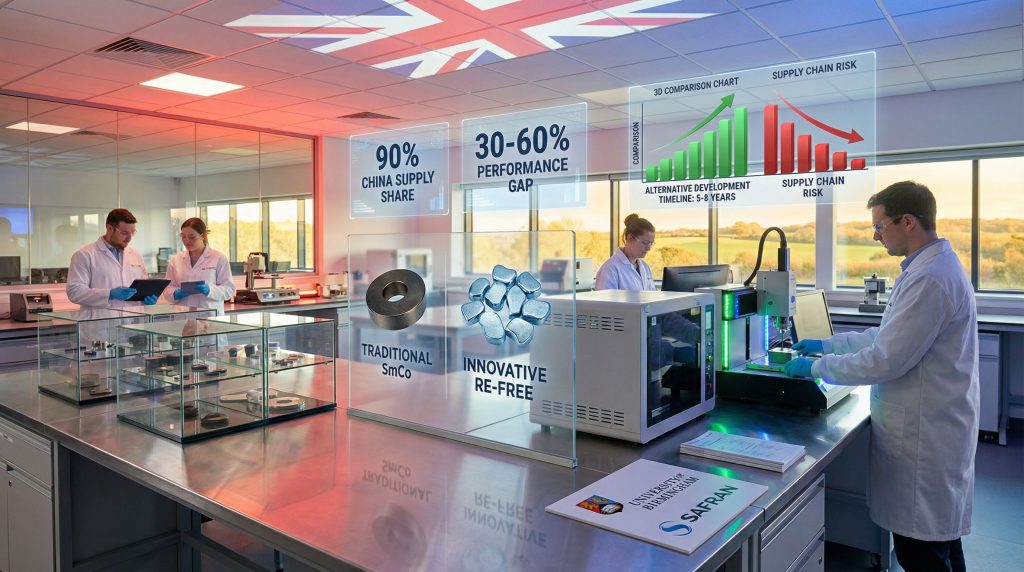
The aerospace industry confronts an unprecedented convergence of technological evolution and supply chain vulnerability that threatens to reshape global aviation manufacturing. As electrification initiatives accelerate across commercial and defense aircraft programs, demand for specialized magnetic materials has intensified beyond traditional procurement models. This transformation occurs against a backdrop of concentrated rare earth element production, where geopolitical tensions intersect with critical minerals energy transition dependencies.
China's dominance in rare earth processing capabilities extends beyond raw material extraction to encompass the sophisticated refinement processes essential for aerospace-grade magnetic components. This vertical integration creates multiple interdependent vulnerabilities throughout Western supply chains, from initial mining operations to final component assembly.
The strategic implications extend beyond cost considerations to encompass national security concerns and technological sovereignty. Aerospace manufacturers increasingly recognize that traditional procurement strategies developed during periods of abundant material availability require fundamental restructuring to address emerging supply constraints and geopolitical realities.
The Geopolitical Landscape of Critical Materials
China's control over rare earth element supply chains represents one of the most concentrated industrial dependencies in modern manufacturing. Current data indicates Chinese producers account for approximately 60-70% of global rare earth element extraction, with processing capabilities reaching 85-90% of refined output. This concentration has intensified since 2010, when export quota restrictions demonstrated the strategic value of supply control mechanisms.
The implementation of export licensing requirements has introduced additional complexity to procurement processes. Western aerospace manufacturers now navigate approval systems that can extend procurement timelines by 3-6 months beyond traditional supply schedules. These delays compound during periods of heightened geopolitical tension, when administrative processing becomes increasingly unpredictable.
Historical pricing volatility provides stark illustration of supply concentration risks:
- Samarium oxide: $10-15/kg (2005) → $100-150/kg (2011 peak) → $20-40/kg (2024)
- Dysprosium: $7-10/kg (2005) → $260-300/kg (2011) → $180-220/kg (2024)
- Terbium: $12/kg (2005) → $1,100/kg (2011) → $450-500/kg (2024)
These price fluctuations forced aerospace manufacturers to absorb cost increases estimated at $2-5 billion industry-wide during the 2010-2012 crisis period. Furthermore, this has led to a significant pivot in critical minerals strategy across the aerospace sector.
Temperature Performance Requirements
Aerospace applications demand magnetic materials capable of maintaining performance characteristics under extreme thermal conditions. Samarium-cobalt magnets operate effectively across temperature ranges from -40°C to +350°C, with operational stability that neodymium-iron-boron alternatives cannot match beyond 150°C.
This thermal stability requirement creates technical barriers to substitution that extend beyond simple material replacement. Jet engines, auxiliary power units, and emerging hybrid propulsion systems generate operating environments where conventional magnetic alternatives experience catastrophic performance degradation.
Key Performance Characteristics:
| Material Type | Operating Temperature | Remanent Induction (Tesla) | Energy Product (kJ/m³) |
|---|---|---|---|
| Samarium-Cobalt | -40°C to +350°C | 0.8-1.1 | 150-240 |
| Neodymium-Iron-Boron | -40°C to +150°C | 1.2-1.4 | 200-440 |
| Ferrite (Ceramic) | -40°C to +250°C | 0.2-0.4 | 20-40 |
Safran UK Rare Earth Magnet Research Initiative
Safran's selection of its Pitstone facility for critical materials research represents a strategic departure from traditional French-centred research operations. The Safran UK research facility has been tasked with electric propulsion development alongside advanced composite research for future single-aisle aircraft.
The facility's proven capability in navigating complex aerospace certification processes provides essential infrastructure for advanced materials development. EASA certification of the 70 kW electric motor system in 2014 demonstrated institutional competency in translating laboratory research into production-ready aerospace components.
Research Focus Areas
Current Safran UK rare earth magnet research encompasses multiple parallel development tracks:
High-Temperature Alternative Materials:
- Manganese-aluminium compound systems showing theoretical Curie temperatures exceeding 500°C
- Advanced ferrite compositions optimised for aerospace thermal cycling
- Hybrid composite structures combining multiple magnetic material types
- Surface treatment technologies for enhanced temperature stability
Manufacturing Process Innovation:
- Powder metallurgy techniques for improved material density
- Additive manufacturing approaches for complex magnetic geometries
- Quality control systems meeting aerospace certification standards
- Scalable production methods for commercial viability
The research timeline reflects the complexity of aerospace materials development. Conservative estimates suggest 8-12 years for viable alternatives to reach commercial deployment, with incremental improvements possible within 5 years for specific applications.
Investment Scale and Strategic Commitment
Safran's €2.5 billion annual R&D investment (approximately 10% of revenue) provides substantial resources for materials research. The establishment of dedicated UK operations represents a multi-decade commitment extending beyond typical product development cycles.
This investment scale aligns with comparable aerospace materials programmes, such as the European Commission's Clean Sky initiative, which allocated €1.6 billion over seven years for aviation technology advancement. However, the focus on rare earth alternatives represents a more targeted approach to addressing supply chain vulnerabilities affecting European raw materials supply.
Technological Alternatives and Performance Analysis
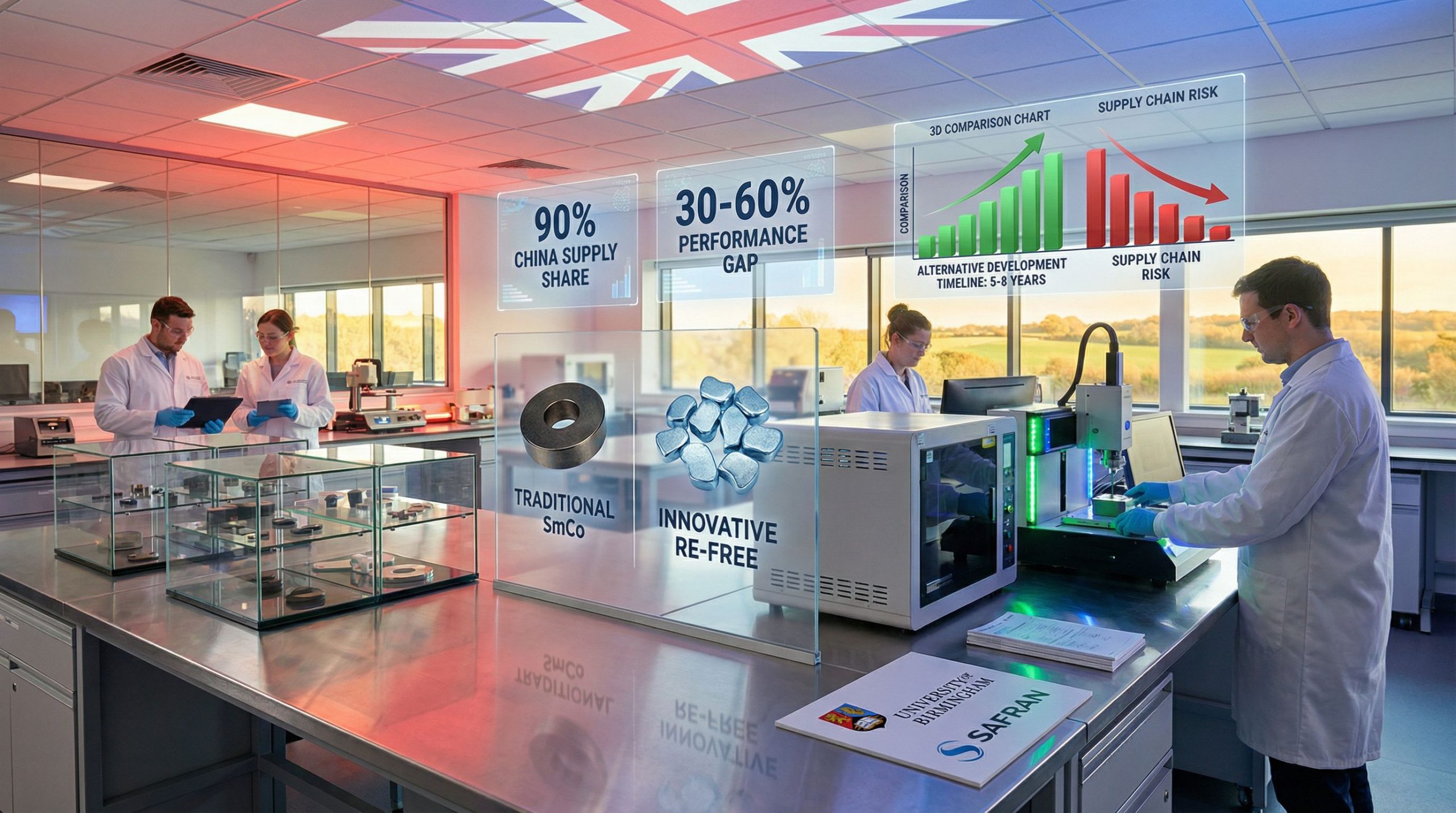
The development of rare earth magnet alternatives requires addressing fundamental physics limitations rather than incremental engineering improvements. Current research demonstrates performance gaps that range from 30-60% compared to samarium-cobalt systems, depending on specific application requirements.
Ferrite-Based Development Progress
Advanced ferrite compositions represent the most mature alternative technology, with prototype systems achieving operational temperatures above 450°C. However, magnetic strength limitations restrict applications to lower-performance aerospace systems.
Current Ferrite Limitations:
- Maximum energy product: 20-40 kJ/m³ (compared to 150-240 kJ/m³ for SmCo)
- Temperature-dependent performance degradation of 40-50% at operational temperatures
- Increased component weight requirements due to lower magnetic efficiency
- Limited availability of aerospace-qualified material suppliers
Manganese-Aluminium Compound Research
Heusler alloy systems based on manganese-aluminium compounds demonstrate theoretical potential for high-temperature magnetic applications. Laboratory results indicate Curie temperatures exceeding 500°C with room-temperature saturation magnetisation of 50-65 A·m²/kg.
However, scaling from laboratory demonstrations to production quantities presents significant technical challenges:
- Material brittleness limiting component durability
- Corrosion susceptibility requiring protective coating systems
- Manufacturing complexity increasing production costs
- Limited understanding of long-term performance characteristics
Composite Hybrid Approaches
Emerging research explores combining multiple magnetic materials within engineered composite structures. These hybrid systems potentially achieve intermediate performance levels whilst reducing rare earth content requirements.
Hybrid System Advantages:
- Partial rare earth reduction rather than complete elimination
- Customisable performance characteristics for specific applications
- Potential cost benefits through material optimisation
- Reduced supply chain vulnerability through diversified material sources
Development Challenges:
- Manufacturing complexity requiring advanced processing techniques
- Interface compatibility between different magnetic materials
- Long-term stability under aerospace operational conditions
- Certification requirements for novel material combinations
Investment Implications and Market Dynamics
The aerospace industry's transition toward supply chain independence creates multiple investment scenarios with varying risk-reward profiles. Current market valuations reflect uncertainty regarding technological feasibility and development timelines.
Market Size and Growth Projections
Global aerospace magnet consumption currently approximates 8,000-12,000 tonnes annually, with growth projections of 15-25% per year through 2035 driven by electrification initiatives. This demand expansion occurs simultaneously with supply concentration concerns, creating upward pressure on material costs.
Investment Scenario Analysis:
| Scenario | Probability | Market Impact | Investment Implications |
|---|---|---|---|
| Successful alternatives (80% performance parity) | 30-40% | Supply diversification | Traditional suppliers face demand reduction |
| Partial alternatives (60% performance parity) | 40-50% | Hybrid supply chains | Premium pricing for high-performance applications |
| Continued rare earth dependency | 20-30% | Price volatility increases | Strategic stockpiling becomes standard |
Capital Allocation Strategies
Aerospace manufacturers implement diversified approaches to materials risk management:
Research and Development Investment:
- Alternative materials research: €200-500 million industry-wide investment
- University partnership programmes for fundamental research
- Cross-industry collaboration with automotive and renewable energy sectors
- Intellectual property development for competitive advantage
Supply Chain Diversification:
- Strategic stockpiling programmes for critical materials
- Long-term supply contracts with non-Chinese producers
- Investment in processing capabilities outside China
- Recycling infrastructure development for circular economy integration
In addition, this strategic approach supports the development of a critical minerals strategic reserve framework across allied nations.
Academic-Industrial Collaboration Framework
The University of Birmingham's Magnetic Materials Research Institute provides specialised expertise in high-temperature magnet development, particularly through their Hydrogen Processing of Magnet Scrap (HPMS) technology. This recycling innovation achieves 95% rare earth element recovery from end-of-life magnetic components.
Research Partnership Structure
UK academic institutions contribute complementary capabilities to Safran UK rare earth magnet research:
University of Birmingham:
- Advanced materials characterisation facilities
- High-temperature testing capabilities exceeding 800°C
- Recycling process development for sustainable materials cycles
- Graduate student research programmes focused on magnetic materials
University of Sheffield:
- Computational materials design using artificial intelligence algorithms
- Predictive modelling for magnetic property optimisation
- Manufacturing process simulation and optimisation
- Industry liaison programmes connecting research with commercial applications
Funding Mechanisms and Timeline
UK Research and Innovation (UKRI) provides substantial support for critical materials research through multiple funding streams:
- Advanced Manufacturing Research: £50-100 million annually across multiple institutions
- Strategic Priorities Fund: Dedicated allocation for supply chain resilience research
- Industrial Partnership Programmes: Co-funding arrangements with industry partners
- International Collaboration Initiatives: Joint programmes with EU and allied nation research institutions
The typical research timeline progresses through distinct phases:
Years 1-3: Fundamental research and proof-of-concept development
Years 4-6: Prototype testing and aerospace certification processes
Years 7-10: Commercial production scaling and market integration
Years 10+: Full supply chain transformation and cost competitiveness
Regulatory Framework and Policy Support
The UK government's Critical Materials Strategy identifies rare earth elements as priority materials for supply chain resilience. This policy framework provides regulatory support for alternative materials development whilst coordinating with allied nations on technology protection measures.
National Security Considerations
Defence applications of rare earth magnets receive particular attention within UK strategic planning. The Ministry of Defence maintains separate procurement guidelines for critical materials, including:
- Strategic stockpiling requirements for defence contractors
- Technology transfer controls for sensitive applications
- Allied cooperation frameworks through NATO standardisation agreements
- Export control coordination for advanced magnetic technologies
International Cooperation Mechanisms
UK participation in multiple international frameworks supports coordinated responses to supply chain vulnerabilities:
Five Eyes Technology Sharing:
- Intelligence cooperation on supply chain threats
- Coordinated research programmes with allied institutions
- Technology transfer agreements for defence applications
- Joint procurement initiatives for strategic materials
European Union Collaboration:
- Horizon Europe funding for cross-border research projects
- Critical Raw Materials Act implementation coordination
- Shared intellectual property frameworks for breakthrough technologies
- Joint certification standards for alternative materials
How Is Aerospace Electrification Driving Magnet Demand?
The aviation industry's commitment to carbon neutrality by 2050 drives unprecedented adoption of electric and hybrid propulsion systems. Regional aircraft manufacturers target 100-passenger electric aircraft by 2035, requiring magnetic systems capable of generating 2-5 MW of electrical power.
Next-Generation Aircraft Requirements
Emerging aircraft designs incorporate magnetic materials across multiple systems:
Electric Propulsion Systems:
- Primary propulsion motors: 500 kW to 2 MW power requirements
- Distributed propulsion architectures with multiple smaller motors
- Hybrid systems combining traditional turbines with electric assistance
- Emergency backup systems requiring high-reliability magnetic components
Enhanced Electrical Systems:
- More-electric aircraft (MEA) configurations replacing hydraulic systems
- Advanced flight control actuators requiring precise magnetic positioning
- Electrical power generation systems with increased capacity requirements
- Navigation and communication systems with enhanced magnetic sensors
Performance Scaling Challenges
The transition to higher-power electrical systems amplifies magnetic material requirements exponentially. A 1 MW electric motor requires approximately 50-100 kg of high-performance magnetic materials, compared to 5-10 kg for traditional aerospace applications.
This scaling effect multiplies the strategic importance of supply chain security. Large electric aircraft programmes could consume 1,000-2,000 tonnes of rare earth magnets per production run, representing significant procurement exposure to supply disruptions.
Risk Mitigation and Strategic Approaches
Aerospace manufacturers implement comprehensive risk management frameworks addressing both technical and supply chain uncertainties. These strategies balance immediate operational requirements with long-term strategic objectives.
Strategic Stockpiling Programmes
Current industry practice involves maintaining 6-12 month inventory reserves for critical materials. However, supply chain vulnerability concerns extend these requirements to 18-24 months for rare earth magnets specifically.
Stockpiling Cost Analysis:
- Storage costs: 2-4% of material value annually
- Insurance and security: 1-2% of material value annually
- Opportunity cost of capital: 3-5% annually
- Total carrying cost: 6-11% of inventory value per year
Despite these costs, manufacturers consider strategic stockpiling essential insurance against supply disruption scenarios that could halt production entirely.
Alternative Supply Chain Development
Diversification efforts focus on developing non-Chinese supply sources:
Australian Rare Earth Development:
- Lynas Rare Earths: 15,000 tonnes annual production capacity
- Northern Minerals: Heavy rare earth element specialisation
- Arafura Resources: Projected 4,400 tonnes annual rare earth oxide production
- Processing facility development outside China reducing geopolitical risk
North American Initiatives:
- MP Materials (Mountain Pass, California): 38,000 tonnes annual production
- Canadian rare earth exploration projects in Quebec and Saskatchewan
- Processing capability development for reduced Chinese dependency
- Strategic partnership agreements with aerospace manufacturers
Recycling and Circular Economy Integration
End-of-life aircraft provide substantial rare earth recovery opportunities. Commercial aircraft contain 200-500 kg of magnetic materials across all systems, creating significant recycling potential as fleet replacement accelerates.
Recycling Process Development:
- HPMS Technology: 95% rare earth element recovery rates
- Solvent Extraction Methods: Enhanced separation efficiency for mixed materials
- Direct Re-use Applications: Component refurbishment for extended service life
- Closed-loop Manufacturing: Integration of recycled materials into new production
Future Technology Convergence
The intersection of artificial intelligence, advanced materials science, and aerospace engineering accelerates innovation beyond traditional research timelines. Machine learning algorithms identify promising material combinations through computational analysis rather than empirical testing alone.
AI-Driven Materials Discovery
Materials Nexus collaboration with UK universities demonstrates 10x acceleration in material screening processes. Computational models evaluate thousands of potential compositions weekly, compared to dozens through traditional laboratory methods.
Key Technology Applications:
- Crystal structure prediction for optimised magnetic domains
- Alloy composition optimisation across multi-dimensional parameter spaces
- Manufacturing process simulation reducing development costs
- Predictive performance modelling under aerospace operational conditions
Additive Manufacturing Integration
3D printing technologies enable rapid prototyping of complex magnetic structures impossible through conventional manufacturing. This capability accelerates the transition from laboratory discovery to aerospace-qualified components.
Manufacturing Advantages:
- Complex geometries optimised for magnetic field distribution
- Rapid iteration cycles for design optimisation
- Reduced material waste compared to subtractive manufacturing
- Customisation capabilities for specific application requirements
What Investment Opportunities Does This Create?
The convergence of technological advancement and geopolitical tensions creates multiple investment opportunities across the rare earth magnet value chain. Successful strategies require balancing high-risk research investments with lower-risk diversification approaches.
Technology Investment Opportunities
High-Risk, High-Reward Investments:
- Alternative magnet material startups with breakthrough potential
- University spin-off companies commercialising research discoveries
- Advanced manufacturing technology companies serving aerospace markets
- Intellectual property licensing opportunities for successful innovations
Medium-Risk Diversification Plays:
- Non-Chinese rare earth mining companies with production capabilities
- Recycling technology companies with proven recovery processes
- Aerospace suppliers developing supply chain alternatives
- Processing facility operators outside China with expansion plans
Market Psychology and Timing
Investment timing reflects industry uncertainty regarding technological feasibility and development schedules. Current market valuations discount success probability whilst creating opportunities for early-stage investment in breakthrough technologies.
The aerospace industry's conservative approach to materials certification extends development timelines but provides competitive advantages for companies achieving successful alternatives. First-mover advantages in alternative magnet technologies could generate substantial licensing revenue across multiple industries.
Furthermore, these developments align with broader mining industry innovation trends that are reshaping global materials supply chains.
Long-Term Strategic Implications
Success in developing viable rare earth alternatives fundamentally transforms global materials markets beyond aerospace applications. The automotive industry, renewable energy sector, and consumer electronics all depend on similar magnetic materials with comparable supply chain vulnerabilities.
Geopolitical Rebalancing
European success in materials independence potentially reduces Chinese leverage over critical technology supply chains. This rebalancing extends beyond rare earths to encompass broader strategic materials essential for advanced manufacturing.
The UK's position as a technology bridge between European and North American research capabilities provides strategic advantages in international collaboration frameworks. Post-Brexit trade relationships enable flexible partnership arrangements unavailable within EU regulatory constraints.
Technology Convergence Acceleration
Safran UK rare earth magnet research contributes to broader materials science advancement with applications extending far beyond aerospace. Breakthrough developments in high-temperature magnetic materials enable next-generation renewable energy systems, advanced manufacturing processes, and emerging technology applications not yet conceived.
The interconnection between military, commercial, and civilian applications amplifies the strategic value of materials independence. Technologies developed for aerospace applications find secondary markets in defence systems, industrial automation, and consumer products, creating multiple revenue streams from successful innovations.
In addition, recent developments in nuclear fusion magnet technology demonstrate the broader implications of magnetic materials research across multiple high-technology sectors.
Disclaimer: This analysis contains forward-looking statements regarding technological development timelines, market projections, and investment scenarios. Actual results may vary significantly due to technological, regulatory, and market factors beyond current prediction capabilities. Investment decisions should incorporate comprehensive due diligence and risk assessment appropriate to individual circumstances.
Ready to Capitalise on the Next Critical Minerals Discovery?
Discovery Alert's proprietary Discovery IQ model delivers instant notifications on significant ASX mineral discoveries, transforming complex geological data into actionable investment opportunities for both short-term traders and long-term investors. Explore how historic mineral discoveries have generated substantial market returns, then begin your 30-day free trial today to position yourself ahead of the market as the aerospace industry's demand for rare earth elements continues to reshape global supply chains.