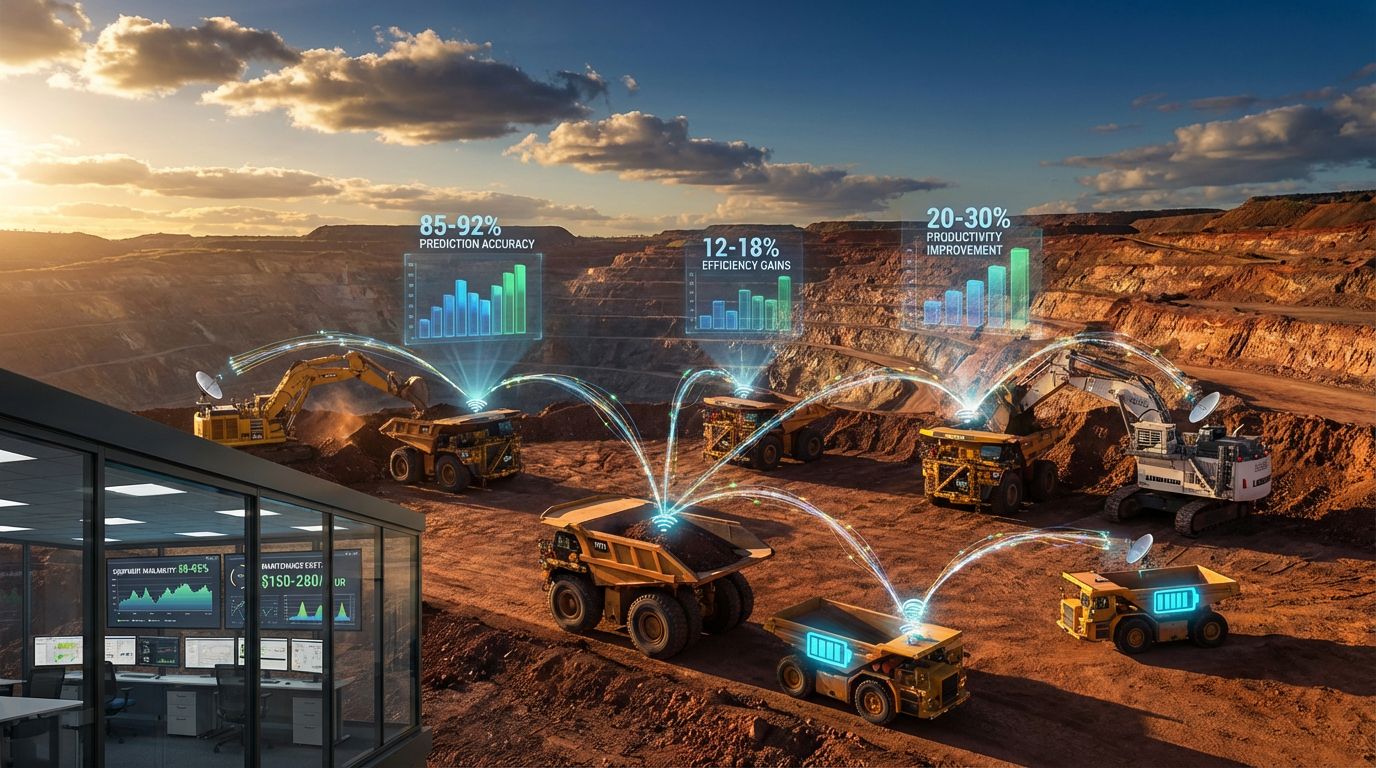
The transformation of mining operations through artificial intelligence represents one of the most significant technological shifts in heavy industry digitalisation. Modern mining enterprises face unprecedented complexity as they navigate regulatory pressures, environmental mandates, and the integration of diverse equipment ecosystems spanning multiple manufacturers, power sources, and automation levels.
Furthermore, this convergence of operational challenges has created a critical infrastructure gap that traditional equipment monitoring systems cannot address effectively. The emergence of AI-powered efficiency boost platforms capable of operating across manufacturer boundaries signals a fundamental shift in how mining operations approach fleet management, predictive maintenance, and operational optimisation. Consequently, Hitachi invests in AI mining analytics as part of a broader industry movement toward comprehensive digital transformation.
Digital Infrastructure Requirements Drive Mining Technology Evolution
Mining operations today operate under constraints that demand sophisticated technological solutions. The integration of autonomous vehicles, electrified equipment, and conventional diesel-powered machinery within single operational environments creates data management challenges that exceed the capabilities of traditional monitoring systems.
Environmental compliance requirements have evolved beyond simple reporting to demand real-time monitoring and predictive analytics. Mining operators must now demonstrate continuous environmental performance tracking whilst maintaining operational efficiency targets that directly impact profitability and regulatory standing.
In addition, the complexity of modern mining operations extends to equipment procurement strategies where operators increasingly source machinery from multiple manufacturers to optimise performance characteristics, cost structures, and supply chain resilience. This multi-vendor approach, whilst operationally advantageous, creates significant data integration challenges that impact maintenance planning, performance optimisation, and operational coordination.
Equipment Lifecycle Management Complexity
Modern mining equipment operates within intricate technological ecosystems where traditional maintenance schedules prove inadequate for optimising operational efficiency. The integration of hydraulic systems, electronic control units, GPS tracking, and environmental monitoring sensors generates continuous data streams that require sophisticated analytical processing to extract actionable insights.
Furthermore, equipment downtime in mining operations carries substantial financial implications, with large-scale mining equipment representing significant capital investments that must maintain operational availability to justify their economic contribution to mining operations.
Regulatory Compliance and Environmental Monitoring
Mining operators face increasingly stringent environmental regulations that demand precise tracking of emissions, fuel consumption, and operational impact across entire equipment fleets. These requirements extend beyond traditional compliance reporting to encompass predictive environmental impact assessment and real-time operational adjustments based on environmental performance metrics.
However, the integration of environmental monitoring into operational analytics creates opportunities for mining operators to optimise both environmental performance and operational efficiency simultaneously, supporting sustainability objectives whilst maintaining production targets.
Cross-Platform Equipment Analytics Address Integration Challenges
The mining industry evolution toward mixed equipment fleets has created demand for analytical platforms capable of integrating data across manufacturer boundaries. Traditional equipment monitoring solutions, typically designed around specific manufacturer ecosystems, cannot provide comprehensive fleet visibility when operations incorporate machinery from multiple suppliers.
Consequently, OEM-agnostic analytics platforms address this fundamental limitation by implementing standardised data integration protocols that extract, normalise, and analyse operational data regardless of equipment manufacturer or model specifications.
Multi-Vendor Fleet Management Realities
Mining operations increasingly incorporate equipment from diverse manufacturers to optimise specific operational requirements, cost considerations, and supply chain flexibility. This approach, whilst operationally beneficial, creates data silos that prevent comprehensive fleet performance analysis and optimisation.
For instance, integration challenges extend beyond simple data collection to encompass communication protocol standardisation, sensor compatibility, and analytical framework consistency across diverse equipment types and manufacturers.
Universal Data Integration Architecture
Modern mining analytics platforms implement universal sensor interfaces and communication protocols that enable seamless data integration across equipment brands and models. This technological approach eliminates the operational limitations imposed by manufacturer-specific monitoring systems whilst providing comprehensive fleet visibility.
The implementation of standardised data collection and processing frameworks enables mining operators to:
- Monitor equipment performance metrics consistently across all fleet assets
- Implement predictive maintenance strategies based on comprehensive operational data
- Optimise operational planning through integrated fleet performance analysis
- Maintain regulatory compliance through standardised environmental monitoring
- Reduce training requirements for operations and maintenance personnel
Artificial Intelligence Applications in Mining Equipment Management
AI in mining operations platforms process continuous data streams from equipment sensors, GPS tracking systems, fuel monitoring, and environmental measurement devices to generate actionable operational insights. These systems employ machine learning algorithms to identify patterns, predict equipment failures, and optimise operational parameters in real-time.
Furthermore, the integration of artificial intelligence into mining equipment management enables predictive rather than reactive operational strategies, fundamentally changing how mining operations approach maintenance planning, performance optimisation, and risk management.
Real-Time Data Processing Architecture
Mining analytics platforms integrate sensor data from hydraulic systems, engine performance monitors, electrical system diagnostics, and environmental sensors to create comprehensive operational profiles for individual equipment units and entire fleets.
Continuous monitoring capabilities encompass:
- Equipment Health Monitoring: Temperature sensors, pressure gauges, vibration analysis, and component wear indicators
- Operational Performance Tracking: Fuel consumption rates, cycle times, payload optimisation, and route efficiency
- Location-Based Analytics: GPS tracking for performance analysis, route optimisation, and operational coordination
- Environmental Impact Assessment: Emissions monitoring, energy consumption tracking, and environmental compliance verification
Machine Learning Implementation Categories
AI applications in mining equipment management span multiple analytical domains, each addressing specific operational challenges and optimisation opportunities:
| Application Area | Primary Functions | Operational Benefits |
|---|---|---|
| Predictive Maintenance | Component wear analysis, failure pattern recognition | Reduced unplanned downtime, optimised maintenance scheduling |
| Performance Optimisation | Fuel efficiency analysis, cycle time optimisation | Improved operational efficiency, cost reduction |
| Operational Planning | Route optimisation, equipment allocation | Enhanced productivity, resource optimisation |
| Environmental Monitoring | Emissions tracking, energy consumption analysis | Regulatory compliance, sustainability goal achievement |
Strategic Investment Drivers in Mining Technology Partnerships
The convergence of mining expertise and artificial intelligence capabilities through strategic partnerships represents a fundamental shift in how technology development occurs within the mining industry. These collaborations combine established operational knowledge with advanced analytical capabilities to accelerate technology adoption and enhance operational outcomes.
Recent strategic partnerships demonstrate how equipment manufacturers are positioning themselves to support comprehensive digital transformation rather than focusing solely on mechanical equipment supply. As reported by Hitachi Construction Machinery's press release, Hitachi invests in AI mining analytics through its strategic partnership with Rithmik Solutions.
Partnership Value Creation Framework
Strategic partnerships between mining equipment manufacturers and AI technology developers create multiple value streams that benefit mining operators, technology providers, and equipment manufacturers simultaneously.
The investment by Hitachi Construction Machinery in Rithmik Solutions exemplifies this strategic approach. According to Ross Barichievy, CEO of Rithmik Solutions, this collaboration leverages Hitachi Construction Machinery's global presence with Rithmik's expertise in mining analytics to deliver enhanced performance, reliability, and sustainability to customers worldwide.
Moreover, Eiji Fukunishi, President of the Mining Business Unit at Hitachi Construction Machinery, emphasised that combining Rithmik's advanced AI-powered data analysis technology with Hitachi Construction Machinery's operational insight enables more flexible customer solutions whilst contributing to increased productivity and reduced environmental impact at mining sites.
Technology Partnership Strategic Benefits
Strategic technology partnerships in mining create competitive advantages through:
- Market Expansion: Technology providers gain access to established customer relationships and global distribution networks
- Product Development Acceleration: Combined technical expertise enables faster innovation cycles and more comprehensive solution development
- Risk Mitigation: Established equipment manufacturer credibility reduces customer adoption barriers for new technologies
- Customer Trust Enhancement: Association with recognised industry brands increases customer confidence in new analytical platforms
Electrification and Autonomous Equipment Integration
The mining industry's transition toward electrified and autonomous equipment creates complex integration challenges that require sophisticated analytical platforms capable of managing diverse power systems, automation levels, and operational coordination requirements.
Additionally, modern mining operations increasingly incorporate mixed fleets that combine electric vehicle integration, hybrid systems, conventional diesel equipment, and various levels of autonomous operation within single operational environments.
Multi-Power Source Fleet Management
The integration of electric mining equipment alongside conventional diesel-powered machinery requires analytical platforms capable of optimising performance across different power systems whilst maintaining operational coordination and safety protocols.
As stated in industry analysis, mines are moving toward more complicated mixed fleets of autonomous and human-operated equipment, coupled with new electrification systems, making a single view of equipment performance across different brands essential for planning productivity, risk reduction, and sustainability goal attainment.
Electric equipment integration challenges include:
- Battery Performance Optimisation: Monitoring charge levels, discharge rates, and battery health across diverse electric vehicle types
- Charging Infrastructure Coordination: Managing charging schedules to optimise operational availability whilst minimising energy costs
- Hybrid System Management: Coordinating power source transitions and optimising energy efficiency in hybrid equipment
- Range and Performance Planning: Integrating battery capacity and charging requirements into operational planning systems
Autonomous Equipment Coordination
The integration of autonomous vehicles with human-operated equipment requires sophisticated coordination systems that ensure operational safety whilst optimising productivity across mixed operational environments.
Key coordination requirements include:
- Safety Zone Management: Real-time monitoring and coordination of safety boundaries around autonomous and human-operated equipment
- Traffic Flow Optimisation: Route coordination to prevent conflicts and optimise material flow efficiency
- Emergency Response Protocols: Rapid communication and response coordination across different equipment control systems
- Operational Handoff Management: Seamless transition between autonomous and human-controlled operational phases
Quantifiable Operational Improvements Through Advanced Analytics
Mining operations implementing comprehensive analytics platforms report significant improvements across multiple operational metrics, though specific performance gains vary based on operational complexity, equipment age, and implementation scope.
Furthermore, the implementation of data-driven mining operations enables mining operations to transition from reactive maintenance and operational strategies to predictive approaches that optimise performance before problems occur.
Operational Efficiency Enhancement Areas
Advanced analytics platforms generate operational improvements through several key mechanisms:
Equipment Availability Optimisation: Predictive maintenance capabilities enable mining operations to schedule maintenance activities during planned downtime periods, reducing unplanned equipment outages that impact production schedules.
Maintenance Cost Management: Early identification of component wear and potential failures enables targeted maintenance interventions that prevent catastrophic failures requiring expensive emergency repairs and extended downtime periods.
Fuel Efficiency Improvements: Real-time optimisation of equipment operation parameters, route planning, and load management reduces fuel consumption whilst maintaining or improving productivity metrics.
Environmental Compliance Enhancement: Continuous monitoring and automated reporting capabilities ensure consistent regulatory compliance whilst identifying optimisation opportunities that improve both environmental performance and operational efficiency.
Long-Term Strategic Operational Benefits
Beyond immediate operational improvements, advanced analytics implementation supports strategic objectives that position mining operations for long-term competitive advantage:
- Regulatory Compliance Automation: Automated environmental monitoring and reporting reduces compliance costs whilst ensuring consistent regulatory adherence
- Safety Performance Enhancement: Predictive risk assessment and real-time monitoring improve safety outcomes through proactive hazard identification and mitigation
- Decarbonisation Goal Support: Precise emissions tracking and energy optimisation support achievement of sustainability objectives and regulatory requirements
- Competitive Differentiation: Operational excellence through advanced analytics creates sustainable competitive advantages in commodity markets
Global Equipment Manufacturer Strategic Response
Major mining equipment manufacturers are restructuring their technology strategies to support open digital platforms rather than proprietary systems, recognising that customer demands for comprehensive fleet management capabilities exceed the limitations of single-manufacturer solutions.
This strategic shift represents a fundamental change in how equipment manufacturers position themselves within the mining industry value chain, transitioning from equipment suppliers to technology-enabled solution providers.
Open Platform Architecture Development
Equipment manufacturers are investing in open architecture systems that support third-party integration and collaborative technology development rather than maintaining closed proprietary platforms.
Hitachi's investment strategy exemplifies this approach, as described by Eiji Fukunishi: "This investment marks an important step towards Hitachi Construction Machinery's goal of building open digital platforms with various partners."
Platform development priorities include:
- API Standardisation: Development of standardised application programming interfaces that enable third-party integration and data sharing
- Cloud-Based Analytics: Implementation of cloud computing architectures that support remote monitoring and analytical processing
- Mobile Application Integration: Development of mobile platforms that enable field-based decision making and real-time operational adjustments
- Collaborative Development: Partnership structures that accelerate technology innovation through combined expertise and shared development costs
Ecosystem Collaboration Expansion
Mining equipment manufacturers are expanding their partnership networks to include AI specialists, environmental monitoring companies, autonomous vehicle developers, and cloud computing providers to create comprehensive technology ecosystems.
These collaborative approaches enable rapid technology development and deployment whilst sharing development risks and costs among multiple partners with complementary expertise areas.
Future Operational Models in Mining Technology
The convergence of artificial intelligence, electrification, and automation technologies is enabling new operational models that fundamentally change how mining operations are planned, executed, and monitored.
Future mining operations will increasingly operate through remote monitoring capabilities, automated decision-making systems, and predictive operational adjustments that optimise performance in real-time based on changing operational and market conditions.
Remote Operations Evolution
Advanced analytics platforms enable remote monitoring and control capabilities that reduce on-site personnel requirements whilst improving operational oversight and decision-making capabilities.
Remote operations capabilities include:
- Centralised Monitoring: Comprehensive fleet monitoring from centralised control centres supporting multiple mining sites simultaneously
- Automated Decision-Making: AI-powered systems that make routine operational adjustments without human intervention
- Predictive Maintenance Automation: Automated maintenance scheduling and resource allocation based on predictive analytics
- Real-Time Market Response: Dynamic operational adjustments based on commodity pricing, energy costs, and market demand fluctuations
Sustainability Integration Framework
Future mining operations will integrate environmental performance optimisation directly into operational planning and execution systems, enabling simultaneous achievement of production and sustainability objectives.
Consequently, Hitachi invests in AI mining analytics as part of their strategic focus on "zero-emissions, zero-downtime, and zero-entry operations", which represents the industry direction toward comprehensive operational optimisation that addresses efficiency, environmental, and safety objectives simultaneously.
Sustainability integration elements include:
- Carbon Footprint Optimisation: Real-time tracking and optimisation of carbon emissions at individual equipment and fleet levels
- Energy Efficiency Maximisation: Dynamic energy consumption optimisation across mixed power source fleets
- Environmental Impact Minimisation: Continuous environmental monitoring and automatic operational adjustments to minimise ecological impact
- Regulatory Compliance Automation: Automated environmental reporting and compliance verification systems
Implementation Considerations and Strategic Planning
Mining operations considering advanced analytics implementation must evaluate multiple technical, operational, and strategic factors to ensure successful deployment and return on investment achievement.
Successful analytics platform implementation requires comprehensive planning that addresses technology integration, personnel training, operational procedure updates, and performance measurement frameworks.
Technical Integration Planning
Equipment Compatibility Assessment: Evaluation of existing equipment sensor capabilities, communication systems, and retrofit requirements for comprehensive data integration.
Infrastructure Requirements: Assessment of network connectivity, data storage, and computational resources required to support real-time analytics processing.
Data Security and Management: Implementation of cybersecurity measures and data management protocols to protect operational data and maintain system integrity.
System Integration Timeline: Phased implementation planning that maintains operational continuity whilst deploying new analytical capabilities.
Operational Change Management
Advanced analytics implementation requires significant changes in operational procedures, maintenance practices, and decision-making processes that must be carefully managed to ensure successful adoption.
Key change management considerations include:
- Personnel Training Programmes: Comprehensive training for operations and maintenance personnel on new analytical tools and data-driven decision-making processes
- Operational Procedure Updates: Revision of maintenance schedules, operational protocols, and performance measurement systems to incorporate predictive analytics
- Performance Measurement Integration: Development of new key performance indicators that reflect analytical capabilities and optimisation opportunities
- Cultural Adaptation Support: Change management programmes that help personnel adapt to data-driven operational approaches
Strategic Investment and Market Development Implications
The strategic partnerships between mining equipment manufacturers and AI technology providers represent broader market consolidation trends that are reshaping competitive dynamics within the mining technology sector.
These partnerships enable smaller operations to access enterprise-level technology capabilities whilst accelerating technology development through collaborative innovation approaches that combine operational expertise with advanced analytical capabilities.
Market Consolidation and Competitive Dynamics
Technology partnerships are becoming standard competitive requirements as analytics capabilities transition from competitive advantages to operational necessities for mining operations seeking to maintain efficiency and regulatory compliance.
Market development trends include:
- Technology Differentiation: Equipment manufacturers using analytics capabilities to differentiate their offerings and create customer value beyond mechanical equipment performance
- Barrier Reduction: Partnership structures that enable smaller mining operations to access advanced technologies previously available only to large-scale operations
- Industry Standardisation: Collaborative development accelerating standardisation of communication protocols, data formats, and analytical frameworks
- Innovation Acceleration: Combined expertise enabling faster development cycles and more comprehensive solution deployment
Future Development Investment Priorities
Strategic investment in mining technology development is focusing on areas that support comprehensive operational optimisation whilst addressing regulatory requirements and sustainability objectives.
Priority development areas include:
- Renewable Energy Integration: Advanced analytics platforms that optimise mining operations powered by renewable energy sources
- Autonomous Fleet Coordination: Enhanced AI capabilities for managing fully autonomous mining equipment fleets
- Environmental Monitoring Enhancement: Advanced sensor systems and analytical capabilities for comprehensive environmental impact assessment
- Supply Chain Integration: Blockchain and analytics integration for equipment provenance tracking and supply chain transparency
Industry Insight: Mining operations implementing comprehensive AI analytics platforms are positioning themselves for long-term competitive advantage through operational excellence, regulatory compliance automation, and sustainability goal achievement whilst reducing operational risks and improving financial performance.
The transformation of mining equipment management through artificial intelligence represents a fundamental shift in operational capabilities that extends beyond efficiency improvements to encompass comprehensive operational optimisation, environmental performance enhancement, and strategic competitive positioning within increasingly complex market environments. As Hitachi invests in AI mining analytics, the industry moves toward an era where technology partnerships drive innovation and operational excellence across global mining operations.
Are You Tracking the Next Wave of Mining Technology Breakthroughs?
Discovery Alert's proprietary Discovery IQ model delivers instant notifications on significant ASX mineral discoveries, including breakthrough mining technology investments that could reshape operational efficiency across the sector. Stay ahead of market-moving announcements by exploring Discovery Alert's historic mining discoveries and begin your 30-day free trial today to position yourself at the forefront of mining innovation.