Australia's mining sector stands at a technological crossroads where computational intelligence meets geological necessity. The convergence of machine learning algorithms with extractive operations represents more than mere automation; it embodies a fundamental shift toward responsive, data‐driven mining operations that adapts continuously to operational variables. This transformation reflects broader industrial trends toward intelligent systems that learn, predict, and optimise in real-time across complex operational environments, establishing a dynamic approach to AI in mining that reshapes traditional extraction methodologies.
The concept of artificial intelligence in mining has evolved from simple automated machinery to sophisticated networks of interconnected systems capable of processing vast data streams simultaneously. Modern mining operations generate enormous volumes of information through sensors, geological surveys, equipment telemetry, and environmental monitoring systems. The challenge lies not in data collection but in transforming this information into actionable insights that drive immediate operational improvements.
Real-Time Intelligence Systems in Contemporary Mining
Dynamic artificial intelligence in mining operations differs fundamentally from traditional automation through its capacity for continuous learning and adaptation. Unlike predetermined control systems that follow fixed parameters, these advanced platforms modify their responses based on real-time data analysis and historical pattern recognition.
The Australian mining industry has witnessed increasing adoption of these technologies, with industry leaders advocating for regulatory frameworks that encourage innovation whilst maintaining safety standards. According to recent industry analysis, mining companies are already implementing AI-driven solutions to achieve better operational outcomes and enhanced employee safety protocols.
Adaptive Processing Architecture
Modern mining AI systems integrate multiple data streams including geological sensors, equipment diagnostics, weather monitoring, and workforce tracking systems. These platforms process information through machine learning algorithms that identify patterns, predict equipment failures, and optimise resource allocation decisions in real-time.
The infrastructure supporting these systems requires robust communication networks capable of handling continuous data transmission from remote mining locations. Furthermore, investment in advanced telecommunications infrastructure, including private 5G networks and fibre optic systems, enables faster data processing at local centres rather than relying on offshore computational resources.
Continuous Learning Mechanisms
Dynamic AI systems in mining operations employ reinforcement learning algorithms that improve performance through operational experience. These systems analyse the outcomes of previous decisions and adjust their future recommendations accordingly, creating increasingly accurate predictive models over time.
The integration of digital twin technology allows mining operations to test optimisation strategies in virtual environments before implementing changes in physical operations. This approach reduces operational risks whilst enabling continuous refinement of extraction and processing techniques, supporting the broader mining industry evolution.
Implementation Strategies for Mining Intelligence
Mining companies implementing dynamic AI technologies must consider both technical infrastructure requirements and operational integration challenges. The process typically involves phased deployment strategies that begin with specific operational areas before expanding to comprehensive system integration.
Exploration and Resource Assessment Enhancement
Artificial intelligence applications in mineral exploration utilise satellite imagery, geological data, and drilling information to identify potential resource deposits more efficiently than traditional methods. Advanced geospatial analytics, supported by recent government investments, enhance mineral exploration capabilities whilst improving operational efficiency and environmental compliance measures.
The $440 million investment in Geoscience Australia's Earth Observation Program and the Australia-United States Partnership in Landsat Next represents significant government support for AI-enhanced mineral exploration technologies. This funding specifically targets improved satellite imaging and geospatial analytics capabilities for the mining sector.
Machine learning algorithms analyse geological formations, mineral composition data, and historical extraction patterns to predict ore quality and quantity with increasing accuracy. These systems continuously update their assessments as new drilling data becomes available, enabling more precise resource planning and extraction strategies.
Processing and Extraction Optimisation
A dynamic approach to AI in mining optimises extraction operations through real-time analysis of equipment performance, ore quality variations, and processing efficiency metrics. These platforms automatically adjust extraction parameters, blasting patterns, and processing configurations to maximise resource recovery whilst minimising operational costs.
Intelligent ore sorting systems use computer vision and spectral analysis to identify material quality in real-time, enabling immediate processing adjustments. Moreover, AI drilling innovations reduce waste generation and improve final product consistency by ensuring only suitable materials proceed through expensive processing stages.
Technology Infrastructure for Mining Intelligence
The foundation of dynamic AI implementation in mining requires comprehensive sensor networks, edge computing capabilities, and robust communication systems capable of operating in harsh industrial environments.
Sensor Networks and Data Collection
Modern mining operations deploy extensive sensor networks throughout their facilities to monitor equipment performance, environmental conditions, material quality, and safety parameters. These sensors generate continuous data streams that feed into centralised AI processing systems for real-time analysis and decision-making.
Edge computing devices process critical data locally, enabling immediate responses to safety hazards or equipment malfunctions without waiting for centralised system analysis. This distributed processing approach ensures operational continuity even when communication networks experience disruptions.
Communication Infrastructure Requirements
The mining industry's adoption of private 5G and fibre networks enables faster data transmission to local processing centres, supporting real-time AI analysis and decision-making capabilities. As industry experts note, processing data domestically rather than offshore accelerates automation development and strengthens competitive positioning in global markets.
Critical Infrastructure Insight: Private sector investments in AI initiatives are expected to exceed $100 billion as part of national technology advancement strategies, with mining operations representing a significant portion of this investment.
These infrastructure investments enable mining companies to maintain data sovereignty whilst accessing advanced computational capabilities necessary for complex AI operations. Domestic data processing also reduces latency issues that could impact real-time operational decisions.
Safety and Environmental Enhancement Through AI
Dynamic AI systems significantly enhance mining safety protocols through predictive analytics and real-time hazard detection capabilities. These technologies identify potential safety risks before incidents occur, enabling proactive intervention measures that protect workers and equipment.
Predictive Safety Analytics
Machine learning algorithms analyse historical incident data, equipment performance patterns, and environmental conditions to identify factors that increase accident probability. These systems provide early warning alerts when conditions indicate elevated safety risks, allowing supervisors to implement preventive measures.
Autonomous safety monitoring systems track worker locations, equipment operations, and environmental conditions continuously. When these systems detect potential hazards, they can automatically implement safety protocols including equipment shutdowns, evacuation procedures, or emergency response activation.
Environmental Monitoring and Compliance
AI-driven environmental monitoring systems track emissions, water quality, noise levels, and ecological impacts across mining operations. These platforms ensure continuous compliance with regulatory requirements whilst identifying opportunities for environmental performance improvements. In addition, the sustainable mining transformation demonstrates how AI contributes to better environmental stewardship.
Advanced satellite imagery and geospatial analytics enable comprehensive environmental impact assessment and monitoring across large mining footprints. This technology supports both regulatory compliance and sustainable mining practice development.
| Environmental Monitoring Capability | Technology Application | Compliance Benefit |
|---|---|---|
| Emissions Tracking | Real-time atmospheric sensors | Continuous regulatory compliance |
| Water Quality Management | AI-driven treatment optimisation | Reduced environmental impact |
| Biodiversity Assessment | Machine learning ecosystem analysis | Enhanced conservation outcomes |
Operational Challenge Resolution
Dynamic AI addresses critical operational challenges in mining through predictive maintenance, resource optimisation, and quality management systems that adapt to changing conditions automatically.
Equipment Performance Management
Predictive maintenance systems analyse equipment sensor data to identify potential failures before they occur, enabling scheduled maintenance that minimises operational disruptions. These systems learn from equipment performance patterns to improve failure prediction accuracy over time.
Intelligent fleet management systems optimise equipment deployment across mining operations, considering factors such as material transport requirements, equipment capabilities, fuel consumption, and maintenance schedules. This optimisation reduces operational costs whilst maximising productivity.
Resource Quality Control
Real-time ore quality assessment systems use spectral analysis and computer vision to evaluate material composition continuously during extraction and processing. These systems enable immediate processing parameter adjustments to maintain consistent product quality.
Dynamic blending strategies optimise material combinations to achieve desired product specifications whilst minimising waste generation. Consequently, AI systems analyse material properties and processing requirements to determine optimal blending ratios automatically.
Economic Impact and Investment Returns
The economic benefits of dynamic AI implementation in mining operations extend beyond immediate cost savings to include productivity improvements, risk reduction, and competitive advantage development.
Cost Structure Optimisation
AI-driven optimisation reduces operational costs through improved energy efficiency, reduced maintenance expenses, and minimised waste generation. These systems identify operational inefficiencies and recommend corrections that compound into significant cost savings over time.
Predictive maintenance capabilities reduce unplanned equipment downtime whilst extending asset lifecycles through optimised maintenance scheduling. This approach maximises equipment utilisation whilst minimising maintenance costs and replacement requirements, delivering an AI efficiency boost across operations.
Revenue Enhancement Opportunities
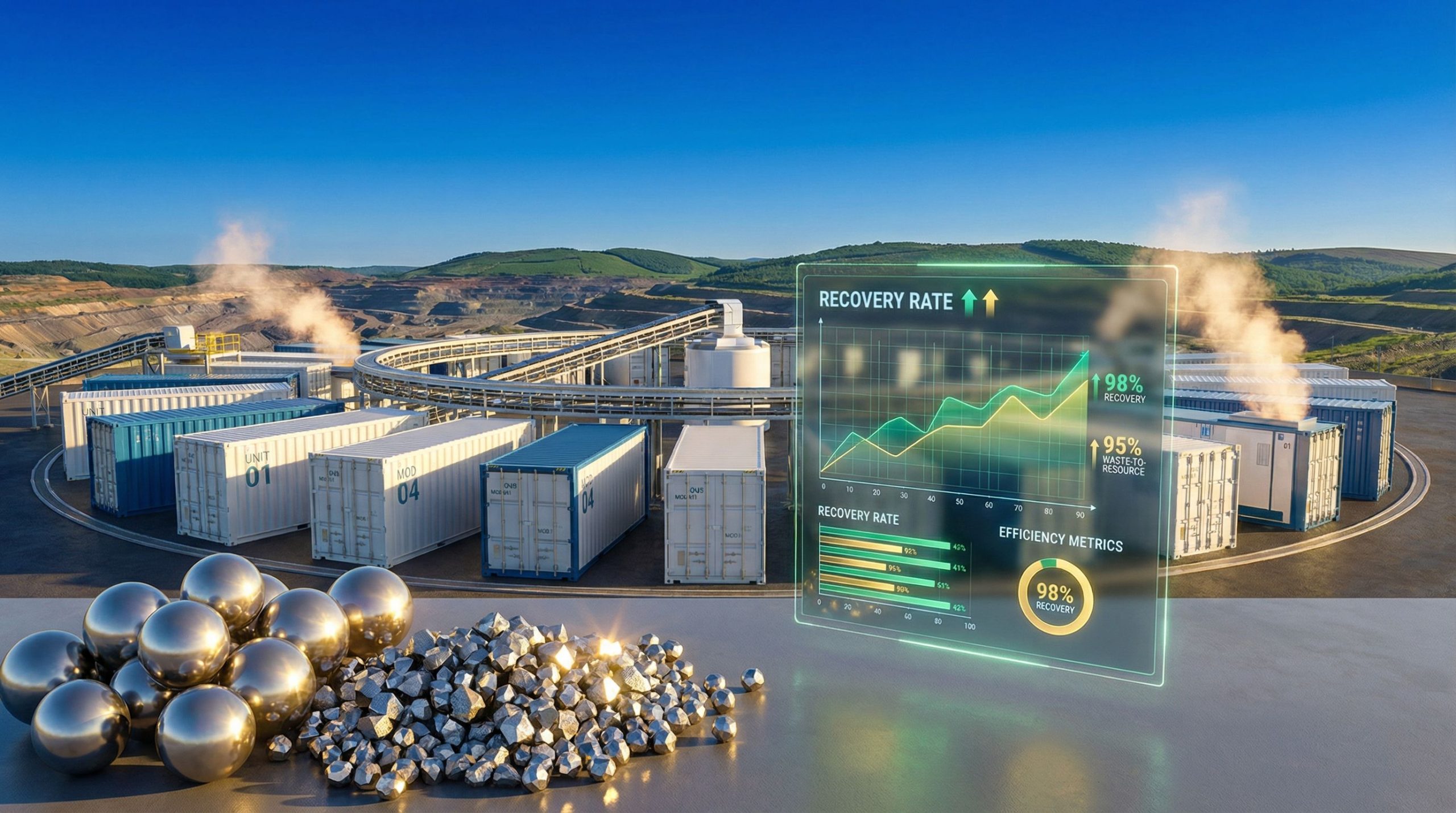
Dynamic AI systems improve ore recovery rates through optimised extraction and processing techniques that adapt to geological variations. These improvements directly increase resource yields from existing deposits, enhancing overall project economics.
Enhanced product quality consistency achieved through AI-driven processing control commands premium pricing in global markets. Mining companies implementing these technologies gain competitive advantages through superior product reliability and consistency.
Mining Sector Applications and Benefits
Different mining sectors experience varying degrees of benefit from dynamic AI implementation, with complex operations typically realising greater efficiency improvements.
Critical Minerals and Rare Earth Operations
Critical mineral extraction operations benefit significantly from AI optimisation due to their complex processing requirements and stringent quality control demands. These operations often involve multi-stage processing systems where small optimisation improvements compound into substantial efficiency gains.
Government investment in geospatial analytics capabilities specifically targets enhanced mineral exploration for critical minerals, supporting national strategic objectives whilst improving operational efficiency for mining companies in this sector.
Rare earth processing requires precise control of chemical processes and material handling systems. However, AI optimisation of these complex operations reduces processing costs whilst improving product quality and consistency.
Large-Scale Mining Operations
Open pit mining operations utilise AI for blast pattern optimisation, fleet management across extensive areas, and environmental monitoring throughout their operational footprints. The scale of these operations amplifies the benefits of efficiency improvements achieved through AI implementation.
Intelligent scheduling systems coordinate complex logistics across large mining operations, optimising material flow, equipment utilisation, and processing capacity allocation. These systems adapt to changing conditions automatically whilst maintaining operational efficiency.
Implementation Challenges and Solutions
Mining companies face several technical and organisational challenges when implementing dynamic AI systems, requiring careful planning and phased deployment strategies.
Technical Infrastructure Development
Remote mining locations often lack adequate digital infrastructure to support AI implementation. Companies must invest in communication networks, data processing capabilities, and integration systems that can operate reliably in harsh industrial environments.
System integration challenges arise when connecting AI platforms with existing operational control systems. Furthermore, companies require technical expertise to ensure seamless data flow and operational continuity during implementation phases.
Workforce Development and Change Management
Successful AI implementation requires collaborative approaches between industry stakeholders, technical experts, and workforce representatives to ensure smooth technology adoption. This cooperative framework addresses worker concerns whilst maximising technology benefits.
Training programmes must prepare mining personnel to work effectively with AI-enhanced systems whilst maintaining their traditional expertise in mining operations. This hybrid skill development ensures optimal human-machine collaboration.
Strategic Implementation Approaches
Mining companies should adopt systematic approaches to AI integration that minimise risks whilst maximising operational benefits through careful planning and execution.
Phased Deployment Strategy
Successful AI implementation typically begins with pilot projects in specific operational areas where benefits can be demonstrated and measured effectively. These initial implementations provide valuable experience and proof-of-concept validation before broader system deployment.
Gradual scaling allows companies to refine their AI systems based on operational experience whilst building internal expertise and confidence in the technology. This approach reduces implementation risks whilst ensuring sustainable technology adoption.
Regulatory Compliance and Innovation Balance
Industry advocates recommend dynamic and flexible regulatory approaches that enable companies to test, deploy, and refine new technologies whilst maintaining safety and environmental standards. This balanced framework supports innovation whilst protecting stakeholder interests.
Regulatory frameworks should accommodate the iterative nature of AI development, allowing companies to improve their systems continuously based on operational experience and technological advancement.
Future Technology Evolution
The mining industry continues evolving toward more sophisticated AI applications that promise even greater operational improvements and new business model possibilities.
Emerging Technology Integration
Quantum computing applications may eventually enable complex optimisation problems that exceed current computational capabilities. These advanced systems could optimise entire mining operations simultaneously, considering thousands of variables that current systems cannot process effectively.
Advanced robotics integration promises autonomous mining operations that require minimal human intervention in hazardous environments. These systems would combine AI decision-making with robotic execution to create fully automated mining processes.
Industry Transformation Expectations
The mining industry's evolution toward autonomous operations requires continued technological development and supportive regulatory frameworks. Companies need operational flexibility to test and refine emerging technologies as they become commercially viable.
Competitive positioning in global markets increasingly depends on technological sophistication and operational efficiency. Mining companies that successfully implement a dynamic approach to AI in mining gain significant advantages through reduced costs, improved safety, and enhanced environmental performance.
Investment Insight: Private sector technology investments exceeding $100 billion signal strong industry commitment to AI-driven transformation across multiple sectors, with mining operations positioned as significant beneficiaries of this technological advancement.
The transformation toward AI-driven mining operations represents both opportunity and necessity as companies compete in increasingly complex global markets whilst meeting growing demands for sustainable and efficient resource extraction. This dynamic approach to AI in mining will continue reshaping the industry landscape, creating new possibilities for operational excellence and sustainable development.
Want to Capitalise on AI-Driven Mining Discoveries?
Discovery Alert's proprietary Discovery IQ model instantly identifies breakthrough mining technologies and innovations across the ASX, ensuring subscribers never miss actionable opportunities when companies announce AI implementations or technological advancements. Experience how major technological shifts in mining can generate substantial returns by exploring Discovery Alert's historic discoveries and begin your 30-day free trial today.