
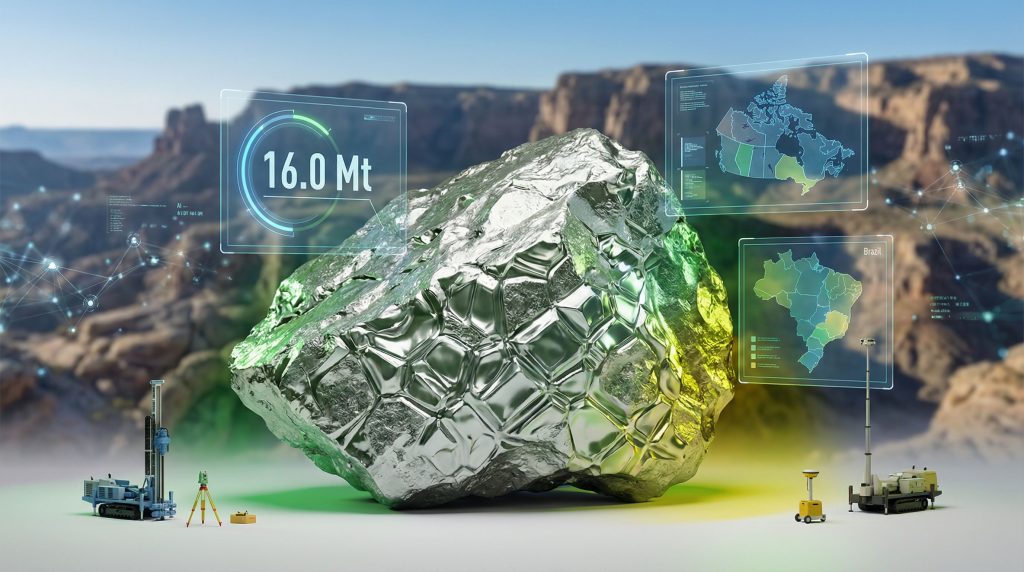
The global mining industry faces a fundamental challenge in the 21st century: traditional exploration methods, while proven over decades, cannot match the accelerated timelines required for critical mineral discovery in an era of supply chain uncertainty. This technological gap becomes particularly pronounced when examining nickel exploration, where geological complexity and remote deposit locations create substantial barriers to efficient resource identification. The integration of AI in mining operations into mineral exploration represents more than incremental improvement – it constitutes a paradigm shift toward data-driven discovery methodologies that could reshape global mineral supply dynamics.
Understanding the Strategic Context of AI-Driven Mineral Discovery
The convergence of machine learning capabilities with geological data analysis has created unprecedented opportunities for accelerating mineral discovery processes. Modern AI systems can process millions of geological data points simultaneously, identifying patterns that would require decades of manual analysis to detect. This technological advancement becomes particularly relevant when examining nickel exploration, where deposit formation involves complex relationships between multiple geological variables including mineralogy, temperature conditions, chemical environments, and structural controls.
Traditional exploration approaches rely heavily on geologist expertise and intuition for hypothesis generation, limiting discovery potential to human cognitive capacity for pattern recognition across vast datasets. Machine learning algorithms excel at identifying multi-variable relationships in non-linear ways, enabling exploration teams to leverage historical geological data that previously remained underutilized due to processing limitations.
The Canada and Brazil AI nickel exploration alliance exemplifies this technological transformation through systematic integration of geological databases spanning decades of survey activity. The partnership combines Canadian institutional expertise in data management with Brazilian geological endowment to create a framework for AI-driven exploration efficiency improvements.
The Economic Imperative Behind AI Adoption
Cost reduction represents a primary driver for AI adoption in mineral exploration. Traditional exploration programs require extensive field surveys, geophysical measurements, and drilling programs that can consume millions of dollars before identifying viable targets. Furthermore, data-driven mining operations enable exploration teams to focus resources on high-probability areas identified through predictive modeling, potentially reducing overall exploration costs by 30-50%.
Time-to-discovery acceleration provides additional economic benefits. Conventional exploration timelines often extend across multiple years from initial survey to resource definition. AI-driven target identification can compress these timelines significantly by eliminating low-probability areas early in the exploration process.
Risk mitigation through advanced data analytics offers a third major advantage. Mining companies face substantial uncertainty when investing in exploration programs, with historically low success rates for discovering economic deposits. AI systems provide quantified probability assessments for exploration targets, enabling more informed investment decisions and portfolio optimisation strategies.
When big ASX news breaks, our subscribers know first
The Technology Framework Behind AI Mineral Exploration
Machine learning applications in geological analysis require sophisticated data integration across multiple survey types and decades of historical information. The Canada and Brazil AI nickel exploration alliance exemplifies this approach through systematic combination of four primary data categories: geophysical surveys measuring magnetic susceptibility and gravity anomalies, geochemical analysis from rock and soil samples, remote sensing imagery including multispectral and hyperspectral satellite data, and comprehensive historical drilling records.
Data standardisation represents a critical technical challenge when integrating geological information from multiple historical surveys. Exploration data collected over decades often involves different methodologies, equipment calibrations, and technical standards. Georeferencing precision, measurement units, and analytical protocols vary significantly across time periods, requiring sophisticated preprocessing to harmonise datasets for machine learning applications.
Machine Learning Algorithm Selection for Geological Applications
The selection of appropriate algorithms depends on specific geological characteristics and available training data. Supervised learning systems trained on known deposit locations enable classification of unexplored areas by deposit probability. These systems require extensive validated datasets connecting geological signatures with confirmed mineral occurrences.
Clustering algorithms identify geological similarity zones that predict deposit occurrence based on pattern recognition across multiple variables. These approaches prove particularly valuable when exploring frontier regions with limited historical drilling data, such as areas where recent nickel-copper discovery activities demonstrate the potential for new resource identification.
Neural network architectures can model complex, non-linear relationships between input geological variables and deposit presence. Deep learning systems excel at identifying subtle patterns in high-dimensional datasets that traditional statistical methods cannot detect.
The validation methodology involves ground-truthing AI predictions through drilling programs that confirm or refute model accuracy. This creates iterative refinement processes where actual drilling results feed back into model training, progressively improving predictive capabilities over time.
Data Integration and Processing Capabilities
Modern AI systems process geological data at unprecedented scales and resolutions. Current predictive modelling platforms generate three-dimensional target confidence maps at resolutions down to 50-100 meter grid cells across exploration areas spanning thousands of square kilometres.
In addition, 3D geological modeling capabilities enable comprehensive visualisation of subsurface geological relationships. The integration framework combines:
• Geophysical measurements including magnetic and electromagnetic surveys detecting subsurface mineral signatures
• Geochemical assay results from systematic soil and rock sampling programs
• Remote sensing analysis identifying surface alteration patterns associated with mineralisation
• Digital elevation models providing topographic context for geological interpretation
• Historical exploration databases containing decades of drilling and survey results
This comprehensive data integration enables AI systems to identify correlations between surface indicators and subsurface mineralisation that exceed human analytical capabilities.
Brazil's Strategic Position in Global Nickel Markets
Brazil's position in global nickel markets reveals a fundamental disconnect between geological endowment and production capacity. The country possesses estimated nickel reserves of 16 million tonnes, ranking third globally behind Indonesia's 62 million tonnes and Australia's 25 million tonnes. However, Brazil ranks only eighth in global nickel production with approximately 2.1% of total global supply, creating a significant reserve-to-production ratio gap that indicates systematic exploration and development inefficiencies.
| Global Ranking | Country | Estimated Reserves (Mt) | Production Share |
|---|---|---|---|
| 1st | Indonesia | 62.0 | 35% |
| 2nd | Australia | 25.0 | 18% |
| 3rd | Brazil | 16.0 | 2.1% |
| 4th | Russia | 7.9 | 12% |
This production deficit reflects multiple systemic challenges including exploration efficiency limitations, infrastructure development requirements in remote regions, and regulatory complexity affecting project development timelines. The Canada and Brazil AI nickel exploration alliance directly addresses the exploration efficiency component through technological advancement and institutional knowledge sharing.
Geological Characteristics of Brazilian Nickel Deposits
Brazilian nickel deposits occur predominantly as laterite formations developed through tropical weathering processes, contrasting with the sulphide deposit characteristics of Indonesian and Australian resources. Laterite deposits present distinct exploration signatures requiring specialised predictive modelling approaches reflecting different mineralogical concentrations and weathering process characteristics.
Primary nickel exploration activity concentrates in three major regions:
• Goiás state in the Tocantins region, containing extensive laterite development
• Minas Gerais state with established mining infrastructure and geological database
• Pará state representing frontier exploration areas with significant resource potential
The tropical weathering environment creates unique challenges for mineral detection through conventional surface surveys, as deep soil profiles and dense vegetation obscure geological features. Remote sensing analysis and geochemical sampling become particularly important for identifying mineralisation indicators in these environments.
Market Activity and Investment Interest
Despite exploration challenges, international investment in Brazilian nickel assets remains active. The MMG acquisition of Anglo American's Brazilian nickel assets for US$500 million demonstrates continued investor confidence in the country's mineral potential. However, the transaction's extension to June 30, 2026, for regulatory clearance illustrates approval complexity affecting project development timelines.
The broader Brazilian mining sector faces regulatory uncertainty affecting asset transactions. Recent judicial blocking of the Equinox Gold-CMOC transaction for Brazilian gold assets valued at US$1 billion demonstrates the legal environment complexity affecting mineral asset transfers in the country.
Canada's Technological Leadership in Mining Innovation
Canada's position as an optimal partner for AI-driven exploration development reflects convergence of institutional capacity, technological infrastructure, and industry expertise accumulated over more than a century of mineral exploration activity. The Geological Survey of Canada maintains comprehensive databases spanning over 150 years of systematic geological survey work, providing extensive training datasets essential for machine learning model development.
The country's mining technology sector represents a significant innovation ecosystem with concentrated expertise in exploration software, geophysical instrumentation, and resource estimation methodologies. Canadian universities and federal research institutions maintain advanced facilities for mineralogical research, computational geology, and remote sensing technology development.
Institutional Advantages in Data Management
The GSC maintains digitised records of regional geological surveys, mineral deposit databases, geophysical survey results, and historical exploration data accessible through federal geological information systems. This institutional data represents competitive advantage for machine learning model training, as algorithms benefit from extensive validated datasets establishing relationships between geological signatures and mineral occurrences.
Canadian mining companies and technology providers have developed sophisticated exploration software platforms integrating geological modelling, resource estimation, and project economics analysis. This existing infrastructure provides foundation for AI system integration rather than requiring wholesale methodology replacement.
Remote Sensing and Technology Development
Canadian institutions have developed advanced remote sensing analysis capabilities particularly relevant for mineral detection in challenging environments. These capabilities prove especially valuable for tropical exploration contexts where vegetative cover obscures surface geological features, directly applicable to Brazilian nickel exploration scenarios.
The PDAC Convention annually convenes over 25,000 mining professionals, technology providers, and investors in Toronto, establishing Canada's position as the global hub for mineral exploration innovation and capital formation. The formal signing of the Canada and Brazil AI nickel exploration alliance at PDAC 2026 signals institutional commitment transcending commercial interests.
Geopolitical Implications of the Canada-Brazil Alliance
The Canada and Brazil AI nickel exploration alliance carries significant geopolitical implications beyond technological advancement, representing systematic effort to address supply chain vulnerabilities in critical mineral markets. Current global nickel production concentrates heavily in three nations – Indonesia, Australia, and Russia – which control approximately 60% of global production, with Indonesian production alone accounting for roughly 35% of global supply.
This concentration creates strategic vulnerability for Western manufacturers dependent on imported critical minerals for battery and clean energy technologies. The Canada-Brazil partnership signals recognition among Western policymakers that supply chain resilience requires institutional commitment and multi-year development programs rather than short-term market solutions, particularly given the importance of energy transition minerals for clean technology deployment.
Western Hemisphere Supply Chain Development
The alliance represents the first systematic effort to develop Western Hemisphere nickel supply capacity outside established Latin American mining centres in Chile and Peru. Success in this initiative could establish Brazil as a significant nickel producer serving North American markets while reducing geographic concentration of critical mineral supply.
The institutional participants – the Brazilian Geological Service (SGB) and Geological Survey of Canada (GSC) – represent government-level commitment transcending private commercial interests. This official backing provides stability and continuity for long-term technology development and knowledge transfer programs.
Strategic Autonomy Considerations
The partnership reflects geopolitical calculation that diversifying nickel supply sources enhances strategic autonomy for Western manufacturers. Reducing dependence on Asian-dominated markets mitigates geopolitical risks associated with trade disputes, export restrictions, or supply disruptions affecting critical mineral availability.
The 2027 timeline for initial findings establishes relatively near-term validation for AI exploration effectiveness in tropical nickel deposit contexts. Success in this program could accelerate adoption of similar technological approaches across other critical minerals including lithium, rare earth elements, and cobalt.
Expected Outcomes and Technology Scaling Potential
The Canada and Brazil AI nickel exploration alliance projects delivery of initial findings by 2027, establishing a framework for evaluating AI effectiveness in mineral exploration applications. The expected outcomes extend beyond nickel discovery to encompass methodological advancement applicable across multiple critical minerals.
Quantified Success Metrics
The program aims to achieve measurable improvements in exploration efficiency through several key performance indicators:
• Target identification accuracy measured by drilling success rates in AI-recommended locations
• Time reduction in progression from geological survey to resource definition
• Cost efficiency through focused drilling programs eliminating low-probability areas
• Resource estimation precision improving project valuation and investment decisions
Validation of AI predictions requires extensive ground-truthing through drilling programs that confirm or refute model accuracy. This validation process creates iterative improvement cycles where actual results enhance model training and predictive capabilities.
Expansion to Other Critical Minerals
Success in nickel exploration could establish a template for applying AI methodologies to other critical minerals essential for clean energy transitions. Potential applications include:
Lithium exploration using similar geological pattern recognition for identifying brine deposits and pegmatite formations containing lithium minerals. The integration of hydrogeological data with traditional geological surveys could improve lithium resource assessment in both countries.
Rare earth element discovery through analysis of igneous rock formations and associated alteration patterns. AI systems could identify exploration targets for both heavy and light rare earth elements critical for renewable energy technologies.
Copper and cobalt exploration leveraging existing databases of porphyry and sedimentary deposits. The systematic analysis of structural controls and geochemical signatures could accelerate discovery of new copper deposits essential for electrical infrastructure expansion.
The next major ASX story will hit our subscribers first
Investment and Market Implications
The Canada and Brazil AI nickel exploration alliance carries significant implications for global nickel market dynamics and mining investment strategies. The potential for increased exploration efficiency in Brazil could affect long-term supply projections and investment allocation decisions across the mining sector.
Impact on Nickel Market Structure
Enhanced exploration success in Brazil could contribute to global supply diversity, potentially reducing market concentration currently dominated by Indonesian and Australian production. Increased Brazilian nickel output would provide additional supply sources for Western manufacturers seeking to reduce dependency on Asian markets.
The development timeline suggests that meaningful production increases would not materialise until the early 2030s, considering exploration validation, project development, and construction phases. However, successful AI exploration could accelerate these timelines through more efficient target identification and reduced exploration risk.
Mining Company Strategy Evolution
The alliance signals broader industry evolution toward technology-driven exploration methodologies. Mining companies may need to adapt strategies to incorporate AI capabilities, either through internal development or partnerships with technology providers.
Investment implications include:
• Enhanced due diligence capabilities for acquisition targets through AI-assisted resource evaluation
• Improved project valuation accuracy reducing investment risk in exploration ventures
• Portfolio optimisation opportunities through quantified risk assessment across multiple exploration properties
• Competitive advantages for companies adopting AI methodologies ahead of industry peers
Challenges and Risk Factors
Despite promising technological potential, the Canada and Brazil AI nickel exploration alliance faces substantial technical, regulatory, and commercial obstacles that could affect program success and broader industry adoption.
Technical Implementation Challenges
Data quality standardisation represents the primary technical hurdle. Integrating geological data collected over decades using different methodologies, equipment calibrations, and technical standards requires sophisticated preprocessing to ensure model accuracy. Inconsistent data quality could compromise AI prediction reliability.
Algorithm validation requirements create additional complexity. AI systems require extensive ground-truthing through drilling programs to confirm prediction accuracy. This validation process demands significant capital investment before realising exploration efficiency benefits.
Geographic specificity of geological models poses scaling challenges. AI systems trained on Canadian geological conditions may require substantial modification for Brazilian tropical environments with different weathering processes, vegetation cover, and mineral deposit characteristics.
Regulatory and Commercial Obstacles
The Brazilian regulatory environment presents complexity for mining project development, as demonstrated by recent judicial interventions affecting major asset transactions. Environmental assessment requirements, indigenous land rights considerations, and permitting processes could delay project advancement even after successful AI exploration.
Intellectual property protection for AI algorithms and geological databases requires careful management. Both countries must establish frameworks for sharing technological development while protecting competitive advantages developed through the partnership.
Commercial scalability depends on demonstrating economic returns from AI exploration investment. Mining companies require clear evidence of improved discovery rates and cost reduction before committing to widespread AI adoption.
What Are the Future Implications for Global Mining?
The Canada and Brazil AI nickel exploration alliance could catalyse fundamental transformation in mineral exploration methodologies, establishing new industry standards for efficiency and technological integration. Success in this program would likely accelerate broader adoption of AI-driven approaches across the global mining sector.
Industry Transformation Potential
The shift from traditional geological methods to AI-first exploration approaches represents paradigmatic change comparable to previous technological revolutions in mining. Enhanced pattern recognition capabilities could democratise exploration success by enabling smaller companies to compete with major mining corporations through superior data analysis rather than extensive field operations.
Professional skill requirements would evolve significantly, demanding new competencies in data science, machine learning, and computational geology alongside traditional geological expertise. Universities and professional development programs would need to adapt curricula to prepare geoscientists for AI-integrated exploration workflows.
Critical Mineral Security Implications
Accelerated development of alternative supply sources through AI exploration could enhance strategic autonomy for Western nations dependent on imported critical minerals. Reduced geopolitical risks in mineral supply chains would support long-term planning for clean energy infrastructure development and strategic manufacturing capacity.
The establishment of Western Hemisphere critical mineral supply networks could reduce vulnerability to trade disruptions while supporting domestic manufacturing competitiveness in emerging technology sectors. This geographic diversification complements existing efforts to develop critical mineral processing capacity outside Asian markets.
Success in the Canada and Brazil AI nickel exploration alliance would likely inspire similar technological partnerships across other mineral commodities and geographic regions. The development of standardised AI exploration methodologies could accelerate global mineral discovery and support the massive resource requirements associated with global energy transition programs.
The convergence of artificial intelligence with geological exploration represents more than technological advancement – it constitutes strategic infrastructure development for securing critical mineral supplies essential to 21st-century economic competitiveness and energy security. The outcomes of this partnership will likely influence exploration strategies worldwide and determine the pace of critical mineral supply development for decades to come.
Investment Disclaimer: This analysis is for educational purposes only and does not constitute investment advice. Mineral exploration involves substantial risks including project failure, regulatory delays, and market volatility. Past performance does not guarantee future results, and all mining investments should be evaluated carefully considering individual risk tolerance and investment objectives.
Ready to Capitalise on the Next Major Mineral Discovery?
Discovery Alert instantly alerts investors to significant ASX mineral discoveries using its proprietary Discovery IQ model, transforming complex mineral data into actionable insights for traders and investors. Understand why major mineral discoveries can lead to substantial market returns by exploring historic examples, then begin your 14-day free trial today to position yourself ahead of the market.
