Alliance Nickel Ltd
Alliance Nickel Eyes Lower NiWest Capex as Vat Leach Testwork Begins
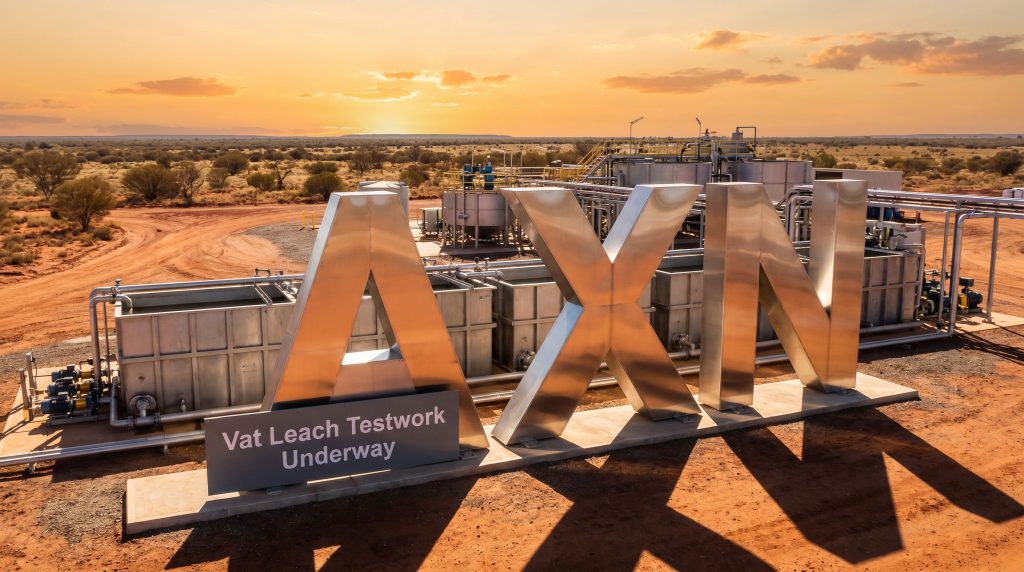
Alliance Nickel Limited (ASX: AXN) has started vat leach testwork at its 100% owned NiWest Nickel-Cobalt Project in Western Australia, targeting a potential reduction in one of the project's largest capital cost items. According to the ASX announcement, a bulk sample of about 2 tonnes of representative NiWest ore has arrived at an overseas testing facility, with results expected by late Q3 2026.
The focus is clear. Alliance Nickel is testing whether vat leaching could reduce the circa $310 million water infrastructure component included in the November 2024 Definitive Feasibility Study (DFS). If confirmed, that could materially improve NiWest's capital efficiency without changing the broader product strategy of producing Class 1 nickel sulphate and cobalt sulphate for battery markets.
When big ASX news breaks, our subscribers know first
Why the Vat Leach Programme Matters
In the ASX update, Alliance Nickel said vat leaching is being assessed as an atmospheric leaching alternative to the heap leach flowsheet used in the 2024 DFS. Atmospheric leaching refers to processing at normal pressure, which can be simpler than high-pressure methods, although the economics still depend heavily on water, recovery rates and cycle times.
The key issue at NiWest is water infrastructure. The DFS included a water-related capital cost of roughly $310 million, reflecting the requirements of a heap leach configuration at the project site. Management's current optimisation work is aimed at determining whether a vat leach setup could use sufficient local water from the Mt Kilkenny tenement, potentially reducing that spend considerably.
For investors, this matters because large upfront capital costs often shape whether a project can move from study phase to financing and construction. A lower capex profile may, furthermore, improve funding flexibility, project returns and overall development options.
Alliance Nickel stated that vat leaching is being evaluated as a lower-cost atmospheric leach alternative to heap leaching, with the potential for material capex reduction, particularly through lower water infrastructure requirements.
What the 2024 DFS Established at NiWest
The company's 2024 DFS remains an important reference point. According to Alliance Nickel, that study confirmed the technical and economic viability of a heap leach and direct solvent extraction (DSX) operation at NiWest.
This is a relevant distinction. The current testwork does not replace a failed flowsheet or restart the project from first principles. Instead, it appears to be a targeted optimisation programme focused on one major cost area within a DFS-backed development plan.
Alliance Nickel also stated in the announcement that all material assumptions supporting the DFS production target and forecast financial information continue to apply and have not materially changed. That suggests the vat leach work is being pursued as a refinement opportunity rather than a response to a broader change in project fundamentals.
NiWest is described by the company as one of Australia's highest-grade undeveloped nickel laterite resources. The project also has access to established infrastructure including roads, rail and a gas pipeline, and is located adjacent to Glencore's Murrin Murrin Operations.
Heap Leaching Versus Vat Leaching Explained
For non-specialist investors, the difference between heap leaching and vat leaching is central to this update.
What Is Heap Leaching?
Heap leaching involves stacking crushed ore on lined pads and applying a leach solution, usually acidic, across the top. As the solution moves through the ore, it dissolves metals such as nickel and cobalt, which are then collected for downstream recovery.
Heap leaching is a widely used method because it can be suitable for large tonnage, lower-grade ore bodies. However, it can require substantial land area, careful solution management and, importantly in NiWest's case, major water infrastructure.
What Is Vat Leaching?
Vat leaching uses enclosed tanks or vessels rather than large outdoor heaps. Ore is placed inside the vats and contacted with leach solution in a more controlled environment.
That control can improve how evenly the solution moves through the ore. It may also allow tighter management of water and solution chemistry, which is why it is being examined as a possible lower-cost alternative at NiWest.
Why Does the Distinction Matter?
According to Alliance Nickel's preliminary analysis, a vat leach flowsheet could enable enough water to be sourced locally from Mt Kilkenny. If that proves correct at testwork scale and remains valid at commercial scale, the project may not require the same level of external water infrastructure assumed in the DFS.
The potential benefits outlined by the company include:
- Lower water infrastructure capital requirements
- Improved solution distribution through the ore
- Enhanced leaching kinetics, meaning faster metal dissolution
- Shorter leach cycle times
Each of these factors has economic relevance. Lower infrastructure spend can reduce initial capital needs. Furthermore, faster leaching and shorter cycle times can improve processing efficiency, although those outcomes still need to be demonstrated by the current testwork programme.
NiWest Project Snapshot
The following table sets out the main project details drawn from the ASX announcement and referenced company disclosures.
| Feature | Detail |
|---|---|
| Ownership | 100% Alliance Nickel |
| Project | NiWest Nickel-Cobalt Project |
| Location | Western Australia |
| DFS completion | November 2024 |
| DFS processing route | Heap leach + direct solvent extraction |
| Water infrastructure in DFS | Circa $310 million |
| Current optimisation focus | Vat leach testwork |
| Bulk sample size | Approximately 2 tonnes |
| Testwork timing | Commenced June 2026 |
| Expected completion | Late Q3 2026 |
| Target products | Class 1 nickel sulphate, cobalt sulphate |
| Nearby infrastructure | Roads, railway, gas pipeline |
| Adjacent operation | Glencore's Murrin Murrin Operations |
The capex optimisation context makes each of these details relevant to how investors might assess the project's near-term development trajectory.
The Capex Optimisation Case for Investors
Capital intensity is one of the most common hurdles in laterite nickel development. Laterite projects often involve large ore volumes, extensive processing infrastructure and site-specific challenges such as water supply. That can make even technically sound projects difficult to finance if upfront costs are too high.
In that context, the NiWest testwork programme has a clear purpose. Rather than revisiting the project's entire development concept, Alliance Nickel is testing whether an alternative front-end leaching method could preserve the processing pathway while lowering one of the biggest capex inputs.
There are three investor questions likely to shape market attention over the coming months:
- Can local water from Mt Kilkenny support a vat leach configuration at meaningful scale?
- Will nickel and cobalt recoveries be comparable to, or better than, the heap leach assumptions used in the DFS?
- Can cycle times and operating performance support a commercially attractive design?
If those questions are answered positively, Alliance Nickel may be able to revise parts of the feasibility work with a lower capital burden. That would not automatically guarantee development, but it could, however, improve the project's financial profile and potential funding pathway.
Why Water Infrastructure Matters in Nickel Laterite Projects
Water is more than a utility in hydrometallurgical nickel processing. It is part of the ore treatment system itself. Leach solutions need to be delivered, collected, stored, recycled and managed safely across the processing circuit.
In a heap leach operation, this can require major infrastructure such as pipelines, ponds, storage facilities and pumping systems. In dry or remote regions, obtaining and transporting enough water can become a major capital item before production even starts.
That is why the circa $310 million figure in the NiWest DFS is so important. It is not a minor line item. It is a substantial project cost that can influence:
- Initial funding requirements
- Construction complexity
- Operating flexibility
- Project returns
A more controlled leaching system such as vat leaching may reduce the scale of water movement and storage infrastructure needed, depending on site conditions and process design. For NiWest, the test is whether that balance works in practice. The current programme is designed to generate the data needed to make that assessment.
Timeline and Next Catalysts
The testwork has already started, which gives the market a defined near-term timetable. According to the announcement, the programme is expected to be completed in late Q3 2026.
A simplified milestone view is below.
| Milestone | Timing | Status |
|---|---|---|
| Bulk sample delivered to testing facility | June 2026 | Completed |
| Vat leach testwork commenced | June 2026 | Underway |
| Testwork programme completion | Late Q3 2026 | Expected |
| Assessment for feasibility update | Post-Q3 2026 | Conditional on results |
| Further market updates | As material information becomes available | Pending |
The timeline is short enough to matter. Investors are not being asked to wait years for a first technical signal. Within roughly a quarter, the company expects to know whether the vat leach option warrants incorporation into refined feasibility work.
The next major ASX story will hit our subscribers first
Key Takeaways From the ASX Update
Alliance Nickel's latest ASX announcement centres on a practical question with clear financial implications: can NiWest use vat leaching to lower the water infrastructure burden built into the 2024 DFS?
The company has now moved from concept to active testing, with a 2-tonne ore sample at an overseas facility and results due by late Q3 2026. Preliminary analysis, according to Alliance Nickel, suggests local water from Mt Kilkenny could support the alternative flowsheet and reduce a circa $310 million capital component.
For investors following ASX nickel stocks, nickel laterite project development and battery materials exposure, this is a near-term catalyst tied directly to project economics. The original DFS remains in place, the downstream product strategy is unchanged, and the current work is focused on improving capital efficiency at one of Australia's more advanced undeveloped nickel-cobalt projects.
Want to Stay Ahead of the Next Major ASX Mineral Discovery?
Discovery Alert's proprietary Discovery IQ model delivers real-time alerts on significant ASX mineral discoveries — including battery materials and nickel developments like NiWest — instantly translating complex data into actionable investment insights for traders and long-term investors alike. Explore historic examples of exceptional discovery returns and begin your 14-day free trial at Discovery Alert to position yourself ahead of the broader market.