
August 1, 2026
How Energy-Dependent Aluminium Production Defines Modern Manufacturing Vulnerability
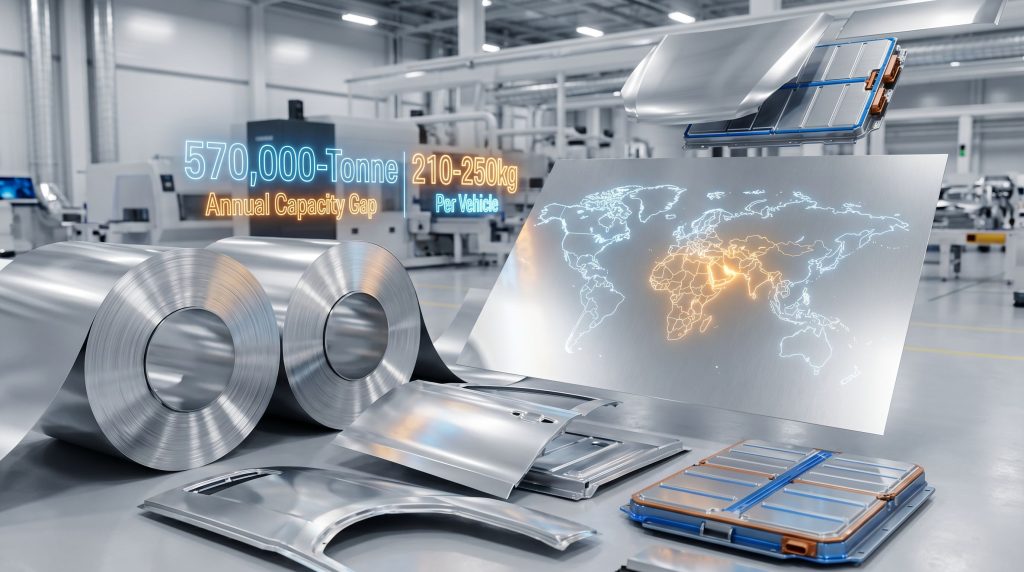
The convergence of energy-intensive metallurgy and geopolitical chokepoints reveals fundamental weaknesses in contemporary industrial supply chains. Aluminium smelting operations require approximately 15,000 kilowatt-hours per tonne, consuming roughly 30-40% of total production costs through electricity alone. When major energy-producing regions face disruption, these facilities become economically unviable within weeks, triggering cascading shortages across multiple manufacturing sectors simultaneously.
This structural dependency creates particularly acute exposure for automotive manufacturers, who rely on both abundant aluminium supplies and stable crude oil access for vehicle production. The industry's material intensity—demanding between 210 and 250 kilograms of aluminium per passenger vehicle alongside substantial petroleum-derived components—means simultaneous disruptions in Gulf energy exports threaten production continuity across global automotive supply chains.
Understanding these interconnected vulnerabilities requires examining how aluminium supply disruptions in the automobile industry propagate through regional production networks, alternative sourcing mechanisms, and long-term strategic responses that manufacturers are implementing to reduce geographic concentration risks.
When big ASX news breaks, our subscribers know first
Middle Eastern Production Infrastructure Under Pressure
Regional Capacity Concentration Creates Systemic Risk
Gulf region smelting operations collectively represent approximately 10% of global aluminium output, with facilities concentrated across Bahrain, the United Arab Emirates, and Qatar. These installations leverage abundant natural gas resources to achieve competitive electricity rates, typically 40-60% lower than European or North American alternatives, while benefiting from strategic export positioning for Asian and European markets.
The geographic concentration becomes problematic when regional disruptions affect multiple facilities simultaneously. Aluminium Bahrain (Alba) operates at 1.6 million tonnes annual capacity, while Emirates Global Aluminium's Al Taweelah facility and Qatar's Qatalum operations contribute additional significant volumes to international markets.
Critical Infrastructure Dependencies in Smelting Operations
Modern aluminium smelting requires continuous power supply, specialized workforce expertise, and complex supply chains for alumina feedstock. The energy-intensive electrolytic process cannot be easily interrupted without risking pot-line damage, making these facilities particularly vulnerable to sudden disruptions.
Recent operational challenges have forced major producers to declare force majeure conditions, reducing output by approximately 19% across affected facilities. This represents a substantial capacity reduction when global demand remains elevated, particularly from automotive and construction sectors. Furthermore, the aluminium shortage impacts multiple automotive manufacturers across Europe and Asia simultaneously.
Quantifying the Supply Gap Impact
The current disruption creates an estimated 570,000-tonne annual capacity shortfall when combining reduced Gulf production with constrained alternative sources. This deficit becomes particularly acute given China's production capacity constraints and limited expansion potential from established suppliers in Australia, Canada, and Norway.
Key Production Metrics:
- Gulf facilities: 1.6 million tonnes (Alba) plus additional UAE and Qatar capacity
- Production reduction: 19% across major facilities
- Global supply impact: Approximately 10% of total aluminium output affected
- Annual shortfall: 570,000 tonnes under current disruption scenarios
Automotive Sector's Unique Material Dependencies
Material Intensity Throughout Vehicle Production
Modern passenger vehicles incorporate substantial aluminium content across body panels, engine components, wheels, and structural elements. The material intensity averages 210-250 kilograms per vehicle, with electric vehicles requiring 300-400 kilograms due to battery housing and thermal management systems.
| Vehicle Category | Annual Production (Million) | Aluminium per Unit (kg) | Total Consumption (Million Tonnes) |
|---|---|---|---|
| Passenger Vehicles | 66 | 210-250 | 13.9-16.5 |
| Commercial Vehicles | Variable | 280-350 | ~11 |
| Electric Vehicles | Growing segment | 300-400 | Rapidly increasing |
Global passenger vehicle production reached approximately 66 million units annually, consuming between 13.9 and 16.5 million tonnes of aluminium. When including commercial vehicles, total automotive aluminium demand approaches 25-27.5 million tonnes yearly, representing significant exposure to regional supply disruptions.
Dual Commodity Exposure Amplifies Risk
The automotive industry faces simultaneous dependency on both aluminium and crude oil derivatives. Beyond the 210-250 kilograms of aluminium per vehicle, production requires approximately 157 million barrels of crude oil annually across the global passenger vehicle fleet for:
- Synthetic rubber and tyre materials: 7 gallons per vehicle
- Plastic components and trim: Multiple petroleum-derived polymers
- Engine lubricants and fluids: Refined petroleum products
- Paint and coating systems: Solvent-based formulations
This dual exposure means regional disruptions affecting both commodities create compounded cost pressures and supply constraints that traditional risk management approaches struggle to address effectively. Meanwhile, oil price movements continue to influence production costs across the supply chain.
Electric Vehicle Manufacturing Intensifies Material Requirements
Electric vehicle production demonstrates heightened sensitivity to aluminium supply disruptions in the automobile industry through several mechanisms:
- Battery housing systems requiring high-grade aluminium alloys
- Thermal management components demanding precise material specifications
- Structural lightweighting to offset battery mass through increased aluminium content
- Charging infrastructure incorporating substantial aluminium components
The transition toward electrification amplifies the automotive sector's aluminium dependency precisely when supply chain resilience faces greatest scrutiny. Additionally, manufacturers must navigate energy transition challenges while maintaining production efficiency.
Gulf Region's Strategic Production Advantages Under Threat
Energy Cost Competitiveness and Geographic Positioning
Gulf aluminium facilities achieve competitive advantage through energy costs typically 30-40% below global averages, leveraging abundant natural gas resources and government energy subsidies. The strategic geographic positioning enables efficient shipping access to both European and Asian markets, reducing transportation costs and delivery times.
Aluminium Bahrain (Alba) exemplifies this model, operating multiple pot-lines with integrated power generation and direct port access. The facility's 1.6 million tonnes annual capacity serves as a cornerstone of regional aluminium exports, particularly to construction and automotive sectors in developing economies.
Production Disruption Timeline and Recovery Challenges
Recent facility shutdowns highlight the complexity of smelter restart procedures. Unlike other manufacturing operations, aluminium smelting requires:
- Pot-line rehabilitation: 6-12 weeks for electrolytic cell restoration
- Workforce reactivation: Specialised technical teams and safety protocols
- Supply chain restoration: Alumina feedstock and chemical inputs
- Quality stabilisation: 4-8 weeks for consistent output specifications
The extended restart timeline means temporary disruptions often translate into months of reduced capacity, amplifying supply chain impacts beyond the initial disruption period. However, the US natural gas forecast suggests potential regional energy cost adjustments.
Regional Production Statistics and Market Share
The three primary Gulf facilities collectively process approximately 4.5-5.0 million tonnes annually under normal operations:
- Bahrain (Alba): 1.6 million tonnes capacity
- UAE (EGA Al Taweelah): 1.4 million tonnes capacity
- Qatar (Qatalum): 1.2 million tonnes capacity
This production volume represents roughly 10% of global primary aluminium supply, making regional disruptions particularly significant for international markets and downstream manufacturing sectors.
Traditional Supply Chain Diversification Limitations
China's Production Policy Constraints
Chinese aluminium production operates under government capacity utilisation policies rather than pure market mechanisms. The country maintains approximately 45 million tonnes of annual capacity but faces environmental restrictions and energy consumption targets that limit expansion flexibility during global supply shortages.
Recent policy frameworks emphasise carbon emissions reduction and industrial consolidation, making Chinese producers less responsive to short-term price signals compared to market-driven economies. This structural constraint reduces the global supply system's ability to compensate for regional disruptions through rapid capacity increases.
Alternative Supplier Capacity Limitations
Traditional alternative sources face their own constraints when absorbing increased demand:
Norway (Norsk Hydro): Hydropower-dependent operations with limited expansion capacity
Canada (Alcoa, Rio Tinto): Energy costs 20-30% higher than Gulf alternatives
Australia (Alcoa): Geographic distance from Asian automotive manufacturing centres
Russia (Rusal): Trade restrictions and sanctions limiting market access
These suppliers can increase utilisation rates moderately but lack the spare capacity to fully offset major Gulf production losses without significant capital investment and multi-year development timelines. Consequently, OPEC oil market influence becomes increasingly relevant to overall production costs.
Smelter Restart Economics and Capital Requirements
Restarting idled aluminium facilities involves substantial capital commitments, typically $50-100 million per 100,000-tonne capacity facility. The process requires:
- Infrastructure assessment and repair: $10-20 million
- Environmental compliance updates: $15-25 million
- Workforce recruitment and training: $5-10 million
- Working capital for startup: $20-40 million
These economics make opportunistic capacity restart financially challenging unless sustained price premiums justify the investment risk.
Secondary Material Disruptions Beyond Primary Aluminium
Steel and Plastic Component Supply Chain Impact
Regional disruptions extend beyond aluminium to affect multiple automotive materials simultaneously. Steel production faces energy cost increases due to crude oil price volatility, while plastic component manufacturing encounters feedstock shortages from reduced petrochemical output.
The interconnected nature of these supply chains means automotive manufacturers cannot simply substitute away from aluminium without encountering similar constraints in alternative materials. Moreover, manufacturing supply chain pressures affect multiple sectors simultaneously.
Electric Vehicle Battery Component Crisis
Helium shortages emerging from reduced natural gas processing particularly impact EV battery manufacturing, where helium serves critical functions in:
- Battery cell purging during assembly processes
- Thermal management testing for safety certification
- Quality control procedures for electrolyte systems
Synthetic graphite production also faces energy cost pressures, with typical manufacturing requiring 2,500-3,000 kWh per tonne. This energy intensity makes synthetic graphite particularly sensitive to regional energy disruptions.
Maritime Logistics and Transportation Multipliers
Strait of Hormuz disruptions affect approximately 12 million barrels daily of oil transit, representing roughly 20% of global petroleum trade. This chokepoint closure directly impacts:
- Shipping fuel costs for alternative routing
- Container availability as vessels avoid affected regions
- Port capacity at alternative terminals handling diverted cargo
- Insurance premiums for vessels operating in affected areas
The logistics cost multiplication often exceeds the direct commodity price impacts, creating sustained pressure on delivered material costs.
The next major ASX story will hit our subscribers first
Price Dynamics and Market Volatility Analysis
Crude Oil Correlation Patterns
Brent crude reached USD 119 per barrel during March 2026 before retreating to USD 98 per barrel by mid-April, demonstrating the volatile price discovery process during supply disruptions. This 17.6% decline from peak reflects market adaptation to alternative supply sources and demand destruction at elevated prices.
Historical precedent from 2022 shows similar crude oil volatility, with prices reaching comparable peak levels near USD 120 per barrel during geopolitical tensions. The current pattern suggests cyclical rather than unprecedented market behaviour, though the duration and severity of supply disruptions create uncertainty about price floor levels.
Aluminium Price Transmission Mechanisms
Aluminium pricing responds to energy cost changes through several channels:
- Direct smelting costs: Energy typically represents 30-40% of production expenses
- Opportunity cost adjustments: Smelters evaluate whether continued operation remains profitable
- Supply chain logistics: Transportation and handling cost increases
- Currency effects: Regional disruptions often strengthen commodity currencies
London Metal Exchange (LME) aluminium prices have reached four-year highs, reflecting both supply constraints and energy cost increases across global production facilities. Furthermore, tariff economic implications continue to influence pricing structures.
Automotive Cost Inflation Pressure Points
Vehicle manufacturers face cost pressures across multiple input categories simultaneously:
| Cost Category | Price Impact | Substitution Difficulty | Timeline to Relief |
|---|---|---|---|
| Primary Aluminium | +25-35% | Limited alternatives | 6-12 months |
| Steel Components | +15-20% | Moderate alternatives | 3-6 months |
| Plastic Parts | +20-30% | Material-dependent | 4-8 months |
| Logistics/Transport | +40-50% | Geographic constraints | 2-4 months |
These compounding pressures force manufacturers to implement price increases, delay model launches, or absorb margin compression during market transition periods.
Regional Vulnerability Assessment and Import Dependencies
European Manufacturing Exposure Analysis
European automotive manufacturers demonstrate elevated vulnerability to Gulf supply disruptions, with 35-40% dependence on Middle Eastern aluminium sources. Limited alternative suppliers beyond Norway and Russia create structural bottlenecks when regional production faces constraints.
Norway's hydropower-based smelting offers some relief but operates near capacity limits, while Russian suppliers face ongoing trade restrictions that limit their ability to serve as reliable alternatives during crisis periods.
North American Supply Chain Resilience
North American automotive production shows greater resilience with 15-20% Gulf dependency, benefiting from substantial domestic capacity and Canadian suppliers. Alcoa and Rio Tinto facilities across Canada provide alternative sourcing options, though delivered costs typically run 10-15% higher than Gulf alternatives.
Strategic advantages include:
- Domestic recycling infrastructure handling 35-40% of total aluminium consumption
- Canadian hydropower smelting providing clean, competitive production
- NAFTA/USMCA trade frameworks reducing tariff burdens
- Shorter transportation distances from Canadian facilities
Asian Market Adaptation Strategies
Asian automotive manufacturers face 25-30% Gulf supply dependency but maintain access to Australian primary production and Chinese capacity. The geographic proximity to alternative suppliers provides greater flexibility during disruption periods.
Key adaptation mechanisms include:
- Chinese domestic production leveraging coal-based power generation
- Australian exports via established Pacific shipping routes
- Indonesian expansion of integrated bauxite-alumina-aluminium operations
- Recycled content integration across Japanese and Korean manufacturers
Regional Import Dependency Analysis:
| Region | Gulf Supply % | Primary Alternatives | Risk Assessment |
|---|---|---|---|
| Europe | 35-40% | Norway, Russia | High Risk |
| North America | 15-20% | Canada, Domestic | Medium Risk |
| Asia-Pacific | 25-30% | Australia, China | Medium-High Risk |
Strategic Response Implementation by Automotive Manufacturers
Inventory Stockpiling and Working Capital Management
Automotive manufacturers are implementing strategic inventory buffers to mitigate supply disruption risks, though this approach creates significant working capital requirements. Typical stockpiling strategies involve:
- 60-90 day supply buffers for critical aluminium components
- Supplier financing arrangements to reduce direct capital requirements
- Consignment inventory programmes shifting carrying costs to suppliers
- Regional distribution centres reducing transportation vulnerability
Financial implications include:
- Working capital increases of 15-25% for critical materials
- Inventory carrying costs at 8-12% annually
- Price risk exposure if commodity values decline during holding periods
- Storage and handling expenses for expanded material volumes
Accelerated Supplier Diversification Programmes
Major automotive manufacturers are rapidly expanding their approved supplier networks beyond traditional Gulf sources. This diversification effort focuses on addressing aluminium supply disruptions in the automobile industry through:
Geographic spread across multiple continents:
- African capacity development through partnerships with Guinea and Ghana suppliers
- Latin American expansion leveraging hydroelectric power advantages
- European recycling integration reducing primary material dependency
- North American capacity restoration at previously idled facilities
Technical qualification acceleration:
- Expedited testing protocols for new supplier materials
- Co-development programmes ensuring specification compliance
- Quality assurance systems maintaining automotive grade standards
- Supply chain auditing verifying operational resilience
Recycled Aluminium Integration and Circular Economy Development
Secondary aluminium processing offers significant advantages with 95% lower energy requirements compared to primary smelting. Automotive manufacturers are investing heavily in:
- Closed-loop recycling systems capturing manufacturing scrap
- End-of-life vehicle processing recovering aluminium content
- Alloy development programmes optimising recycled material properties
- Supply chain partnerships with specialised recycling facilities
Technical considerations include:
- Contamination management maintaining material purity standards
- Alloy compatibility ensuring recycled content meets specifications
- Processing capacity expansion scaling recycling infrastructure
- Quality certification systems validating recycled material performance
Long-Term Structural Supply Chain Transformation
Geographic Rebalancing Strategy Implementation
The current crisis accelerates permanent supply chain regionalisation that industry analysts expect will persist through 2030 and beyond. Manufacturers are implementing fundamental changes rather than temporary adjustments:
Regional hub development:
- European manufacturers strengthening ties with Norwegian and potential African suppliers
- North American producers expanding Canadian relationships and domestic capacity
- Asian companies diversifying between Australian, Chinese, and Indonesian sources
Investment commitment patterns:
- Long-term supply agreements spanning 5-10 year periods
- Minority equity positions in strategic supplier facilities
- Infrastructure co-investments supporting alternative production capacity
- Technology sharing arrangements improving supplier operational efficiency
Vertical Integration Feasibility Analysis
Some automotive manufacturers are evaluating direct ownership stakes in aluminium production facilities, following successful models implemented by Japanese and Korean companies in other commodity sectors.
Capital requirements typically include:
- Greenfield smelter construction: $1-3 billion per facility
- Existing facility acquisition: $500 million – $1.5 billion depending on capacity
- Working capital requirements: $200-500 million for operational startup
- Environmental compliance: $100-300 million for modern standards
Strategic considerations:
- Operational expertise gaps requiring specialised management capabilities
- Energy supply agreements securing competitive power pricing
- Regulatory compliance across multiple jurisdictions
- Market risk exposure to aluminium price volatility
Technology Innovation in Material Efficiency and Substitution
Advanced manufacturing techniques are enabling reduced aluminium intensity without compromising vehicle performance or safety standards:
Lightweighting technologies:
- Advanced high-strength steel substituting for aluminium in select applications
- Carbon fibre composites for premium vehicle segments
- Magnesium alloy development offering weight savings with reduced supply risk
- Hybrid material systems optimising material selection by component function
Manufacturing process innovations:
- Additive manufacturing reducing material waste in prototyping
- Precision forming techniques minimising scrap generation
- Modular design systems enabling material flexibility across product lines
- Joining technology advances improving mixed-material integration
Risk Mitigation Framework for Supply Chain Resilience
Multi-Source Procurement Strategy Development
Sophisticated supplier portfolio management requires balancing cost, quality, and supply security across multiple dimensions:
Geographic diversification targets:
- No single region exceeding 40% of total aluminium sourcing
- Minimum three qualified suppliers per critical material category
- Alternative production technologies reducing energy dependency variations
- Transportation route diversity avoiding single chokepoint exposure
Supplier relationship management:
- Tiered supplier networks with primary, secondary, and emergency sources
- Performance monitoring systems tracking delivery, quality, and cost metrics
- Collaborative improvement programmes enhancing supplier operational resilience
- Financial health assessment ensuring supplier stability during market stress
Financial Hedging Instruments and Risk Management
Commodity risk management requires sophisticated financial instruments addressing both price volatility and supply availability:
Derivatives strategies:
- Aluminium futures contracts providing price certainty for 6-18 month periods
- Options strategies creating price caps while preserving upside flexibility
- Basis swaps managing regional price differentials between supply sources
- Currency hedging addressing foreign exchange exposure from international suppliers
Supply insurance mechanisms:
- Force majeure insurance covering supplier operational disruptions
- Political risk coverage protecting against government intervention or conflict
- Trade credit insurance ensuring payment security with new suppliers
- Business interruption policies covering production delays from material shortages
Strategic Partnership Models with Alternative Producers
Long-term relationship development beyond traditional buyer-supplier arrangements creates mutual commitment and supply security:
Partnership structures include:
- Offtake agreements guaranteeing minimum purchase volumes for suppliers
- Joint venture arrangements sharing investment risk in new capacity development
- Technology licensing deals improving supplier operational efficiency
- Equity investments aligning financial interests between manufacturers and suppliers
Regional partnership priorities:
- African capacity development leveraging abundant bauxite resources and hydroelectric potential
- Latin American expansion utilising renewable energy advantages
- Southeast Asian integration accessing growing regional production capacity
- Recycling infrastructure partnerships developing circular economy solutions
Scenario Planning for Extended Crisis Management
Six-Month Disruption Impact Modelling
Medium-term supply constraints force significant operational adjustments across automotive manufacturing:
Production impact scenarios:
- 10-15% reduction in vehicle production volumes
- Model mix optimisation prioritising higher-margin vehicles
- Regional production shifts utilising facilities with better material access
- Customer delivery delays extending order fulfilment timelines
Financial modelling assumptions:
- Material cost increases of 25-40% for affected components
- Margin compression of 200-400 basis points industry-wide
- Working capital increases requiring additional financing capacity
- Capital expenditure delays preserving cash during uncertainty periods
Twelve-Month Market Adaptation Pathways
Extended disruption periods enable structural supply chain adjustments but create cumulative production losses:
Supply chain evolution:
- Alternative supplier qualification providing 40-60% replacement capacity
- Recycled content integration reaching 25-35% of total aluminium consumption
- Regional production rebalancing reducing Gulf dependency by 50-70%
- Technology substitution implementing 10-15% material efficiency gains
Market equilibrium restoration:
- Price normalisation as alternative capacity comes online
- Inventory rebuilding restoring strategic material buffers
- Customer demand recovery following initial disruption impacts
- Competitive landscape changes as companies adapt differently to supply challenges
Permanent Supply Chain Restructuring Implications
Long-term structural changes create new competitive dynamics and operational requirements. Indeed, aluminium supply disruptions in the automobile industry represent a fundamental shift requiring sustained adaptation:
Industry transformation patterns:
- Regional supply chain clusters reducing transportation vulnerabilities
- Vertical integration increases providing greater material security
- Technology substitution acceleration reducing critical material dependencies
- Circular economy expansion minimising primary material requirements
Competitive implications:
- First-mover advantages for companies implementing resilient supply chains early
- Cost structure evolution as geographic diversification affects material pricing
- Innovation acceleration in materials technology and manufacturing processes
- Market share shifts favouring companies with superior supply chain resilience
Disclaimer: This analysis is based on reported market conditions and industry data as of April 2026. Commodity prices, production figures, and geopolitical situations remain subject to rapid change. Investors and industry participants should conduct independent research and consult qualified professionals before making strategic or financial decisions based on these market assessments.
Ready to Navigate the Next Commodity Supply Crisis?
Discovery Alert's proprietary Discovery IQ model delivers instant notifications on significant ASX mineral discoveries, helping investors identify opportunities in aluminium, critical metals, and emerging mining companies before broader market awareness. Explore why major mineral discoveries can generate substantial returns during supply chain disruptions, and begin your 14-day free trial today to position yourself ahead of volatile commodity markets.