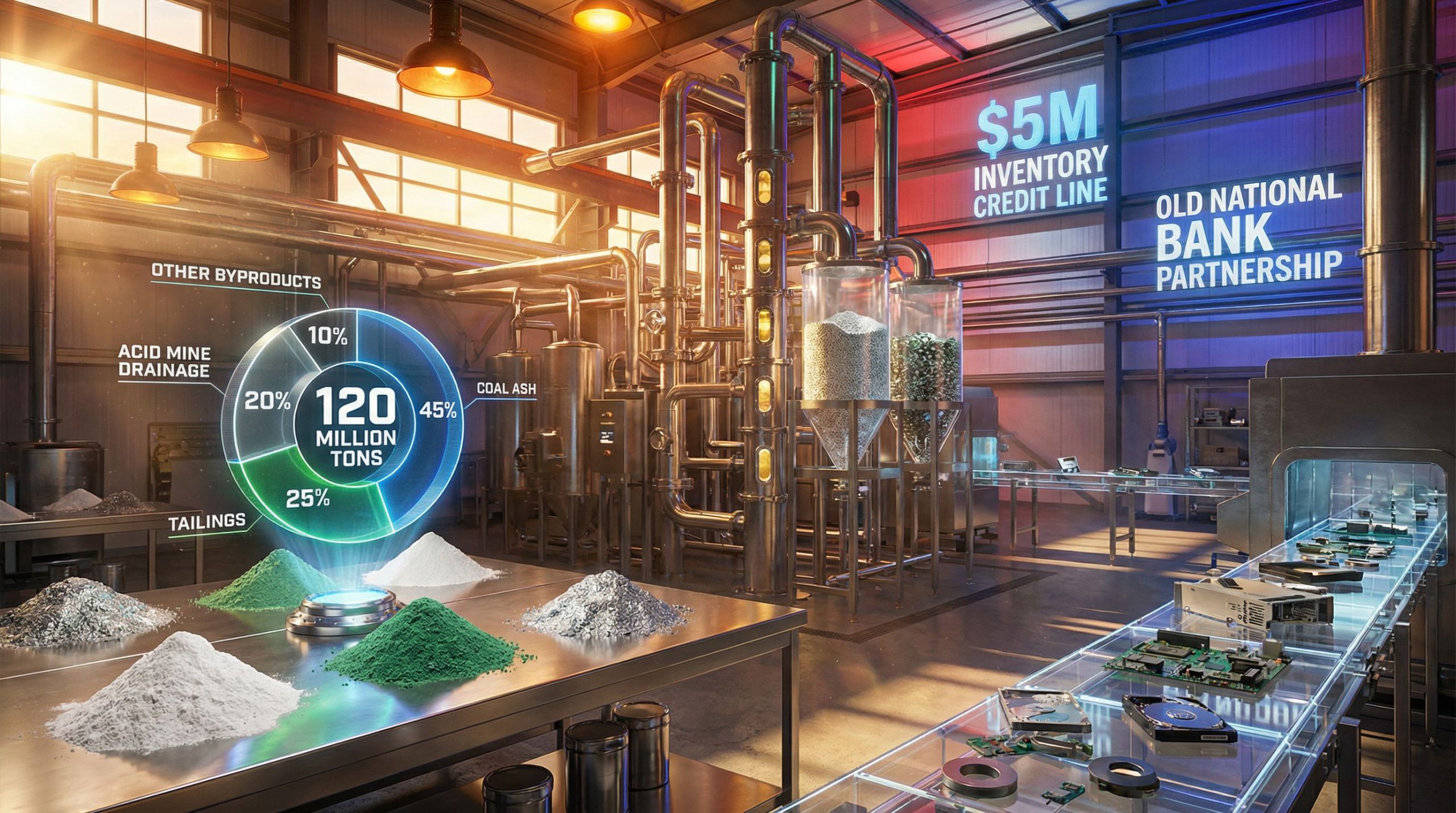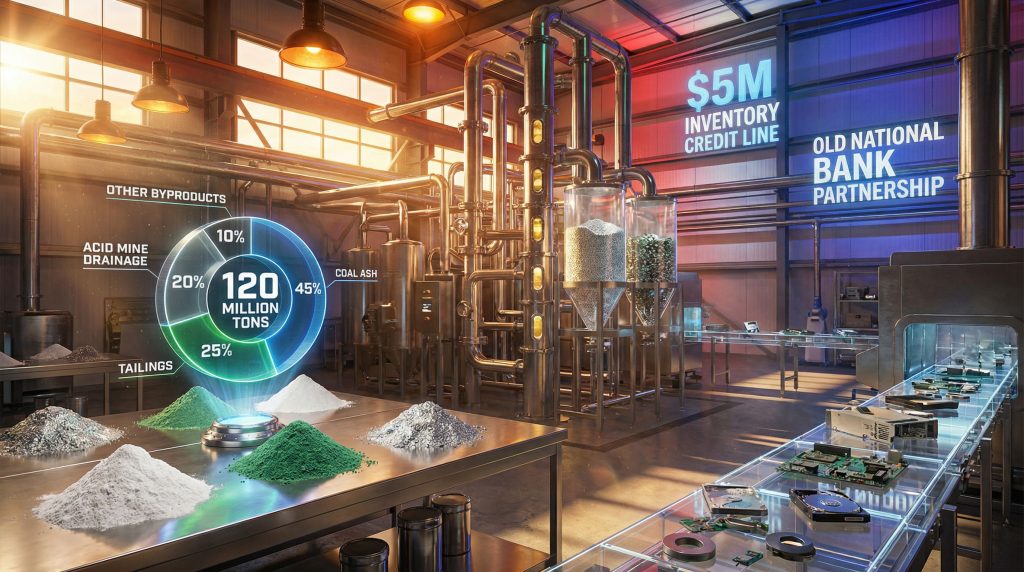
American Resources' comprehensive approach to securing diverse material streams demonstrates how innovative companies are reshaping the critical minerals strategy landscape. The critical minerals sector faces unprecedented challenges in securing reliable feedstock sources while building domestic processing capabilities. Traditional approaches to mineral supply development often rely on single-source extraction models that create vulnerability during market disruptions or geopolitical tensions. However, emerging market leaders are developing sophisticated procurement ecosystems that combine multiple material streams, strategic financing arrangements, and advanced processing technologies to create resilient supply chain architectures.
American Resources feedstock strategy exemplifies this evolutionary approach to mineral sourcing and processing. Rather than pursuing conventional large-scale mining developments, the company has constructed a diversified acquisition model that captures value across recycled materials, legacy industrial assets, and strategic partnerships. This multi-dimensional approach addresses critical industry pain points while positioning the organization for rapid market response during supply chain volatility.
Building Integrated Procurement Networks Through Strategic Capital Allocation
Modern feedstock acquisition requires sophisticated financial infrastructure that enables rapid material procurement across diverse market conditions. Successful mineral processors recognize that working capital access functions as both operational necessity and competitive differentiator in markets characterized by supply uncertainty and price volatility.
The integration of flexible credit arrangements transforms traditional inventory management into strategic market positioning. American Resources' December 2025 credit facility with Old National Bank demonstrates how regional banking partnerships can support specialized industrial development while creating operational flexibility for opportunistic material acquisitions.
Financial Infrastructure Components:
- $5 million inventory credit line providing immediate liquidity access
- Regional banking partnership streamlining approval processes for expansion
- Flexible terms structure adapting to market volatility cycles
- Rapid deployment capability for time-sensitive acquisition opportunities
This financial architecture enables companies to respond immediately when high-quality feedstock becomes available, often through compressed timelines that favor organizations with pre-established credit facilities. CFO Kirk Taylor's emphasis on liquidity and flexibility reflects industry recognition that material availability frequently operates independently of traditional commodity market cycles.
Furthermore, these capital raising methods create significant competitive advantages, particularly when supply chain disruptions affect traditional sourcing networks.
Market Response Capabilities:
The ability to secure materials during market dislocations creates significant competitive advantages, particularly when supply chain disruptions affect traditional sourcing networks.
Credit facility structures enable bulk material acquisitions that would otherwise require extended cash conversion cycles, improving both processing economics and supply security.
Working capital arrangements also facilitate relationship development with material suppliers who require predictable payment terms for consistent delivery schedules. This becomes particularly important when developing recycling partnerships or securing manufacturing scrap from industrial operations.
Diversified Material Sourcing Through Legacy Asset Monetization
The transformation of historical mining assets into critical minerals feedstock represents an innovative approach to supply development that leverages existing infrastructure while addressing environmental remediation objectives. American Resources' control over 120 million tons of pre-mined coal-based byproducts demonstrates how legacy industrial assets can become valuable mineral processing inputs.
Coal Byproduct Processing Advantages:
- Pre-existing material stockpiles eliminating exploration timelines
- Established transportation networks reducing logistics costs
- Existing regulatory permits accelerating processing authorization
- Environmental remediation creating dual value proposition
Coal waste processing addresses multiple market challenges simultaneously. The materials contain rare earth elements and other critical minerals that accumulated during historical coal extraction operations. Processing these byproducts creates economic value while addressing long-term environmental liabilities associated with mining waste storage.
Technical Processing Considerations:
Coal-based feedstocks require specialized processing methodologies that accommodate varying mineral concentrations and impurity profiles. The materials typically contain lower rare earth element concentrations compared to dedicated ore deposits, but the absolute volume potential compensates for reduced grades through economies of scale.
| Material Source | Processing Advantage | Operational Impact |
|---|---|---|
| Pre-mined coal waste | Immediate availability | Eliminates exploration delays |
| Existing infrastructure | Transportation networks | Reduced capital expenditure |
| Regulatory framework | Established permits | Accelerated processing timeline |
| Environmental benefit | Waste remediation | Dual value creation |
Geographic distribution across Kentucky and West Virginia provides access to established coal industry logistics networks, including rail transportation, port facilities, and processing infrastructure. This geographic positioning reduces material handling costs while providing access to skilled industrial workforce with mineral processing experience.
Advanced Recycling Networks Creating Circular Supply Chains
The development of comprehensive recycling partnerships represents a fundamental shift toward circular material flows that capture end-of-life products before they enter waste streams. American Resources' alliance with Electronics Recyclers International (ERI) demonstrates how companies can access national collection infrastructure to secure continuous feedstock supplies from consumer and industrial sources.
Recycling Partnership Components:
- National collection infrastructure through ERI's established network
- Consumer electronics processing capturing hard disk drive magnets
- Industrial equipment recycling securing manufacturing scrap materials
- Automotive component recovery processing electric vehicle motors
Electronics recycling provides access to high-quality permanent magnet materials that contain concentrated rare earth elements. Hard disk drives, electric motors, and magnetic separation equipment typically contain neodymium-iron-boron (NdFeB) magnets with 25-30% rare earth oxide content, significantly higher than traditional ore concentrates.
E-Waste Supply Chain Metrics:
Global electronic waste generation reaches approximately 57-62 million metric tons annually, creating substantial material recovery opportunities. The United States generates roughly 6-7 million metric tons of e-waste per year, with permanent magnet-containing devices representing a significant fraction of this stream.
Recovery Potential Analysis:
- One metric ton of hard disk drive waste contains approximately 0.5-2 kg of rare earth elements
- Optimized permanent magnet recycling could recover 5,000-8,000 tonnes of rare earth oxides annually from U.S. waste streams
- Formal recycling networks capture only 20-25% of available end-of-life magnets currently
The ERI partnership enables American Resources to access materials before they enter informal recycling channels or export markets. This upstream capture creates supply security while supporting domestic value retention from end-of-life products. This approach aligns with the latest battery recycling breakthrough developments that demonstrate improved material recovery techniques.
Material Quality Specifications:
Recycled permanent magnets provide defined stoichiometric compositions that enable targeted extraction processes, reducing processing complexity compared to variable-grade ore concentrates.
End-of-life electronics contain fewer heavy metal impurities than mining-derived materials, improving refining efficiency and reducing waste disposal requirements.
Multi-Element Processing Capabilities Enabling Feedstock Optimization
ReElement Technologies' multi-mineral processing platform creates operational flexibility that allows American Resources feedstock strategy to optimize material sourcing based on availability, pricing, and quality specifications. This technological capability transforms diverse input materials into standardized high-purity outputs through integrated refining systems.
Processing Element Portfolio:
| Element | Symbol | Primary Applications | Processing Complexity |
|---|---|---|---|
| Neodymium | Nd | Permanent magnet manufacturing | Moderate |
| Praseodymium | Pr | Combined NdPr magnet production | Moderate |
| Dysprosium | Dy | High-temperature magnet applications | High |
| Terbium | Tb | Specialized phosphor and magnet uses | High |
| Gadolinium | Gd | Medical and industrial applications | High |
| Yttrium | Y | Electronics and ceramic applications | Moderate |
Multi-feedstock processing addresses critical industry bottlenecks by maximizing facility utilization across different material types and quality grades. Traditional rare earth processing typically focuses on single feedstock sources, creating capacity constraints and supply vulnerability when specific materials become unavailable.
Technical Processing Advantages:
- Flexible input parameters accommodating diverse material compositions
- Element-specific extraction enabling selective recovery optimization
- Integrated purification systems producing magnet-grade specifications
- Waste stream minimization through comprehensive element recovery
The processing platform enables American Resources to switch between feedstock sources based on market conditions, material availability, and economic optimization. During periods of limited recycled material availability, the system can process coal byproducts or conventional concentrates without operational disruption.
How does multi-feedstock processing improve operational efficiency?
Different feedstock sources require specialized processing protocols to maximize element recovery while maintaining product purity specifications. Coal byproducts typically require extended leaching cycles and selective precipitation, while recycled magnets enable direct dissolution and rapid purification.
Industry Context for Processing Flexibility:
U.S. permanent magnet manufacturing operates at approximately 60-70% utilization due to domestic rare earth oxide availability constraints. ReElement's multi-feedstock capability enables optimization for magnet-grade output specifications (≥99.5% purity) regardless of input material composition.
In addition, these developments reflect broader mining evolution trends towards integrated processing solutions.
Blockchain Integration Enhancing Supply Chain Transparency
The December 2025 partnership with SAGINT Inc. introduces comprehensive supply chain traceability that addresses growing regulatory requirements and customer demands for verified sourcing documentation. Blockchain technology creates immutable records that track materials from initial acquisition through final product delivery.
Blockchain Implementation Framework:
- Digital warehouse receipts for all processed materials
- End-to-end traceability from source to refined product
- Compliance verification for regulatory framework requirements
- Customer authentication through transparent sourcing documentation
Supply chain transparency becomes increasingly critical as governments implement domestic sourcing requirements and customers demand conflict-free material verification. The blockchain system enables American Resources to demonstrate material provenance for regulatory compliance and competitive differentiation.
Regulatory Compliance Applications:
- Buy American Act requirements for government contracting
- Section 1502 due diligence for conflict minerals documentation
- Environmental compliance tracking for remediation verification
- Quality assurance documentation for industrial customer requirements
The transparency system also enables real-time inventory management and supply chain optimization. Digital records facilitate rapid material identification, quality verification, and delivery scheduling across multiple feedstock sources and processing batches.
Market Differentiation Through Documentation:
Verified domestic sourcing creates premium market positioning for customers requiring supply chain transparency and regulatory compliance.
Blockchain documentation eliminates verification delays and reduces administrative costs associated with traditional material certification processes.
Strategic Market Positioning Through Integrated Operations
American Resources feedstock strategy creates multiple competitive advantages that extend beyond traditional mineral processing operations. The integration of diverse sourcing channels, flexible financing, and transparent documentation positions the company as a comprehensive domestic alternative to foreign processing capabilities.
Competitive Differentiation Factors:
- Speed-to-market advantage through credit facility enabling rapid acquisition
- Supply security enhancement via multiple independent feedstock channels
- Cost optimization potential through price arbitrage across material sources
- Regulatory compliance alignment with domestic sourcing preferences
The strategic positioning addresses critical industry pain points while creating barriers to competitive entry. New market participants require simultaneous development of processing technology, feedstock sourcing networks, financial arrangements, and regulatory compliance systems.
Market Response Capabilities:
Integrated operations enable American Resources to respond rapidly to supply chain disruptions or price volatility that affect traditional mineral processors. During geopolitical tensions or trade restrictions, domestic feedstock sources provide supply continuity that foreign-dependent competitors cannot match.
Industry Challenge Resolution:
| Challenge | Traditional Response | American Resources Approach |
|---|---|---|
| Feedstock scarcity | Single-source dependence | Multiple procurement channels |
| Processing bottlenecks | Fixed-capacity limitations | Multi-feedstock flexibility |
| Working capital constraints | Cash flow timing issues | Credit facility eliminating delays |
| Supply chain transparency | Limited documentation | Blockchain-verified traceability |
Consequently, these integrated approaches align with data-driven operations that optimise performance across multiple parameters.
Addressing Critical Industry Transformation Requirements
The critical minerals sector faces systematic challenges that require innovative solutions beyond traditional extraction and processing models. American Resources' integrated approach demonstrates how companies can address multiple industry pain points through coordinated strategy implementation rather than isolated technological development.
Systemic Industry Challenges:
- Material sourcing reliability during geopolitical disruption
- Processing capacity constraints limiting domestic production scale
- Financial access limitations restricting rapid market response
- Regulatory compliance complexity increasing operational requirements
The multi-channel feedstock model addresses these challenges through strategic diversification rather than single-point solutions. This approach creates operational resilience that enables continued production during supply chain disruptions that affect competitors with less flexible sourcing arrangements.
What makes the supply chain resilience framework effective?
Multiple feedstock channels ensure material availability even during market disruptions, trade restrictions, or environmental challenges affecting specific supply sources.
Financial flexibility eliminates cash flow constraints that traditionally prevent rapid response to material acquisition opportunities during volatile market conditions.
Processing adaptability maximises facility utilisation across different input materials, improving economic efficiency while reducing dependence on specific feedstock sources.
The approach also demonstrates how established industrial infrastructure can be repurposed for critical minerals development without requiring extensive greenfield investment. Coal industry assets, electronics recycling networks, and regional banking relationships create synergistic value when integrated through strategic coordination.
Implications for Domestic Critical Minerals Development
American Resources feedstock strategy represents a scalable model for domestic critical minerals capacity development that emphasises incremental growth through strategic partnerships rather than large-scale capital projects. This approach may prove more effective for rebuilding U.S. processing capabilities given regulatory, environmental, and financial constraints affecting traditional mining development.
National Strategic Implications:
- Reduced foreign processing dependence for recycled material streams
- Domestic value capture from end-of-life product recovery
- Strategic material stockpiling through coal byproduct reserves
- Technology development for multi-feedstock processing advancement
The integrated approach suggests that U.S. critical minerals independence may emerge through aggregated mid-scale operations rather than singular large-scale mining projects. This distributed development model creates supply chain redundancy while reducing individual project risk and environmental impact.
Industry Development Pathway:
Multiple companies implementing similar multi-channel strategies could create cumulative domestic processing capacity that rivals traditional integrated mining operations. The modular approach enables rapid scaling when market conditions support expansion while maintaining operational flexibility during uncertain periods.
How could this framework influence regional economic development?
Regional implementation of similar strategies across different geographic areas could create distributed critical minerals processing networks that support local employment while contributing to national supply security objectives. The approach leverages existing industrial infrastructure rather than requiring extensive new facility construction.
Technology Transfer Potential:
The multi-feedstock processing technologies developed for American Resources' operations could be licensed or adapted for other domestic processors, accelerating overall industry capacity development. Blockchain transparency systems and recycling network models provide replicable frameworks for industry expansion.
Risk Mitigation Through Diversification:
Distributed processing capacity reduces systemic risks associated with single-point failures that could affect large-scale integrated operations during natural disasters, regulatory changes, or market disruptions.
Multiple material sources create supply redundancy that maintains production continuity even when specific feedstock channels experience temporary limitations.
This strategic framework demonstrates how innovative approaches to feedstock acquisition and processing integration can address complex industry challenges while creating sustainable competitive advantages in the evolving critical minerals market landscape. Furthermore, the USDA's comprehensive biomass supply chain report provides valuable insights into optimising feedstock logistics across distributed networks.
Disclaimer: This analysis is based on publicly available information and industry research. Investment decisions should be based on comprehensive due diligence and professional financial advice. Market conditions, regulatory requirements, and company operations may change significantly over time.
Ready to Capitalise on the Next Critical Minerals Discovery?
Discovery Alert's proprietary Discovery IQ model delivers real-time alerts on significant ASX mineral discoveries, instantly empowering subscribers to identify actionable opportunities ahead of the broader market. Begin your 30-day free trial today and secure your market-leading advantage whilst exploring the full potential of Australia's critical minerals sector.