Locksley Resources Ltd
Locksley Resources Achieves Breakthrough Antimony Recovery Results in Rice University Collaboration
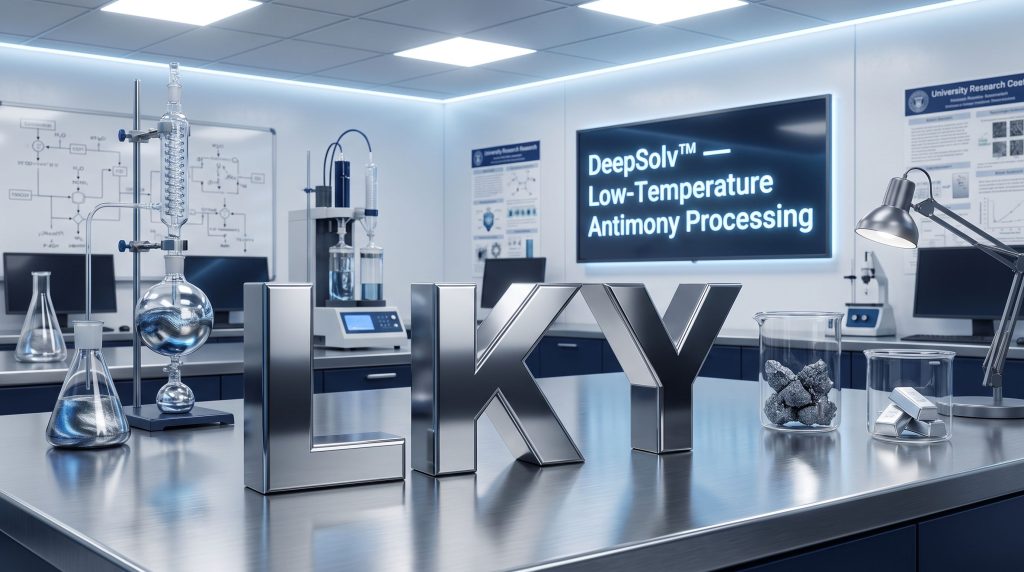
Locksley Resources (ASX: LKY) has reported encouraging laboratory results from its ongoing collaboration with Rice University, marking further progress in the Locksley Resources antimony recovery results with Rice University DeepSolv technology program for domestic U.S. antimony recovery. According to the announcement, the results demonstrate an increasingly integrated processing pathway, extending from raw material dissolution through to the recovery of high-purity antimony oxide and metallic antimony.
When big ASX news breaks, our subscribers know first
What Just Happened: DeepSolv™ Delivers High-Grade Recovery Results
The announcement centres on laboratory demonstration of DeepSolv™ technology, a low-temperature hydrometallurgical process being evaluated as an alternative to traditional high-temperature smelting and conventional chemical leaching for antimony extraction.
According to the company, testing was conducted on material sourced from the Desert Antimony Mine within the Mojave Project in California, with results as follows:
| Feedstock Type | Starting Grade | Recovered Product Grade |
|---|---|---|
| Raw material (no prior concentration) | approximately 9-12% Sb | up to 93% Sb |
| Antimony concentrates | approximately 65-70% Sb | approximately 91-96% Sb |
These figures represent a substantial upgrade in antimony grade reported to have been achieved directly through DeepSolv™ processing, without requiring flotation or prior concentration steps in the case of the raw material.
Beyond the leaching and recovery results, the company reported two further developments:
- Antimony oxide recovery: The Rice University team is reported to have successfully recovered phase-pure antimony oxide from raw material under optimised laboratory conditions, described as an important step towards producing higher-value antimony products.
- Electrodeposition of metallic antimony: Pure metallic antimony was reportedly recovered directly from raw material dissolved using DeepSolv™ technology, supporting the potential for an integrated processing pathway from leaching through to metal recovery.
Together, these outcomes represent progression from individual leaching tests towards a more complete, end-to-end processing demonstration, according to the announcement.
"These latest results represent another important technical milestone in our collaboration with Rice University. They demonstrate that DeepSolv™ processing technology has the potential to unlock a cleaner and more flexible antimony recovery pathway. The work has now moved beyond simple leaching tests and has demonstrated recovery of both antimony oxide and metallic antimony products from raw material and concentrates.
For shareholders, this is meaningful progress. It supports the Company's strategy of advancing U.S. based antimony processing capability at a time when secure domestic supply chains for critical minerals are increasingly important." — Managing Director Kerrie Matthews
Understanding DeepSolv™: Why Does This Technology Matter?
What Is Hydrometallurgy?
Hydrometallurgy is a method of extracting metals from ore or concentrates using liquid chemistry, typically water-based solutions, rather than heat. It stands in contrast to pyrometallurgy, which relies on high-temperature smelting furnaces.
DeepSolv™ is described as a low-temperature hydrometallurgical process, meaning it dissolves and recovers metals at lower energy inputs and temperatures compared with conventional smelting. This distinction is relevant for several reasons:
- Environmental footprint: Lower-temperature processing is generally associated with fewer emissions and waste by-products than high-temperature smelting.
- Flexibility: Hydrometallurgical methods can often be tailored to suit different feedstock types and grades.
- Downstream product options: As reported in this announcement, DeepSolv™ has demonstrated the ability to produce multiple antimony product types, including antimony oxide and metallic antimony, from the same raw material.
Why Does This Matter for Investors?
The ability to produce high-purity, higher-value antimony products from relatively low-grade raw material, without extensive pre-processing, is a key commercial consideration for any prospective processing operation. Furthermore, the additional demonstration of metallic antimony recovery through electrodeposition adds further weight to the case for an integrated domestic processing capability, though the company notes this remains at laboratory scale.
Glossary of Key Terms
| Term | Definition |
|---|---|
| Sb | Chemical symbol for antimony, derived from the Latin "stibium" |
| Hydrometallurgy | Metal extraction using liquid chemical processes rather than heat |
| Electrodeposition | The process of depositing a metal onto a surface using electrical current; in this context, used to recover pure metallic antimony from solution |
| Antimony oxide | A chemical compound of antimony and oxygen used in flame retardants, glass manufacturing, and semiconductor applications |
| Leaching | The process of dissolving metals from ore or concentrates into a liquid solution |
| Flotation | A mineral processing technique used to separate valuable minerals from waste rock using water and chemical reagents |
| Stibnite | The primary ore mineral of antimony (antimony trisulfide), identified visually in the Desert Antimony Mine samples |
| Phase-pure | A material composed of a single chemical phase or compound, indicating high purity |
The Partnership With Rice University
The collaboration with Rice University is structured as a staged technical development program under a formal Sponsored Research Agreement, rather than a one-off research engagement. According to the announcement, key features of the partnership include the following:
- Joint intellectual property ownership. IP generated through the program is jointly owned by Rice University and Locksley, which the company says creates potential long-term strategic value as the technology matures.
- Staged development pathway. The program progresses through laboratory validation, process optimisation, and pilot-scale planning, with each milestone evaluating technical and commercial potential.
- Broader applicability. The knowledge and processing expertise being developed may have application across other suitable U.S.-sourced antimony feedstocks, not only the Mojave Project.
- Pilot-scale orientation. The collaboration is structured with scalability in mind, including evaluation of reactor and filtration systems in a laboratory environment.
The Desert Antimony Mine at the Mojave Project serves as the feedstock source for the current research program. A 325 kilogram batch sample was collected from historical underground workings in October 2025, providing representative antimony-bearing material for testing, as detailed in the accompanying JORC Table 1 disclosures.
What Comes Next: The Development Roadmap
Building on the current laboratory results, the next phase of the DeepSolv™ program covers several parallel workstreams, according to the company.
| Workstream | Focus Area |
|---|---|
| Process optimisation | Further refining DeepSolv™ chemistry and antimony product recovery |
| Purification | Production of single-phase antimony oxide products at higher solid-to-liquid ratios |
| Solvent recyclability | Testing recovery performance using recycled DeepSolv™ solvent to assess process economics |
| Electrodeposition refinement | Deposition rate determination and continued recovery chemistry development |
| Pilot-scale evaluation | Assessment of reactor and filtration systems for larger-scale leaching and recovery test work |
| Downstream assessment | Evaluation of potential applications for recovered antimony products |
The progression from laboratory-scale dissolution towards pilot-scale planning reflects a staged de-risking process, with each phase intended to build on results confirmed at the previous stage.
The Investment Case: Why Does This Announcement Carry Weight?
Locksley's reported DeepSolv™ results, central to the broader Locksley Resources antimony recovery results with Rice University DeepSolv technology story, sit alongside several themes relevant to the broader critical minerals sector.
Antimony Supply and Strategic Importance
Antimony is a critical mineral with limited Western supply. Antimony is used across strategic applications including flame retardants, semiconductors, ammunition, and energy storage technologies. Global antimony supply is concentrated in a small number of countries, a factor the company suggests creates supply chain considerations for Western manufacturers. Consequently, domestic U.S. processing capability for antimony remains limited.
Locksley's Integrated Processing Strategy
The company's approach combines resource development at the Mojave Project with downstream processing work through the Rice University collaboration. Rather than solely extracting and exporting ore, Locksley states it is working towards producing finished or near-finished antimony products domestically.
The DeepSolv™ results support the processing concept at laboratory scale. The reported upgrade of raw material from approximately 9-12% Sb to up to 93% Sb, together with recovery of both antimony oxide and metallic antimony, indicates the processing approach has produced measurable outcomes at this stage of development. However, these figures are laboratory results from representative Mojave Project feedstock, not projections of commercial-scale performance.
In addition, jointly owned IP may offer additional strategic value. Under the shared intellectual property arrangement, Locksley holds a co-ownership position in the processing know-how being developed — an asset the company suggests could extend beyond the Mojave Project itself.
The next major ASX story will hit our subscribers first
Why Investors Should Keep Watching Locksley Resources
Locksley is a small-cap critical minerals company advancing a defined technical strategy, at a time when domestic U.S. processing capability for strategic minerals continues to attract industry attention. The Locksley Resources antimony recovery results with Rice University DeepSolv technology program provides a clear series of upcoming milestones for investors to track.
- Reported laboratory results: The DeepSolv™ outcomes represent measured recovery performance on Mojave Project feedstock, according to the company.
- Staged development pipeline: The Rice University program provides a defined sequence of upcoming technical milestones.
- Joint IP ownership: Co-ownership of DeepSolv™-related intellectual property extends Locksley's position beyond that of a resource developer alone.
- Dual-commodity Mojave Project: The project targets both antimony and rare earth elements, providing exposure across two commodity groups.
- Upcoming catalysts: Pilot-scale equipment evaluation, solvent recyclability testing, and further purification work are scheduled for the next phase of the program.
"Locksley Resources has reported laboratory results indicating its DeepSolv™ technology can upgrade low-grade antimony raw material to high-purity products, including both antimony oxide and metallic antimony. With pilot-scale evaluation and further process optimisation identified as the next phase of work, investors may wish to monitor the company's progress as it seeks to demonstrate processing potential beyond the laboratory setting."
Ready to Learn More About Locksley Resources and the DeepSolv™ Program?
Locksley Resources (ASX: LKY) is advancing a compelling critical minerals strategy — combining domestic U.S. antimony resource development with cutting-edge processing technology through its Rice University collaboration. With high-purity recovery results confirmed at laboratory scale, jointly owned intellectual property, and a defined pilot-scale development roadmap ahead, the company offers investors a clear series of milestones to track. To explore the Mojave Project, the DeepSolv™ program, and Locksley's broader investment case in more detail, visit the official company website at locksleyresources.com.au.