July 21, 2026
Global critical minerals markets are witnessing fundamental shifts as resource-rich nations reassess the balance between environmental protection and economic development. Traditional frameworks established during periods of heightened environmental awareness are now facing pressure from geopolitical supply chain concerns, energy transition demands, and provincial economic realities. These competing forces create complex policy environments where governments must navigate between conservation commitments and critical minerals energy transition objectives.
What Does Argentina's Glacier Mining Reform Mean for Global Commodity Markets?
Argentina's recent legislative changes represent a significant recalibration of South American mineral policy frameworks. The April 2026 passage of the Argentina mining reform bill through the Chamber of Deputies with a 137-111 vote margin demonstrates substantial political momentum behind resource development initiatives. This shift from federal environmental oversight to provincial resource management authority creates new pathways for accessing previously restricted high-altitude mineral deposits.
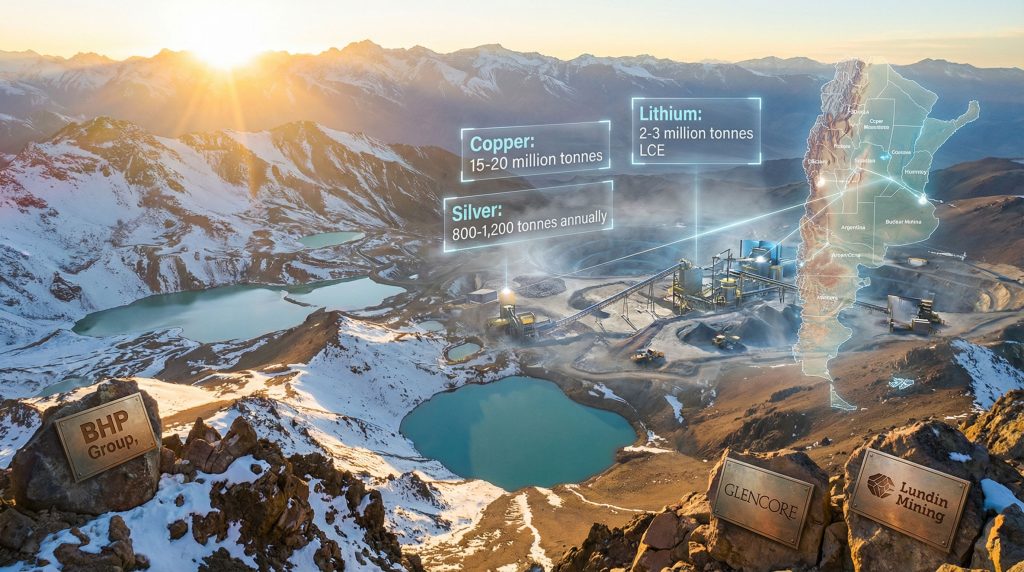
The reform specifically targets copper, lithium, and silver deposits located in glacial and permafrost regions of the Andes Mountains. These commodities represent critical components of global supply chains, particularly for renewable energy infrastructure and battery manufacturing. Furthermore, Argentina's lawmakers have approved a reform to the 2010 National Glacier Law that positions Argentina to potentially capture larger market shares in these strategic minerals sectors.
The Macroeconomic Context Behind Resource Sovereignty Shifts
Resource sovereignty movements across Latin America reflect broader economic pressures facing commodity-dependent nations. Argentina's decision to modify glacier protection standards aligns with regional trends toward maximising extractive industry revenues. Provincial governments increasingly view mineral resources as essential fiscal tools, particularly given limited alternative revenue sources in remote Andean regions.
The five provinces actively supporting the reform (Catamarca, Jujuy, Salta, Mendoza, and San Juan) represent Argentina's primary mining jurisdictions. These provinces participate in formal coordination mechanisms known as the "Lithium Table" and "Copper Table," indicating structured approaches to resource development planning.
Global commodity markets are experiencing supply chain diversification pressures, creating demand for new production sources outside traditional mining jurisdictions. Consequently, the Argentina copper system regulatory shift occurs within this context of heightened supply security concerns among consuming nations, particularly regarding battery metals essential for energy transition technologies.
Provincial Autonomy vs Federal Environmental Controls: A New Economic Framework
The fundamental restructuring of Argentina's resource governance creates a dual-track regulatory system where provinces determine "strategic water function" designations rather than adhering to uniform federal protection standards. This represents a significant departure from the centralised approach established by the 2010 Glacier Law.
Provincial classification systems now hold authority over water resource protection decisions, creating potential for heterogeneous regulatory environments across mining regions. This decentralisation enables provinces to balance environmental considerations against economic development priorities according to local conditions and fiscal needs.
The reform transfers determination of protected water resources from federal environmental agencies to provincial resource management bodies. This shift enables faster project approval processes but introduces potential variations in environmental standards across different jurisdictions within Argentina's mining sector.
When big ASX news breaks, our subscribers know first
How Will Modified Glacier Protection Laws Reshape South American Mining Investment?
Investment flows into South American mining are likely to experience substantial reallocation patterns following Argentina's regulatory modernisation. The legislative timeline, spanning from Senate approval in February 2026 to Chamber of Deputies passage in April 2026, demonstrates rapid policy implementation that suggests government commitment to attracting increased capital deployment.
The 60.1% support margin in the Chamber of Deputies indicates majority backing while acknowledging significant opposition that may create implementation challenges. Mining companies must factor political risk assessments into investment decisions, particularly regarding potential future policy reversals under different political administrations.
Capital Flow Implications for Andean Copper Development
Copper market dynamics are experiencing structural changes as global demand growth outpaces new mine development timelines. Argentina's expanded access to high-altitude deposits addresses this supply-demand imbalance by potentially bringing new reserves into economically viable production categories.
Multinational mining corporations are reassessing their South American portfolios in light of Argentina's regulatory changes. Companies with existing Andean operational experience possess competitive advantages in evaluating new opportunities created by glacier zone access. These advantages include:
- High-altitude operational expertise and equipment capabilities
- Environmental management systems adapted to sensitive ecosystems
- Established relationships with provincial governments and regulatory bodies
- Existing infrastructure networks that can support new project development
- Technical knowledge of Andean geology and processing requirements
Investment risk profiles for Argentine mining projects are evolving as the regulatory framework shifts from restrictive federal oversight to provincial resource management discretion. This change reduces certain regulatory risks whilst introducing new uncertainties related to provincial policy consistency and water resource classification methodologies.
Risk-Adjusted Returns in Previously Restricted Geological Zones
Previously inaccessible geological formations in glacier-adjacent areas may contain mineral concentrations that justify development costs despite challenging operating environments. High-altitude mining operations require specialised equipment and operational procedures that increase capital requirements but may be economically justified by ore grade premiums.
Project economics in glacier zones involve unique cost structures including extended equipment maintenance cycles, specialised workforce requirements, and enhanced environmental management systems. Companies must evaluate whether potential ore values offset these additional operational expenses.
Risk assessment frameworks for glacier zone mining must incorporate climate variability, water resource availability, and potential future regulatory changes. For instance, Argentina approves Milei's bill that eases protections for glaciers despite environmental backlash, highlighting ongoing tensions that investors require comprehensive due diligence processes to address alongside traditional geological and economic evaluations.
Which Critical Minerals Could Benefit from Expanded Access to High-Altitude Deposits?
Strategic mineral development in Argentina's newly accessible zones centres on three primary commodities essential to global energy transition and industrial applications. The focus on copper, lithium, and silver reflects both geological realities and market demand projections for these critical materials.
Copper Supply Chain Diversification Opportunities
Copper market fundamentals suggest substantial supply deficits emerging over the next decade as electrification demands accelerate faster than new mine capacity additions. Argentina's expanded mining access addresses this challenge by potentially bringing significant reserves into development pipelines.
| Commodity | Strategic Importance | Market Drivers | Development Challenges |
|---|---|---|---|
| Copper | Electrical infrastructure | Grid expansion, EVs, renewables | High-altitude logistics, processing |
| Lithium | Battery manufacturing | Electric vehicles, energy storage | Brine processing, water management |
| Silver | Industrial applications | Solar panels, electronics | Byproduct economics, price volatility |
High-altitude copper deposits often exhibit different geological characteristics compared to traditional porphyry systems, potentially offering grade advantages that compensate for increased extraction costs. Specialised mining techniques may be required for glacier-adjacent operations, creating opportunities for companies with advanced technical capabilities.
Infrastructure development requirements for copper projects in previously restricted zones include road construction, power supply systems, and processing facility development. These capital-intensive requirements favour larger mining companies with substantial financial resources and project development experience.
Lithium Triangle Expansion and Battery Metal Security
Argentina's position within the "Lithium Triangle" (encompassing parts of Argentina, Bolivia, and Chile) becomes more significant with expanded access to high-altitude brine deposits and hard-rock lithium resources. This geographic concentration of lithium resources provides strategic advantages for integrated battery supply chain development.
Battery metal security concerns among automotive manufacturers and technology companies drive demand for diversified lithium supply sources. Additionally, Argentina lithium insights create opportunities for direct investment partnerships between lithium developers and end-user industries seeking supply chain security.
Processing technology considerations become critical for glacier-zone lithium development, as traditional evaporation pond methods may not be suitable for high-altitude, cold-weather environments. Advanced lithium extraction technologies may be required, potentially increasing initial capital requirements but offering faster production ramp-up timelines.
Market Analysis: Global lithium demand projections suggest potential supply shortfalls beginning in the late 2020s, creating favourable pricing environments for new production sources. Argentina's expanded mining access addresses this supply gap through both brine and hard-rock lithium development opportunities.
What Are the Economic Trade-offs Between Environmental Protection and Resource Development?
Environmental protection and resource development tensions in Argentina's mining policy reflect broader economic pressures facing provincial governments with limited revenue diversification options. The trade-offs involve immediate economic benefits from mining royalties against long-term environmental risks associated with glacier zone industrial activity.
Cost-Benefit Analysis of Water Resource Management vs Mining Revenue
Water resource economics in high-altitude mining environments require sophisticated management systems that balance industrial consumption against downstream agricultural and municipal users. Mining operations in glacier-adjacent areas must implement comprehensive water recycling and treatment technologies to minimise environmental impacts.
Provincial revenue structures in Argentina's mining regions demonstrate significant dependencies on extractive industry contributions through royalties, employment, and indirect economic multiplier effects. These economic relationships create strong incentives for provincial governments to support mining development despite environmental concerns.
Environmental compliance costs for glacier zone mining operations include specialised waste management systems, enhanced monitoring protocols, and restoration bonding requirements. These additional expenses must be factored into project economics alongside traditional mining operational costs.
The opportunity cost analysis of maintaining glacier protection versus enabling mineral development involves quantifying both immediate economic benefits and potential long-term environmental damages. This calculation becomes complex when considering global climate change mitigation benefits from renewable energy infrastructure enabled by increased mineral supply.
Provincial Fiscal Dependencies on Extractive Industries
Regional economic development in Argentina's Andean provinces relies heavily on mining-related activities due to limited alternative industrial development opportunities. Geographic constraints and transportation costs make mining one of the few economically viable industries for these remote areas.
Employment impacts from expanded mining access extend beyond direct mining jobs to include construction, transportation, and service sector positions that support mining operations. These employment multiplier effects become particularly significant in provinces with limited economic diversification.
Infrastructure development associated with mining projects often provides broader regional benefits including improved road networks, power supply systems, and telecommunications infrastructure. These public goods create positive externalities that extend beyond mining operations to benefit broader provincial economies.
Tax revenue generation from mining operations includes not only royalty payments but also corporate income taxes, employee income taxes, and indirect taxes from increased economic activity. Provincial governments must weigh these fiscal benefits against environmental management costs and potential future liabilities.
How Does This Reform Align with Global Critical Minerals Supply Chain Strategies?
International critical minerals policy frameworks are increasingly emphasising supply chain diversification and strategic partnership development. Argentina's regulatory changes align with these global trends by creating new opportunities for bilateral resource cooperation agreements and private sector investment partnerships.
US-Argentina Critical Minerals Partnership Implications
United States critical minerals strategy emphasises developing alternative supply sources for materials essential to renewable energy and defence technologies. Argentina's expanded mining access creates opportunities for enhanced bilateral cooperation through trade agreements, technical assistance programmes, and investment facilitation mechanisms.
Technology transfer opportunities may emerge as US companies seek to develop Argentine mining projects using advanced extraction and processing technologies. These partnerships could accelerate project development timelines whilst ensuring compliance with international environmental and labour standards.
Strategic stockpile considerations influence US government interest in diversified critical minerals supply chains. Argentina's potential copper and lithium production increases could contribute to American strategic reserve objectives whilst reducing dependence on geopolitically sensitive supply sources.
China's Influence on South American Resource Policy
Chinese investment strategies in South American mining have historically focused on securing long-term supply agreements for industrial commodities. Argentina's regulatory changes may attract increased Chinese capital deployment, potentially creating competitive dynamics with Western investment sources.
Processing capacity development represents a key component of Chinese resource strategy, as companies seek to control value-added manufacturing stages rather than purely raw material extraction. Argentine projects may face choices between different international partnership models offering varying levels of local value addition.
Market access considerations become significant as Chinese companies possess established supply chains for battery manufacturing and renewable energy equipment production. These downstream capabilities may provide competitive advantages in developing Argentine lithium and copper projects.
European Union's Raw Materials Act Response Mechanisms
European Union critical raw materials legislation emphasises supply chain resilience and strategic autonomy objectives. Argentina's mining reform aligns with EU preferences for diversified supply sources outside Chinese sphere of influence.
Environmental standards requirements under EU trade agreements may influence how Argentine mining projects develop operational protocols. Compliance with European environmental and social governance (ESG) standards could become necessary for accessing European markets and investment capital.
Technical cooperation opportunities exist for European technology companies to provide advanced mining equipment and environmental management systems for Argentine projects. These partnerships could facilitate knowledge transfer whilst ensuring projects meet international sustainability standards.
What Investment Frameworks Will Emerge Under the New Regulatory Structure?
Investment frameworks for Argentina's expanded mining sector require adaptation to the new provincial regulatory environment whilst maintaining compliance with international environmental and financial standards. The transition from federal oversight to provincial authority creates both opportunities and challenges for project development financing.
RIGI (Large Investment Incentive Regime) Integration Opportunities
Argentina's Large Investment Incentive Regime (RIGI) provides fiscal incentives and regulatory streamlining for substantial mining projects. Integration between RIGI benefits and the new glacier mining access creates attractive investment propositions for major mining companies with significant capital deployment capabilities.
Currency stability provisions within RIGI frameworks become particularly important for mining projects with extended development timelines and substantial foreign exchange exposure. These protections help mitigate Argentina's historical currency volatility risks that have previously deterred international mining investment.
Tax incentive structures under RIGI may provide accelerated depreciation, reduced royalty rates, and customs duty exemptions for qualifying mining projects. These benefits must be evaluated alongside project-specific economics to determine overall investment attractiveness.
Provincial Classification Systems for "Strategic Water Function"
Water resource classification methodologies vary across provinces, creating potential for different regulatory approaches to similar geological situations. Investors must understand provincial-specific classification criteria to evaluate project feasibility and regulatory compliance requirements.
Technical standards for determining "strategic water function" designations may evolve as provinces gain experience implementing the new regulatory framework. Early project developers may face uncertainty regarding classification criteria, whilst later investors benefit from established precedents.
Appeals processes and review mechanisms for provincial water resource decisions require clear definition to provide investor certainty. The absence of standardised review procedures could create investment risks if provincial decisions lack predictability or consistency.
Foreign Direct Investment Risk Assessment Models
Political risk assessment for Argentine mining projects must incorporate both national-level policy stability and provincial-level regulatory consistency. The new framework creates additional complexity as investors must evaluate multiple jurisdictional layers affecting project development.
Currency hedging strategies become essential components of investment planning given Argentina's macroeconomic volatility. Mining projects with extended development periods require sophisticated financial instruments to manage foreign exchange and inflation risks.
Insurance markets for Argentine mining projects may require specialised products addressing provincial regulatory risks alongside traditional mining operational hazards. These insurance costs must be factored into project economics during feasibility assessment phases.
The next major ASX story will hit our subscribers first
Which Multinational Mining Companies Stand to Benefit Most?
Market positioning advantages in Argentina's expanded mining sector favour companies with existing South American operational experience and technical capabilities suited to high-altitude mining environments. Strategic advantages include established provincial government relationships, regional logistics expertise, and environmental management systems adapted to sensitive ecosystems.
Tier-1 Operators with Existing Andean Exposure
Major mining corporations with established Andean operations possess infrastructure advantages that facilitate expansion into newly accessible Argentine deposits. These companies benefit from existing regional supply chains, trained workforces, and regulatory compliance systems that reduce project development risks and timelines.
- BHP Group: Operational expertise in large-scale copper developments with potential application to Argentine high-altitude projects
- Glencore: Integrated commodity trading capabilities that provide market access advantages for new production
- Freeport-McMoRan: Technical capabilities in complex geological environments suitable for glacier-adjacent operations
Financing capabilities of tier-1 operators enable development of capital-intensive projects requiring substantial upfront investment for infrastructure development in remote locations. Access to debt and equity capital markets provides competitive advantages over smaller developers.
Technology transfer opportunities allow major companies to deploy advanced mining and processing technologies in Argentine projects. These technological advantages may enable economic extraction from deposits that would be uneconomical for companies lacking sophisticated technical capabilities.
Mid-Tier Developers with Glacial Zone Assets
Regional mining companies with existing Argentine land positions in previously restricted areas may experience significant asset value appreciation following the regulatory change. These companies possess first-mover advantages in specific geographic areas with established geological knowledge and permitting relationships.
Partnership opportunities exist for mid-tier developers to collaborate with major operators through joint ventures, earn-in agreements, or acquisition transactions. These structures allow smaller companies to monetise their land positions whilst providing larger operators with project access.
Development timelines for mid-tier companies may be accelerated through strategic partnerships that provide technical expertise and financial resources. These arrangements can reduce project risks whilst maintaining equity participation for original asset holders.
Junior Exploration Companies in Previously Restricted Areas
Exploration-stage companies with land holdings in glacier-adjacent areas face significantly improved development prospects following the regulatory change. These companies may attract increased investor interest and potential acquisition premiums from larger operators seeking project portfolios.
Capital raising opportunities for junior miners improve substantially with expanded mining access, as projects previously considered stranded assets gain economic viability. However, mining trends and innovation suggest that venture capital and private equity investors may increase allocation to Argentine exploration projects.
Technical due diligence requirements increase for junior companies as they advance projects from exploration toward development phases. Partnerships with established operators can provide access to technical expertise whilst sharing development risks and capital requirements.
What Are the Long-term Macroeconomic Implications for Argentina's Export Profile?
Argentina's economic transformation potential centres on diversifying export revenue sources away from traditional agricultural commodities toward higher-value mining products. This structural shift could provide currency stability benefits and reduced exposure to agricultural commodity price volatility.
Commodity Export Diversification Beyond Agricultural Products
Export profile transformation represents a fundamental economic strategy shift for Argentina, traditionally dependent on agricultural products for foreign exchange earnings. Mining development in previously restricted areas could substantially alter the country's export composition over the next decade.
| Export Sector | Current Share | Projected Growth | Value Addition Potential |
|---|---|---|---|
| Agricultural Products | ~50% | Moderate | Processing, logistics |
| Mining Products | ~8% | High | Refining, manufacturing |
| Energy Resources | ~12% | Moderate | LNG, renewables |
| Manufacturing | ~30% | Variable | Technology, automotive |
Value-added processing opportunities emerge as mining production increases, potentially enabling development of refining and manufacturing capabilities that capture additional economic value beyond raw material exports. These downstream industries create employment multiplier effects and technological knowledge transfer benefits.
Foreign exchange earnings stability improves with diversified export portfolios that reduce dependence on agricultural commodity price cycles. Mining exports provide different price dynamics and demand patterns that can offset agricultural sector volatility.
Currency Stabilisation Through Hard Commodity Earnings
Macroeconomic stability benefits from increased mining exports include improved current account balances and reduced pressure on Argentina's currency. Hard commodity exports provide reliable foreign exchange earnings that support monetary policy objectives and external debt servicing capabilities.
Balance of payments improvements from mining exports could reduce Argentina's historical reliance on international monetary fund assistance and external borrowing. Sustained hard currency earnings enable more independent monetary policy implementation and reduced vulnerability to external financial shocks.
Investment capital inflows associated with mining development provide additional foreign exchange benefits beyond export earnings. Direct foreign investment in mining projects brings capital equipment, technology transfer, and ongoing operational revenues that strengthen Argentina's external financial position.
Infrastructure Investment Requirements and Economic Multipliers
Transportation infrastructure development becomes essential to support mining operations in remote high-altitude locations. Road, rail, and port infrastructure investments create economy-wide benefits extending beyond mining sector applications.
Power supply infrastructure requirements for mining operations may accelerate renewable energy development in Argentina's Andean regions. Solar and wind power potential in these areas could support both mining operations and broader electrification objectives.
Economic multiplier effects from mining investment extend through construction services, equipment supply, maintenance services, and local procurement opportunities. These indirect economic benefits often exceed direct mining employment in terms of regional economic impact.
How Will Environmental Opposition Groups Influence Implementation Timelines?
Environmental advocacy organisations maintain significant influence over mining project development through legal challenge mechanisms, public opinion campaigns, and international pressure strategies. The implementation timeline for the Argentina mining reform bill will likely face sustained opposition requiring careful political and legal management.
Legal Challenge Strategies and Judicial Review Processes
Constitutional challenges to the glacier mining reform may emerge through Argentina's judicial system, potentially creating delays or modifications to implementation timelines. Environmental organisations possess technical legal expertise and may coordinate multi-jurisdictional challenge strategies.
Provincial-level legal challenges represent another potential avenue for opposition, as environmental groups may argue that provincial water classification systems fail to provide adequate protection compared to previous federal standards. These challenges could vary by province depending on local political dynamics.
International legal mechanisms through environmental treaties or trade agreements may provide additional venues for challenging the reform implementation. These international processes could create reputational risks for mining companies and potential complications for project financing.
International Environmental Pressure and Trade Implications
European Union trade relationships with Argentina include environmental compliance requirements that may influence how mining projects develop operational protocols. Non-compliance with international environmental standards could affect market access for Argentine mineral exports.
International environmental organisations maintain capacity to influence public opinion in consuming countries, potentially affecting demand for Argentine mineral products. Corporate customers may implement sourcing policies that exclude minerals from environmentally controversial operations.
ESG investment criteria applied by international financial institutions and pension funds could affect capital availability for Argentine mining projects if environmental opposition creates reputational concerns. Furthermore, silver market dynamics show that these financing constraints may extend project development timelines or increase capital costs.
Corporate ESG Compliance Requirements in Glacial Mining Operations
Environmental management systems for glacier-zone mining operations must meet increasingly sophisticated international standards to satisfy corporate ESG requirements. These systems often exceed minimum regulatory compliance to address stakeholder expectations and risk management objectives.
Third-party environmental monitoring and verification services become essential components of project development to provide credible assurance regarding environmental performance. These monitoring systems require ongoing investment and may influence operational procedures.
Stakeholder engagement programmes must address environmental concerns through transparent communication and community involvement processes. Effective stakeholder management can reduce opposition intensity whilst building social licence for mining operations.
What Regional Competitive Dynamics Will Emerge in South American Mining?
Regional competition for mining investment within South America will intensify as Argentina's regulatory changes alter the competitive landscape for mineral development. Neighbouring countries may respond with their own policy modifications to maintain competitiveness for international mining capital.
Chile's Response to Argentina's Regulatory Liberalisation
Chilean mining policy may require reassessment to maintain the country's traditional advantages in South American copper production. Argentina's expanded access to high-altitude deposits creates new competitive pressures for Chilean operations and potential projects.
Infrastructure advantages in Chile include established ports, power supply systems, and transportation networks that provide ongoing competitive benefits despite Argentina's regulatory changes. These infrastructure assets may become more valuable as regional competition intensifies.
Investment promotion strategies in Chile may evolve to emphasise political stability, established regulatory frameworks, and operational expertise advantages over newer Argentine opportunities. Marketing positioning will likely focus on risk-adjusted returns rather than purely regulatory flexibility.
Peru's Mining Investment Attraction Strategies
Peruvian competitive responses may include regulatory streamlining initiatives, tax incentive modifications, or infrastructure investment programmes designed to maintain mining sector competitiveness. Peru's established mining industry provides operational expertise advantages that newer Argentine projects lack.
Regional cooperation opportunities may emerge between Peru and Argentina for shared infrastructure development, technical expertise exchange, and joint marketing of South American mining capabilities to international investors.
Political stability comparisons become relevant factors as investors evaluate regional alternatives. Peru's mining sector experience and regulatory predictability may offset Argentina's newer regulatory flexibility in investment decision frameworks.
Bolivia's Lithium Nationalisation vs Argentina's Private Investment Model
Policy contrast analysis between Bolivia's state-controlled lithium development and Argentina's private investment approach creates natural experiments in resource development strategies. Investment outcomes may influence future policy decisions across the region.
Technical development capabilities differ significantly between state-led and private investment models, with potential implications for project timelines, technology adoption, and operational efficiency. These differences may become evident as projects advance through development phases.
Market access strategies vary between nationalised operations and private company developments, with private operators potentially providing superior international marketing and supply chain integration capabilities.
Strategic Outlook: Argentina's Position in the Global Resource Economy
Argentina's long-term positioning within global resource markets depends on successful implementation of the glacier mining reform whilst maintaining environmental credibility and operational efficiency. The country's potential to become a major supplier of critical minerals requires sustained policy consistency and continued international investment attraction.
Competitive Advantages in High-Altitude Mining Technology
Technical expertise development in high-altitude mining operations could become a competitive advantage for Argentine operations and service companies. Experience gained through glacier-zone mining may create exportable knowledge and technology services for similar operations globally.
Environmental management innovations developed for sensitive glacier environments may provide technological advantages applicable to mining operations in other environmentally challenging locations. These innovations could create intellectual property and consulting service opportunities.
Operational efficiency gains from high-altitude mining experience may reduce costs over time as companies optimise equipment, procedures, and logistics systems. These efficiency improvements enhance long-term competitiveness in global commodity markets.
Integration with Regional Infrastructure Development Projects
Transportation corridor development connecting Argentine mining areas with ports and processing facilities may integrate with broader South American infrastructure initiatives. Regional connectivity improvements benefit multiple countries and economic sectors beyond mining.
Power grid integration across South American countries could enable efficient energy sharing to support mining operations whilst providing broader economic benefits. Renewable energy development in mining regions may contribute to regional clean energy objectives.
Supply chain optimisation through regional cooperation may reduce logistics costs and improve delivery reliability for Argentine mineral exports. Integrated regional approaches could enhance overall South American competitiveness in global markets.
Long-term Sustainability of the Provincial Classification System
Regulatory framework evolution will likely occur as provinces gain experience implementing water resource classification systems. Learning from early implementation may lead to improved procedures and more predictable outcomes for future projects.
Political sustainability of the Argentina mining reform bill depends on successful balancing of environmental protection and economic development objectives. Demonstrable environmental protection alongside economic benefits will be essential for maintaining public support.
International acceptance of Argentina's regulatory approach will influence market access and investment attractiveness over time. Credible environmental management and transparent governance will be crucial for maintaining international confidence in Argentine mining operations.
This analysis reflects conditions and projections current as of April 2026. Mining investments involve substantial risks including commodity price volatility, regulatory changes, environmental liabilities, and operational challenges. Investors should conduct comprehensive due diligence and seek professional advice before making investment decisions.
Want to Stay Ahead of the Next Mining Investment Wave?
Discovery Alert's proprietary Discovery IQ model delivers instant notifications when significant ASX mineral discoveries break, helping investors capitalise on opportunities like the Argentina mining boom discussed above. Start your 14-day free trial today and join thousands of investors who rely on real-time intelligence to identify actionable trading opportunities before the broader market responds.