The Strategic Imperative Behind Australia's Clean Steel Research Revolution
Global decarbonisation pressures are reshaping industrial priorities across commodity-dependent economies, with steel production emerging as a critical battleground for competitive positioning. Australia finds itself uniquely positioned at the intersection of abundant iron ore reserves, advanced renewable energy potential, and increasing carbon accountability requirements from international markets.
The establishment of coordinated research initiatives represents more than environmental compliance—it reflects strategic economic positioning in markets where carbon intensity increasingly determines competitive advantage. With steel production contributing approximately 8% of global CO2 emissions while iron ore exports generate 18–20% of Australia's national export revenue, the imperative extends beyond regulatory requirements to long-term economic resilience.
Traditional steelmaking processes face accelerating obsolescence as carbon border adjustments and sustainability requirements reshape global trade dynamics. Australia's response through university-led research initiatives demonstrates institutional recognition that resource abundance alone cannot sustain competitive advantage in carbon-conscious markets. Furthermore, these cleaner steelmaking initiatives represent a strategic shift towards sustainable industrial practices that will define future competitiveness.
What Makes Australia's Approach to Clean Steelmaking Fundamentally Different?
Multi-Institutional Collaboration Framework
The ARC Research Hub for Smart Process Design and Control at Monash University represents a departure from conventional research models, integrating academic capabilities with industrial partnerships including Rio Tinto and Baowu Steel. This coordinated approach contrasts sharply with traditional siloed research and development methodologies that often fail to achieve commercial scalability.
Monash University's national hub establishes a comprehensive framework for reducing steel production emissions through innovative research and development. The initiative demonstrates how academic excellence can be leveraged to address critical environmental challenges.
Hub Director Sankar Bhattacharya emphasises the transformative potential of integrated collaboration: The initiative aims to create smarter, cleaner and more efficient steelmaking processes through combining simulation, artificial intelligence and industrial testing to transform one of the world's most critical industries while utilising diverse Australian ore compositions and maintaining competitive positioning in global markets.
The framework establishes four interconnected capability domains:
• Advanced computational modelling for process optimisation across varying ore grades
• AI-driven process control enabling real-time parameter adjustment
• Industrial-scale testing infrastructure bridging laboratory research and commercial application
• Cross-border knowledge transfer mechanisms facilitating rapid technology deployment
This multi-institutional architecture accelerates the traditional research-to-commercialisation timeline by eliminating typical barriers between academic research, pilot testing, and industrial implementation phases.
Resource-to-Technology Integration Strategy
Australia's competitive differentiation derives from developing clean steelmaking technologies specifically optimised for domestic iron ore characteristics. Unlike regions dependent on imported raw materials, this integrated approach transforms ore diversity from a processing challenge into a technological advantage.
Australian iron ore deposits exhibit significant variation in grade, mineral composition, and impurity profiles across different geological formations. The cleaner steelmaking initiative leverages this diversity by developing process parameters tailored to specific ore characteristics, creating proprietary technological advantages that foreign competitors cannot readily replicate.
The resource-to-technology integration encompasses:
Ore-Specific Process Development: Hydrogen-based direct reduction and electric arc furnace parameters optimised for varying silica content, phosphorus levels, and mineral assemblages found in Australian deposits.
Supply Chain Optimisation: Co-location strategies for renewable energy generation, hydrogen production, and steel processing to minimise transportation costs and energy losses.
Quality Advantage Creation: Development of premium steel products leveraging the consistent quality characteristics of high-grade Australian iron ore through tailored processing methods. In addition, Australia's iron ore leadership provides significant strategic advantages in global markets.
Which Technologies Are Driving Australia's Clean Steel Innovation Pipeline?
Hydrogen-Based Direct Reduction Pathways
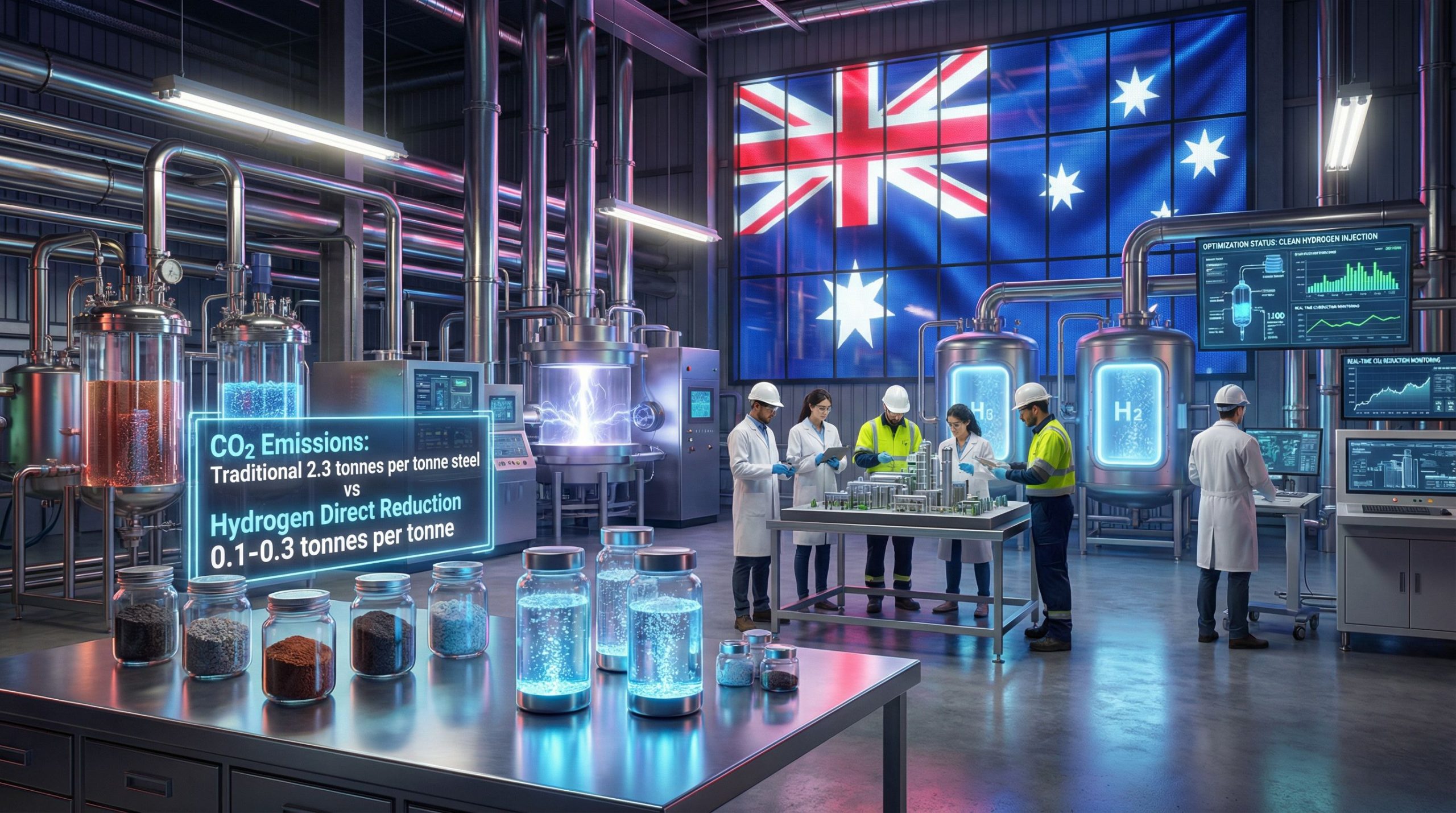
Hydrogen direct reduction technology represents the most promising pathway for eliminating carbon emissions from primary steel production. The process involves reducing iron oxide using hydrogen gas at temperatures between 600–750°C, producing metallic iron and water vapour rather than carbon dioxide.
| Technology Comparison | Traditional BF-BOF | Hydrogen Direct Reduction | Electric Arc Furnace |
|---|---|---|---|
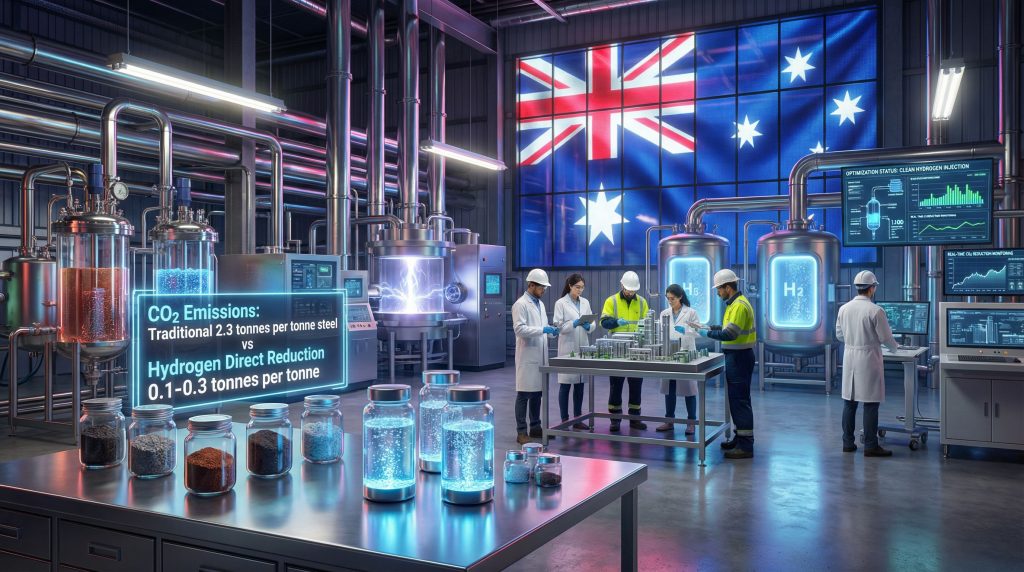
| CO2 Emissions (tonnes/tonne steel) | 2.3 | 0.1–0.3 | 0.4–0.6 |
| Primary Energy Source | Coking coal | Green hydrogen | Renewable electricity |
| Scrap Steel Utilisation | 15–25% | Variable | 90–100% |
| Capital Investment Premium | Baseline | 150–200% | 80–120% |
The technology pathway encompasses three integrated development streams:
Green Hydrogen Production Integration: Direct coupling of renewable energy infrastructure with electrolysis facilities to produce hydrogen specifically allocated for steel reduction processes, eliminating fossil fuel dependency in hydrogen generation.
Plasma Smelting Reduction Processes: Advanced plasma technologies achieving higher reduction temperatures through alternative energy inputs, completely eliminating coking coal requirements while maintaining production efficiency.
Hybrid System Architecture: Combining hydrogen reduction with electric arc furnace technology to optimise energy efficiency, accommodate varying scrap steel availability, and achieve superior final product specifications.
Commercial viability demonstrations are advancing rapidly, with Rio Tinto committing to supply 70% of iron ore for a new hydrogen-based steelmaking plant in Austria, representing one of the first large-scale implementations of the technology pathway.
AI-Powered Process Optimisation
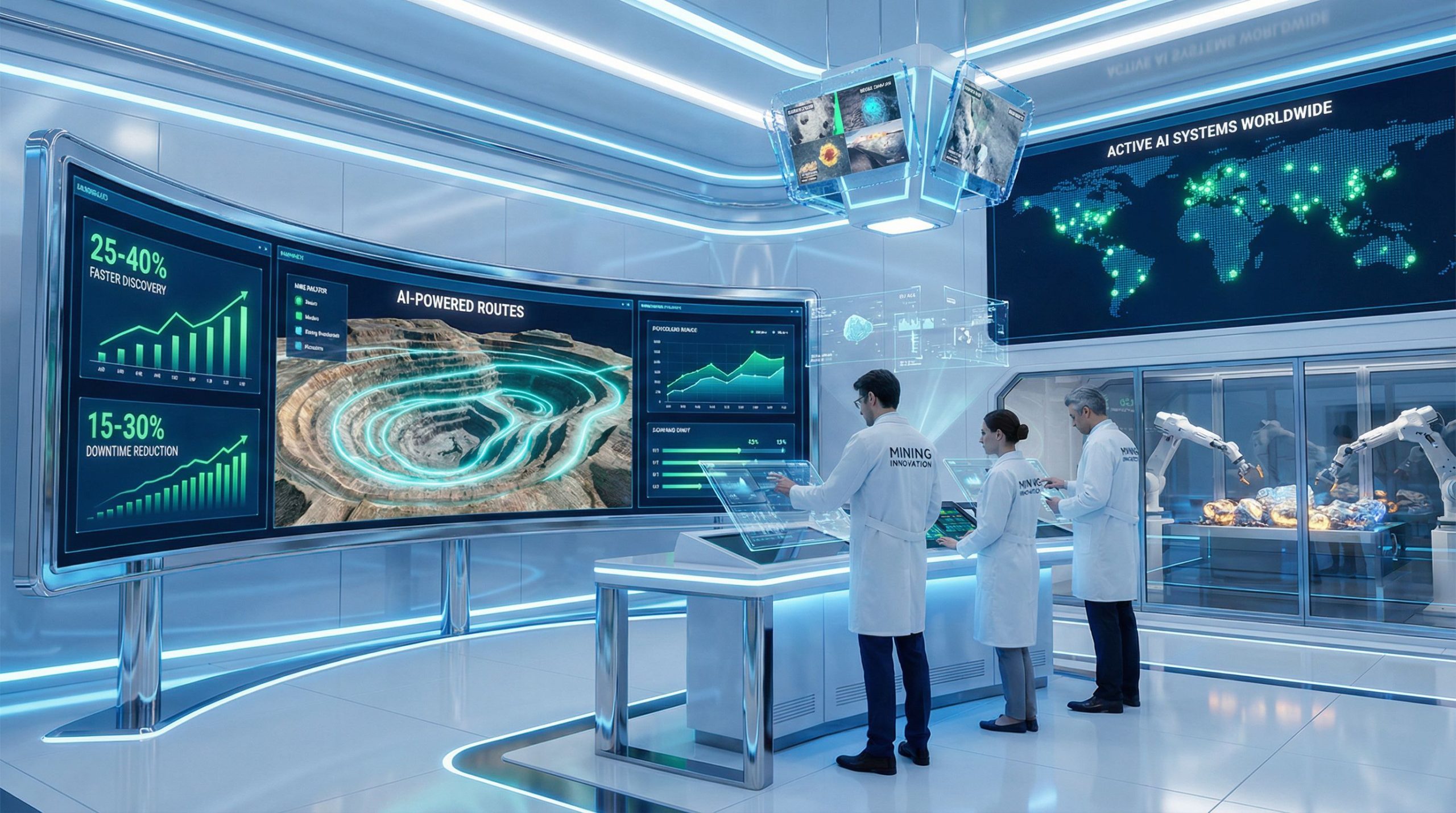
Machine learning integration across steelmaking processes enables dynamic optimisation impossible with traditional fixed-parameter control systems. The artificial intelligence applications target four critical optimisation domains, and AI revolution insights suggest significant transformative potential across industrial sectors.
Predictive Ore Blending: Algorithms analyse ore grade heterogeneity from multiple sources to predict optimal blending ratios that minimise CO2 emissions during reduction while maintaining product quality specifications.
Energy Consumption Forecasting: AI models process historical production data to identify energy consumption patterns, enabling proactive equipment efficiency adjustments and production scheduling aligned with renewable energy availability.
Intelligent Thermal Management: Machine learning systems identify waste heat recovery opportunities and optimise thermal recirculation patterns, achieving incremental efficiency improvements across production cycles.
Quality Control Enhancement: Computer vision and sensor fusion technologies enable real-time monitoring with predictive quality assessment, reducing rework requirements and associated emissions.
The integrated AI approach represents a fundamental shift from reactive process control to predictive optimisation, potentially achieving 15–25% efficiency improvements across existing steelmaking infrastructure while facilitating transition to cleaner production methods.
How Does Australia's 2035 Emissions Target Reshape Steel Industry Dynamics?
Regulatory Framework Implications
The Federal Government's 2035 emissions reduction target requiring 62% reduction below 2005 levels creates significant structural changes across Australia's steel production sector. This regulatory framework fundamentally alters capital allocation decisions and operational strategies for existing producers.
The policy environment generates four immediate impact categories:
Accelerated Depreciation Pressures: Traditional blast furnace-basic oxygen furnace equipment faces shortened economic lifespans as regulatory stringency increases, creating stranded asset risks for operators unable to transition to cleaner technologies.
Carbon Pricing Implementation: Anticipated carbon pricing mechanisms affecting operational economics through direct emissions costs, fundamentally altering the cost structure comparison between traditional and clean steelmaking processes.
Green Steel Procurement Preferences: Government infrastructure projects increasingly specify low-carbon steel requirements, creating guaranteed demand streams for producers achieving emissions reduction benchmarks.
Export Market Positioning: Alignment with international carbon measurement standards becomes essential for maintaining access to European and North American markets implementing carbon border adjustment mechanisms. For instance, decarbonisation economic benefits demonstrate the financial advantages of transitioning to sustainable practices.
Investment Flow Redirection
Regulatory certainty enables capital reallocation toward clean technology development across four priority areas representing approximately 20–30% redirection of industry capital expenditure:
-
Research Infrastructure Expansion: University-based computational facilities, pilot-scale testing equipment, and sensor networks supporting process development
-
Pilot-to-Commercial Facility Construction: Hydrogen direct reduction plants, plasma smelting reduction prototypes, and hybrid electric arc furnace configurations
-
Renewable Energy Integration: Co-location of solar and wind generation with steelmaking facilities, including grid-scale battery storage systems for energy security
-
Workforce Development Programming: Comprehensive retraining initiatives, apprenticeships, and skills certification for emerging clean steelmaking technologies
The Western Australian Government's commitment to highlighting green steel as a cornerstone of upcoming infrastructure projects provides demand certainty enabling private sector investment confidence in clean technology deployment.
What Role Do International Partnerships Play in Australia's Clean Steel Strategy?
Strategic Alliance Analysis
International partnerships serve dual functions in Australia's clean steel development: technology transfer acceleration and market access facilitation. The collaboration between Australian research institutions and global steel producers demonstrates multi-dimensional strategic value creation.
Technology Transfer Mechanisms:
• Joint Development Programs: Shared intellectual property frameworks for hydrogen-based reduction technologies with companies like Baowu Steel enabling rapid knowledge exchange
• Cross-Market Implementation: Pilot project deployment across different geographical markets providing diverse operational data for process optimisation
• Supply Chain Integration: Australian iron ore specifically optimised for partner company clean steelmaking facilities, creating dedicated high-value export channels
Market Access Facilitation:
The Rio Tinto partnership supplying iron ore for Austrian hydrogen-based steelmaking demonstrates how resource-technology integration creates premium market positioning. This approach enables Australian producers to capture value beyond traditional commodity pricing through technology-enabled differentiation.
International partnerships also provide regulatory intelligence regarding carbon border adjustment mechanisms, sustainability certification requirements, and green steel specifications across different markets, enabling proactive compliance strategies. Furthermore, cleaner steelmaking innovations are gaining momentum globally, creating opportunities for technology transfer and collaborative development.
Which Economic Models Support Clean Steel Transition Viability?
Cost Structure Transformation Analysis
The transition to clean steelmaking involves fundamental shifts in operational economics requiring new financial models and risk assessment frameworks. Capital expenditure patterns show dramatic changes compared to traditional steelmaking infrastructure development.
Investment Economics:
| Cost Category | Traditional Process | Clean Technology | Economic Impact |
|---|---|---|---|
| Initial Capital | Baseline investment | 150–200% premium | Higher upfront barriers |
| Operating Costs | Stable coal pricing | Volatile hydrogen/electricity | Risk management complexity |
| Payback Period | 15–20 years | 8–12 years | Faster returns with carbon pricing |
| Maintenance | Established procedures | Emerging complexity | Skills development requirements |
Revenue Model Innovation:
Clean steel production enables premium pricing strategies through sustainability certification, carbon credits generation, and preferred supplier status for environmentally conscious customers. These revenue streams can offset higher initial capital requirements within 8–12 year payback periods when carbon pricing mechanisms are implemented.
Risk Distribution Strategies:
Modular deployment approaches reduce individual company risk exposure by enabling staged capacity additions based on market demand. Shared infrastructure models for hydrogen production and renewable energy generation further distribute capital requirements across multiple stakeholders. However, the mining sustainability transformation demonstrates how established approaches can successfully guide industry transitions.
How Are Regional Governments Accelerating Clean Steel Implementation?
Western Australia's Infrastructure Integration Strategy
State government procurement policies create demand certainty essential for private sector investment confidence in clean steelmaking technologies. The commitment to incorporating green steel in infrastructure projects provides guaranteed market opportunities for producers achieving sustainability benchmarks.
Policy Implementation Framework:
• Public Procurement Preferences: Infrastructure projects specify low-carbon steel requirements creating predictable demand streams
• Co-location Incentives: Planning approvals and infrastructure support for renewable energy facilities adjacent to steel production sites
• Port Infrastructure Development: Enhancement of facilities supporting hydrogen export capabilities and clean steel product distribution
• Skills Training Partnerships: Collaboration with universities and industry for workforce development in emerging technologies
Federal Policy Coordination Mechanisms
National-level support provides the regulatory framework and financial incentives necessary for industry-wide transformation:
Research and Development Incentives: Tax credits and grants for clean technology development accelerating private sector innovation investment.
Export Facilitation: Credit facilities for international green steel projects and trade agreement provisions supporting clean steel exports to carbon-conscious markets.
Regulatory Sandbox Programs: Testing environments for new processes enabling regulatory compliance pathway development before full commercial deployment.
What Competitive Advantages Does Australia Possess in Global Clean Steel Markets?
Resource Endowment Optimisation
Australia's competitive positioning derives from unique convergence factors that foreign competitors cannot readily replicate:
High-Grade Iron Ore Reserves: Domestic deposits suitable for direct reduction processes eliminating quality-related processing complications common with lower-grade international alternatives.
Renewable Energy Abundance: Solar and wind resources capable of supporting large-scale hydrogen production at competitive costs, providing sustainable energy inputs for clean steelmaking.
Established Mining Infrastructure: Existing extraction, processing, and transportation networks reducing development costs for clean steel production facilities.
Geographic Proximity: Location advantages for accessing major Asian steel-consuming markets while maintaining cost competitiveness despite premium production methods.
Technological Innovation Ecosystem
The convergence of university research capabilities, industry partnerships, and government support creates accelerated development cycles impossible in markets lacking institutional coordination:
Risk-Sharing Mechanisms: Multi-stakeholder partnerships enable pilot project implementation with distributed financial exposure, accelerating commercial viability testing.
Intellectual Property Development: University-industry collaboration generates proprietary technologies with international licensing potential, creating additional revenue streams beyond domestic steel production.
Technology Export Opportunities: Expertise in clean steel processes applicable to international markets, particularly regions with similar renewable energy profiles and iron ore characteristics.
Future Outlook: Scaling Clean Steel Production to Industrial Levels
Timeline for Commercial Deployment
The cleaner steelmaking initiative follows a structured development pathway enabling systematic scaling from research to industrial implementation:
Phase 1 (2025–2027): Technology Validation
• Pilot plant operations demonstrating technical feasibility
• Process optimisation through AI-driven parameter adjustment
• Supply chain integration testing with renewable energy sources
• Workforce training programme development and implementation
Phase 2 (2027–2030): Commercial Scale Construction
• Construction and commissioning of full-scale clean steel facilities
• Integration of hydrogen production with steelmaking operations
• Market development for premium green steel products
• International partnership expansion for technology export
Phase 3 (2030–2035): Industry-Wide Adoption
• Traditional facility conversion to clean technologies
• Export market development for green steel products
• Technology licensing revenue generation from international markets
• Achievement of 2035 emissions reduction targets
Success Metrics and Performance Indicators
Environmental Performance:
• Emissions reduction per tonne of steel produced targeting 0.1–0.3 tonnes CO2 compared to traditional 2.3 tonnes CO2
• Energy efficiency improvements through AI optimisation achieving 15–25% consumption reduction
• Waste heat recovery optimisation reducing overall energy requirements
Economic Viability:
• Cost competitiveness with traditional steel production within 8–12 years including carbon pricing benefits
• Market share capture in premium low-carbon steel segments targeting 20–30% of export markets
• Technology export revenue generation from intellectual property licensing and consulting services
Industry Transformation:
• Workforce transition success measured by retraining completion rates and employment maintenance
• Infrastructure development supporting clean steel production and hydrogen export capabilities
• International market positioning as preferred supplier for sustainable steel products
Investment Disclaimer: The clean steel industry involves emerging technologies with inherent technical and commercial risks. Investment decisions should consider technological uncertainty, regulatory changes, and market development timelines. Performance projections are based on current research and pilot project data, and actual results may vary significantly based on technological advancement, regulatory implementation, and market acceptance factors.
The transformation of Australia's steel sector through coordinated research initiatives represents strategic positioning for long-term competitive advantage in carbon-constrained global markets. Success depends on continued collaboration between universities, industry partners, and government agencies to achieve technological breakthroughs while maintaining economic viability during the transition period.
The cleaner steelmaking initiative extends beyond environmental compliance to encompass fundamental restructuring of industrial processes, supply chains, and market positioning strategies. Australia's resource endowments combined with technological innovation capabilities create unique opportunities for maintaining competitive advantage while achieving decarbonisation objectives essential for international market access.
Ready to Capitalise on Australia's Clean Steel Revolution?
Discovery Alert's proprietary Discovery IQ model delivers real-time alerts on significant mineral discoveries powering the green transition, instantly empowering subscribers to identify actionable opportunities as Australia's clean steel sector accelerates toward industrial deployment. Begin your 30-day free trial today to secure your market-leading advantage in the rapidly evolving sustainable materials landscape.