What Technologies Define Modern Mining Automation?
The evolution of automation in mining has revolutionised how the industry approaches resource extraction and operational efficiency. Modern mining operations leverage sophisticated technologies that transform traditional extraction methods into precision-driven processes. Furthermore, the integration of artificial intelligence, robotics, and autonomous systems creates operational frameworks that fundamentally alter how mineral resources are identified, extracted, and processed across global mining complexes.
These technological advances enable mining companies to achieve unprecedented levels of safety, productivity, and environmental compliance. However, successful implementation requires comprehensive understanding of the complex integration requirements and operational considerations that support automated mining systems.
Core Automation Components Reshaping Mining Operations
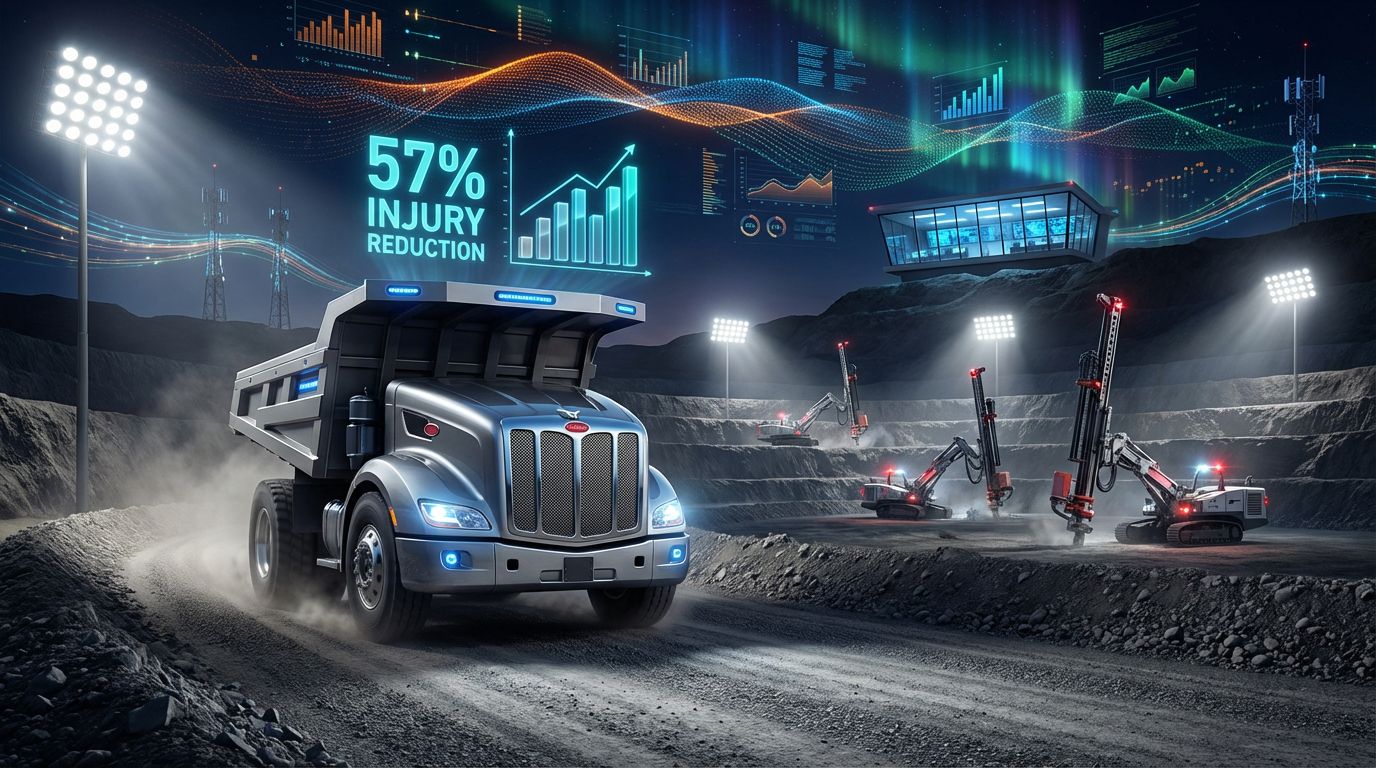
Modern mining automation relies on interconnected technological ecosystems that enable seamless coordination between multiple operational components. Autonomous haulage operations represent the most visible aspect of this transformation, with self-driving trucks navigating complex mining environments using GPS positioning, LiDAR sensors, and real-time communication networks.
Key technological components driving mining automation include:
• Autonomous vehicle fleets operating with 99.5% uptime reliability across 24-hour cycles
• Predictive maintenance algorithms analysing equipment vibration patterns, temperature fluctuations, and performance metrics
• Remote-controlled drilling platforms executing precision extraction from centralised command centres
• Distributed sensor networks monitoring atmospheric conditions, ground stability, and equipment performance
• Machine learning optimisation systems adjusting extraction parameters based on ore grade variations
The integration architecture supporting these technologies requires sophisticated communication protocols that enable real-time data exchange between autonomous equipment, central control systems, and human operators. 5G wireless networks and dedicated fibre-optic infrastructure provide the low-latency connectivity essential for coordinating complex automated workflows.
Integration Frameworks for Automated Mining Systems
Mining automation succeeds through layered integration approaches that coordinate multiple technological components within unified operational frameworks. Centralised control platforms aggregate data streams from hundreds of sensors, processing operational intelligence through cloud-based analytics systems that optimise resource allocation across entire mining complexes.
Data fusion technologies combine inputs from geological surveys, equipment sensors, weather monitoring systems, and production metrics to create comprehensive operational intelligence. This integration enables dynamic workflow optimisation that adjusts extraction patterns, transportation routes, and processing schedules based on real-time operational conditions.
Communication protocols supporting these integrated systems must accommodate the unique challenges of mining environments. These include electromagnetic interference from heavy machinery, signal attenuation in underground operations, and the need for redundant communication pathways that maintain connectivity during equipment failures or adverse weather conditions.
How Does Automation Transform Mining Safety Standards?
Mining safety transformation through automation in mining extends beyond simple risk reduction to encompass comprehensive hazard elimination strategies that fundamentally restructure operational safety protocols. Autonomous equipment deployment removes human workers from high-risk zones including blasting areas, unstable geological formations, and locations with elevated concentrations of hazardous gases.
Risk Mitigation Through Technology Implementation
Advanced sensor systems create safety perimeters around automated equipment, automatically halting operations when unauthorised personnel enter designated zones. Environmental monitoring networks continuously assess air quality, ground stability, and atmospheric conditions, triggering immediate safety protocols when dangerous conditions develop.
Emergency response automation represents a critical advancement in mining safety. These systems can initiate evacuation procedures, isolate affected areas, and coordinate rescue operations without human intervention. Automated responses reduce emergency response times from traditional 8-12 minute averages to 2-4 minutes through pre-programmed safety protocols.
| Safety Implementation | Traditional Response Time | Automated Response Time | Risk Reduction |
|---|---|---|---|
| Gas leak detection | 15-20 minutes | 30-60 seconds | 95% faster response |
| Equipment malfunction | 5-10 minutes | Immediate shutdown | 100% prevention |
| Structural instability | 10-30 minutes | 1-2 minutes | 90% faster response |
Operational Safety Enhancement Strategies
Predictive hazard identification utilises machine learning algorithms that analyse historical incident data, geological surveys, and real-time sensor inputs to identify potential safety risks before they manifest as dangerous conditions. These systems can predict equipment failures, geological instabilities, and atmospheric hazards with accuracy rates exceeding 85%.
Automated isolation systems create physical barriers around dangerous areas, preventing human access while maintaining automated operations in adjacent zones. Real-time health monitoring tracks worker vital signs, location data, and environmental exposure levels, providing immediate alerts when safety thresholds are exceeded.
Moreover, 3D geological modelling enhances safety by providing detailed visualisation of underground structures and potential hazards, enabling better planning and risk mitigation strategies.
What Efficiency Gains Result From Mining Automation?
Production optimisation through automated systems generates efficiency improvements that extend beyond simple operational metrics to encompass comprehensive resource utilisation strategies. Continuous operation capability eliminates productivity losses associated with shift changes, meal breaks, and human fatigue factors that traditionally reduce mining output by 25-30% during standard operational cycles.
Production Optimisation Through Automated Systems
Precision extraction techniques enabled by automated drilling and excavation systems reduce waste material generation by 15-20% compared to conventional methods. AI-driven ore grade optimisation analyses geological data in real-time, directing extraction equipment to focus on highest-value mineral deposits while minimising processing of low-grade materials.
Dynamic resource allocation systems optimise equipment deployment across multiple operational areas based on production priorities, equipment availability, and geological conditions. This coordination reduces idle equipment time by up to 35% and improves overall asset utilisation rates.
"Automated mining operations achieve productivity improvements of 20-30% through optimised equipment coordination, with peak efficiency gains reaching 45% in operations utilising fully integrated automation systems."
Workflow Streamlining Methodologies
Integrated supply chain management connects extraction, transportation, and processing operations through automated coordination systems that optimise material flow from mine face to final product delivery. Automated quality control systems monitor ore characteristics throughout the processing chain, adjusting parameters to maintain consistent output specifications.
Performance analytics platforms aggregate operational data from multiple sources, identifying optimisation opportunities through pattern recognition and predictive modelling. These systems generate actionable insights that guide strategic decision-making and tactical operational adjustments.
In addition, remote drilling insights provide valuable data for optimising drilling patterns and improving extraction efficiency across mining operations.
How Do Economic Factors Drive Automation Adoption?
Economic justification for mining automation extends beyond immediate cost reduction to encompass long-term strategic advantages including market competitiveness, operational scalability, and risk mitigation strategies. Capital investment analysis for automation technologies demonstrates return on investment periods typically ranging from 18 months to 3 years, depending on operational scale and technology implementation scope.
Cost-Benefit Analysis of Automation Investment
| Technology Category | Capital Investment Range | Annual Operating Savings | Payback Period |
|---|---|---|---|
| Autonomous haul trucks | $3-6 million per unit | $800K-1.2M per truck | 24-36 months |
| Integrated AI systems | $1-4 million implementation | $1.5-3M annual savings | 12-24 months |
| Sensor network infrastructure | $200K-800K installation | $400K-800K savings | 8-18 months |
Labour cost optimisation through automation reduces workforce requirements by 20-40% in specific operational areas while simultaneously increasing average worker compensation by 15-25% due to higher skill requirements for automated system operation and maintenance.
Financial Impact Assessment
Insurance premium reductions resulting from improved safety records provide additional economic benefits. Mining operations demonstrate 40-60% decreases in workers' compensation costs and liability insurance premiums following automation implementation.
Energy efficiency improvements through optimised equipment operation reduce power consumption by 12-18% across mining operations. Additionally, predictive maintenance programmes decrease unscheduled equipment downtime by 25-35%, resulting in significant productivity and cost benefits.
Market competitiveness advantages derived from automation enable mining operations to maintain profitability during commodity price downturns that force higher-cost conventional operations to suspend production. This resilience becomes particularly valuable during volatile market conditions.
Long-term Economic Sustainability
Capital expenditure amortisation strategies spread automation investments across 7-10 year operational horizons, aligning with equipment depreciation schedules and technology upgrade cycles. Scalability advantages enable mining operations to expand production capacity without proportional increases in workforce or operational complexity.
Technology depreciation management requires strategic planning to optimise automation investments while maintaining technological currency and operational competitiveness throughout equipment lifecycles.
What Environmental Benefits Does Mining Automation Provide?
Environmental sustainability improvements through automation in mining encompass multiple ecological impact reduction strategies that address traditional mining industry environmental challenges. Precision extraction methods significantly reduce ecosystem disruption by minimising overburden removal and focusing extraction activities on specific high-value ore zones.
Ecological Impact Reduction Strategies
Automated environmental monitoring systems continuously assess air quality, water contamination levels, noise pollution, and habitat disruption indicators. These systems provide real-time data that enables immediate corrective actions when environmental thresholds are exceeded.
Key environmental benefits include:
• Water usage optimisation through automated monitoring and recycling systems reduces freshwater consumption by 30-45%
• Dust suppression automation maintains air quality standards through targeted application of suppression agents
• Carbon footprint reduction via optimised transportation routes and equipment operation schedules
• Waste stream optimisation minimises environmental contamination through precise material separation
Energy consumption monitoring enables optimisation of power usage across mining operations. Automated systems identify opportunities for renewable energy integration and load balancing strategies that reduce overall carbon emissions.
Sustainable Mining Practice Implementation
Rehabilitation process automation accelerates land restoration activities through automated seeding, soil amendment, and vegetation monitoring systems. These technologies restore mining areas to productive ecological states faster than conventional restoration methods.
Biodiversity protection protocols integrated into automated operational planning systems ensure that extraction activities avoid sensitive ecological areas and minimise disruption to wildlife habitats and migration patterns.
Furthermore, automation supports mining industry evolution towards more sustainable practices by enabling precise monitoring and control of environmental impacts throughout the mining lifecycle.
Which Industries Benefit Most From Mining Automation?
Different mining sectors demonstrate varying levels of automation adoption based on operational characteristics, safety requirements, and economic factors that influence technology integration strategies. Surface mining operations typically achieve higher automation penetration rates due to fewer technical constraints compared to underground mining environments.
Sector-Specific Automation Applications
Iron ore mining leads automation adoption globally, with major operations utilising autonomous haul truck fleets, automated drilling systems, and integrated processing automation. Copper mining operations increasingly implement AI-driven ore grade optimisation and automated concentrate processing systems.
Coal mining operations utilise automated longwall systems, continuous mining machines, and conveyor automation for underground extraction. Surface coal operations deploy autonomous overburden removal and coal extraction equipment.
Gold mining benefits from automated processing systems including gravity separation, flotation, and cyanide leaching automation that improves recovery rates and reduces processing costs.
Commodity-Specific Technology Deployment
-
Iron ore operations achieve highest automation penetration through autonomous haulage systems
-
Copper mining utilises AI optimisation for complex ore processing requirements
-
Rare earth mining employs precision separation technologies for complex mineral processing
-
Quarrying operations deploy automated crushing, screening, and material handling systems
These sector-specific applications demonstrate how data-driven mining operations can be tailored to meet the unique requirements of different commodity types and extraction methods.
How Are Major Mining Companies Implementing Automation?
Global mining leaders pursue comprehensive automation strategies that integrate multiple technology components across their operational portfolios. Industry analysis reveals distinct approaches to automation implementation based on operational scale, geographic distribution, and commodity focus.
Industry Leadership in Automation Adoption
Rio Tinto operates extensive remote operations capabilities through their Perth-based Operations Centre, managing autonomous haul truck fleets across multiple Australian iron ore mines. The company's Mine of the Future programme demonstrates comprehensive automation integration across extraction, transportation, and processing operations.
BHP Group implements autonomous haulage systems across their Pilbara iron ore operations, with over 300 autonomous trucks operating across multiple mine sites. Their automation programme includes autonomous drilling systems and integrated mine planning optimisation.
Fortescue Metals Group integrates artificial intelligence across exploration, production, and processing operations through their technology subsidiary Fortescue Future Industries. Their automation initiatives focus on autonomous haulage, predictive maintenance, and ore processing optimisation.
Technology Partnership Strategies
Equipment manufacturer collaborations between mining companies and technology providers including Caterpillar, Komatsu, and Hitachi Construction Machinery create customised automation solutions tailored to specific operational requirements.
Software development partnerships with companies like Hexagon Mining, Micromine, and AVEVA provide integrated management platforms that coordinate multiple automation technologies within unified operational frameworks. These partnerships often leverage advanced sensing technologies to enhance operational capabilities.
Research institution cooperation through partnerships with universities and technology research centres advances automation capabilities while developing workforce training programmes for automated mining operations.
What Challenges Face Mining Automation Implementation?
Technical implementation barriers represent significant obstacles to automation adoption, particularly in mining environments with complex geological conditions, remote locations, and existing infrastructure limitations. Legacy system integration requires extensive retrofitting of existing equipment and control systems to accommodate modern automation technologies.
Technical Implementation Barriers
Communication infrastructure limitations in remote mining locations create challenges for real-time data transmission and remote operation capabilities essential for advanced automation systems. Equipment interoperability challenges arise when integrating automation components from different manufacturers with varying communication protocols and control systems.
Cybersecurity vulnerabilities in connected mining systems require comprehensive security frameworks to protect operational systems from cyber threats while maintaining the connectivity necessary for automated operations.
Workforce Transition Management
Skill development programmes must address the transition from traditional mining skills to automation-related technical competencies. These include system monitoring, predictive maintenance, and data analysis capabilities.
Workforce considerations include:
• Job displacement mitigation through retraining programmes and role transition support
• Organisational restructuring accommodating flatter management structures and technology-focused roles
• Change management processes ensuring smooth adoption of automated workflows
• Compensation adjustments reflecting higher skill requirements for automated operations
Regulatory and Compliance Considerations
Safety standard updates lag behind automation technology development, creating regulatory uncertainty regarding automated equipment operation, safety protocols, and liability frameworks for autonomous systems.
Environmental regulation compliance requires adaptation of existing monitoring and reporting requirements to accommodate automated environmental management systems and real-time compliance monitoring capabilities.
Insurance framework adjustments address coverage requirements for autonomous equipment, cyber security risks, and liability considerations for automated decision-making systems.
What Future Developments Will Shape Mining Automation?
Emerging technology trends indicate continued evolution toward fully integrated autonomous mining operations that require minimal human intervention for routine operational activities. Advanced artificial intelligence systems will enable predictive operational optimisation that anticipates equipment needs, geological challenges, and market demand fluctuations.
Emerging Technology Integration
Digital twin technology creates comprehensive virtual models of mining operations that enable testing of operational scenarios, equipment configurations, and extraction strategies without disrupting physical operations. These systems provide optimisation insights and predictive capabilities that enhance operational efficiency and safety.
Blockchain integration for supply chain transparency provides immutable tracking of extracted materials from mine face through processing and delivery. This supports ethical sourcing requirements and regulatory compliance documentation.
Edge computing deployment reduces latency in automated decision-making by processing operational data locally rather than relying on cloud-based analytics. This enables faster response times for safety-critical automated systems.
Next-Generation Automation Capabilities
-
Fully autonomous mining sites operating with minimal human presence during routine operations
-
Self-optimising equipment systems that adapt operational parameters based on real-time conditions
-
Predictive geological modelling using AI to anticipate ore body characteristics and extraction challenges
-
Integrated sustainability monitoring ensuring environmental compliance through automated systems
Industry Evolution Projections
Market growth forecasts indicate continued expansion of automation adoption. Industry analysts project 60-80% of major mining operations will implement comprehensive automation systems within the next decade.
Technology cost reduction through economies of scale and technological maturation will make automation accessible to smaller mining operations. This democratises access to efficiency and safety benefits previously available only to major operators.
Regulatory framework evolution will adapt to accommodate autonomous systems while maintaining safety standards and environmental protection requirements. This provides clearer guidelines for automation implementation and operation.
How Does Mining Automation Address Skilled Labour Shortages?
Global mining industries face persistent challenges recruiting and retaining skilled workers in remote locations with demanding working conditions. Automation in mining addresses these workforce challenges by reducing operational dependence on large numbers of specialised workers while creating opportunities for higher-skilled technical positions.
Remote operation capabilities enable skilled workers to manage mining operations from urban centres rather than relocating to remote mining sites. This improves worker retention and expands the available talent pool. Predictive maintenance systems reduce the need for specialised maintenance technicians on-site while improving equipment reliability and operational continuity.
Digital skill development programmes prepare workers for technology-intensive roles that command higher compensation levels. These positions often involve system monitoring, data analysis, and automated process optimisation rather than traditional manual labour roles.
What Role Does Data Analytics Play in Mining Automation?
Advanced data analytics forms the foundation of intelligent mining automation systems, processing vast quantities of operational data to optimise extraction strategies, predict equipment failures, and enhance safety protocols. Machine learning algorithms analyse patterns in geological data, equipment performance metrics, and operational conditions to continuously improve automated decision-making capabilities.
Real-time analytics platforms process sensor data from hundreds of sources simultaneously, identifying optimisation opportunities and potential issues within seconds of their occurrence. Predictive modelling capabilities enable mining operations to anticipate market demand, optimise inventory levels, and adjust production schedules proactively.
Integration of geological modelling with operational analytics provides comprehensive understanding of ore body characteristics. This enables automated systems to adjust extraction parameters dynamically based on changing geological conditions.
Frequently Asked Questions About Mining Automation
How cost-effective is automation for medium-sized mining operations?
Medium-sized mining operations can achieve significant cost benefits through selective automation implementation focusing on high-impact areas such as safety monitoring, predictive maintenance, and ore processing optimisation. Modular automation approaches enable gradual technology adoption that aligns capital investment with operational cash flow and return on investment requirements.
Scalable implementation strategies allow medium-sized operations to begin with specific automation components and expand systematically based on operational experience and financial performance. This approach reduces initial capital requirements while building internal expertise.
What cybersecurity measures protect automated mining systems?
Comprehensive cybersecurity frameworks for automated mining include network segmentation, multi-factor authentication, encrypted communication protocols, and continuous monitoring systems that detect and respond to potential cyber threats. Air-gapped control systems provide additional security for critical operational components while maintaining necessary connectivity for optimisation and monitoring functions.
Regular security audits and vulnerability assessments ensure that cybersecurity measures evolve alongside emerging threats. Employee training programmes address human factors in cybersecurity, reducing risks from social engineering and operational errors.
How do automated systems perform in extreme weather conditions?
Autonomous mining equipment incorporates weather-resistant designs and adaptive operational parameters that enable continued operation during adverse weather conditions. These conditions would typically halt conventional mining activities. Environmental monitoring integration enables automated systems to adjust operational parameters based on weather conditions while maintaining safety standards and equipment protection protocols.
Predictive weather integration allows automated systems to anticipate and prepare for adverse conditions, optimising operational schedules and equipment positioning to minimise weather-related disruptions.
This analysis represents current industry trends and technological capabilities in mining automation. Operational outcomes may vary based on specific implementation approaches, geological conditions, and regulatory requirements. Readers should consult with automation specialists and conduct detailed feasibility studies before implementing automation technologies in mining operations.
Ready to Position Yourself Ahead of the Next Mining Technology Breakthrough?
Discovery Alert's proprietary Discovery IQ model delivers real-time alerts on significant ASX mineral discoveries, including breakthrough mining automation and technology companies that could transform the industry landscape. Begin your 30-day free trial today and understand why major mineral discoveries can generate substantial returns by exploring Discovery Alert's dedicated discoveries page.