Understanding Autonomous Rock-Breaking Technology in Modern Mining Operations
The underground mining sector faces a technological crossroads where operational efficiency meets worker safety in increasingly sophisticated ways. Traditional rock-breaking operations have long represented one of the most hazardous intervention points in mining environments, requiring human operators to work in proximity to crushers and grizzly systems where oversized materials create dangerous bottlenecks.
Modern mining operations depend heavily on consistent ore flow management, where secondary rock-breaking serves as a critical control stage. When material imbalances occur, such as large boulder formations or excessive fine particles, the entire ore stream can halt, triggering cascading effects throughout the production chain. These disruptions generate unplanned downtime scenarios that extend far beyond the immediate breaking point, affecting downstream processing, transportation schedules, and overall operational continuity.
The emergence of fully autonomous rock-breaking systems represents a fundamental shift in how mining operations approach these challenges. These technologies eliminate direct human exposure to hazardous zones while maintaining operational control through advanced monitoring and intervention capabilities. The Xrock Autobreaker autonomous mining system exemplifies this technological evolution, incorporating real-time vision processing and intelligent control algorithms to manage rock-breaking operations without requiring human presence near dangerous equipment.
How Does Secondary Rock-Breaking Impact Mine Productivity and Safety?
The Critical Role of Ore Flow Management
Secondary rock-breaking operations function as bottleneck management systems within the broader ore processing chain. When oversized materials accumulate at grizzly points or crusher feed zones, the resulting blockages create ripple effects that extend throughout the entire mining operation. These interruptions force production teams to balance competing priorities: maintaining operational schedules while ensuring worker safety during intervention procedures.
The financial implications of ore flow disruptions multiply rapidly through the production system. Equipment downtime affects not only the immediate breaking operation but also upstream extraction activities and downstream processing facilities. Mining operations typically operate on tight scheduling margins, where even brief interruptions can compromise daily production targets and cascade into longer-term operational challenges.
Traditional intervention methods require specialised operators to work directly near crushing equipment, often in confined spaces with limited visibility and high ambient noise levels. These conditions create inherent safety risks that have persisted throughout the mining industry's operational evolution. Manual clearing processes typically involve:
- Direct operator positioning near active crushing equipment
- Extended exposure time in high-risk operational zones
- Complex coordination between equipment operators and clearing personnel
- Time-sensitive decision-making under hazardous conditions
Safety Challenges in Underground Rock-Breaking Operations
Underground mining environments present unique safety considerations that distinguish rock-breaking operations from surface mining activities. Limited access routes, restricted visibility conditions, and proximity to heavy machinery create operational contexts where traditional safety protocols require constant adaptation and vigilance.
The grizzly area represents one of the highest-risk intervention points in underground mining operations, where operators must navigate between active equipment systems to address material blockages. These zones typically feature:
- Multiple moving mechanical systems operating simultaneously
- Limited escape routes during emergency situations
- Unpredictable material behaviour during breaking operations
- Acoustic conditions that can impair communication and situational awareness
Worker exposure statistics in rock-breaking operations highlight the persistent safety challenges that have driven technological innovation toward autonomous solutions. Industry safety protocols continue evolving to address these risks, but the fundamental challenge of human presence in hazardous zones has remained a constant concern for mining safety professionals.
Regulatory compliance requirements for underground mining operations increasingly emphasise hazard elimination rather than hazard management, creating operational pressures for mining companies to adopt technologies that remove workers from dangerous environments entirely. This regulatory evolution reflects broader industry recognition that traditional safety measures, while effective in reducing risk, cannot eliminate the inherent dangers associated with manual intervention in high-risk operational zones.
What Technologies Enable Fully Autonomous Rock-Breaking Systems?
Advanced Vision and Sensor Integration
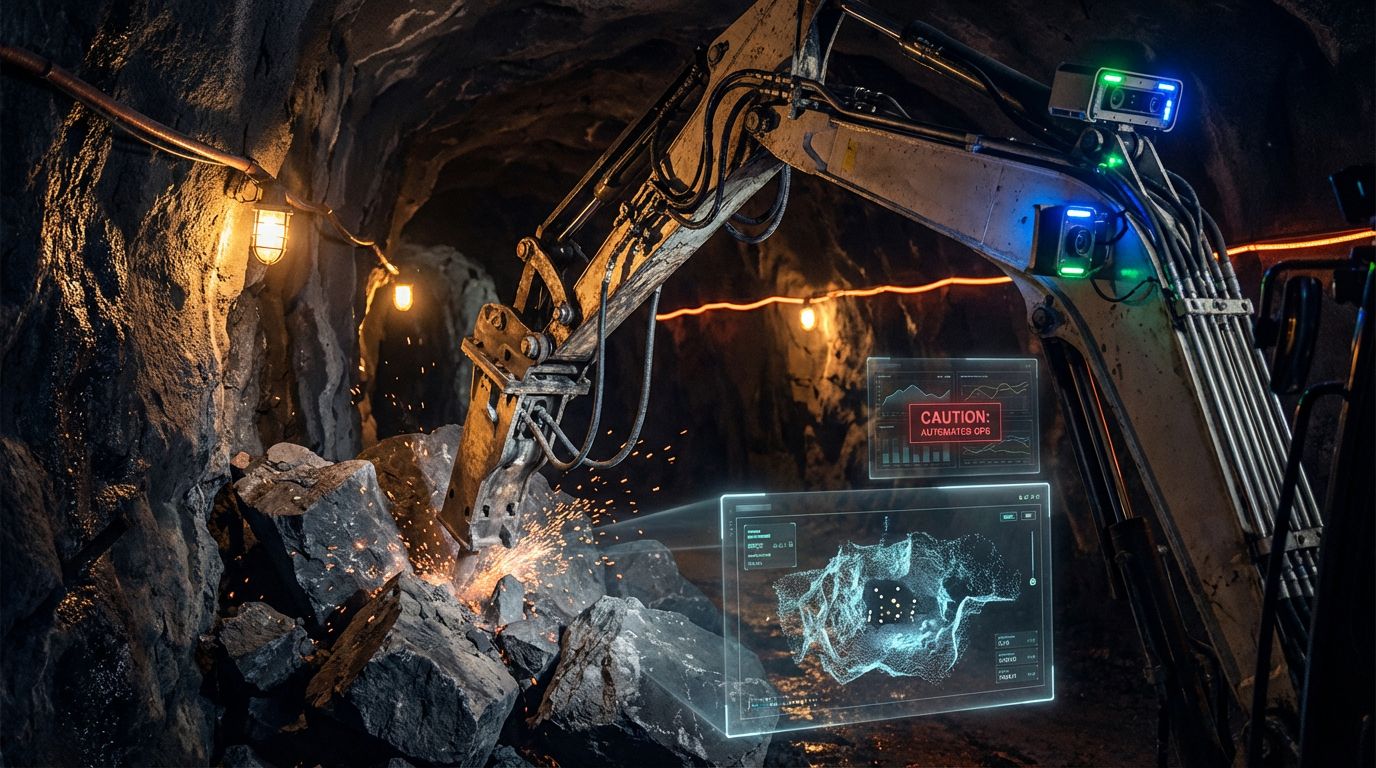
The Xrock Autobreaker autonomous mining system operates through sophisticated real-time camera vision and sensor fusion capabilities that generate dynamic three-dimensional mapping of ore masses. This technology creates comprehensive situational awareness by combining multiple data-driven operations streams into coherent operational intelligence that guides autonomous decision-making processes.
The system's vision processing capabilities automatically identify oversized boulders within ore masses, calculating optimal strike positions for maximum breaking efficiency. This identification process occurs continuously, with the system dynamically adjusting its operational model to reflect changes in ore mass composition and boulder positioning as breaking operations progress.
Multi-angle monitoring systems provide comprehensive coverage of operational zones, enabling the autonomous system to maintain awareness of changing conditions throughout the breaking process. These monitoring capabilities include:
- Real-time three-dimensional point cloud generation
- Continuous ore mass composition analysis
- Dynamic boulder identification and classification
- Ongoing strike position optimisation calculations
The sensor fusion technology combines visual data with additional monitoring inputs to create robust operational awareness that functions effectively in challenging underground mining environments. This comprehensive approach ensures reliable autonomous operation even when individual sensor inputs encounter temporary limitations or environmental interference.
Intelligent Control and Decision-Making Algorithms
Autonomous target identification represents a critical technological advancement that enables systems to recognise and prioritise intervention targets without human guidance. The Xrock Autobreaker autonomous mining system automatically identifies oversized materials requiring intervention, plans appropriate strike positions, and executes breakage sequences while continuously adapting to changing operational conditions.
The system's control algorithms plan and execute boom movements autonomously, recognising current operational phases in real-time and adjusting tactics accordingly. This autonomous planning capability eliminates the need for continuous human oversight while maintaining operational flexibility to address unexpected conditions or material variations.
Adaptive learning systems within the autonomous control framework enable continuous improvement in operational efficiency. As the system encounters different ore compositions and breaking scenarios, it refines its operational models to optimise future performance. This learning capability includes:
- Strike position optimisation based on material response patterns
- Operational sequence refinement through performance analysis
- Predictive modelling for proactive intervention planning
- Integration learning for improved communication with mine control systems
How Do Autonomous Boom Systems Transform Mining Operations?
Remote Operation Capabilities
The transformation from direct operator presence to remote supervision represents a fundamental shift in mining operational models. Autonomous boom systems enable operators to supervise multiple breaker systems simultaneously from protected control room environments, multiplying individual operator productivity while eliminating exposure to hazardous intervention points.
Control room supervision creates opportunities for enhanced operational coordination, where individual operators can monitor multiple systems across different operational zones. This centralised approach enables more efficient resource allocation and faster response times when intervention or adjustment becomes necessary.
Communication infrastructure integration ensures seamless connectivity between autonomous systems and existing mine control networks. The Xrock Autobreaker autonomous mining system communicates directly with mine control infrastructure, enabling full supervision and intervention capabilities from office locations positioned far from hazardous operational zones.
Multi-boom coordination capabilities allow experienced operators to oversee several breaking systems simultaneously, creating efficiency gains that extend beyond individual equipment performance. This coordination includes:
- Synchronised operational scheduling across multiple systems
- Resource allocation optimisation for maximum throughput
- Predictive maintenance coordination to minimise operational disruptions
- Emergency response coordination during system alerts or malfunctions
Automated Tool Management Features
Quick coupler technology enables seamless transitions between different breaking tools without requiring human presence at operational sites. The Normet XRock quick coupler system allows automatic tool changes that adapt to varying operational conditions and material requirements throughout breaking operations.
A single boom equipped with automated tool management can switch seamlessly between multiple tool types, including breakers, grapples, and magnets, maximising operational flexibility while maintaining continuous autonomous operation. This tool management capability includes:
- Automatic tool selection based on material analysis
- Seamless switching operations without operational interruption
- Tool performance monitoring and optimisation
- Predictive maintenance scheduling for individual tools
Maintenance scheduling benefits from automated monitoring capabilities that track tool performance and predict optimal service intervals. This predictive approach reduces unexpected equipment failures and optimises maintenance resource allocation across multiple systems and tool configurations.
What Are the Productivity Benefits of Autonomous Rock-Breaking?
Operational Efficiency Improvements
The transition from traditional manual intervention to autonomous rock-breaking creates measurable improvements across multiple operational metrics. Operator safety risk elimination represents the most significant benefit, removing direct human exposure from hazardous intervention points entirely.
System supervision capabilities enable individual operators to manage multiple breaking systems simultaneously, creating productivity multipliers that extend beyond single-system performance improvements. This supervision model allows experienced operators to apply their expertise across broader operational scopes while maintaining safety and operational quality standards.
Consistent automated responses to material blockages reduce operational variability and improve overall system reliability. Unlike human-dependent interventions that can vary based on operator experience, fatigue, or environmental conditions, autonomous systems provide consistent response times and intervention quality regardless of external factors.
Continuous operation capabilities extend beyond traditional shift patterns, enabling 24/7 operational availability when required by production schedules. This operational flexibility creates opportunities for mining operations to optimise production scheduling around autonomous system capabilities rather than human resource availability.
Workforce Development Opportunities
The shift toward autonomous rock-breaking operations creates new opportunities for workforce expansion by removing physical barriers that previously limited operator role accessibility. Remote supervision roles can accommodate operators who may not have been able to access traditional underground operational positions due to physical limitations or other accessibility considerations.
Skill transformation opportunities emerge as operators transition from direct equipment operation to supervisory roles that require different technical competencies. These supervisory positions emphasise system monitoring, predictive analysis, and multi-system coordination skills that can provide career advancement pathways for experienced operators.
Training programmes for autonomous system supervision typically require less physical preparation and can focus more heavily on technical system understanding and operational optimisation. This training approach can reduce preparation time for new operators while creating opportunities for existing operators to expand their technical competencies.
Career progression pathways in autonomous system management create opportunities for operators to develop expertise in emerging technologies while applying their existing operational knowledge to more sophisticated equipment systems. These progression opportunities include:
- Advanced system optimisation and performance analysis roles
- Multi-system coordination and resource management positions
- Technical training and mentorship responsibilities for new autonomous system operators
- Integration planning and implementation leadership for expanding autonomous operations
Which Mining Applications Benefit Most from Autonomous Rock-Breaking?
Primary Implementation Scenarios
Grizzly applications represent the initial deployment focus for autonomous rock-breaking systems, where material blockages create the most significant operational disruptions and safety risks. The Xrock Autobreaker autonomous mining system is now commercially available specifically for grizzly applications, where oversized material management creates consistent operational challenges.
Crusher feed control applications benefit from autonomous systems' ability to maintain consistent material flow to processing equipment without requiring human intervention near dangerous crushing machinery. This application focus addresses one of the most persistent bottlenecks in ore processing operations while eliminating worker exposure to high-risk zones.
Ore pass maintenance represents an additional application area where autonomous rock-breaking can prevent blockages in vertical material transport systems. These applications require precise positioning and controlled breaking operations that align well with autonomous system capabilities for accurate targeting and controlled force application.
The commercial availability of autonomous rock-breaking systems begins with grizzly applications but extends to broader implementation scenarios as operational experience and system refinements expand application possibilities. Implementation priorities typically focus on:
- High-frequency intervention zones with consistent blockage patterns
- Areas with elevated safety risks from manual intervention requirements
- Critical production bottlenecks where downtime creates significant financial impact
- Operations with skilled operator availability challenges
Integration with Existing Infrastructure
Retrofit compatibility enables mining operations to implement autonomous capabilities within existing breaker boom installations without requiring complete equipment replacement. The Xrock Autobreaker autonomous mining system integrates seamlessly into current XRock breaker boom configurations, minimising implementation complexity and capital investment requirements.
Scalability considerations address the expansion of autonomous capabilities across broader mining operations as initial implementations demonstrate operational and safety benefits. This scalability includes both horizontal expansion to additional operational zones and vertical integration with other autonomous mining technologies.
Technology migration pathways enable phased implementation strategies that maintain operational continuity while gradually expanding autonomous capabilities. These migration approaches allow mining operations to:
- Test autonomous capabilities in lower-risk operational environments
- Develop operator expertise with autonomous systems before broader deployment
- Validate performance benefits before committing to larger-scale implementations
- Integrate autonomous systems with existing operational protocols and safety procedures
How Does Autonomous Rock-Breaking Address Industry Labour Challenges?
Workforce Safety Enhancement
Hazard elimination through autonomous rock-breaking removes human presence from dangerous intervention points entirely, addressing long-standing safety challenges that have persisted throughout mining industry evolution trends. This elimination approach represents a fundamental shift from hazard management to hazard elimination, aligning with evolving safety regulations and industry best practices.
Accident prevention benefits extend beyond immediate operational safety to include reduced insurance costs, improved safety compliance records, and enhanced operational reputation within the mining industry. These benefits create competitive advantages for mining operations that prioritise safety innovation and worker protection.
Compliance improvements with evolving safety regulations become more achievable when autonomous systems eliminate worker exposure to hazardous zones entirely. Regulatory compliance requirements increasingly emphasise proactive hazard elimination rather than reactive safety management, creating operational advantages for mining companies that adopt autonomous safety technologies.
The Xrock Autobreaker autonomous mining system removes workers from danger rather than removing them from mining operations entirely, maintaining employment opportunities while enhancing worker safety and operational efficiency simultaneously.
Operational Resilience Building
Skill shortage mitigation addresses persistent challenges in recruiting and retaining specialised operators for high-risk mining positions. Autonomous systems reduce dependency on specialised manual operators while creating new opportunities for operators to develop expertise in advanced technology management and system supervision.
Continuous operation capability maintains productivity during labour constraints, equipment maintenance periods, or shift transition challenges that traditionally create operational interruptions. This operational resilience enables mining operations to maintain consistent production schedules despite various external challenges.
Training efficiency improvements enable mining operations to develop operator capabilities more quickly and with reduced physical preparation requirements. Autonomous system supervision requires different competencies than direct equipment operation, often emphasising technical system understanding over physical operational skills.
Operational resilience building through autonomous systems includes:
- Reduced dependency on specialist operator availability for critical operations
- Enhanced operational continuity during workforce transitions or shortages
- Improved adaptability to changing operational requirements and schedules
- Greater operational flexibility for emergency response and recovery situations
What Implementation Considerations Apply to Autonomous Mining Systems?
Technical Integration Requirements
Infrastructure compatibility assessments ensure that existing mining operations can support autonomous system implementation without requiring extensive modifications to current operational frameworks. The Xrock Autobreaker autonomous mining system communicates seamlessly with mine control infrastructure, enabling integration with established operational protocols and safety systems.
Communication networks require reliable data transmission capabilities that support real-time monitoring and intervention requirements for autonomous systems. These network requirements include adequate bandwidth for vision system data, low-latency communication for control responsiveness, and redundant connectivity options for operational reliability.
Maintenance protocols for autonomous equipment differ from traditional manual equipment maintenance, requiring technical expertise in vision systems, sensor technologies, and automated control systems. These maintenance requirements include:
- Specialised technical training for maintenance personnel
- Advanced diagnostic capabilities for complex electronic systems
- Predictive maintenance scheduling based on system performance data
- Integration with existing maintenance management systems and scheduling protocols
Full supervision and intervention capabilities from office locations require robust communication systems that enable operators to maintain operational control and emergency response capabilities from protected environments far from hazardous operational zones.
Economic Evaluation Framework
Capital investment analysis for autonomous systems must account for both direct equipment costs and indirect implementation expenses, including infrastructure upgrades, training programmes, and integration support services. These analyses typically compare autonomous system investments against the ongoing costs and risks associated with traditional manual intervention methods.
ROI calculation methodology should incorporate safety benefits, productivity improvements, and operational efficiency gains alongside traditional financial metrics. Safety benefits include reduced accident costs, improved insurance rates, and enhanced regulatory compliance, while productivity benefits encompass increased operational availability and reduced dependency on specialised operator resources.
Operational cost modelling evaluates long-term financial impacts of autonomous system implementation, including maintenance costs, energy consumption, and operator training requirements. These models typically demonstrate favourable financial outcomes when safety benefits and productivity improvements are included in comprehensive economic analyses.
Long-term financial impact assessments consider the evolving regulatory environment, changing labour markets, and advancing technology capabilities that may influence the relative value of autonomous system investments over extended operational periods.
How Will Autonomous Rock-Breaking Shape Future Mining Operations?
Technology Evolution Trajectory
Artificial intelligence advancement in mining applications continues evolving toward more sophisticated decision-making capabilities and predictive operational optimisation. Future autonomous systems will likely incorporate machine learning algorithms that continuously improve operational efficiency based on accumulated operational experience and changing ore conditions.
Furthermore, AI in drilling & blasting applications demonstrates the broader potential for artificial intelligence integration across mining operations. These technological improvements include enhanced vision system capabilities, more robust environmental sensors, and improved communication technologies for underground applications.
Integration expansion opportunities connect autonomous rock-breaking systems with broader mine automation ecosystems, creating coordinated operational capabilities across multiple mining functions. This integration potential includes coordination with automated material handling systems, predictive maintenance networks, and comprehensive mine monitoring and control systems.
The development trajectory for autonomous mining technologies suggests continuing advancement toward fully integrated operational systems that coordinate multiple automated functions across entire mining operations, with rock-breaking representing one component within broader automation frameworks. Additionally, 3D geological modelling capabilities will enhance autonomous systems' understanding of geological conditions.
Industry Transformation Implications
Operational model changes reflect fundamental shifts from manual intervention approaches toward supervisory management of autonomous systems. These changes require different operator competencies, modified training programmes, and evolved operational protocols that emphasise system oversight rather than direct equipment operation.
Safety standard evolution establishes new benchmarks for hazard-free mining operations, where autonomous systems enable previously unattainable safety performance levels. Industry safety standards will likely continue evolving to incorporate autonomous technologies as standard practice rather than innovative exceptions.
Competitive advantage creation benefits mining operations that implement autonomous technologies early in their adoption cycles. These advantages include enhanced safety performance, improved operational efficiency, and greater operational resilience during challenging market conditions or workforce availability challenges.
The strategic implications of autonomous rock-breaking technology extend beyond individual operational improvements to encompass comprehensive transformation of mining operational models, safety approaches, and workforce development strategies across the industry.
Strategic Value of Autonomous Rock-Breaking Technology
The introduction of fully autonomous rock-breaking systems marks a transformative moment in underground mining operations, where technological innovation addresses fundamental safety and productivity challenges that have persisted throughout the industry's evolution. The Xrock Autobreaker autonomous mining system exemplifies this transformation by eliminating human exposure to hazardous intervention points while maintaining operational control through advanced monitoring and supervision capabilities.
By removing workers from danger zones rather than removing them from mining operations entirely, autonomous rock-breaking technology creates new operational paradigms that enhance both worker protection and mining efficiency. The ability to supervise multiple systems remotely enables experienced operators to apply their expertise across broader operational scopes while maintaining safety standards that exceed traditional manual intervention approaches.
The convergence of real-time vision processing, intelligent control algorithms, and automated tool management creates comprehensive solutions for persistent operational challenges in secondary rock-breaking applications. These technological capabilities address material blockage management, operational continuity, and worker safety simultaneously, creating value propositions that extend beyond traditional cost-benefit analyses to encompass strategic operational advantages.
As mining operations continue embracing autonomous technologies, the early implementation of systems like the Xrock Autobreaker autonomous mining system provides competitive advantages through improved safety performance, enhanced productivity metrics, and greater operational resilience during challenging conditions. The technology represents a foundational advancement that enables further automation expansion across broader mining operational frameworks.
The strategic value of autonomous rock-breaking extends beyond immediate operational benefits to encompass workforce development opportunities, regulatory compliance advantages, and operational flexibility that positions mining companies for continued success in an evolving industry landscape. Moreover, the integration of these systems with mining decarbonisation benefits creates additional value through improved environmental performance and reduced operational energy consumption.
This technology transformation reflects the mining industry's commitment to innovation, safety, and operational excellence in challenging underground environments. The autonomous rock-breaking technology represents a significant step forward in mining automation, demonstrating how advanced systems can simultaneously improve safety and operational efficiency.
Ready to Invest in the Next Major Mineral Discovery?
Discovery Alert's proprietary Discovery IQ model delivers real-time alerts on significant ASX mineral discoveries, instantly empowering subscribers to identify actionable opportunities ahead of the broader market. Understand why historic discoveries can generate substantial returns by visiting Discovery Alert's dedicated discoveries page, and begin your 30-day free trial today to position yourself ahead of the market.