
May 17, 2026
Brazil's energy landscape is undergoing a significant transformation as the country grapples with the integration of distributed renewable energy sources into its traditional grid infrastructure. Battery energy storage systems in Brazil are emerging as a pivotal technology to address the complex challenges of managing intermittent renewable generation while maintaining grid stability and reliability. Furthermore, the rapid expansion of solar photovoltaic installations across residential and commercial sectors has created unprecedented operational challenges that require sophisticated technological solutions.
The economic viability of these storage systems depends heavily on regulatory frameworks that can recognise and compensate storage for the full spectrum of grid services they provide. Moreover, the battery metals investment landscape continues to evolve, influencing the cost structure and deployment strategies for energy storage projects across the region.
Understanding Brazil's Energy Storage Market Framework
Brazil's electricity infrastructure operates through the National Interconnected System (SIN), which connects approximately 96% of the country's electrical demand across a vast geographic area spanning multiple climate zones and demand profiles. This integrated network has historically relied on hydroelectric generation as its backbone, supplemented by thermal plants during dry seasons.
However, the rapid deployment of distributed solar photovoltaic systems has introduced new operational challenges that traditional grid management approaches struggle to address effectively. Grid operators report increasing incidents of voltage instability and reverse power flows that can damage distribution equipment designed for unidirectional energy delivery.
The proliferation of rooftop solar installations creates significant power quality issues during peak generation hours, particularly in regions with high solar penetration. These technical challenges translate into economic losses through curtailment requirements, where renewable energy production must be reduced to maintain grid stability.
Current regulatory structures in Brazil have evolved to recognise battery energy storage systems in Brazil as independent entities capable of participating across generation, transmission, and distribution segments. This regulatory evolution creates opportunities for diverse business models while establishing clear operational standards for grid-connected storage systems.
Market Dynamics and Investment Environment
The Brazilian energy storage sector benefits from several convergent trends that enhance investment attractiveness. Declining battery costs, improved energy density specifications, and extended cycle life capabilities have fundamentally altered the economic equation for storage deployments.
Additionally, the country's manufacturing base has begun developing domestic production capabilities for energy storage components, reducing supply chain dependencies and supporting local economic development. In addition, advances in battery recycling processes are creating sustainable pathways for end-of-life battery management.
Key Market Drivers:
- Expanding solar generation capacity creating grid balancing requirements
- Regional electricity price differentials enabling arbitrage opportunities
- Consumer demand for energy cost optimisation solutions
- Grid modernisation initiatives requiring flexible resources
- Industrial sector interest in backup power and demand management
The investment landscape reflects growing confidence in Brazil's energy storage potential, with both domestic and international companies establishing manufacturing facilities and project development pipelines. This industrial expansion supports job creation while building technical expertise necessary for long-term sector sustainability.
When big ASX news breaks, our subscribers know first
Comparative Analysis of BESS Deployment Strategies
Wholesale Market Arbitrage Operations
Grid-scale storage installations operating in wholesale electricity markets face a complex regulatory and economic environment. These systems operate as independent power resources, charging during low-price periods and discharging when wholesale electricity prices peak.
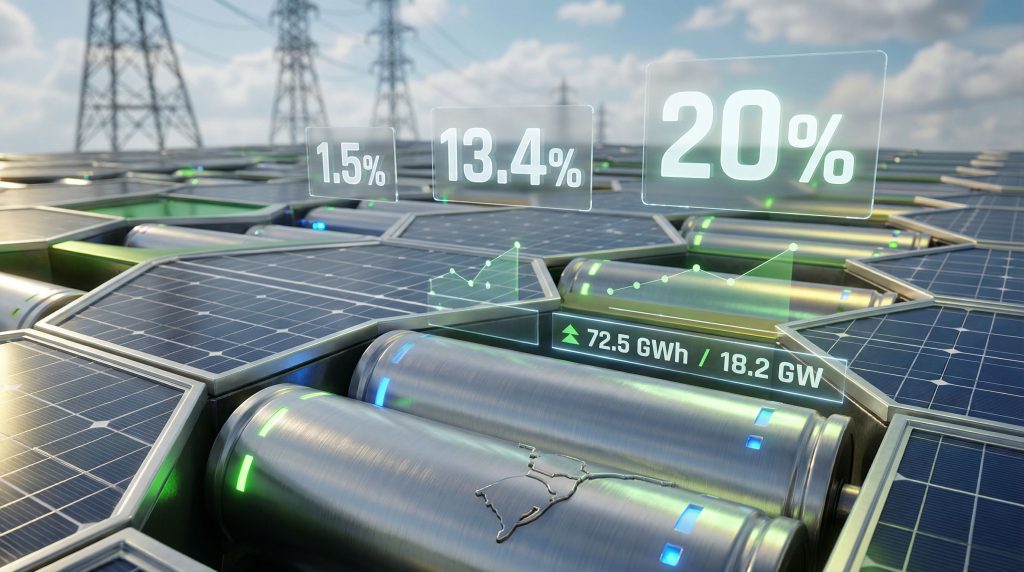
The economic viability of this approach depends on consistent price differentials and the ability to predict market conditions accurately. Technical analysis suggests that Brazil's grid could accommodate up to 72.5 GWh of arbitrage-focused storage capacity before creating adverse effects on nighttime load balancing.
Economic Performance Metrics:
| Battery Cost (BRL/kWh) | Price Spread (BRL/MWh) | Return on Investment | Commercial Viability |
|---|---|---|---|
| 1,250 | 400 | 1.5% | Below investment threshold |
| 500 | 160 | 1.5% | Marginal returns |
| 500 | 400 | 13.4% | Commercially attractive |
The data demonstrates that wholesale arbitrage becomes economically viable only under specific cost and pricing conditions. Investment-grade returns typically require battery costs below BRL 500 per kWh combined with consistent price differentials exceeding BRL 400 per MWh.
Regulatory Challenges:
- Limited recognition of storage as dual-function generation/load resource
- Absence of system services compensation mechanisms
- Wholesale market rules designed for conventional generation
- Dispatch protocols that may not optimise storage value
Current regulations create barriers to optimal storage utilisation by preventing participation in ancillary services markets where storage systems typically provide highest value. This regulatory gap limits revenue opportunities and extends payback periods for wholesale market participants.
Behind-the-Meter Consumption Optimisation
Consumer-sited storage systems operate under more favourable regulatory conditions compared to wholesale market installations. These systems leverage Brazil's time-of-use tariff structure, known as the white tariff, to reduce electricity costs by shifting consumption from peak to off-peak periods.
The operational strategy involves charging batteries during the 07:00-14:00 period when solar generation is abundant and electricity rates are lowest, then discharging during the 17:00-22:00 evening peak when tariffs reach maximum levels.
Financial Performance Analysis:
| System Cost (BRL/kWh) | Tariff Differential (BRL/MWh) | Return on Investment | Market Appeal |
|---|---|---|---|
| 1,500 | 320 | 1.6% | Limited adoption potential |
| 750 | 80 | Positive returns | Consumer viable |
| 500 | 400 | 20% | High market attractiveness |
Consumer economics improve significantly as battery costs decline and tariff differentials increase. The 20% return scenario represents optimal conditions achievable under current tariff structures with low-cost battery systems.
Technical requirements for effective behind-the-meter deployment involve approximately 40 GWh of distributed capacity across 8.6 GW of installations. This distributed approach provides system-wide benefits by reducing peak demand and improving load factor characteristics.
Implementation Advantages:
- Full regulatory approval for consumer installations
- Straightforward interconnection processes
- Established net metering compensation mechanisms
- Consumer familiarity with distributed generation concepts
Despite regulatory support, consumer adoption remains constrained by modest economic benefits under current tariff structures. Off-peak electricity savings typically average around 5%, which may not provide sufficient incentive for widespread adoption without additional financial incentives.
Solar-Plus-Storage Integration Model
The combination of distributed photovoltaic systems with co-located battery energy storage systems in Brazil represents the most economically attractive deployment model under current market conditions. This approach capitalises on the country's energy compensation scheme, where electricity injected during peak demand periods receives credit values approximately 1.6 times higher than off-peak injections.
Solar-plus-storage systems charge batteries using excess solar production until reaching approximately 3 hours of storage capacity, then discharge during the 18:00-21:00 peak tariff window. This operational pattern maximises the value of solar generation by time-shifting delivery to the highest-value periods.
ROI Sensitivity Under Different Scenarios:
| Battery Cost (BRL/kWh) | Peak/Standard Tariff Ratio | Return on Investment | Weekend Performance |
|---|---|---|---|
| 1,000 | 1.6 | Positive returns | Enhanced profitability |
| Higher costs | 1.8+ | Minimum viable | Positive across scenarios |
| 500 | 2.0 | 16.6% | Maximum economic potential |
The solar-plus-storage model demonstrates robust economic performance across various cost and tariff scenarios. Even with battery costs at BRL 1,000 per kWh, the system achieves positive returns when peak tariffs reach 1.6 times standard rates.
System-wide implementation would require approximately 18 GWh of storage capacity across 6 GW of installations. This represents a more manageable technical requirement compared to other deployment models while providing significant consumer benefits.
Strategic Advantages:
- Leverages existing solar investment and infrastructure
- Simple operational protocols requiring minimal coordination
- Benefits from established energy compensation mechanisms
- Provides consumer energy independence and cost predictability
Weekend operation enhances returns because solar generation continues while commercial demand decreases, creating more favourable export opportunities during peak tariff periods.
Technology Cost Trajectories and Market Evolution
Battery technology costs continue declining along established learning curves, with lithium-ion systems demonstrating consistent price reductions of approximately 10-15% annually. These cost improvements directly impact the economic viability of all deployment models, with solar-plus-storage installations showing particular sensitivity to battery price changes.
Alternative battery chemistries, including sodium-ion and flow battery technologies, may provide additional cost reduction opportunities while offering different performance characteristics. Furthermore, the critical minerals transition continues to influence supply chain dynamics and pricing structures across the energy storage sector.
Manufacturing Localisation Initiatives:
Brazilian companies have announced significant manufacturing investments to support domestic battery production:
- Dedicated BESS manufacturing facilities in Santa Catarina state
- Supply chain partnerships with international battery manufacturers
- Research and development programmes focused on local mineral resources
- Technical training programmes to develop specialised workforce capabilities
These manufacturing developments support job creation while reducing import dependencies and foreign exchange exposure for storage projects. Local production also enables customisation for Brazilian grid conditions and regulatory requirements.
Current project pipelines indicate substantial industry confidence, with approximately 18 GW of storage capacity registered for upcoming procurement processes. This pipeline represents over USD 2 billion in potential investment commitments across diverse application segments.
Regulatory Framework Development and Policy Innovation
Brazil's evolving regulatory approach to energy storage reflects recognition of these systems' critical role in energy transition success. Recent policy developments establish storage as an independent regulated entity with operational autonomy across generation, transmission, and distribution segments.
Key Regulatory Developments:
- Independent storage entity recognition enabling autonomous operation
- Capacity auction frameworks specifically designed for storage participation
- Interconnection standards for various storage applications and scales
- Safety and performance requirements adapted to local conditions
The regulatory framework continues evolving to address market gaps and optimise storage value recognition. Priority areas include system services compensation, load aggregation licensing, and tariff structures that better reflect storage's multiple value streams.
Moreover, [https://strategicenergy.eu/brazil-advances-energy-storage-regulation-and-confirms-dual-grid-tariffs-for-bess/](energy storage regulation advancement) demonstrates Brazil's commitment to creating comprehensive policy frameworks that support market development.
International Best Practices and Adaptation
Brazil's regulatory development benefits from examining successful storage markets in California, Australia, and Germany. Key lessons include the importance of:
- Technology-neutral procurement mechanisms that allow storage to compete with conventional resources
- Market rules that recognise and compensate storage's unique operational characteristics
- Grid codes that enable storage to provide multiple services simultaneously
- Transparent interconnection processes that reduce development risks and costs
Adaptation to Brazilian conditions requires consideration of the country's unique grid characteristics, including:
- Hydroelectric dominance creating seasonal variation in system needs
- Geographic diversity requiring region-specific technical requirements
- Economic development priorities supporting local manufacturing and employment
- Environmental considerations including battery recycling and end-of-life management
Technical Integration Requirements and System Coordination
Effective integration of storage systems requires sophisticated coordination across multiple technical domains. Grid-scale installations must demonstrate real-time dispatch capabilities, advanced energy management systems, and compatibility with existing transmission infrastructure.
Grid-Scale Integration Specifications:
- Real-time communication with system operators for dispatch coordination
- Power quality management including voltage and frequency regulation
- Fault ride-through capabilities maintaining stability during grid disturbances
- Cybersecurity protocols protecting critical infrastructure from digital threats
Distributed storage systems require different technical approaches focused on aggregation and coordination. Effective distributed deployment involves:
- Standardised communication protocols enabling coordinated control
- Advanced distribution management systems for congestion relief
- Consumer protection mechanisms ensuring service reliability
- Data privacy protections for residential and commercial participants
Current infrastructure limitations constrain optimal storage deployment in certain grid locations. Transmission capacity constraints and distribution system upgrades may be necessary to fully realise storage potential in high-demand areas.
Safety Standards and Performance Monitoring
Brazilian storage installations must comply with comprehensive safety protocols addressing fire risk management, emergency response procedures, and personnel training requirements. These standards vary across voltage levels and installation types, with grid-scale facilities subject to more stringent requirements.
Performance Monitoring Requirements:
- Continuous measurement of energy throughput and round-trip efficiency
- Battery degradation tracking and remaining useful life assessment
- Environmental impact monitoring including thermal and acoustic emissions
- Operational data reporting to regulatory authorities and system operators
Digital infrastructure supporting performance monitoring enables predictive maintenance, optimised dispatch strategies, and regulatory compliance verification. This data also supports research and development efforts to improve storage technology and operational practices.
Investment Strategies and Market Psychology
Successful investment in battery energy storage systems in Brazil requires careful evaluation of multiple risk factors and return drivers. Market psychology currently reflects cautious optimism, with investors recognising significant opportunity while remaining mindful of regulatory and technical uncertainties.
Investment Considerations:
- Technology cost trajectories and supplier reliability
- Regulatory stability and policy continuity across political cycles
- Grid infrastructure compatibility and upgrade requirements
- Competition from alternative flexibility resources including demand response
Early-stage investors benefit from first-mover advantages in site selection, regulatory relationships, and technical expertise development. However, rapid technology improvement suggests that delayed entry may access superior equipment at lower costs.
Market psychology varies significantly across investor categories. Utility companies prioritise proven technologies and established revenue streams, while private investors may accept higher risks for potentially superior returns.
Financing Mechanisms and Capital Structure
Diverse financing approaches support storage development across different project scales and ownership models:
- Developer ownership with long-term power purchase agreements
- Utility ownership with regulated asset recovery
- Third-party ownership with energy service company models
- Consumer ownership with financing support programmes
Each financing structure involves different risk allocations and return expectations. Regulatory clarity on asset recovery and revenue recognition significantly impacts financing costs and project viability.
In addition, developments in battery-grade lithium refining capabilities influence supply chain security and cost structures for storage projects.
The next major ASX story will hit our subscribers first
Future Market Evolution and Growth Projections
Brazil's battery energy storage market exhibits characteristics of an emerging sector with substantial growth potential. Technology cost improvements, regulatory framework maturation, and increased awareness of storage benefits create favourable conditions for sustained market expansion.
Growth Drivers:
- Continued renewable energy capacity additions requiring balancing resources
- Grid modernisation investments incorporating digital control systems
- Industrial sector demand for power quality and backup power solutions
- Consumer interest in energy independence and cost control
Market evolution will likely follow established patterns from other countries, beginning with high-value niche applications before expanding to mainstream deployment. Early applications focus on specific technical requirements or favourable economic conditions.
Technology Roadmap and Innovation Opportunities
Emerging battery technologies may significantly impact market development trajectories. Sodium-ion batteries offer potential cost advantages using abundant raw materials, while flow batteries provide longer-duration storage capabilities for specific applications.
Innovation Areas:
- Battery management systems optimising performance and lifespan
- System integration technologies reducing installation and commissioning costs
- Grid services software enabling multiple value stream capture
- Recycling technologies supporting circular economy principles
Brazilian research institutions and companies are developing expertise in these innovation areas, creating opportunities for technology export and intellectual property development. Furthermore, the decarbonisation benefits associated with energy storage deployment support broader sustainability objectives.
Regional Integration and Export Potential
Brazil's experience developing battery energy storage markets positions the country as a potential leader throughout Latin America. Technical expertise, manufacturing capabilities, and regulatory frameworks developed domestically create opportunities for regional expansion and technology transfer.
Regional Market Opportunities:
- Consulting services for regulatory framework development
- Equipment export from domestic manufacturing facilities
- Project development expertise and financing partnerships
- Technical training and capacity building programmes
Regional integration efforts could create economies of scale in manufacturing, reduce technology costs, and accelerate market development across Latin America. This approach supports Brazilian economic development while advancing regional energy transition goals.
However, [https://www.trade.gov/market-intelligence/brazil-energy-battery-storage-auction](battery storage auction mechanisms) demonstrate the complexity of implementing effective procurement frameworks that balance market development with cost containment.
Strategic Implications for Energy Transition
Energy storage systems represent more than technological solutions to grid management challenges. These systems enable fundamental changes in energy system architecture, supporting increased renewable penetration, enhanced grid resilience, and consumer empowerment through distributed resources.
Effective storage deployment requires coordinated action across technical, economic, and regulatory domains. Success depends on aligning private investment incentives with public policy objectives while maintaining grid reliability and consumer affordability.
The three deployment models analysed demonstrate different pathways toward these objectives, each with distinct advantages and implementation requirements. Market development success will ultimately be measured by storage systems' contribution to broader energy transition goals: decarbonisation, economic development, energy security, and social equity.
Brazil's approach to integrating these critical infrastructure systems will influence regional markets while contributing to global experience in renewable energy integration and grid modernisation. The country's large domestic market, technical capabilities, and strategic location create significant potential for storage technology leadership throughout the hemisphere.
Looking to capitalise on Brazil's emerging battery storage opportunities?
Discovery Alert's proprietary Discovery IQ model delivers real-time alerts on significant ASX mineral discoveries, instantly empowering subscribers to identify actionable opportunities in battery metals and energy storage sectors ahead of the broader market. Understand why major mineral discoveries can lead to substantial market returns by exploring Discovery Alert's dedicated discoveries page, showcasing historic examples of exceptional outcomes, then begin your 14-day free trial today to position yourself ahead of the market.