August 7, 2026
The Hidden Knowledge Gap That Keeps Mining Workers in Harm's Way
There is a persistent and underappreciated disconnect at the heart of industrial safety management: the people who design safety systems rarely perform the tasks those systems are meant to protect. In large-scale mining operations, this gap between policy architects and operational reality has contributed to an injury and fatality burden that remains stubbornly high despite decades of regulatory tightening, management system refinement, and technology investment.
The global mining sector records thousands of occupational injuries annually, with fatality rates that, while improving over time, continue to reflect the inherent danger of tasks involving extreme thermal environments, confined spaces, heavy rotating equipment, and subsurface infrastructure. According to the International Labour Organization, mining accounts for a disproportionate share of workplace fatalities relative to its share of global employment, with thermal exposure, equipment interaction, and confined space incidents among the leading causes of serious harm.
What conventional safety frameworks have struggled to address is not the absence of rules, but the absence of the right knowledge in the right hands. The BHP innovator program for frontline worker safety, known as Breakthrough Open House, represents a structural attempt to close that gap permanently.
When big ASX news breaks, our subscribers know first
Why Compliance-Driven Safety Models Reach Their Limits
Traditional occupational health and safety frameworks in large mining operations are built on a foundation of compliance: documented procedures, periodic audits, regulatory inspections, and hierarchical sign-off processes. These systems are not without value, but they carry an inherent architectural weakness.
Safety auditors, by definition, visit operational environments periodically. A quarterly inspection of a copper smelter casting floor cannot replicate the accumulated observational knowledge of a technician who performs the same high-temperature task dozens of times per month. The micro-hazards that emerge through task repetition, the subtle process deviations that precede incidents, and the ergonomic stresses that accumulate over months are largely invisible to scheduled audit cycles.
Research across industrial safety disciplines consistently demonstrates that frontline personnel identify operational hazards at a significantly higher frequency than periodic auditors, with some studies suggesting detection rates three to five times greater among workers with daily task exposure. This is not a criticism of auditors; it reflects the structural advantage of proximity.
The implication is significant: if the most reliable hazard intelligence resides with frontline workers, then safety systems that exclude those workers from solution design are operating with a fundamental information deficit. Furthermore, broader mining industry innovation trends consistently point to workforce engagement as a critical lever for closing this gap.
Occupational safety researchers have long recognised that the tacit, experience-based knowledge frontline workers accumulate through task repetition represents a qualitatively different form of risk intelligence than what formal risk assessments capture. Converting that knowledge into engineered solutions requires structured pathways that most organisations have historically lacked.
What the Breakthrough Open House Program Actually Does
BHP's Breakthrough Open House initiative functions as an internal innovation competition, structured to systematically harvest the operational knowledge of frontline employees and embedded contractors across the company's global asset base. The program invites workers to translate their firsthand observations of workplace hazards and inefficiencies into formal innovation proposals, which are then evaluated against criteria including safety impact potential, technical feasibility, and the capacity to scale across different commodity types and geographic locations.
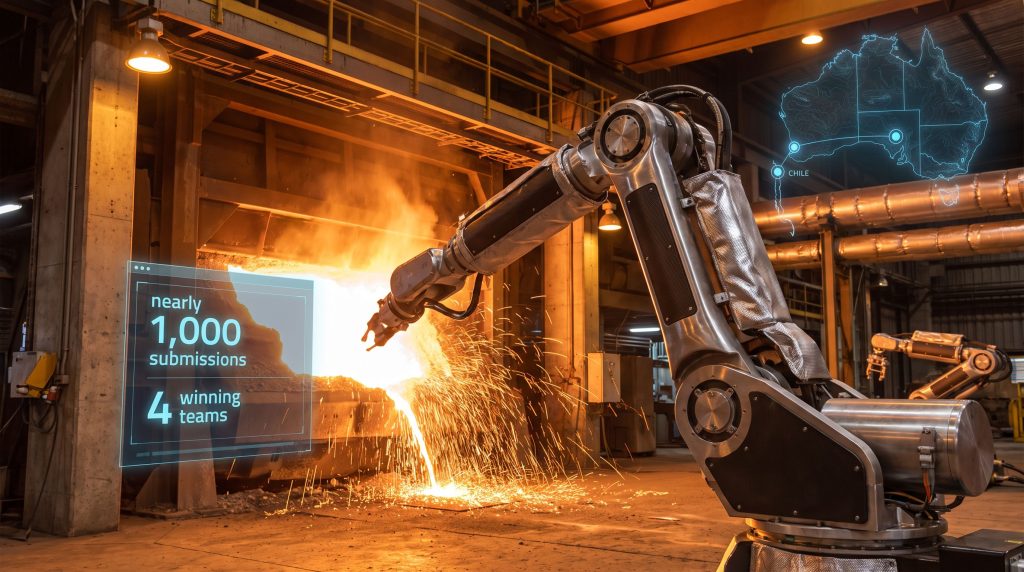
The 2026 program cycle received close to 1,000 submissions from workers across BHP's international operations, a participation level that speaks to both the scale of latent safety intelligence within the workforce and the accessibility of the submission process. From that field, four winning teams were selected to proceed to funded proof-of-concept development, supported by BHP's internal engineering expertise and technical resources.
The selection rate of approximately 0.4% is notably more selective than typical corporate innovation programs, which generally advance between 2% and 5% of submissions. This stringency reflects the program's commitment to concepts with genuine cross-site scalability rather than localised workarounds.
How Does the Program Compare to BHP's Broader Safety Ecosystem?
Breakthrough Open House occupies a distinct position within BHP's broader suite of safety and improvement programs. The table below illustrates how it differs from complementary initiatives:
| Program | Primary Focus | Core Mechanism | Operational Scope |
|---|---|---|---|
| Breakthrough Open House | Worker-led technology innovation for safety and productivity | Competitive submission leading to funded proof-of-concept development | Global operations, cross-commodity |
| Step Up For Safety | Safety culture and hazard communication | Frontline engagement and speaking-up protocols | Olympic Dam (launched 2021) |
| Field Leadership Program | Supervisor-led frontline risk engagement | Structured observation and coaching dialogues | Operational sites via BHP Operating System |
| BHP Operating System | Continuous improvement and standardised work practices | Enterprise-wide risk controls and standardised procedures | Enterprise-wide |
The key differentiator is the technology development pathway. Where cultural programs build awareness and communication, Breakthrough Open House converts frontline insight into physical, deployable solutions. In addition, data-driven mining operations are increasingly supporting these structured innovation pathways with enhanced analytics capabilities.
The 2026 Winning Innovations: Technical Profiles
Robotic Furnace Casting at Olympic Dam
The most technically striking of the 2026 selections originated at BHP's Olympic Dam copper smelter in South Australia, one of the world's largest integrated copper mining and processing operations. Lucy Williams, a casting technician whose daily role required manually burning through the side of an active furnace prior to each cast cycle, submitted a proposal to automate this process entirely using a robotic burnout arm.
The thermal environment involved is extreme: the process generates sparks at temperatures approaching 3,000 degrees Celsius. Each cast requires a technician to initiate the burnout manually, creating sustained direct exposure to radiant heat, molten metal splash risk, and high-energy particle projection. Under the proposed robotic system, the burnout arm performs the perforation autonomously, physically removing the operator from the hazard zone before the cast cycle begins.
Williams has publicly expressed her desire to see the robotic system operational at Olympic Dam, removing operators from the thermal risk environment that defines the casting process. The proof-of-concept phase will validate whether the mechanical system can perform consistently under the thermal and operational stresses of live smelter conditions.
Robotic Maintenance Systems for Confined and Elevated Environments
A second winning concept targets another of mining's most persistent hazard categories: maintenance activities in confined, elevated, or otherwise difficult-access environments. Scheduled and unscheduled maintenance on heavy processing equipment routinely exposes workers to crush hazards, fall risk, and confined space atmosphere dangers. The selected innovation applies robotics platforms to conduct inspection and servicing tasks in these environments, reducing the duration and frequency of human entry into high-consequence zones.
The modular design ambition of this concept is particularly notable from a scalability perspective. A robotics maintenance platform engineered to operate across different equipment configurations and facility types could theoretically be deployed across BHP's copper, iron ore, nickel, and potash operations with adaptation rather than full redesign. Consequently, AI in mining operations is increasingly integral to how these robotic systems are guided and optimised in the field.
Underwater Cleaning Technology
A third innovation addresses the unique risk profile of underwater infrastructure maintenance at mining and processing facilities. Tasks involving submersed cleaning and inspection present a compounding set of hazards: zero or limited visibility, confined space conditions, physical access constraints, and the physiological risks of aquatic environments. The selected concept develops technology capable of performing these functions without requiring personnel to enter the water, with potential applicability across BHP's port infrastructure, processing water systems, and tailings management facilities.
The Cross-Commodity Lancing Rod: A Case Study in Innovation Transfer
Perhaps the most strategically instructive development from the 2026 cohort is the cross-commodity adaptation of a custom lancing rod originally designed for copper smelter operations. BHP's Western Australian Iron Ore team is actively modifying this design for use in iron ore mining equipment workshops, demonstrating that innovations conceived in highly specialised processing environments can be re-engineered for application in structurally different operational contexts.
This cross-pollination model carries significant operational efficiency implications:
- It reduces duplication of safety innovation development effort across commodity divisions
- It accelerates the time from idea to deployment by building on validated design principles rather than starting from scratch
- It creates an organisational incentive for commodity teams to monitor and engage with innovations originating elsewhere in the portfolio
- It establishes a precedent for treating the global workforce as a shared innovation resource rather than siloed operational units
The Innovation Funnel: From Observation to Deployed Solution
Understanding how a worker observation becomes an operational safety technology requires mapping the full process. The Breakthrough Open House pathway operates as follows:
- Hazard identification – A frontline worker observes a recurring risk or operational inefficiency through direct task exposure
- Concept development – The worker translates the observed problem into a structured solution proposal with a defined technical approach
- Submission – The proposal is entered into the Breakthrough Open House platform, contributing to the approximately 1,000 submissions received in 2026
- Evaluation – An internal panel assesses submissions against safety impact potential, technical feasibility, and cross-site scalability criteria
- Selection – Four winning teams are identified per program cycle from the full submission pool
- Proof-of-concept development – Selected teams receive dedicated funding, access to engineering expertise, and technical development support
- Operational validation – The proof-of-concept is tested under live operational conditions to assess real-world performance
- Scale-up assessment – Successful concepts are evaluated for deployment across additional BHP sites and commodity categories
The deliberate inclusion of cross-site scalability as a selection criterion at step four is what distinguishes this process from a standard suggestion box. It builds the conditions for enterprise-wide safety improvement directly into the evaluation gate.
The Commercial Logic Behind Safety Innovation Investment
For investors and industry observers, worker-led safety innovation programs are not purely humanitarian initiatives. They carry measurable financial logic that intersects with operational continuity, regulatory exposure, and workforce economics.
Consider the key commercial drivers:
- Lost-time injury frequency rates directly affect operational continuity, insurance premiums, and regulatory standing in jurisdictions with increasingly demanding OHS frameworks
- Workforce retention in specialised mining roles is strongly correlated with perceived organisational commitment to worker safety; programs that demonstrably act on worker ideas reinforce this perception
- Regulatory compliance costs are reduced when proactive hazard elimination precedes regulatory enforcement, particularly as Australian and Chilean regulators continue to strengthen enforcement activity
- ESG performance metrics now form a material component of institutional investment assessment for major miners, and safety innovation programs contribute positively to social and governance scores
- Insurance and liability exposure is reduced when documented engineering controls replace procedural controls as the primary hazard management mechanism
The distinction between hazard control and hazard elimination is not semantic. Engineering a robot to perform a 3,000-degree furnace burnout eliminates the human thermal exposure entirely. Providing a better heat-resistant suit controls it. Regulators, insurers, and courts increasingly recognise this difference.
However, it is worth noting that mining transformation strategies extend well beyond safety innovation alone, encompassing energy, environmental performance, and operational resilience across the value chain.
The next major ASX story will hit our subscribers first
What the Broader Industry Can Take From BHP's Model
The structural elements that make Breakthrough Open House functional are transferable, but they are not trivially replicable. Several conditions must exist simultaneously for a worker-led innovation program to generate genuine safety outcomes rather than performative participation.
Psychological safety is foundational. Workers will not submit innovations that implicitly criticise existing processes if they fear negative professional consequences for doing so. The 1,000-submission participation rate at BHP suggests a workforce that trusts the program with candid observations. Building that trust requires sustained, visible leadership commitment to acting on worker input.
Submission pathways must be genuinely accessible. Frontline workers in smelters and equipment workshops are not writing technology white papers. The submission mechanism must accommodate practical, experience-based ideas expressed in operational rather than technical language, with support available to develop concepts further.
Evaluation must be credible. If workers perceive the selection process as politically influenced or disconnected from real operational merit, participation rates and quality of submissions will decline rapidly. The 0.4% selection rate at BHP suggests a rigorous process, but transparency about evaluation criteria is equally important.
Cross-site scalability cannot be an afterthought. The lancing rod case study demonstrates that cross-commodity adaptation must be actively facilitated by centralised technical teams, not left to chance. Without this organisational infrastructure, innovations remain siloed and their safety impact is artificially constrained.
Furthermore, predictive maintenance in mining offers a complementary mechanism for surfacing equipment-related hazards before they result in injury or unplanned downtime, reinforcing the broader safety ecosystem that programs like Breakthrough Open House help to build.
BHP Acting President South America Jess Farrell has articulated the organisational philosophy underpinning the BHP innovator program for frontline worker safety: workers closest to operational tasks are best positioned to identify both the hazards and the opportunities to address them. When those workers are empowered to move from identifying risks to designing solutions, the organisation builds a qualitatively stronger safety culture than any top-down compliance framework can produce.
Frequently Asked Questions
What Is BHP's Breakthrough Open House Program?
Breakthrough Open House is BHP's internal innovation initiative that invites frontline employees and embedded contractors to submit practical safety and productivity improvement ideas. Selected submissions receive funded proof-of-concept development support, engineering expertise, and a pathway to scale across BHP's global operations.
How Many Submissions Did BHP Receive in 2026?
The 2026 program cycle received approximately 1,000 submissions from workers across BHP's global operations. Four winning teams were selected to proceed to proof-of-concept development. BHP's commitment to frontline safety innovation has been documented across multiple industry research sources, highlighting the programme's broader sectoral significance.
What Were the 2026 Winning Innovations?
The four selected innovations include an automated robotic burnout arm for copper smelter furnace casting, robotic systems for maintenance in hazardous environments, underwater infrastructure cleaning technology, and the cross-commodity adaptation of a lancing rod design from copper smelting to iron ore operations.
How Does Breakthrough Open House Differ From Step Up For Safety?
Breakthrough Open House converts frontline ideas into funded technology solutions designed for cross-site deployment. Step Up For Safety, launched at Olympic Dam in 2021, is a cultural program focused on improving hazard communication and encouraging workers to speak up about risks. The two programs are complementary but structurally distinct.
Where Are the 2026 Winning Teams Based?
The 2026 cohort includes representatives from BHP operations across Australia and Chile, reflecting the program's multi-regional design and cross-commodity intent.
Can Innovations From One BHP Site Transfer to Others?
Cross-site scalability is a core selection criterion for Breakthrough Open House. The active adaptation of a copper smelter lancing rod for use in Western Australian iron ore workshops demonstrates this transfer in practice, and is a deliberate feature of the program's design rather than an incidental outcome.
Readers seeking further context on BHP's operational and safety developments can explore related coverage at Resources Review, which reports across Australia's resources sector.
Want to Know Which ASX Mining Companies Are Turning Innovation Into Investor Returns?
Discovery Alert's proprietary Discovery IQ model scans ASX announcements in real time, transforming complex mineral data into actionable insights for investors at every level — just as the sector's most forward-thinking operators are transforming frontline knowledge into measurable competitive advantages. Explore historic mineral discovery returns on Discovery Alert's discoveries page and begin your 14-day free trial to position yourself ahead of the broader market.