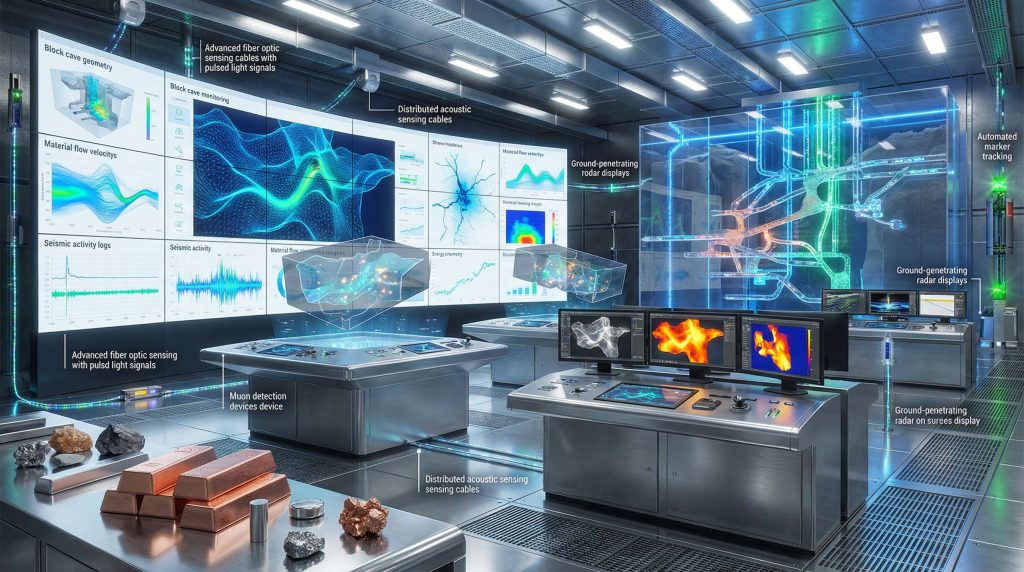
Understanding Block Cave Vulnerability in Tropical Mining Environments
Underground mining operations in tropical regions face escalating technical challenges as the industry transitions toward deeper, more complex extraction methodologies. The intersection of intense seasonal precipitation, legacy surface infrastructure, and advanced block cave techniques creates unprecedented risk matrices that traditional mining protocols struggle to address effectively. However, the development of data-driven mining operations is transforming how companies approach these complex risk scenarios.
Block cave mining in high-precipitation environments presents fundamental engineering challenges that extend far beyond conventional underground operations. The combination of sustained tropical rainfall, complex subsurface hydrology, and transitional geological conditions creates compound vulnerability scenarios requiring specialized risk assessment frameworks. Furthermore, the broader mining industry evolution towards automated systems has revealed new challenges in monitoring and managing these complex environments.
The Freeport Grasberg mud rush incident exemplifies these challenges through its unique environmental and operational context. Located in Indonesia's tropical climate, the operation manages an average of 19,000 gallons per minute of combined surface and groundwater through sophisticated drainage systems. Despite these robust water management capabilities, the September 8, 2025 incident demonstrated that traditional wet material management protocols prove insufficient when external mud accumulation creates direct pathways to underground workings.
Critical Environmental Risk Amplifiers:
- Surface Water Accumulation Patterns: Tropical precipitation creates sustained mud formation above cave operations
- Legacy Pit Integration: Former open-pit areas create unique vulnerability zones 300 metres above active extraction levels
- Material Property Transformation: Fine fragmentation of cave material reduces porosity when contacted by external mud sources
- Multi-Level Transport Mechanisms: Gravity-driven material flow systems enable rapid distribution across underground infrastructure
The Grasberg operation's production capacity underscores the scale of potential disruptions. With 1.8 billion pounds of copper production in 2024 and 1.86 million ounces of gold, operational interruptions create immediate global supply chain implications. The incident reduced projected 2025-2026 production to 1.0 billion pounds of copper and 900,000 ounces of gold, representing production decreases exceeding 50%. Moreover, these disruptions significantly impact the global copper supply forecast for the coming years.
Tropical Block Cave Risk Assessment Matrix:
| Risk Category | Impact Severity | Monitoring Complexity | Mitigation Investment |
|---|---|---|---|
| External Mud Pathway Formation | Critical | High | $100M+ |
| Surface-Underground Connectivity | Critical | Very High | $200M+ |
| Material Flow Velocity Amplification | High | Moderate | $50M+ |
| Multi-Level Infrastructure Damage | High | Moderate | $75M+ |
When big ASX news breaks, our subscribers know first
Geological Complexity in Surface-to-Underground Transitions
Mining operations transitioning from decades of open-pit extraction to underground block cave methodologies encounter geological conditions that existing monitoring systems struggle to interpret effectively. The Grasberg operation's 30-year surface mining period created low-strength, clay-rich soft zones that fundamentally altered subsurface material behaviour patterns. These conditions represent some of the most challenging underground engineering marvels in the industry.
The PB1C production block, designed specifically to address soft zone characteristics, employed narrow panel geometry comprising three extraction panels positioned as extensions of the established PB1 South operation. This configuration, whilst optimised for soft rock extraction, inadvertently created concentrated material flow channels operating at significantly elevated velocities compared to adjacent cave areas.
Transition-Specific Geological Challenges:
- Cave Boundary Geometry: Partially unbroken overhanging and inclined cave boundaries adjacent to established production areas
- Material Draw Asymmetry: PB1C exhibited faster production draw rates relative to the 174 draw points in PB1 South, despite operating only 70 draw points
- Seismic Monitoring Limitations: Soft clay-rich formations produce no detectable seismic signatures, creating monitoring blind spots
- Flow Velocity Amplification: Narrow panel design resulted in 5- to 10-fold increases in material flow velocity compared to standard cave operations
The investigation revealed that multiple contributing factors specific to tropical transition environments combined to create the incident conditions. Mark Johnson, President and COO of Freeport-McMoRan Indonesia, emphasised that the cave geometry characteristics were not visible or measurable through conventional monitoring approaches, stating that caveback geometry inference through seismic monitoring becomes impossible in soft rock formations.
Production Timeline and Transition Metrics:
- Open Pit Duration: 30 years (until 2019)
- Underground Transition: 2019
- PB1C Undercutting Period: Late 2021 to Late 2023
- Initial Production Commencement: 2022 (two panels)
- Final Panel Activation: October 2024
- Incident Occurrence: September 8, 2025 (less than one year post-final panel activation)
The incident occurred during early-stage cave development, highlighting the particular vulnerability of operations transitioning between mining methodologies. The 300-metre vertical separation between surface mud accumulation and underground extraction levels created a previously unrecognised pathway for catastrophic material transfer.
High-Velocity Material Flow Dynamics in Narrow Panel Systems
Contemporary block cave design increasingly employs narrow panel configurations to optimise ore recovery in challenging geological conditions. However, these geometries can create concentrated flow channels that operate at substantially higher velocities than traditional cave systems, particularly when multiple panels combine extraction efforts within confined boundaries. Additionally, advances in AI transforming drilling operations require new understanding of these flow dynamics.
The PB1C operation demonstrated how narrow panel geometry results in production from multiple extraction points combining to draw material through concentrated channels, creating what investigators termed a "High Velocity Zone." This phenomenon represents a fundamental departure from distributed material flow patterns characteristic of conventional block cave operations.
Flow Velocity Amplification Mechanisms:
- Panel Concentration Effects: Three narrow panels drawing from boundary areas rather than directly overhead zones
- Adjacent Cave Interaction: Established PB1 South cave area influenced material migration patterns into PB1C draw points
- Boundary Draw Dynamics: Material extraction from cave boundaries rather than central cave areas
- Cumulative Extraction Pressure: Combined draw forces from multiple panels concentrated in narrow channels
The investigation determined that effective draw conditions in PB1C could have resulted in flow velocities 5 to 10 times higher than average drawdown velocities in the adjacent PB1 South operation. This velocity differential proved sufficient to establish and maintain connectivity between underground extraction points and surface mud accumulations through 300 metres of overburden material.
Material Property Transformation in High-Velocity Zones
The incident revealed critical material behaviour changes when external mud contacts finely fragmented cave material. According to the investigation findings, the relatively fine fragmentation of PB1 South cave material, when contacted by external mud, likely reduced porosity and prevented the mud dispersion that had characterised historical management of wet material events.
This transformation represents a fundamental departure from established material management protocols. Historically, mud formations would eventually disperse into underlying broken cave material through natural drainage processes. The high-velocity zone conditions, combined with fine material fragmentation, eliminated these dispersion pathways and created sustained mud columns extending from surface accumulations to underground extraction levels.
Velocity Monitoring and Detection Challenges
Traditional block cave monitoring systems rely heavily on seismic signatures to infer cave geometry and material movement patterns. In soft clay-rich formations characteristic of tropical transition zones, seismic monitoring becomes ineffective, creating information gaps precisely where enhanced monitoring proves most critical.
Alternative monitoring approaches for high-velocity zone detection include:
- Distributed Strain Monitoring: Fibre optic-based detection systems capable of identifying material movement in soft formations
- Ground-Penetrating Radar Networks: High-resolution subsurface imaging for cavity and pathway detection
- Material Marker Tracking: Enhanced tracking systems for real-time flow velocity and direction measurement
- Pressure Differential Monitoring: Detection of draw pressure variations indicating concentrated flow development
Advanced Monitoring Solutions for Soft Rock Cave Management
The limitations of conventional seismic monitoring in soft clay-rich geological formations necessitate development of alternative cave management technologies. The Freeport Grasberg mud rush incident highlighted critical gaps in monitoring capabilities precisely where enhanced visibility proves most essential for safe operations.
Freeport's response includes implementation of cutting-edge monitoring technologies designed to provide real-time visibility into previously opaque underground processes. The company's emerging cave imaging technology programme incorporates multiple advanced detection methodologies to address the monitoring challenges identified through the incident investigation.
Next-Generation Cave Monitoring Technologies:
- Muon Detection Systems: Cosmic ray-based density measurement for cave propagation tracking through soft formations
- In-Cave Beacon Networks: Real-time tracking of material flow velocity and directional patterns
- Enhanced Marker Systems: Advanced marker deployment for cave advance and propagation detection
- Integrated Sensor Platforms: Combined monitoring systems incorporating multiple detection methodologies
The muon detection approach represents a significant technological advancement for cave management. Unlike seismic monitoring, muon detection operates independently of rock hardness characteristics, providing density measurements that can track cave propagation even in soft geological conditions where traditional monitoring proves ineffective.
Predictive Analytics Integration
Modern cave management increasingly relies on integrated data platforms combining multiple monitoring inputs with machine learning-based pattern recognition capabilities. These systems enable proactive risk identification rather than reactive incident response, particularly critical in environments where traditional monitoring approaches face technical limitations.
Freeport's enhanced monitoring framework incorporates:
- Real-Time Data Aggregation: Integration of multiple sensor networks for comprehensive cave condition assessment
- Machine Learning Pattern Recognition: Automated identification of anomalous material flow or cave development patterns
- Predictive Risk Modelling: Advanced analytics for early warning of developing high-velocity zones or pathway formation
- Automated Response Systems: Immediate alert and isolation capabilities for rapidly developing risk conditions
Emergency Response Protocols for Rapid-Onset Underground Incidents
Underground incidents involving rapid material movement require specialised emergency response frameworks that account for compressed timeframes and limited access conditions inherent in block cave environments. The Freeport Grasberg mud rush incident demonstrated that material can traverse multiple underground levels within minutes, necessitating immediate response protocols designed for these unique conditions.
The September 8 incident timeline revealed the critical importance of rapid response capabilities. Mud material entered the extraction level, travelled over 2 kilometres of drift, then flowed through vent raises and ore passes to reach the service level in approximately two minutes. Two work crews (a 2-person electrical team and a 5-person raise boring team) were operating on the service level when the incident occurred, resulting in seven fatalities.
Time-Critical Response Framework Components:
- Automated Isolation Systems: Immediate containment of affected areas through remote-operated barriers and ventilation controls
- Personnel Accountability Protocols: Rapid location verification for all underground workers using real-time tracking systems
- Emergency Access Route Management: Pre-established evacuation pathways with continuous monitoring for accessibility
- Specialised Recovery Equipment: Deployment of confined-space rescue capabilities suitable for mud-filled environments
Infrastructure Impact Assessment
The incident damaged extensive underground infrastructure across multiple operational levels:
- Equipment Losses: 1 locomotive, 10 Load-Haul-Dump vehicles, 11 railcars, 6 rock breakers
- Infrastructure Damage: 16 ore chutes, 1.25 kilometres of rail infrastructure
- Service Level Impact: 3.4 kilometres of drift filled with mud material
- Extraction Level Impact: More than 2 kilometres of drift affected
Recovery operations prioritised service level mud cleanup to restore ventilation and emergency access capabilities. As of the investigation reporting, 2 kilometres of service level had been cleared, with an additional 800 metres requiring cleanup for PB2 restart operations.
Enhanced Emergency Preparedness Protocols
The incident investigation resulted in comprehensive emergency response protocol updates designed to address the specific challenges of external mud rush events. These differ significantly from wet muck event protocols, which typically involve smaller volumes of material limited to individual draw points.
Key protocol enhancements include:
- Multi-Level Evacuation Planning: Coordination of emergency egress across extraction, service, and haulage levels
- Rapid Communication Systems: Enhanced underground communication networks resistant to infrastructure damage
- Specialised Rescue Training: Development of training programmes specific to mud-filled confined space rescue scenarios
- Equipment Pre-Positioning: Strategic placement of emergency response equipment throughout underground operations
Insurance Coverage and Risk Transfer Mechanisms
Large-scale underground mining operations require comprehensive insurance frameworks designed to address the unique risk profiles associated with block cave mining. The Freeport Grasberg mud rush incident demonstrates the scale of potential losses and the importance of adequate coverage structures for catastrophic underground events.
Freeport maintains insurance coverage providing up to $700 million for underground losses, which the company activated following the September 8 incident. This coverage structure reflects the substantial financial exposures associated with major underground mining operations and the potential for simultaneous equipment loss, infrastructure damage, and production interruption.
Underground Mining Insurance Coverage Categories:
| Coverage Type | Typical Industry Limits | Key Considerations |
|---|---|---|
| Property Damage (Equipment/Infrastructure) | $500M – $1B | Replacement cost basis |
| Business Interruption | 12-36 months | Market price volatility exclusions |
| Extra Expense (Emergency Response) | $50M – $200M | Specialised rescue operations |
| Workers' Compensation | Statutory limits | Underground-specific exposures |
The business interruption component represents particularly complex coverage given the extended timeframes required for underground infrastructure restoration. Freeport's projected restart timeline extends through 2027 for full PB1 South operations, with PB1C restart deferred until late 2027.
Risk Mitigation Investment Justification
The financial impact of the Grasberg incident provides clear justification for substantial preventive technology investments. With production reductions exceeding 50% and restart timelines extending multiple years, the cost of advanced monitoring and risk mitigation systems represents a fraction of potential loss exposure.
Freeport's capital expenditure adjustments reflect this prioritisation:
- Capital Expenditure Reduction: $800 million below July 2025 estimates for 2025-2026
- Deferred Spending: Previously scheduled investments moved to 2027 and beyond
- Recovery Investment Priority: Focus on risk mitigation and monitoring technology implementation
Industry Insurance Market Implications
Major underground mining incidents typically drive insurance market reassessment of risk pricing and coverage terms. The scale and unique characteristics of the Grasberg incident may influence industry-wide insurance approaches for:
- Tropical Climate Operations: Enhanced underwriting consideration for high-precipitation environments
- Surface-to-Underground Transition Risks: Specific coverage for legacy infrastructure integration challenges
- Advanced Monitoring Technology Requirements: Potential insurance premium credits for enhanced monitoring implementations
- Emergency Response Capability Standards: Coverage terms linked to demonstrated rapid response capabilities
Global Copper Supply Chain Concentration Risks
The global copper mining industry exhibits significant concentration risk, with a limited number of major operations contributing substantial portions of worldwide production. The Freeport Grasberg mud rush incident illustrates how disruptions at individual major facilities create immediate supply-demand imbalances that propagate throughout industrial supply chains.
Grasberg's production scale underscores its global significance. The operation's 1.8 billion pounds of copper production in 2024 represents approximately 2.5% of global copper mine production. The projected reduction to 1.0 billion pounds in 2025-2026 removes substantial supply from global markets during a period of increasing demand for energy transition technologies. For more context on copper market dynamics, recent analysis from Mining Weekly provides detailed coverage of restart timelines.
Market Impact Amplification Factors:
- Limited Short-Term Substitution: Copper's unique properties prevent rapid material substitution in most applications
- Long Development Timeframes: New mine development requires 7-15 years, limiting supply response capabilities
- Inventory Management Strategies: Just-in-time manufacturing approaches minimise buffer inventory across supply chains
- Derivative Market Reactions: Financial markets amplify price volatility through speculation and hedging activities
The incident's impact extends beyond immediate production disruption. Copper price volatility affects industries ranging from construction and automotive manufacturing to renewable energy infrastructure development. The projected multi-year recovery timeline creates sustained uncertainty for industrial planning and procurement strategies.
Geographic Supply Concentration Analysis
Major copper-producing regions face various operational risks that create compound supply vulnerability:
- Chile (28% global production): Water scarcity and aging mine infrastructure
- Peru (11% global production): Political instability and community relations challenges
- China (8% global production): Environmental regulations and resource depletion
- Democratic Republic of Congo (8% global production): Political instability and infrastructure limitations
The concentration of major copper production in relatively few geographic regions and individual operations creates systemic vulnerability for copper-dependent industries worldwide.
Strategic Metal Security and Supply Diversification
For countries and industries dependent on copper imports, major mine disruptions highlight the strategic importance of supply source diversification and domestic processing capability development. The Grasberg incident demonstrates how operational challenges at individual facilities can create strategic vulnerability for copper-dependent economies.
Supply Security Strategy Development:
- Geographic Diversification: Reducing dependence on single-country or single-operation supply sources
- Strategic Reserve Accumulation: Government and industry stockpiling for supply security
- Domestic Processing Investment: Development of local refining and manufacturing capabilities
- Alternative Technology Research: Investigation of copper substitution options for critical applications
The increasing global demand for copper in renewable energy applications, electric vehicles, and grid infrastructure creates additional strategic considerations. The International Energy Agency projects copper demand growth of 70% by 2040, primarily driven by energy transition technologies, making supply security increasingly critical for economic competitiveness.
Critical Infrastructure Implications
Copper supply disruptions affect multiple infrastructure categories essential for modern economic function:
- Electrical Grid Systems: Transmission lines, transformers, and distribution equipment
- Transportation Infrastructure: Electric vehicle charging networks and rail electrification
- Renewable Energy Systems: Wind turbines, solar installations, and energy storage systems
- Telecommunications Networks: Data transmission infrastructure and communication systems
The strategic importance of copper supply security has prompted increased government attention to mining industry resilience and supply chain diversification initiatives across developed economies.
Emerging Technologies for Cave Imaging and Detection
Advanced cave monitoring technologies leverage sophisticated physics principles to provide real-time visibility into underground processes that traditional monitoring approaches cannot detect. The limitations of conventional seismic monitoring in soft rock formations have accelerated development of alternative detection methodologies.
Freeport's implementation of emerging cave imaging technology represents a significant advancement in underground monitoring capabilities. The company's comprehensive approach combines multiple detection technologies to address the specific challenges identified through the Grasberg incident investigation. According to Freeport's official updates, these technological investments are crucial for preventing similar incidents.
Cutting-Edge Detection Technologies:
- Muon Detection Systems: Utilisation of cosmic ray muons to measure cave density above mining footprints, providing density mapping independent of rock hardness characteristics
- Enhanced Marker Systems: Advanced tracking technologies for real-time cave advance and material flow monitoring
- In-Cave Beacon Networks: Strategic placement of monitoring devices to track flow velocity and directional patterns
- Integrated Imaging Platforms: Combination of multiple detection methodologies for comprehensive cave condition assessment
The muon detection approach represents particular innovation for soft rock cave management. Unlike seismic methods that require rock movement to generate detectable signals, muon detection measures density variations created by cosmic ray absorption, enabling cave boundary detection even in formations that produce no seismic signature.
Implementation Timeline and Investment Scale
Freeport's technology implementation programme addresses both immediate operational needs and long-term monitoring enhancement:
- Immediate Implementation: Enhanced seismic monitoring systems supported by industry experts
- Short-Term Development: Micro-seismic monitoring deployment in all mining areas
- Medium-Term Integration: Muon detection and advanced imaging technology implementation
- Long-Term Innovation: Continuous technology advancement in partnership with global monitoring specialists
The investment scale for advanced monitoring technologies reflects the critical importance of enhanced cave management capabilities. Industry estimates suggest comprehensive monitoring upgrades for major block cave operations require investments in the tens of millions of dollars, representing substantial but justified expenditure given potential loss exposures.
Risk Mitigation and Surface Mud Management Strategies
Freeport's comprehensive approach to addressing the conditions that created the Grasberg incident includes multiple parallel strategies for surface mud management and underground risk mitigation. The company's recognition that traditional wet muck management protocols proved inadequate for external mud rush scenarios has prompted development of specialised mitigation approaches.
Surface Mud Drainage Solutions:
- Conventional Diamond Drilling: Up-hole coring for slurry pond drainage with high accuracy but limited drilling speed (10 metres/day)
- In-Hole Hammer Drilling: Water-driven drilling technology capable of 200 metres/day drilling rates for larger diameter drainage holes
- Cable-Suspended Slurry Pumping: Mobile pumping systems with relocatable anchor points as cave development progresses
- Pit Bottom Drainage Gallery: Construction of 3,000 metres of new drift development for gravity drainage to mill processing areas
The drainage gallery option represents the most robust long-term solution, requiring substantial infrastructure investment but providing permanent drainage capability for the former pit area. This approach addresses the fundamental condition that enabled surface mud accumulation to reach critical volumes.
Underground Isolation and Recovery Protocols
Recovery operations focus on systematic isolation of affected areas and restoration of critical infrastructure:
- Concrete Plug Installation: Three isolation plugs to permanently separate PB1C from active mining areas
- Service Level Restoration: Priority cleanup of 3.4 kilometres of mud-filled service level drift for ventilation restoration
- Infrastructure Replacement: Systematic replacement of damaged electrical, communication, and material handling systems
- Equipment Recovery: Assessment and potential recovery of 10 buried Load-Haul-Dump vehicles and associated equipment
The restart timeline reflects the complexity of underground infrastructure restoration in mud-filled environments. PB2 and PB3 restart targets for Q2 2026 require completion of isolation measures and service level cleanup, whilst PB1 South restart targets mid-2027 due to extensive ore chute replacement requirements.
International Mining Safety Evolution and Standards Development
Major mining incidents typically catalyse regulatory review and industry standard evolution. The unique characteristics of the Freeport Grasberg mud rush incident, particularly its demonstration of external mud rush risks in tropical block cave operations, contribute to broader industry understanding of previously unrecognised risk scenarios.
Anticipated Regulatory Development Areas:
- Enhanced Monitoring Requirements: Potential mandates for advanced monitoring systems in soft rock cave operations
- Transition Zone Risk Assessment: Specific protocols for operations transitioning from surface to underground methods
- Emergency Response Standards: Updated requirements for rapid-onset underground incident management
- International Best Practice Sharing: Enhanced mechanisms for global mining industry knowledge transfer
The technical complexity revealed through the Grasberg investigation demonstrates the importance of industry-wide collaboration on safety research and risk management protocol development. The incident's unique characteristics provide valuable learning opportunities for the global mining industry.
Industry Collaboration Framework Development
- Cave Management Research: Collaborative development of enhanced cave monitoring and management technologies
- Emergency Response Protocol Standardisation: Industry-wide sharing of emergency preparedness best practices
- Technology Validation: Joint industry programmes for testing and validating advanced monitoring technologies
- Cross-Industry Safety Practice Adoption: Integration of safety innovations from related industries (tunneling, civil engineering, geotechnical monitoring)
Freeport's collaboration with internal and external experts for incident investigation and response planning exemplifies the industry approach to addressing complex technical challenges through combined expertise and resource sharing.
The next major ASX story will hit our subscribers first
Building Resilient Underground Mining Operations
The evolution of underground mining toward increasingly complex and productive operations requires parallel advancement in risk management, monitoring technology, and emergency response capabilities. The Freeport Grasberg mud rush incident demonstrates both the challenges and opportunities for developing more resilient mining operations through technological innovation and enhanced risk management protocols.
The integration of advanced monitoring systems, comprehensive risk assessment frameworks, and specialised emergency response capabilities represents the future direction of responsible mining operations. Companies that invest proactively in these capabilities demonstrate superior operational resilience whilst contributing to sustainable development of critical mineral resources essential for global economic development and energy transition initiatives.
Resilience Framework Components:
- Predictive Risk Management: Advanced monitoring and analytics for early identification of developing risk conditions
- Adaptive Operational Protocols: Dynamic management approaches tailored to varying geological and environmental conditions
- Emergency Preparedness Excellence: Specialised response capabilities designed for rapid-onset underground scenarios
- Continuous Technology Advancement: Ongoing investment in monitoring, safety, and risk mitigation technology development
The financial scale of modern mining operations and their critical importance for global supply chains justify substantial investment in resilience enhancement. The cost of advanced risk management capabilities represents a fraction of potential loss exposures, as demonstrated through the Grasberg incident's multi-billion dollar impact on production and infrastructure.
Mining companies that prioritise resilience through comprehensive risk management, advanced monitoring technology, and emergency preparedness excellence will demonstrate superior stakeholder confidence whilst establishing industry leadership in responsible resource development. The lessons learned from the Grasberg incident contribute to this evolution, providing valuable insights for enhanced underground mining safety and operational resilience across the global industry.
Ready to Invest in the Next Major Mineral Discovery?
Discovery Alert instantly notifies investors of significant ASX mineral discoveries using its proprietary Discovery IQ model, transforming complex geological data into actionable insights for both short-term traders and long-term investors. Understand why major mineral discoveries can lead to substantial market returns by exploring Discovery Alert's dedicated discoveries page, showcasing historic examples of exceptional outcomes, and begin your 30-day free trial today to position yourself ahead of the market.