Economic Forces Reshaping North America's Energy Infrastructure
The transformation of North America's energy landscape reflects broader economic realities that extend far beyond traditional pipeline development metrics. As global monetary policies have fundamentally altered asset valuations across all sectors, infrastructure projects once considered prohibitively expensive now appear strategically essential. This shift in economic perspective drives current momentum in Canada oil pipeline development, where projects previously shelved due to cost concerns have gained renewed viability.
Energy infrastructure development occurs within a context where traditional valuation frameworks require substantial recalibration. Major commodity producers now trade at market capitalizations that would have seemed impossible a decade ago, yet their forward earnings ratios remain historically reasonable. This phenomenon extends to infrastructure projects, where billion-dollar investments no longer carry the psychological weight they once did in capital allocation decisions.
Strategic Infrastructure Development in a New Economic Era
Canada's position as holder of significant global oil reserves creates a unique infrastructure imperative. The country maintains approximately 167 billion barrels of proven oil reserves, according to the Statistical Review of World Energy, yet continues importing substantial energy volumes due to pipeline capacity constraints and refining limitations.
This infrastructure paradox costs the Canadian economy through price differentials when domestic crude trades at discounts to international benchmarks. Western Canadian Select (WCS) has historically traded at discounts ranging from $10 to $25 per barrel below West Texas Intermediate (WTI), primarily due to transportation bottlenecks and limited market access. Furthermore, these energy security challenges extend beyond pricing to broader strategic considerations.
Market Access Transformation Through Pipeline Expansion
Recent pipeline developments address fundamental market access challenges that have constrained Canadian energy producers for decades. The completion of major pipeline projects enables Canadian crude to reach international markets more efficiently, reducing dependence on U.S. Gulf Coast refining capacity and capturing higher netback pricing. Additionally, these improvements align with broader industry innovation trends across the energy sector.
Pipeline Capacity Improvements:
• Enhanced export capacity to international markets
• Reduced transportation costs per barrel
• Improved pricing differentials for Canadian crude
• Increased competition among pipeline operators
Federal Policy Evolution and Regulatory Framework Updates
Canada's regulatory environment for pipeline development has evolved significantly, incorporating new assessment methodologies and consultation frameworks. The Impact Assessment Act, which replaced the National Energy Board Act, establishes updated processes for major project evaluation that integrate climate considerations with economic analysis.
Under current federal policy, pipeline projects must demonstrate compatibility with Canada's climate objectives while meeting energy security requirements. This dual mandate requires sophisticated project design that incorporates emissions reduction technologies and operational optimization strategies. Moreover, these policy developments must be understood within the context of broader Canada's energy transition initiatives.
Indigenous Consultation and Partnership Integration
Modern Canada oil pipeline development incorporates comprehensive Indigenous consultation protocols established under the United Nations Declaration on the Rights of Indigenous Peoples (UNDRIP) implementation framework. These protocols move beyond traditional consultation toward genuine partnership models that include equity participation and revenue sharing arrangements.
Partnership Framework Elements:
• Co-ownership structures in major pipeline projects
• Indigenous community involvement in environmental monitoring
• Capacity building programs for technical training
• Cultural preservation integration with project planning
Trans Mountain Pipeline: Operational Performance and Market Impact
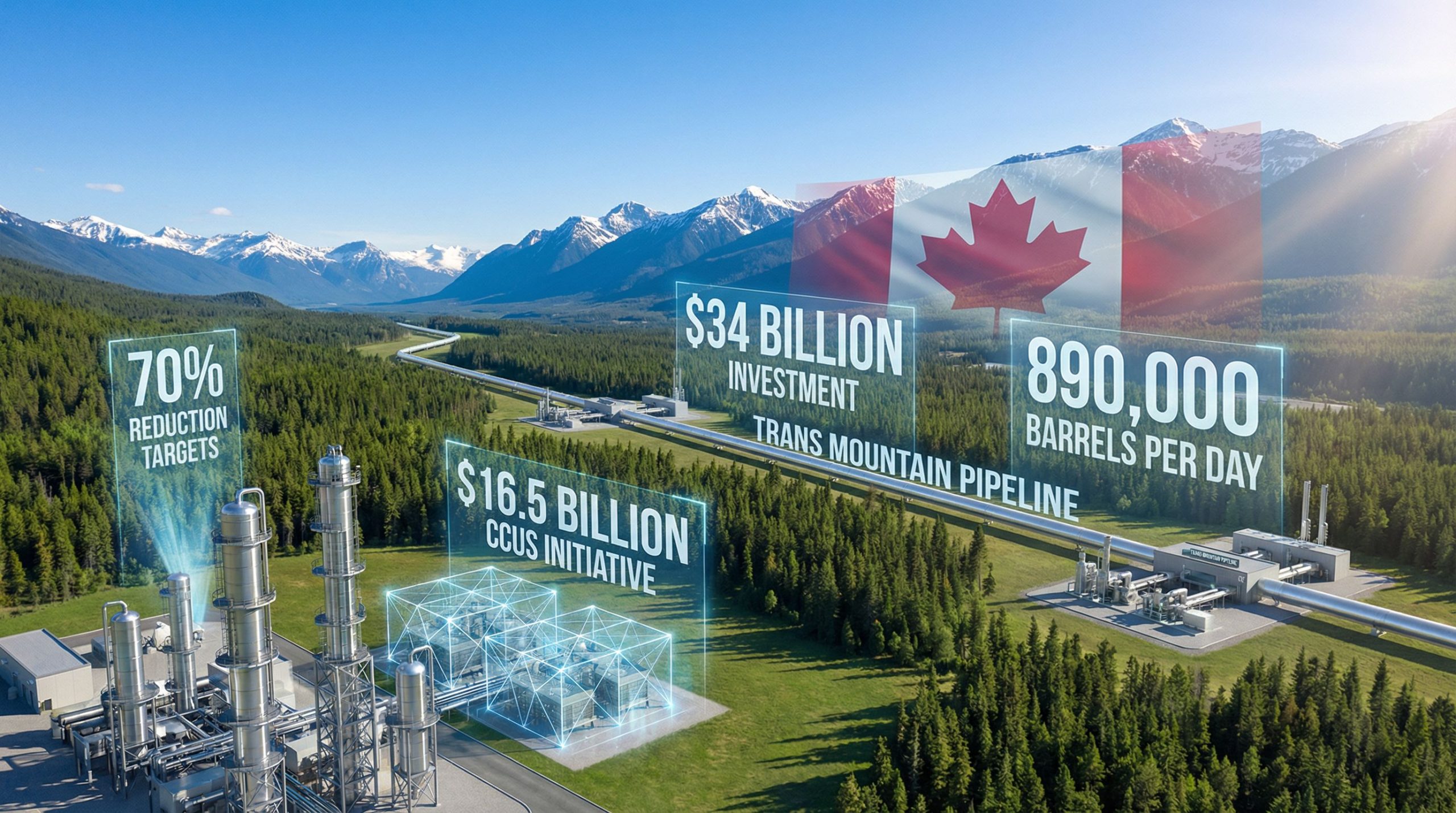
The Trans Mountain Pipeline expansion, completed in 2024, provides 890,000 barrels per day of additional pipeline capacity from Alberta to British Columbia. This infrastructure investment, totaling approximately $34 billion, fundamentally alters Canada's crude oil export dynamics by providing direct access to Pacific markets.
The pipeline's operational performance demonstrates the economic rationale for major infrastructure investments. Initial throughput data indicates strong utilisation rates, with Canadian producers securing long-term shipping commitments that provide revenue certainty and improved netback pricing compared to traditional export routes. Consequently, these developments influence US economic policies regarding energy trade relationships.
Asian Market Access and Pricing Dynamics
Pacific pipeline access enables Canadian crude oil producers to participate more effectively in Asian energy markets, where demand growth remains robust despite global economic uncertainties. Asian refiners value Canadian crude oil quality characteristics and seek supply diversification away from traditional Middle Eastern sources.
Market Access Benefits:
• Direct shipping access to Asian refineries
• Reduced reliance on U.S. Gulf Coast refining capacity
• Improved price realisations through market diversification
• Enhanced supply chain security for Asian energy consumers
Natural Gas Infrastructure and LNG Export Capacity
The Coastal GasLink pipeline system supports Canada's participation in global liquefied natural gas (LNG) markets through connection to Pacific export facilities. This infrastructure, representing investment of approximately $14.5 billion, enables transportation of 2.1 billion cubic feet per day of natural gas from northeastern British Columbia production areas to LNG processing facilities.
Natural gas pipeline infrastructure positions Canada to serve Asian LNG demand as countries transition energy systems away from coal-fired power generation. Asian economies, particularly Japan, South Korea, and emerging markets, require substantial LNG imports to meet growing electricity demand while reducing carbon emissions intensity.
Global LNG Market Positioning
Canadian LNG projects benefit from geographic advantages in serving Pacific Rim markets, including shorter shipping distances to major Asian consumption centres compared to U.S. Gulf Coast or Atlantic export facilities. These logistical advantages translate into improved economics for Canadian LNG producers and competitive pricing for Asian consumers. Furthermore, these developments reflect broader green transition insights affecting global energy markets.
Carbon Capture Integration and Environmental Technology
Advanced pipeline projects increasingly incorporate carbon capture, utilisation, and storage (CCUS) technology integration to address environmental concerns while maintaining production capacity. The Pathways Alliance initiative represents the most significant CCUS development in Canada's oil sands sector, with planned investment exceeding $16.5 billion through 2030.
CCUS technology integration enables oil sands producers to reduce emissions intensity while maintaining production volumes. This approach addresses environmental concerns through technological solutions rather than production curtailment, preserving economic benefits while improving environmental performance.
Emissions Reduction Technology Implementation
| Implementation Phase | Timeline | Emissions Reduction Target | Technology Focus |
|---|---|---|---|
| Initial Deployment | 2025-2027 | 20-30% reduction | Pilot CCUS facilities |
| Expansion Phase | 2027-2030 | 40-50% reduction | Scaled capture networks |
| Full Integration | 2030-2035 | 60-70% reduction | Comprehensive systems |
The integration of CCUS technology with pipeline infrastructure creates synergies that improve project economics while advancing environmental objectives. Captured carbon dioxide can be transported through existing pipeline networks to storage sites, reducing infrastructure requirements and operational costs.
Economic Impact Analysis and Regional Development
Pipeline infrastructure development generates substantial economic impacts through direct employment, supply chain activity, and regional development acceleration. Construction phases typically create 15,000 to 20,000 direct employment positions per major project, with operational phases requiring 2,000 to 3,000 permanent staff.
Economic Impact Categories:
• Direct Employment: Construction and operational positions
• Supply Chain Activity: Equipment manufacturing and services
• Tax Revenue: Federal, provincial, and municipal taxation
• Regional Development: Infrastructure and community investments
Investment Climate and Capital Allocation
Improved regulatory predictability and streamlined approval processes enhance Canada's investment climate for energy infrastructure projects. Reduced regulatory uncertainty decreases project risk premiums, making Canadian pipeline investments more attractive to international capital sources.
Government support for strategic infrastructure projects includes loan guarantees, tax incentives, and expedited permitting for projects meeting environmental and economic criteria. These policy tools help bridge financing gaps and accelerate project development timelines.
Future Pipeline Development and Technology Integration
Next-generation pipeline projects incorporate advanced monitoring systems, predictive maintenance capabilities, and operational optimisation technologies. Smart pipeline infrastructure utilises sensors, data analytics, and automated control systems to maximise throughput while minimising environmental impact.
Technology Integration Features:
• Real-time flow monitoring and optimisation
• Predictive maintenance scheduling
• Automated leak detection systems
• Integration with renewable energy sources
Hydrogen-Ready Infrastructure Planning
Future pipeline designs consider hydrogen transportation capabilities to support emerging hydrogen economy development. Hydrogen-ready infrastructure enables pipeline operators to transport hydrogen fuel while maintaining current hydrocarbon transportation functions, providing operational flexibility as energy markets evolve.
Pipeline modifications for hydrogen compatibility require specific materials and operational procedures due to hydrogen's unique properties. However, planning for hydrogen capability during initial construction phases reduces future conversion costs and timeline requirements.
Challenges and Risk Management in Pipeline Development
Environmental integration remains a primary challenge for pipeline development, requiring sophisticated technology solutions and comprehensive monitoring programmes. Projects must demonstrate environmental protection while achieving operational efficiency and economic viability.
Risk Management Strategies:
• Environmental Monitoring: Continuous assessment of ecological impact
• Technology Integration: Advanced safety and efficiency systems
• Community Engagement: Ongoing consultation and benefit sharing
• Regulatory Compliance: Meeting evolving environmental standards
Multi-Jurisdictional Coordination Challenges
Pipeline projects crossing multiple provincial boundaries require coordination among different regulatory frameworks and government priorities. The recent Canada-Alberta Memorandum of Understanding demonstrates improved coordination mechanisms, though challenges persist in aligning different jurisdictional requirements.
Successful multi-jurisdictional projects require early engagement with all relevant authorities and development of comprehensive coordination frameworks that address regulatory requirements, environmental standards, and community consultation protocols.
Investment Opportunities and Market Positioning
Canada oil pipeline development creates investment opportunities across infrastructure development, technology integration, and regional economic growth. Pipeline infrastructure provides stable, long-term cash flows that attract institutional investment while supporting broader economic development objectives.
Investment Characteristics:
• Stable Cash Flows: Long-term transportation contracts
• Inflation Protection: Revenue escalation mechanisms
• Strategic Assets: Essential infrastructure with limited competition
• Growth Potential: Expansion opportunities and technology upgrades
Energy Security and International Trade Benefits
Pipeline infrastructure enhancement strengthens Canada's position as a reliable energy supplier to allied nations while improving domestic energy security. Diversified export capacity reduces dependence on single markets and provides flexibility to respond to changing international energy demand patterns.
Enhanced pipeline capacity supports Canada's role in global energy security by providing alternative supply sources for countries seeking to diversify energy imports. This positioning becomes increasingly valuable as geopolitical tensions highlight the importance of secure energy supply chains.
Strategic Infrastructure for Economic Transition
Canada oil pipeline development represents strategic infrastructure investment that balances current economic requirements with long-term energy transition objectives. Modern pipeline projects incorporate advanced environmental technologies while providing essential energy transportation capacity for domestic consumption and international export.
The integration of carbon capture technology, Indigenous partnership models, and smart infrastructure systems demonstrates that large-scale energy projects can advance multiple policy objectives simultaneously. These developments position Canada as a leader in responsible energy infrastructure development while maintaining economic competitiveness in global energy markets.
Pipeline infrastructure provides the foundation for sustained economic growth through improved market access, reduced transportation costs, and enhanced energy security. As global energy markets continue evolving, Canada's strategic infrastructure investments ensure the country maintains its position as a reliable energy supplier while building capacity for future energy transition technologies.
The success of recent pipeline projects validates the economic rationale for strategic infrastructure investment and demonstrates that environmental responsibility and economic growth can be achieved through innovative technology integration and comprehensive stakeholder engagement. This approach provides a framework for future energy infrastructure development that supports Canada's economic objectives while addressing environmental and social considerations.
Could Pipeline Infrastructure Success Signal New Commodity Opportunities?
Canada's multi-billion dollar pipeline expansions demonstrate how strategic infrastructure investments can unlock substantial market value, a principle that extends across all commodity sectors. Discovery Alert's proprietary Discovery IQ model delivers real-time alerts on significant mineral discoveries across the ASX, helping investors identify actionable opportunities in the next wave of resource development before broader markets react.