Critical Resources Ltd
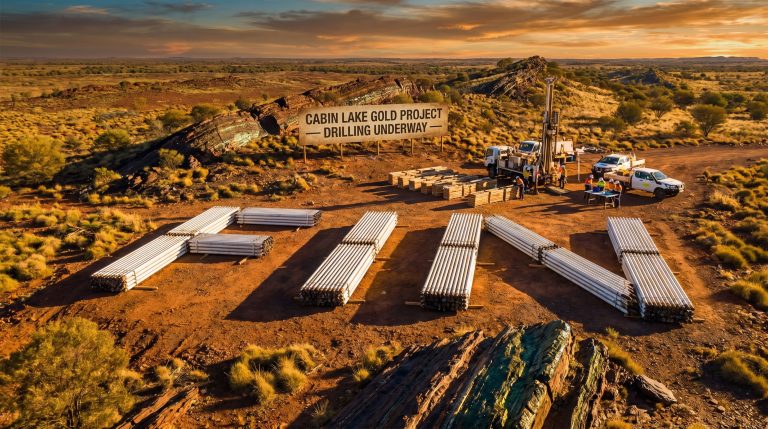
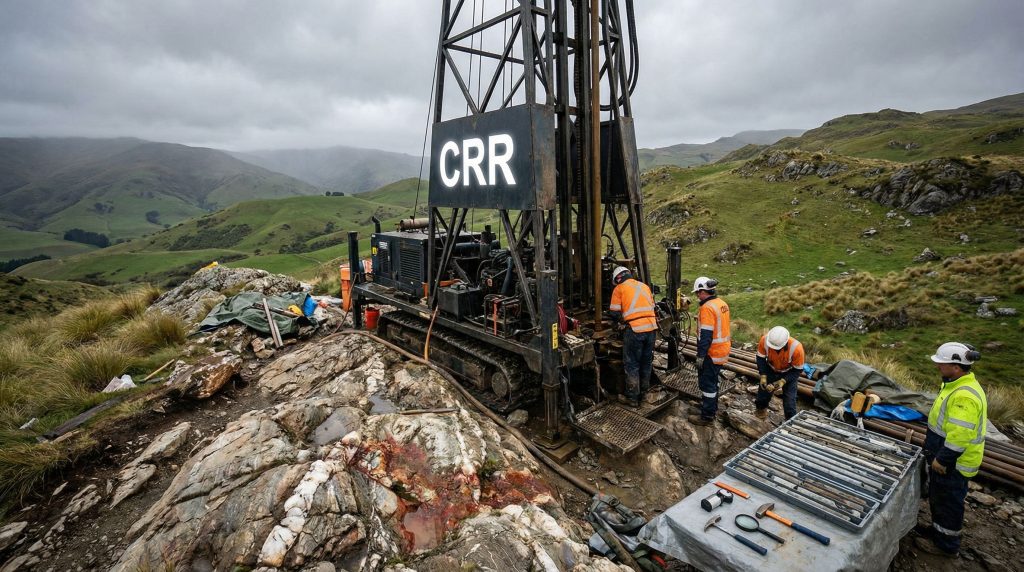
Critical Resources Limited (ASX:CRR) has commenced its inaugural Reverse Circulation drilling programme at the Cap Burn Gold Project by Critical Resources Ltd in New Zealand's Otago region, marking a significant milestone in the company's gold exploration strategy. The announcement reveals a 10-hole, 1,100-metre programme targeting high-grade gold mineralisation beneath a large arsenic-in-soil anomaly along the prospective Cap Burn fault structure.
The project's strategic positioning is particularly compelling. Located just 11 kilometres from OceanaGold's massive 10+ million ounce Macraes gold camp, the Cap Burn Gold Project by Critical Resources Ltd sits within the same structural corridor that has produced some of New Zealand's most significant gold discoveries. Furthermore, the project benefits from a similar geological setting to Santana Minerals' Rise and Shine deposit, which marked New Zealand's most significant gold discovery in four decades.
Strategic Positioning in a World-Class Gold District
The timing of this drilling programme reflects the renewed focus on New Zealand's Otago Schist Belt following recent discoveries. The Cap Burn Gold Project by Critical Resources Ltd occupies prime real estate within this multi-million ounce gold producing region, positioned along major northwest-southeast shear corridors that serve as primary conduits for gold mineralising fluids.
| Key Project Metrics | Details |
|---|---|
| Drilling Programme | 10 holes, ~1,100m total |
| Target Strike Length | 1 km (inaugural phase) |
| Total Fault Structure | ~10 km prospective length |
| Distance to Macraes | 11 km |
| Arsenic Anomaly Size | >1 km² (20-533 ppm As) |
| Expected Completion | 2-3 weeks |
| Assay Results | Mid-February 2026 |
The geological model draws direct parallels to proven deposits in the region. Cap Burn's fault structure aligns with Macraes' Footwall Fault and the Thompson's Gorge Fault at Santana's Bendigo-Ophir project, which hosts over 2.3 million ounces of gold resources.
Management Commentary
"Cap Burn stands out as a geologically robust project in a region renowned for gold potential. Despite this rich gold production legacy, significant portions of the Otago Schist Belt remain underexplored," said Tim Wither, Managing Director.
When big ASX news breaks, our subscribers know first
Understanding Orogenic Gold Systems: What Makes Cap Burn Special
Orogenic gold deposits represent some of the world's most significant gold resources, formed through hot, gold-bearing fluids moving along major fault systems during mountain-building events. These deposits are characterised by their association with specific rock types and structural controls, making geological targeting highly effective.
Key Features of Orogenic Gold Systems:
- Gold concentrated along major fault structures and shear zones
- Associated with specific rock unit boundaries (like TZ3/TZ4 at Cap Burn)
- Surface geochemical signatures (arsenic halos) indicating deeper mineralisation
- High-grade zones often found down-plunge from surface anomalies
This geological understanding has proven crucial in New Zealand, where Santana Minerals' Rise and Shine discovery demonstrated the effectiveness of targeting beneath surface arsenic anomalies. Their standout intercept of 16.5 metres @ 8.9 g/t gold (including 3.2 metres @ 24.3 g/t gold) at just 111 metres depth validates this exploration approach.
The geological model at Cap Burn targets structurally controlled mineralisation hosted within foliation-parallel shear zones. These zones develop where different rock units meet, creating pathways for gold-bearing fluids. Consequently, the Cap Burn fault represents the boundary between Textural Zone three (TZ3) and Textural Zone four (TZ4) schist units, providing the structural setting necessary for gold concentration.
Proven Foundation with Encouraging Early Results
Legacy drilling at Cap Burn in 2020 established a solid foundation for the current programme, returning encouraging intersections that closely resemble those encountered prior to the Rise and Shine discovery:
| Historical Drill Results | Intersection |
|---|---|
| CBN0003 | 9.0m @ 0.24 g/t Au from 54.0m |
| CBN0004 | 1.8m @ 0.76 g/t Au from 14.2m (inc. 0.8m @ 1.28 g/t Au) |
| CBN0011 | 6.0m @ 0.45 g/t Au from 173.0m (inc. 1.0m @ 1.22 g/t Au) |
These results confirmed orogenic gold mineralisation within foliation-parallel shear zones, validating the geological model analogous to the region's major deposits. However, the previous drilling tested only shallow levels, leaving the down-plunge potential beneath the large surface arsenic halo completely untested.
The geological similarities to Rise and Shine are striking. Both projects feature arsenic-in-soil anomalies exceeding 1 km² adjacent to major fault structures, with confirmed gold mineralisation within the TZ4 schist unit. In addition, the revised geological model now targets down-plunge extensions beneath surface arsenic halos, positioning the Cap Burn Gold Project by Critical Resources Ltd as a high-potential analogue to Rise and Shine.
Comprehensive Multi-Stage Exploration Pipeline
The announcement outlines that the current drilling programme represents the first phase of a larger, multi-stage exploration strategy across Critical Resources' expanding New Zealand portfolio. Following completion of permit transfers, the company plans systematic exploration programmes across five additional prospects:
| New Zealand Projects Timeline | Dec-25 | Jan-26 | Feb-26 | Mar-26 | Apr-26 | May-26 | Jun-26 |
|---|---|---|---|---|---|---|---|
| Cap Burn RC Drilling | ✓ | ✓ | Results | Follow-up drilling dependent on results | |||
| Tokomairiro Exploration | Transfer | Programme | Programme | Programme | |||
| Lammerlaw Exploration | Transfer | Programme | Programme | Programme | |||
| Croesus Exploration | Transfer | Programme | Programme | Programme | |||
| Silver Peaks Exploration | Transfer | Programme | Programme | Programme | |||
| Rock & Pillar Exploration | Transfer | Programme | Programme | Programme |
This systematic approach provides multiple opportunities for discovery across the underexplored Otago Schist Belt, with each project benefiting from the renewed geological understanding following recent discoveries. Furthermore, the company has established land access agreements with supportive stakeholders, providing the foundation for accelerated exploration activities.
Investment Thesis: Low-Cost Entry to High-Potential Gold Province
Critical Resources has positioned itself strategically within one of the Southern Hemisphere's most prospective yet overlooked gold provinces. The company's New Zealand portfolio offers several compelling investment advantages based on the announcement:
Geological Validation: The Rise and Shine discovery has fundamentally changed the geological understanding of the Otago region, providing a proven template for targeting high-grade gold beneath surface arsenic anomalies.
World-Class Neighbourhood: Operating within 11 kilometres of a 10+ million ounce gold camp provides immediate validation of the district's gold potential and access to established infrastructure.
Underexplored Potential: Despite the region's rich gold production history, significant portions remain underexplored, offering potential for new discoveries using modern exploration techniques.
Low-Cost Entry: The company reports securing access to this high-potential region with established land access agreements and supportive stakeholders.
Key Investment Highlight
"The inaugural drill programme has been designed for speed and efficiency, with minimal impact. The wide-spaced scout drilling will test the down-plunge potential beneath a well-defined arsenic-in-soil anomaly, guided by a renewed geological model leveraging the Rise and Shine discovery," according to the company announcement.
Drilling Programme Execution and Timeline
The announcement details that the current RC drilling programme comprises approximately 10 drill holes for 1,100 metres to systematically test the down-plunge extensions of defined arsenic-in-soil anomalies. The wide-spaced drill collars are planned to test beneath the Cap Burn fault structure, marking the boundary between the TZ3 and TZ4 schist units.
Drilling is expected to take 2-3 weeks, with all site preparations and coordination with the landowner completed. Samples will be dispatched immediately upon completion of drilling to a New Zealand-based laboratory for analysis, with assay results expected in mid-February 2026.
The programme covers approximately 1 km in strike length and marks the beginning of a larger, multi-stage exploration programme targeting the entire 10 km of the prospective Cap Burn fault structure. Consequently, this systematic approach allows for rapid testing of the geological model while maintaining operational efficiency.
The next major ASX story will hit our subscribers first
Why Investors Should Monitor Critical Resources
Critical Resources has assembled what appears to be a compelling portfolio targeting some of the most prospective yet underexplored gold terrain in the Southern Hemisphere. The company's systematic approach to exploration, combined with its strategic positioning in proven gold districts, creates multiple pathways to potential value creation.
The current drilling programme at the Cap Burn Gold Project by Critical Resources Ltd represents a near-term catalyst that could significantly impact the company's valuation trajectory. With assay results expected in mid-February 2026, investors have a clear timeline for potential value inflection points.
Key Tracking Points:
- Immediate Catalyst: Cap Burn drilling results due mid-February 2026
- Expansion Pipeline: Five additional New Zealand projects entering exploration phase
- Strategic Location: Operating in the same structural corridor as major gold deposits
- Proven Geology: Targeting validated geological model with recent discovery success
The combination of immediate drilling catalysts, strategic asset positioning, and systematic exploration across multiple high-potential targets positions Critical Resources as a notable opportunity in the gold exploration space. For instance, the company's approach of targeting beneath surface arsenic anomalies follows the successful template established by Santana Minerals' Rise and Shine discovery.
The geological setting at Cap Burn closely mirrors that of the Macraes and Bendigo-Ophir deposits, sitting on the northern edge of the Otago schist belt with confirmed gold mineralisation within TZ4 unit foliation-parallel shear zones. This geological validation, combined with the project's proximity to established infrastructure and mining operations, provides additional confidence in the exploration model.
Critical Resources has established itself in New Zealand's most prospective gold province at what appears to be an opportune time, with multiple exploration catalysts set to unfold over the coming quarters. The company's systematic approach and strategic positioning within proven gold corridors provide investors with leveraged exposure to potential discovery success in an underexplored world-class district.
Ready to Explore Critical Resources' Gold Discovery Potential?
With drilling results from the Cap Burn Gold Project expected in mid-February 2026 and five additional New Zealand projects entering exploration phase, Critical Resources presents a compelling opportunity for investors seeking exposure to one of the Southern Hemisphere's most prospective gold provinces. The company's strategic positioning within 11 kilometres of OceanaGold's massive 10+ million ounce Macraes gold camp, combined with its systematic exploration approach across proven geological corridors, creates multiple pathways for potential value creation. To discover more about Critical Resources' expanding New Zealand portfolio and upcoming exploration catalysts, visit the company's official website for comprehensive project details and investment information.