
May 19, 2026
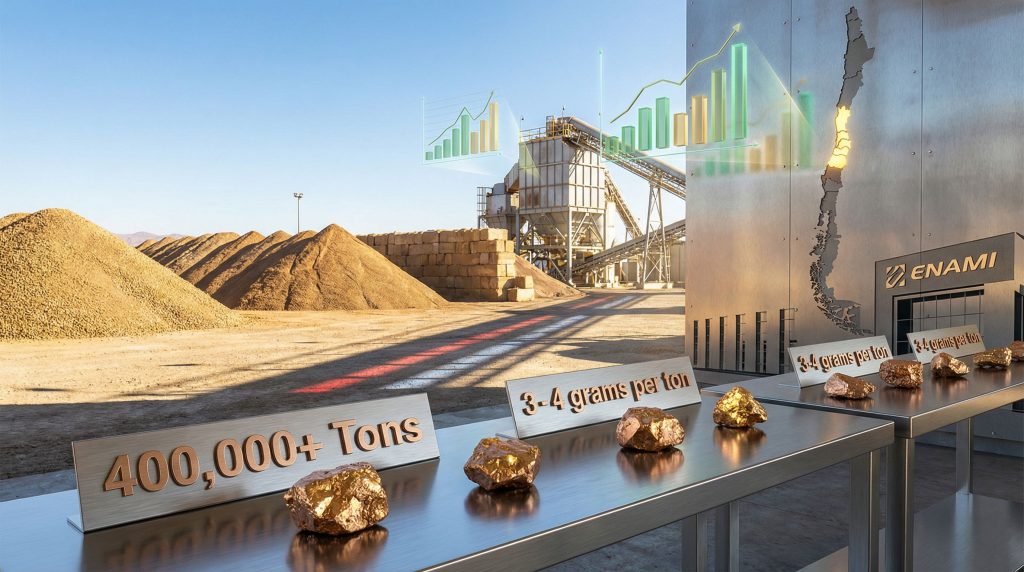
Chile's strategic mineral resource management through ENAMI demonstrates how state-controlled enterprises navigate complex market dynamics while balancing commercial optimization with broader policy objectives. The recent announcement of a chile enami gold ore sale involving over 400,000 tons of medium-grade material reflects sophisticated timing coordination with macroeconomic conditions and political transitions.
State-controlled mining enterprises operate under fundamentally different economic pressures than private sector operators, creating unique dynamics when large-scale asset sales enter commodity markets. These entities must balance commercial optimization with broader policy mandates, often resulting in strategic decisions that reflect macroeconomic timing rather than pure profit maximisation. Chile's approach to mineral resource management through its state mining enterprise demonstrates how government-controlled operations can influence regional supply chains through strategic inventory decisions.
The intersection of currency fluctuations, commodity price cycles, and political transitions creates complex decision-making environments for state mining enterprises. When these organisations control substantial ore inventories, their liquidation strategies can significantly impact regional processing sectors and broader commodity flows. Understanding these dynamics becomes essential for market participants seeking to anticipate supply additions and identify processing opportunities in volatile commodity environments.
ENAMI's Institutional Framework and Market Position
Chile's Empresa Nacional de Minería (ENAMI) functions as the country's primary state-controlled mining enterprise, maintaining a mandate that extends beyond traditional profit-driven operations. The organisation serves multiple roles within Chile's mining ecosystem, including market stabilisation functions and support mechanisms for smaller-scale mining operations. This dual mandate creates operational complexities that influence inventory management decisions and strategic asset optimisation approaches.
The institutional structure of ENAMI allows for inventory accumulation strategies that differ markedly from private mining operations. Rather than immediately processing or selling extracted materials, the enterprise can maintain substantial ore stocks as part of broader market stabilisation objectives. This capability becomes particularly relevant during periods of commodity price volatility, where strategic timing of sales can optimise value while supporting broader policy objectives.
Key operational characteristics of ENAMI include:
• Inventory management capabilities exceeding 400,000 metric tons of gold ore
• Processing and storage infrastructure supporting diverse ore grade classifications
• Strategic positioning within Chile's mineral export framework
• Coordination mechanisms with small and medium-scale mining operations
• Market timing capabilities independent of immediate cash flow pressures
The organisation's ability to maintain and strategically liquidate large ore inventories positions it as a significant factor in regional gold market trends, particularly given the substantial volumes involved in recent transactions.
When big ASX news breaks, our subscribers know first
Economic Fundamentals Behind Bulk Ore Liquidation
Large-scale ore inventory sales reflect sophisticated economic calculations that balance storage costs, market timing, and capital optimisation objectives. For state mining enterprises, these decisions incorporate additional factors beyond traditional profit maximisation, including policy coordination and market stabilisation considerations. The current gold market environment, characterised by recent price weakness following extended strength, creates strategic windows for inventory optimisation.
Furthermore, the strategic timing of ENAMI's inventory liquidation appears coordinated with recent gold price corrections despite year-long commodity strength. This timing suggests sophisticated market analysis capabilities within the organisation, potentially seeking to optimise value during temporary price weakness while maintaining long-term strategic positioning. Moreover, experts suggest gold price forecast models indicate continued upward momentum despite short-term corrections.
Currency dynamics add additional complexity to state mining enterprise decisions. The strong US dollar environment cited as contributing to recent gold price weakness creates both challenges and opportunities for Chilean mining operations. State enterprises can leverage these macroeconomic conditions to optimise inventory liquidation timing while supporting broader economic policy objectives.
Storage cost considerations for large-volume ore inventories include:
• Physical storage infrastructure maintenance and security
• Insurance and risk management for substantial commodity holdings
• Opportunity costs of capital tied up in inventory rather than productive investments
• Environmental compliance costs for long-term ore storage
• Quality degradation risks over extended storage periods
Technical Specifications and Processing Requirements
The medium-grade classification of ENAMI's ore inventory, specified at 3-4 grams per ton, defines specific processing pathways and buyer capabilities required for successful acquisition. This grade classification falls within an economically viable range that requires industrial milling operations while remaining accessible to regional processing facilities.
Medium-grade ore processing involves multi-stage operations including crushing, grinding, flotation, and chemical extraction processes. These requirements limit potential buyers to entities with established industrial processing capabilities and adequate throughput capacity to handle 400,000+ metric tons of material. Additionally, analysts examining gold rallying analysis suggest medium-grade ore processing remains economically viable during current market conditions.
Technical processing considerations include:
• Mill capacity requirements for efficient throughput
• Chemical reagent availability and environmental management
• Transportation logistics for bulk material handling
• Quality control and grade verification protocols
• Recovery rate optimisation for medium-grade specifications
The scale of this transaction requires buyers with significant working capital, processing infrastructure, and logistical capabilities, effectively limiting the potential purchaser pool to established regional operators or international mining organisations with Chilean operations.
Market Dynamics and Supply Chain Implications
Large-scale ore sales by state mining enterprises create distinctive market dynamics that differ from traditional mining production additions. These transactions introduce immediate supply availability while potentially signalling broader shifts in government mining policy or inventory management strategies. The timing and scale of such sales can influence regional processing capacity utilisation and commodity pricing patterns.
Regional Processing Capacity and Buyer Analysis
The successful absorption of 400,000+ metric tons of medium-grade gold ore requires substantial regional processing infrastructure and adequate buyer financing capabilities. This volume represents a significant addition to available processing feedstock, potentially affecting capacity utilisation rates across Chilean and regional South American processing facilities.
Potential buyer categories include:
• Regional smelting operations with existing Chilean processing infrastructure
• International mining conglomerates maintaining South American processing facilities
• Secondary processing specialists focusing on medium-grade ore optimisation
• Mining service companies with integrated processing and trading capabilities
The medium-grade specification (3-4 g/t) creates processing economics that require industrial-scale operations while remaining economically viable for facilities with appropriate infrastructure. This balance limits buyer participation to established operators with adequate technical capabilities and financial resources.
Processing timeline considerations for bulk ore transactions typically involve:
• Extended processing periods due to volume scale
• Coordination with existing production schedules
• Quality control and grade verification protocols
• Environmental compliance and permitting requirements
• Transportation and logistics coordination
Currency Impact and Macroeconomic Factors
The strong US dollar environment significantly influences Chilean mining economics, particularly for state enterprises with domestic cost structures and international revenue exposure. ENAMI's strategic timing appears coordinated with these macroeconomic conditions, potentially seeking to optimise peso-denominated returns during dollar strength periods.
Currency considerations affecting ore sale economics include:
• Revenue optimisation through strategic timing during currency strength
• Cost structure advantages for peso-denominated operational expenses
• Competitive positioning relative to private mining operations
• Policy coordination with broader Chilean economic management
The intersection of commodity price weakness and currency strength creates complex decision-making environments for state mining enterprises, where traditional profit maximisation metrics may be balanced against broader economic policy objectives. However, studies on gold as an inflation hedge suggest long-term value retention despite short-term currency fluctuations.
Regulatory Environment and Compliance Framework
State mining enterprise operations occur within comprehensive regulatory frameworks that govern asset sales, environmental compliance, and transparency requirements. Chile's mining law provides specific authorities and constraints for ENAMI operations, including provisions for inventory optimisation and strategic asset management.
Legal Authority and Transparency Requirements
ENAMI's authority to conduct large-scale ore sales derives from Chilean mining legislation that provides state enterprises with operational flexibility while maintaining public oversight requirements. These legal frameworks typically include provisions for:
• Asset optimisation mandates authorising inventory management decisions
• Transparency requirements for significant transaction disclosure
• Environmental compliance obligations for bulk material transfers
• Export licensing procedures for international ore sales
• Public interest protections ensuring alignment with national mining policy
The timing of this sale announcement coincides with Chile's recent presidential transition (March 11, 2026), potentially indicating coordination with new administration mining policy priorities or continuation of existing strategic directions.
Environmental and Export Compliance
Large-volume ore transactions require comprehensive environmental compliance protocols, particularly for materials that have been stored for extended periods. These requirements encompass quality verification, environmental impact assessment, and transportation safety protocols.
Environmental compliance elements typically include:
• Quality assurance testing for stored ore specifications
• Environmental impact assessment for bulk material transportation
• Storage site remediation following inventory removal
• Transportation routing compliance with environmental regulations
• Destination facility environmental capacity verification
Export procedures for large-volume mineral sales involve coordination with Chilean trade authorities, customs procedures, and potentially international trade agreement provisions affecting mineral export classifications. Chile's experience with ENAMI's operations provides established frameworks for handling such transactions.
Policy Implications Under New Government Leadership
The timing of ENAMI's inventory liquidation coincides with significant political transition in Chile, where a new president took office on March 11, 2026, just one day before the ore sale announcement. This proximity suggests potential coordination with new administration priorities or signals continuity in state mining enterprise management approaches.
Strategic Direction and State Enterprise Modernisation
New government mining policy priorities often influence state enterprise operational strategies, including inventory management, asset optimisation, and revenue generation approaches. The immediate announcement of this large-scale sale may indicate:
• Continuity in strategic direction from previous administration policies
• Revenue optimisation priorities under new government fiscal management
• Modernisation initiatives for state mining enterprise operations
• Market positioning adjustments reflecting new policy frameworks
The scale and timing of this transaction suggest sophisticated policy coordination between ENAMI management and broader government economic strategy, particularly given the substantial revenue implications of 400,000+ tons of gold ore. Furthermore, comparisons with Chile's resource strategy in lithium suggest similar strategic approaches across different mineral sectors.
Balance Between Commercial Efficiency and Social Mandates
ENAMI's traditional mandate includes supporting small and medium-scale mining operations while maintaining commercial viability. New government approaches to this balance may influence future inventory management strategies and asset optimisation decisions.
Policy considerations affecting state mining enterprises include:
• Revenue generation targets for government fiscal management
• Small-scale miner support program funding and operational priorities
• Regional development objectives in mining-dependent communities
• Strategic resource management balancing commercial and policy objectives
• International competitiveness of Chilean mining operations
"State mining enterprises serve dual functions as commercial operations and policy implementation tools, creating decision-making frameworks that incorporate both market optimisation and broader economic policy objectives."
What Are the Investment Implications and Market Outlook?
Large-scale state enterprise ore sales create both opportunities and considerations for mining sector investors, processing facility operators, and commodity market participants. The strategic nature of these transactions provides insights into government mining policy while potentially influencing regional supply chain dynamics.
Processing Sector Investment Opportunities
The availability of 400,000+ metric tons of medium-grade gold ore creates immediate opportunities for processing facilities with adequate capacity and financial resources. This volume represents substantial feedstock availability that could support extended processing operations and revenue generation.
Investment considerations include:
• Processing capacity utilisation optimisation through bulk ore acquisition
• Working capital requirements for large-volume ore purchases
• Transportation and logistics infrastructure investment needs
• Quality control and metallurgical testing capability requirements
• Market timing advantages during current commodity price environment
Regional processing facilities positioned to handle bulk acquisitions may benefit from economies of scale and extended operational security through substantial feedstock availability. Additionally, reports suggest that such transactions provide significant opportunities for established operators.
State Enterprise Asset Management Trends
ENAMI's strategic inventory liquidation may signal broader trends in state mining enterprise asset management, potentially indicating similar opportunities across other government-controlled mining operations in South America and globally.
Emerging trends in state mining enterprise management include:
• Inventory optimisation strategies balancing commercial returns and policy objectives
• Strategic timing coordination with macroeconomic and political cycles
• Modernisation of operational practices incorporating advanced market analysis
• Enhanced transparency requirements in public enterprise asset transactions
• Coordination with private sector processing and trading capabilities
The next major ASX story will hit our subscribers first
Risk Assessment and Due Diligence Considerations
Large-scale ore acquisition from state enterprises requires comprehensive risk assessment encompassing technical, financial, regulatory, and operational factors. The unique characteristics of government inventory liquidation create specific due diligence requirements beyond traditional mining transaction analysis.
Technical and Quality Risk Factors
Extended ore storage periods may affect material quality and processing characteristics, requiring thorough technical evaluation before acquisition commitment. Medium-grade ore stored for significant periods may experience oxidation, moisture content changes, or other quality modifications affecting processing efficiency.
Technical due diligence requirements include:
• Comprehensive sampling protocols across the entire inventory
• Metallurgical testing to verify processing characteristics
• Quality degradation assessment for stored materials
• Processing optimisation analysis for buyer facility compatibility
• Recovery rate verification under various processing scenarios
Regulatory and Compliance Risk Management
Transactions involving state mining enterprises require careful attention to regulatory compliance, export procedures, and potential policy changes affecting transaction completion. Political transitions may introduce uncertainty regarding existing agreements or approval processes.
Regulatory risk factors encompass:
• Export licensing approval and processing timeline uncertainty
• Environmental compliance requirements for bulk material transfer
• Political stability considerations affecting transaction completion
• Currency exchange risk management for international buyers
• Contract enforcement mechanisms under Chilean mining law
Long-Term Strategic Implications
ENAMI's inventory liquidation strategy reflects broader evolution in state mining enterprise management, potentially signalling future approaches to asset optimisation and market participation. This transaction may establish precedents for similar operations across Chile and other resource-rich nations with state mining enterprises.
Evolution of State Mining Enterprise Operations
The sophisticated market timing and substantial scale of this ore sale demonstrate advanced operational capabilities within ENAMI, suggesting potential modernisation of state mining enterprise management approaches. This evolution may influence future government mining policy and public enterprise operational strategies.
Strategic evolution indicators include:
• Enhanced market analysis capabilities for timing optimisation
• Professional asset management approaches in public enterprises
• Coordination with private sector processing and trading capabilities
• Strategic inventory management as policy implementation tool
• Revenue optimisation balancing commercial and social objectives
The success of this transaction may encourage similar strategic approaches by other state mining enterprises, potentially influencing regional commodity supply patterns and market dynamics.
Future Policy Direction and Market Positioning
Chile's approach to state mining enterprise management under new government leadership may establish frameworks affecting future asset optimisation decisions, processing sector development, and regional mining investment climate. The immediate post-transition timing of this announcement suggests policy continuity and strategic coordination.
Long-term implications encompass broader questions about the role of state enterprises in commodity markets, optimal inventory management strategies, and the balance between commercial efficiency and social policy implementation through mining operations. These considerations will likely influence future Chilean mining policy and regional investment patterns.
Disclaimer: This analysis is based on publicly available information and market data as of March 2026. Commodity markets involve substantial volatility and risk. State enterprise transactions may be subject to regulatory changes, political developments, and market conditions affecting completion and outcomes. Readers should conduct independent research and seek professional advice before making investment or business decisions related to mining sector opportunities.
Are You Seeking Opportunities in ASX Gold Discoveries?
Discovery Alert's proprietary Discovery IQ model delivers real-time alerts on significant gold discoveries, instantly empowering subscribers to identify actionable opportunities ahead of the broader market. Understand why major mineral discoveries can lead to substantial market returns by exploring Discovery Alert's dedicated discoveries page, showcasing historic examples of exceptional outcomes, and begin your 14-day free trial today to position yourself ahead of the market.