Strategic Context: Chile's Smelting Capacity Gap
The global copper industry faces a fundamental geographic imbalance that undermines value creation for major producing nations. While advanced economies drive unprecedented demand for copper-intensive renewable energy infrastructure, processing capacity remains concentrated in regions far from primary production centers. This structural inefficiency creates both strategic vulnerabilities and untapped economic opportunities for resource-rich countries seeking to maximise their position in the global copper supply forecast.
Chile's position within this framework illustrates the complexity of modern mineral supply chains. Despite producing approximately 27-28% of global refined copper, Chile processes only 6% of its copper domestically, according to recent industry analysis. This means roughly 94% of Chilean copper concentrate travels thousands of nautical miles to Asian smelting facilities before returning to global markets as refined products.
The economic implications extend beyond transportation costs to include lost processing margins, reduced strategic autonomy, and limited domestic industrial development. Furthermore, this geographic concentration creates supply chain vulnerabilities that extend beyond individual companies to national economic security.
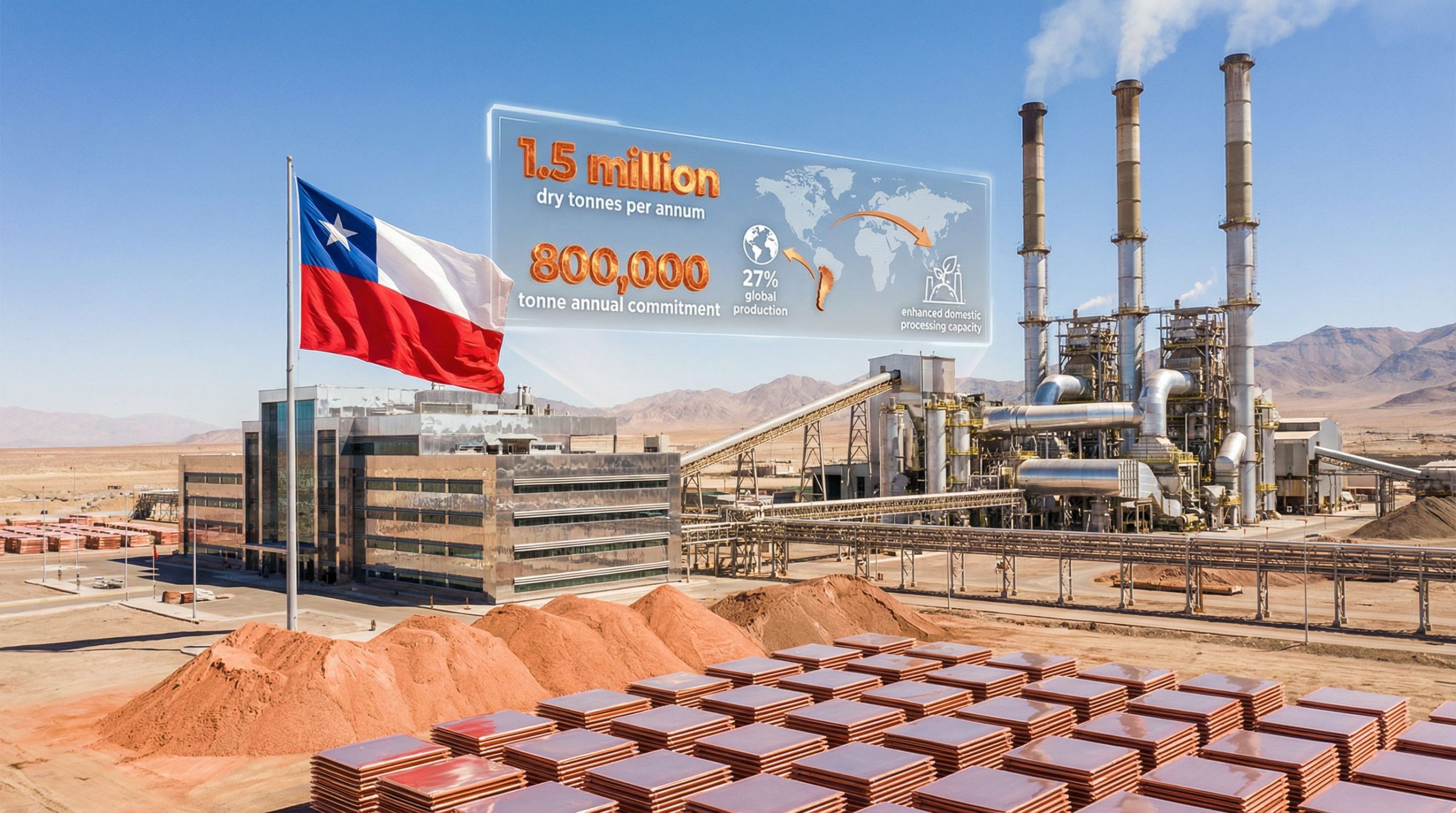
The Codelco and Glencore Memorandum of Understanding represents a strategic response to these market dynamics. Signed in December 2025, this partnership aims to establish significant domestic smelting infrastructure within Chile's Antofagasta Region, targeting processing capacity of 1.5 million dry tonnes per annum with secured feedstock commitments.
This strategic alliance addresses supply chain inefficiencies through a framework designed to capture domestic value while leveraging international expertise. The secured feedstock includes 800,000 tonnes annually for a minimum 10-year term with extension options.
The partnership structure addresses these inefficiencies by creating processing capacity that enables Chilean producers to capture smelting margins currently accruing to Asian facilities. Glencore emerged as the preferred bidder following what industry sources describe as a highly competitive selection process, confirming broad market appetite for Chilean smelting infrastructure development.
Partnership Structure and Commercial Framework
The commercial architecture underlying this strategic alliance demonstrates sophisticated risk allocation and value optimisation principles. Unlike traditional build-operate-transfer models, this partnership establishes long-term operational collaboration between Chile's state-owned copper champion and one of the world's largest commodity trading organisations.
Processing Capacity and Supply Security
The facility's 1.5 million dry tonnes per annum design capacity positions it as a significant addition to Chile's domestic processing infrastructure. Within this total capacity, Codelco has committed to supply contracts covering up to 800,000 tonnes annually, representing approximately 53% of facility throughput.
This supply commitment provides foundational cash flow security for project financing while maintaining operational flexibility for additional regional concentrate sources. The contract duration structure incorporates both stability and adaptability mechanisms that address the fundamental tension between long-term infrastructure investments and dynamic commodity market conditions.
The initial 10-year minimum term provides investment certainty for capital recovery, while 10-year extension options allow partnership evolution based on market conditions and operational performance. This framework enables both parties to adapt to changing market dynamics whilst maintaining long-term strategic alignment.
Competitive Selection and Market Validation
The competitive bidding process that led to Glencore's selection provides important market intelligence regarding industry confidence in Chilean copper processing infrastructure. According to project stakeholders, the highly competitive process confirmed significant industry interest while generating valuable market intelligence about technical approaches and financing structures.
This competitive validation suggests multiple qualified operators evaluated the opportunity favourably, indicating broader industry recognition that Chilean processing capacity represents attractive investment opportunities. The selection of a global trading house rather than a pure-play mining company reflects the commercial complexity of modern smelting operations.
These operations require sophisticated logistics, financing, and market-making capabilities that extend beyond traditional mining company competencies. Consequently, the partnership leverages complementary strengths from both public and private sector participants.
Investment Scale and Technical Standards
Capital requirements estimated at $1.5-2.0 billion place this project among major global copper smelting developments. This investment scale reflects not only processing equipment and infrastructure but also environmental systems designed to meet solid operational and environmental standards.
The Memorandum of Understanding establishes Glencore's responsibility for design, financing, construction, operation, and maintenance of the facility. This comprehensive scope transfer allows Codelco to focus on core mining operations while accessing specialised smelting expertise.
However, the partnership structure ensures Chilean oversight and strategic control whilst benefiting from Glencore's global processing portfolio experience. This approach balances technical expertise requirements with national strategic objectives.
How Will This Infrastructure Investment Transform Chile's Mining Ecosystem?
The establishment of proximate smelting capacity creates cascading benefits throughout Chile's copper mining ecosystem, extending well beyond the immediate partnership participants. These operational advantages reshape competitive dynamics for regional producers while establishing infrastructure foundations for expanded downstream processing capabilities.
Operational Advantages for Regional Producers
Geographic proximity fundamentally alters the economics of copper concentrate processing for Antofagasta Region miners. Current logistics requirements involve rail transportation to coastal ports, maritime shipping across approximately 12,000-15,000 nautical miles to Asian facilities, and extended working capital cycles for inventory in transit.
Domestic processing eliminates intercontinental shipping requirements, potentially reducing logistics expenditure by 20-35% for regional concentrate producers. Beyond direct cost savings, proximate processing provides operational flexibility benefits including reduced inventory management complexity and shorter cash conversion cycles.
The facility's location within Antofagasta or Tocopilla provinces positions it strategically relative to Chile's major copper mining operations. This geographic clustering creates potential for shared infrastructure utilisation and coordinated logistics optimisation that benefits the broader regional mining community.
Moreover, the proximity enables enhanced ability to optimise concentrate blending based on local market conditions. This flexibility supports improved copper investment strategies for regional producers seeking to maximise value from their mineral resources.
Value Capture Through Domestic Processing
Processing proximity enables Chilean producers to capture smelting margins that currently accrue to Asian facilities. Industry analysis suggests these margins typically represent 3-5% of final refined copper value, translating to substantial annual revenue retention for domestic processing operations.
Beyond margin capture, domestic smelting allows Chilean companies to export higher-value refined copper cathodes rather than lower-value concentrate products. This value enhancement supports premium pricing while reducing exposure to concentrate treatment charges that fluctuate based on global smelting capacity utilisation.
Furthermore, the domestic processing capability aligns with broader energy transition strategies that emphasise value addition within producing countries. This approach maximises economic benefits from mineral resources whilst supporting national industrial development objectives.
Competitive Positioning Analysis
Glencore's selection through competitive bidding validates both the commercial attractiveness of Chilean smelting infrastructure and the company's technical capabilities for complex partnership execution. The competitive process generated valuable market intelligence while confirming strategic relevance for global mining companies.
Technical Expertise and Financial Capabilities
Glencore's global footprint in copper smelting and refining operations provides technical precedent for similar projects worldwide. The company's experience with complex, long-duration partnerships involving state-owned enterprises addresses governance and operational coordination challenges inherent in public-private infrastructure development.
Financial capacity to execute $1.5-2.0 billion capital projects represents a key differentiator in competitive selection. Major smelting infrastructure requires sophisticated project financing, equipment procurement, and construction management capabilities that extend beyond traditional mining company competencies.
In addition, this financial capability ensures project completion and operational sustainability throughout economic cycles. The scale of investment reflects long-term commitment to Chilean copper markets and confidence in domestic processing infrastructure viability.
Long-term Strategic Commitment
The partnership reflects Glencore's broader strategic positioning within Chilean copper markets. Company leadership has emphasised long-term confidence in Chile as an investment destination, citing years of significant mining industry investments that provide operational foundation for expanded processing activities.
This established presence offers advantages in regulatory navigation, local supply chain development, and workforce recruitment that benefit large-scale industrial project execution. The partnership leverages these existing relationships while expanding Glencore's value chain integration within Chilean copper markets.
What Are the Macroeconomic Implications for Chile's Mining Sovereignty?
The strategic dimensions of domestic smelting capacity extend far beyond commercial optimisation to encompass national resource sovereignty and economic security objectives. Chile's approach reflects growing global recognition that critical mineral processing capabilities represent strategic assets comparable to energy infrastructure or transportation networks.
National Resource Strategy Enhancement
Chile's mining sovereignty framework recognises that raw material exports without domestic value addition limit economic development potential while creating strategic dependencies on foreign processing infrastructure. The Codelco and Glencore Memorandum of Understanding directly addresses these constraints by establishing domestic processing capabilities aligned with global energy transition requirements.
Value Chain Integration and Economic Retention
Current export patterns that send 94% of Chilean copper concentrate overseas for processing represent substantial value leakage from the domestic economy. Smelting margins, refined product premiums, and associated industrial development opportunities currently accrue to foreign processors rather than Chilean communities.
Domestic smelting infrastructure captures these economic benefits locally while supporting skilled employment development in advanced manufacturing processes. Industry estimates suggest large-scale smelting operations create 500-1,000 permanent jobs directly, with additional indirect employment in supporting services.
These supporting services include logistics, maintenance, and engineering roles that contribute to broader industrial capability development. The employment creation supports regional economic diversification beyond traditional mining activities whilst maintaining connection to the mineral resource base.
Strategic Security Through Processing Independence
The partnership addresses what project leadership describes as strengthening Chile's sovereignty and strategic security in the face of global challenges. This language reflects recognition that copper processing capacity represents strategic infrastructure essential for national economic security.
Processing independence reduces exposure to foreign policy disruptions, trade disputes, or capacity constraints that could limit Chile's ability to monetise its mineral resources effectively. Domestic smelting provides alternative processing pathways that enhance negotiating power with international buyers while maintaining market access flexibility.
Furthermore, this strategic independence becomes increasingly important as global demand for critical minerals intensifies. The partnership positions Chile to maintain control over its resource value chains during periods of heightened international competition for mineral supplies.
Regional Development Framework
Infrastructure Synergies and Industrial Clustering
The facility's proposed location within Antofagasta or Tocopilla provinces leverages existing mining infrastructure, port facilities, and utility systems developed to support regional copper production. This infrastructure foundation reduces project development costs while accelerating construction timelines through shared resource utilisation.
Regional industrial clustering creates agglomeration benefits including specialised workforce development, supplier network optimisation, and knowledge spillover effects that enhance overall competitiveness. The proximity to other copper-producing companies enables logistical advantages and operational flexibility that benefit multiple regional stakeholders.
These clustering benefits extend to major copper system insights that can inform broader regional development strategies. The concentration of processing and mining activities creates opportunities for technical innovation and operational excellence sharing across the industry.
Environmental Standards and Sustainable Development
Modern smelting technology implementation addresses environmental performance expectations while supporting Chile's broader sustainability objectives. The partnership commitment to solid operational and environmental standards reflects industry evolution toward cleaner processing technologies that minimise environmental impact while maximising resource recovery efficiency.
This environmental focus aligns with global market trends favouring responsibly produced copper for renewable energy applications. Chilean processing facilities meeting high environmental standards can command premium pricing while supporting the country's position as a preferred supplier for energy transition infrastructure.
However, the environmental benefits extend beyond market positioning to include local community relations and regulatory compliance. High environmental standards ensure long-term social licence to operate whilst contributing to Chile's broader sustainable development objectives.
How Does This Partnership Align with Global Energy Transition Demands?
The global shift toward renewable energy infrastructure creates unprecedented copper demand while simultaneously highlighting supply chain resilience vulnerabilities. Chile's strategic positioning within this transition reflects both opportunity and responsibility as the world's largest copper producer during a period of accelerating electrification requirements.
Critical Minerals Supply Chain Resilience
Processing Bottleneck Resolution
Global copper smelting capacity constraints represent a fundamental bottleneck limiting the pace of energy transition infrastructure deployment. Asian smelting dominance creates processing queues that delay project development while concentrating supply chain risk within a limited geographic region.
Chilean domestic processing capacity diversifies global smelting geography while adding significant throughput to worldwide processing infrastructure. The 1.5 million dry tonnes per annum facility capacity represents meaningful contribution to global processing capabilities, potentially reducing treatment charges and improving concentrate processing availability.
Moreover, this capacity addition addresses critical timing requirements for energy transition infrastructure. The facility's operational timeline aligns with projected peak demand periods for renewable energy deployment and electric vehicle manufacturing that require substantial copper inputs.
Energy Transition Infrastructure Support
Copper's essential role in renewable energy systems, electric vehicle manufacturing, and grid infrastructure modernisation creates direct linkages between Chilean processing capacity and global decarbonisation objectives. Domestic smelting enhances Chile's ability to support energy transition projects through reliable, high-quality refined copper supply.
The partnership's emphasis on critical minerals as the foundation of energy transition reflects recognition that processing capacity represents infrastructure essential for global climate objectives. Chilean facilities operating to high environmental standards can position the country as a preferred supplier for sustainability-focused applications.
In addition, the strategic importance of reliable copper supply becomes more pronounced as energy transition accelerates. The domestic processing capability provides supply chain security that supports international climate commitments whilst capturing economic benefits for Chile.
Timeline and Implementation Roadmap
Development Phases and Milestone Planning
The Memorandum of Understanding establishes framework for structured project development through pre-feasibility study completion, definitive agreement negotiation, and construction commencement. Industry precedents suggest 2026 study completion targets support 2030 planned construction start with 2032-2033 operational launch timelines.
This development schedule positions the facility to contribute to global copper supply during peak energy transition demand periods projected for the mid-2030s. The timing aligns with international commitments for renewable energy deployment while supporting Chile's position as a strategic supplier during critical transition phases.
Furthermore, the phased development approach enables risk management while maintaining project momentum. Each milestone provides opportunity for assessment and refinement whilst maintaining commitment to ultimate operational objectives.
Operational Maturity and Capacity Optimisation
Full capacity achievement projected for the mid-2030s coincides with anticipated peak stress on global copper processing infrastructure. The facility's contribution during this critical period enhances supply chain resilience while supporting Chilean economic objectives through domestic value capture during high-demand market conditions.
The operational maturity timeline also enables workforce development and technical capability building that supports long-term competitive advantages. These capabilities can inform future expansion decisions or additional processing infrastructure development based on market evolution.
What Investment and Market Dynamics Drive This Strategic Alliance?
The financial and strategic considerations underlying this partnership reflect sophisticated analysis of global copper markets, processing economics, and long-term demand projections. Both Codelco and Glencore bring complementary capabilities that address key success factors for large-scale smelting infrastructure development.
Glencore's Strategic Positioning
Production Integration and Portfolio Optimisation
Glencore's strategic positioning within global copper markets includes production targets supporting 1.6 million tonnes annual copper output by 2035, according to company guidance. The Chilean smelting partnership enhances this production strategy through secured processing capacity that supports long-term supply chain optimisation.
Portfolio diversification through expanded smelting and refining capabilities provides operational flexibility while capturing processing margins across the copper value chain. This vertical integration strategy reduces exposure to treatment charge volatility while enhancing ability to optimise product mix based on market conditions.
The integration also supports copper-uranium investment strategies that leverage complementary mineral resources. This diversification enhances portfolio resilience whilst maximising returns from mineral processing infrastructure investments.
Long-term Supply Security and Market Access
The 800,000 tonnes annual minimum supply commitment from Codelco provides foundational feedstock security supporting project financing and operational planning. This supply arrangement enables Glencore to optimise facility utilisation while maintaining capacity for additional regional concentrate sources.
Long-term supply arrangements reduce market risk while providing cost structure predictability essential for successful project economics. The partnership structure balances supply security with operational flexibility through extension options that adapt to changing market conditions.
However, this supply security also enables strategic planning for market positioning and customer relationship development. The predictable feedstock supply supports long-term customer commitments whilst providing flexibility to respond to market opportunities.
Market Intelligence and Competitive Analysis
Industry Interest Validation
The competitive bidding process that preceded Glencore's selection provides important market intelligence regarding industry perspectives on Chilean processing infrastructure investment opportunities. Broad participation in the competitive process confirms market appetite for strategic partnerships with Chilean mining institutions.
This validation demonstrates that multiple qualified operators view Chilean smelting infrastructure as strategically relevant investment opportunities aligned with global energy transition trends. The competitive interest supports project viability while providing Codelco with negotiating leverage and price discovery.
Furthermore, the competitive interest indicates broader industry recognition of Chile's strategic position within global copper markets. This recognition supports future infrastructure development opportunities whilst validating the partnership approach to major project development.
Risk Mitigation Through Partnership Structure
Stable, long-term supply arrangements mitigate key operational risks while providing cash flow predictability essential for project financing. The partnership structure distributes technical, financial, and operational risks between participants with complementary capabilities and risk tolerance.
Glencore's global trading and marketing capabilities provide market access advantages while Codelco's domestic position offers regulatory and operational benefits. This capability combination addresses key success factors for international mining infrastructure partnerships whilst optimising risk allocation.
Key Success Metrics and Performance Indicators
| Metric Category | Target/Specification | Strategic Impact |
|---|---|---|
| Processing Capacity | 1.5M dry tonnes annually | Regional processing hub creation |
| Supply Commitment | 800K tonnes minimum | Long-term feedstock security |
| Investment Scale | $1.5-2.0B estimated | Major infrastructure development |
| Timeline | 2032-2033 operations | Medium-term capacity addition |
| Contract Duration | 10+10 year structure | Investment certainty framework |
| Geographic Location | Antofagasta/Tocopilla | Proximity to mining operations |
| Employment Creation | 500-1,000 direct jobs | Regional economic development |
| Value Retention | 3-5% processing margins | Domestic economic capture |
Financial Performance Indicators
Project success measurement incorporates both operational metrics and strategic objective achievement. Processing capacity utilisation rates, feedstock quality specifications, and production cost benchmarks provide operational performance indicators while economic impact assessment includes employment creation and tax revenue generation.
Return on investment calculations must incorporate both direct financial returns and strategic value creation including supply chain resilience, market positioning enhancement, and national economic security benefits that extend beyond traditional project economics.
These broader benefits reflect the strategic nature of critical mineral processing infrastructure that supports national economic objectives beyond immediate commercial returns. The partnership structure recognises both commercial viability requirements and strategic value creation objectives.
Operational Excellence Metrics
Environmental performance standards alignment with international best practices supports market positioning while ensuring regulatory compliance and community acceptance. Safety performance indicators, environmental impact minimisation, and operational efficiency benchmarks provide comprehensive success measurement frameworks.
Technical performance metrics including recovery rates, product quality specifications, and processing cost optimisation demonstrate operational competitiveness while supporting long-term project sustainability and expansion potential. These metrics enable continuous improvement whilst maintaining strategic objectives.
Regional and Global Competitive Implications
The strategic implications of Chilean domestic smelting capacity extend beyond national boundaries to influence global copper market dynamics, competitive positioning among producing nations, and supply chain resilience for energy transition infrastructure.
Chile's Strategic Positioning Enhancement
Value Addition and Export Diversification
Domestic processing capability development transforms Chile's position within global copper value chains from raw material supplier to processed product exporter. This transition captures processing margins domestically while supporting premium pricing for high-quality refined copper products.
Export diversification through refined copper cathode production reduces dependence on concentrate markets while providing access to applications requiring high-purity copper specifications. The enhanced product portfolio supports market positioning during varying demand cycles while optimising revenue generation across different customer segments.
Advanced Manufacturing Ecosystem Development
Smelting infrastructure provides foundation for expanded downstream processing capabilities including copper alloy production, electrical component manufacturing, and specialised product development. These advanced manufacturing opportunities create higher-value employment while supporting industrial development beyond primary resource extraction.
The technical expertise developed through domestic smelting operations supports broader industrial capability enhancement including engineering services, equipment manufacturing, and process optimisation that benefit multiple sectors within the Chilean economy. This capability development creates lasting competitive advantages beyond the immediate project scope.
Global Smelting Market Rebalancing
Geographic Diversification Benefits
Chilean processing capacity contributes to global smelting market rebalancing by reducing Asia-Pacific processing concentration. This geographic diversification enhances supply chain resilience while providing alternative processing pathways that reduce bottleneck risks during peak demand periods.
Processing geography diversification supports price discovery improvement while reducing market power concentration that can limit competitive pricing and service availability. Multiple processing regions provide enhanced flexibility for producers seeking optimal processing arrangements based on logistics, timing, and commercial considerations.
Supply Chain Resilience Enhancement
Alternative processing pathways created through Chilean domestic smelting provide insurance against supply chain disruptions while supporting responsive capacity additions during demand growth periods. This resilience enhancement benefits global energy transition infrastructure development through improved copper availability and processing flexibility.
The strategic importance of processing capacity diversification increases as global copper demand accelerates due to renewable energy deployment, electric vehicle adoption, and grid modernisation requirements that stress existing smelting infrastructure. The Codelco and Glencore Memorandum of Understanding represents a significant contribution to this global capacity diversification effort.
Disclaimer: This analysis is based on publicly available information and industry research. Copper market projections, investment returns, and strategic outcomes involve significant uncertainties and risks. Readers should conduct independent analysis and consult qualified professionals before making investment decisions related to copper mining, processing infrastructure, or commodity markets.
Ready to Capitalise on the Next Major Copper Discovery?
Whilst strategic infrastructure partnerships reshape Chile's processing landscape, Discovery Alert's proprietary Discovery IQ model delivers real-time alerts on significant ASX mineral discoveries, instantly empowering subscribers to identify actionable opportunities ahead of the broader market. Begin your 30-day free trial today and secure your market-leading advantage whilst major mining developments unfold globally.