China rare earth export licenses continue reshaping global industrial relationships as governments navigate increasingly complex supply chain dynamics. Traditional open-market frameworks for essential materials face systematic challenges from evolving regulatory approaches that prioritise strategic partnerships over purely commercial transactions. Furthermore, this transformation reflects broader geopolitical realignments where resource access becomes contingent on diplomatic positioning and bilateral cooperation agreements.
Understanding China's New Rare Earth Export Licensing Requirements
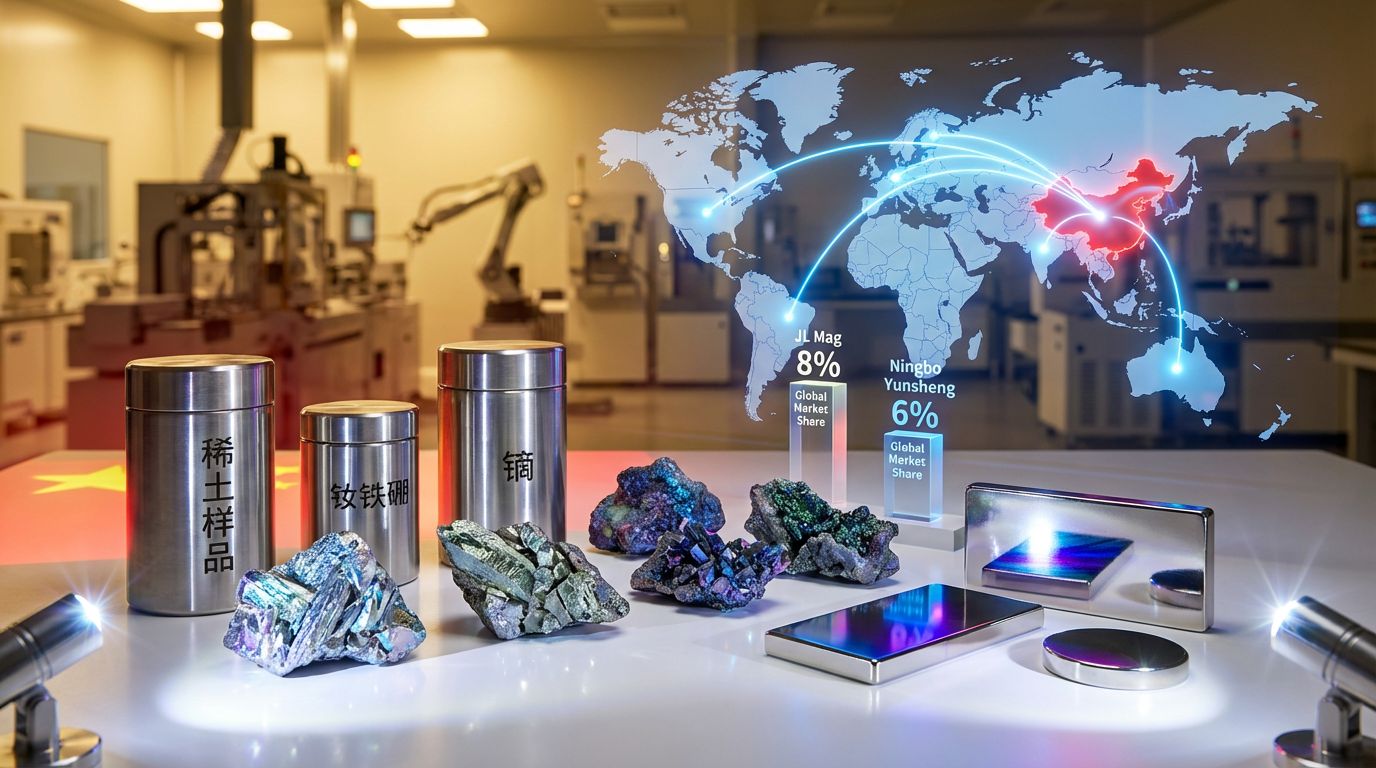
Beijing's December 2025 introduction of general export licences for rare earth materials represents a significant evolution from previous regulatory frameworks. Three Chinese manufacturers – JL Mag, Ningbo Yunsheng, and Zhong Ke San Huan – received the first authorisations under this new system, marking a departure from shipment-by-shipment approval processes that had characterised export controls since April 2025.
The Evolution from Individual to General Export Permits
The regulatory transformation began with China export controls on seven heavy rare earth elements in April 2025, followed by expanded restrictions with extraterritorial provisions in October 2025. These measures created substantial supply chain disruptions across automotive and electronics sectors before Beijing announced temporary suspensions in November 2025.
The December 2025 general licensing framework allows approved exporters to ship materials to designated customers for a full year without requiring individual permit applications for each transaction. This administrative refinement maintains underlying strategic control mechanisms whilst reducing operational friction for selected partners.
Table: Initial General Licence Recipients
| Company | Primary Products | Strategic Applications | Licensing Status |
|---|---|---|---|
| JL Mag | Permanent magnets | Electric vehicle supply chains | General licence approved |
| Ningbo Yunsheng | Magnetic materials | Electronics and automotive | General licence approved |
| Zhong Ke San Huan | High-performance magnets | Aerospace applications | General licence approved |
These three manufacturers represent significant players in China's rare earth downstream sector, anchoring major supply chains for European and American automotive manufacturers. Their selection as initial licence recipients reflects strategic considerations regarding supply chain stability and international partnership preservation.
Regulatory Timeline and Implementation Phases
The licensing system emerged following a carefully orchestrated sequence of regulatory changes:
- April 2025: Export controls implemented on seven heavy rare earth elements
- October 2025: Expanded controls introduced with extraterritorial application provisions
- November 2025: Temporary suspension of October measures announced
- December 2025: General licensing system introduced for selected exporters
This timeline suggests deliberate market conditioning, where initial controls created supply chain stress points before selective relief mechanisms were deployed to manage strategic relationships.
How General Licences Differ from Traditional Export Controls
The transition from individual permits to general licensing represents fundamental changes in administrative burden and supply chain predictability. Previous export procedures required fresh documentation and approval processes for each shipment, creating processing delays of 30-45 days per transaction.
Operational Advantages for Approved Exporters
General licence holders gain several operational benefits:
- Year-long authorisation periods eliminating recurring approval requirements
- Pre-established customer relationships reducing documentation cycles
- Predictable shipping schedules supporting inventory planning
- Streamlined compliance protocols for approved transactions
These advantages create competitive differentiation between licensed and non-licensed exporters. Licensed companies offer supply chain certainty that competitors cannot match under individual permit requirements.
Customer-Specific Authorisation Framework
Strategic Insight: General licences establish preferential trading relationships rather than open market access, creating bilateral commercial frameworks that link supply chain continuity to diplomatic cooperation.
The customer designation system allows approved exporters to ship materials to pre-approved international recipients without additional permits. This framework transforms rare earth trade from transactional commodity markets into relationship-dependent strategic partnerships.
Customer selection criteria remain proprietary to China's Ministry of Commerce. However, initial beneficiaries appear concentrated among European strategic metals manufacturers and established supply chain partners with existing Chinese operations.
Comparison with Previous Permit-Per-Shipment Model
Efficiency Improvements Under General Licensing:
- Processing time reduction from 30-45 days to annual approval cycles
- Elimination of recurring documentation submissions for approved transactions
- Supply chain planning horizon extension from quarterly to annual frameworks
- Inventory management optimisation through delivery schedule predictability
The administrative efficiency gains particularly benefit high-volume manufacturers requiring consistent material flows. European electric vehicle manufacturers report significant supply chain stabilisation following the initial batch of rare earth export licences announcements.
What Strategic Objectives Drive China's Licensing Approach?
Beijing's general licensing framework reflects sophisticated strategic positioning that balances market stabilisation objectives with preserved geopolitical leverage. The regulatory evolution demonstrates controlled relief deployment rather than fundamental policy reversal.
Controlled Market Stabilisation Strategy
China's approach follows a deliberate sequence: impose controls to establish leverage, identify critical supply chain dependencies, then provide selective relief to maintain strategic relationships whilst preserving underlying threat capabilities. This methodology creates managed stability for preferred partners whilst maintaining uncertainty for others.
The three initial licence recipients anchor major automotive supply chains in Europe and the United States. This targeted relief addresses specific sectors experiencing the greatest disruption whilst demonstrating Beijing's capacity for both constraint and accommodation.
Two-Tier Access Architecture Development
Featured Insight for SEO: China rare earth export licenses create distinct market tiers where preferred customers with general licences enjoy year-long shipping continuity, whilst standard customers face individual permit requirements and potential processing delays.
This bifurcated system establishes relationship-dependent market access where diplomatic cooperation and strategic alignment influence commercial terms. Consequently, European CRM supply manufacturers with established Chinese partnerships benefit from preferential treatment, whilst American industrial buyers face continued permit uncertainty.
Geopolitical Leverage Preservation Mechanisms
The licensing framework maintains several strategic control mechanisms:
- Defence sector restrictions for sensitive jurisdictions and applications
- Semiconductor industry oversight targeting technological competition concerns
- European market access calibrated to broader diplomatic relationship quality
- American industrial customer screening emphasising national security considerations
These differentiated approaches enable Beijing to reward cooperation whilst penalising strategic competition. In addition, they transform rare earth access into diplomatic leverage through geopolitical mining trends.
Which Industries Face the Greatest Impact from Licensing Changes?
The general licensing system creates disparate outcomes across industrial sectors. Automotive manufacturers experience the most significant benefits whilst defence and semiconductor applications face continued restrictions.
Automotive Sector Supply Chain Implications
Case Study Analysis: European electric vehicle manufacturers demonstrate the primary beneficiaries of general licensing policies due to established Chinese partnerships and integrated supply chain relationships developed over the past decade.
Major automotive applications for licensed rare earth materials include:
- Electric vehicle traction motor magnets requiring neodymium-iron-boron compounds
- Advanced driver assistance system sensors utilising dysprosium-enhanced magnetic materials
- Hybrid powertrain components incorporating terbium and gadolinium elements
- Electric power steering systems dependent on high-performance permanent magnets
American automotive manufacturers face greater uncertainty as licensing preferences appear calibrated toward established cooperative relationships rather than market-based allocation mechanisms.
Electronics Manufacturing Vulnerability Assessment
Consumer electronics production remains vulnerable to licensing discretion due to widespread rare earth magnet dependencies across device categories. Smartphone manufacturing requires multiple rare earth elements for:
- Speaker and microphone magnet assemblies
- Haptic feedback motor systems
- Camera stabilisation mechanisms
- Wireless charging coil configurations
Electronics manufacturers without licensed supplier relationships face inventory management challenges and potential production delays. Component stockpiling strategies have emerged as risk mitigation approaches for non-licensed supply chains.
Defence and Aerospace Sector Restrictions
Critical Warning: Military applications and dual-use technologies remain subject to individual permit requirements with heightened scrutiny and significant denial risks under current Chinese export control frameworks.
Defence applications face the most restrictive licensing environment. Individual permits are required for:
- Aerospace guidance system magnets
- Military radar component materials
- Missile system rare earth elements
- Naval propulsion magnetic assemblies
American defence contractors report substantial supply chain challenges as alternative sourcing options remain limited. Chinese export approvals face increased political scrutiny, particularly affecting critical minerals energy applications.
How Do Extraterritorial Provisions Affect Global Supply Chains?
China's extraterritorial licensing requirements extend regulatory reach beyond direct Chinese exports to encompass products and manufacturing processes incorporating Chinese rare earth content or technology.
Chinese Content Threshold Requirements
The extraterritorial framework applies to products containing Chinese-origin rare earth materials regardless of final manufacturing location. This creates compliance obligations for:
- International manufacturers using Chinese rare earth inputs
- Component suppliers incorporating Chinese magnetic materials
- Assembly operations utilising Chinese rare earth technology
- Third-country processors handling Chinese rare earth concentrates
Content tracking requirements demand comprehensive supply chain documentation to establish Chinese material origins. Furthermore, they necessitate compliance with licensing obligations for international transfers.
International Manufacturing Compliance Obligations
Step-by-Step Compliance Framework for Global Manufacturers:
- Identify Chinese-origin content in raw materials, components, and finished products
- Assess manufacturing technology origins and potential licensing requirements
- Obtain necessary export permits before international shipments or technology transfers
- Document compliance statements for overseas recipients and regulatory authorities
- Maintain audit trails for regulatory compliance verification and enforcement
These requirements create administrative burdens for international manufacturers whilst extending Chinese regulatory influence beyond direct export relationships.
November 2025 Suspension Timeline Analysis
The temporary suspension of October 2025 extraterritorial provisions provides diplomatic breathing room whilst preserving underlying regulatory frameworks for potential future activation. Industry observers interpret the suspension as:
- Temporary relief facilitating diplomatic negotiations and relationship management
- Framework preservation maintaining regulatory capabilities for future deployment
- Preparation time allowing international companies to develop alternative sourcing strategies
- Strategic signalling demonstrating both constraint and accommodation capabilities
The suspension timeline remains indefinite. Reinstatement depends on geopolitical developments and strategic relationship evolution.
What Are the Long-Term Market Structure Implications?
China rare earth export licenses fundamentally transform market architecture from open commodity trading toward relationship-dependent strategic partnerships. This transformation has profound implications for global supply chain organisation.
Relationship-Dependent Trade Architecture
The licensing framework establishes bilateral commercial relationships replacing traditional market mechanisms:
- Partnership loyalty incentives through preferential access and supply chain continuity
- Diplomatic relationship quality determining commercial terms and access levels
- Strategic alliance formation driving licensing decisions and customer designation
- Geopolitical alignment influencing long-term supply chain sustainability
This transformation requires international buyers to consider diplomatic relationships alongside commercial factors when developing sourcing strategies.
Alternative Supply Chain Development Pressures
Table: Non-Chinese Rare Earth Development Projects
| Region | Key Projects | Expected Annual Production | Development Timeline |
|---|---|---|---|
| Australia | Mount Weld expansion, Nolans project | 15,000 tonnes REO | 2026-2027 |
| North America | Mountain Pass restart, Elk Creek development | 8,000 tonnes REO | 2025-2026 |
| Europe | Kvanefjeld development, Norra Kärr project | 3,000 tonnes REO | 2027-2028 |
These alternative projects face significant challenges including:
- Capital intensity requirements for processing infrastructure development
- Environmental permitting complexities for rare earth extraction operations
- Technical expertise limitations for downstream processing capabilities
- Market competition from established Chinese production cost advantages
Investment and Strategic Planning Considerations
The licensing framework creates new investment considerations:
- Supply security premiums justifying higher costs for guaranteed material access
- Diversification strategies reducing single-source dependencies on Chinese suppliers
- Government stockpiling programmes establishing strategic reserves for critical applications
- Technology development investments in recycling capabilities and material substitution research
Investment decisions increasingly incorporate geopolitical risk assessments alongside traditional commercial factors. Supply chain resilience is becoming a strategic priority.
Frequently Asked Questions About China's Export Licensing
Will General Licences Expand to More Companies?
Licensing expansion depends on several factors including diplomatic relationship evolution, market stability objectives, and strategic industry priorities. Gradual rollouts appear likely for companies serving non-sensitive applications and maintaining cooperative international partnerships.
The initial three licence recipients suggest preferences for established manufacturers with significant international supply chain integration. Future expansion may target companies serving European markets and strategic partnership development.
How Long Will the Current Licensing Framework Remain?
Current indicators suggest the framework represents a permanent structural shift toward managed trade relationships rather than temporary emergency controls. The system enables Beijing to maintain strategic leverage whilst providing operational flexibility for market management.
Periodic adjustments appear likely based on geopolitical conditions. Licensing criteria and customer designations remain subject to diplomatic relationship evolution and strategic priority changes.
What Compliance Steps Should International Buyers Take?
International buyers should implement several strategic measures:
- Establish comprehensive supply chain documentation tracking Chinese-origin content and technology
- Develop relationships with licensed exporters to ensure access to preferential supply channels
- Prepare alternative sourcing strategies for critical applications and sensitive materials
- Monitor regulatory developments affecting licensing criteria and customer designation processes
- Assess geopolitical risk factors influencing long-term supply chain sustainability and relationship management
These proactive approaches help manage supply chain continuity whilst navigating evolving regulatory frameworks.
Strategic Outlook for Rare Earth Trade Relationships
Emerging Market Dynamics and Pricing Structures
The licensing framework creates differentiated pricing structures reflecting supply security considerations:
- Premium pricing for guaranteed supply access through licensed exporters and established relationships
- Spot market volatility for non-licensed transactions subject to individual permit requirements and processing delays
- Long-term contract advantages for approved customer relationships with predictable access terms
- Risk-adjusted pricing incorporating supply security premiums and geopolitical uncertainty factors
These pricing dynamics encourage long-term relationship development whilst penalising transactional market approaches.
Technology Transfer and Partnership Requirements
Future licensing decisions may increasingly incorporate technology sharing agreements, joint venture requirements, and strategic partnership commitments as conditions for preferential access. This evolution would deepen economic integration requirements for supply chain security.
Chinese manufacturers already demonstrate preferences for customers offering technology cooperation. They favour manufacturing partnerships and strategic alliance development opportunities beyond pure commercial transactions.
Global Supply Chain Resilience Building
The China rare earth export licenses framework accelerates international efforts to develop alternative rare earth sources, recycling capabilities, and substitution technologies. This response fundamentally reshapes global critical mineral dependencies over the medium term.
Key resilience-building initiatives include:
- Government-backed mining project development in Australia, Canada, and the United States
- Recycling technology advancement for permanent magnet recovery and rare earth element extraction
- Material substitution research reducing rare earth dependencies in critical applications
- Strategic stockpiling programmes establishing national security reserves for essential materials
These developments create long-term structural changes in global rare earth markets. China's licensing framework catalyses accelerated diversification efforts across major consuming regions, as detailed in China's rare earth export controls impacts on businesses.
Disclaimer: This analysis reflects market conditions and regulatory frameworks as of December 2025. Rare earth export licensing policies remain subject to diplomatic developments, strategic priority changes, and bilateral relationship evolution. Investment and sourcing decisions should incorporate comprehensive risk assessments and professional guidance appropriate to specific circumstances and strategic objectives.
Looking for Investment Opportunities in Critical Minerals and Mining?
Discovery Alert's proprietary Discovery IQ model delivers real-time alerts on significant ASX mineral discoveries, instantly empowering subscribers to identify actionable opportunities ahead of the broader market. Begin your 30-day free trial today and secure your market-leading advantage.