June 3, 2026
China's Strategic Transformation of Global Rare Earth Supply Chains Through Industrial-Scale Recycling
The convergence of environmental regulations, supply chain vulnerabilities, and technological maturation has created an unprecedented opportunity for nations to reshape critical materials markets. While global industries have historically relied on virgin rare earth mining to meet growing demand for permanent magnets, a fundamental shift toward circular economy principles is emerging across the supply chain. China rare earth magnet recycling initiatives represent the most significant development in this transformation, positioning the nation to control both primary and secondary rare earth streams simultaneously.
With worldwide recycling rates for neodymium-iron-boron (NdFeB) magnets remaining below 2%, the development of industrial-scale recovery infrastructure presents strategic implications that extend far beyond environmental stewardship. The materialisation of automated recycling facilities capable of processing tens of thousands of tons annually signals a deliberate pivot toward supply chain dominance through technological superiority and operational scale.
When big ASX news breaks, our subscribers know first
The Infrastructure Foundation of China's Circular Economy Strategy
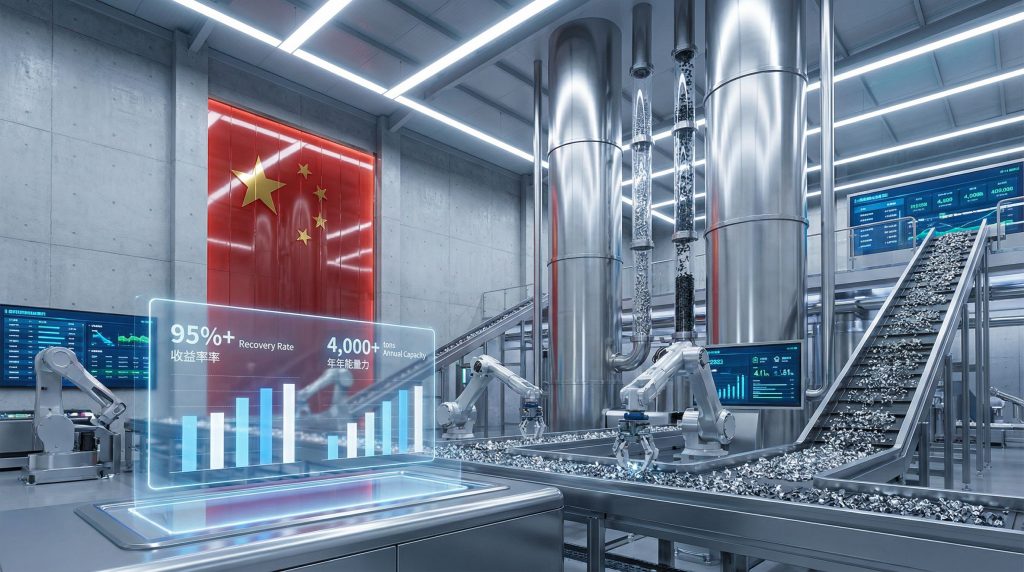
China's approach to rare earth magnet recycling transcends pilot-scale demonstrations, instead focusing on building comprehensive industrial ecosystems capable of competing directly with virgin material production. The Jinmeng Rare Earth facility in Inner Mongolia exemplifies this strategy, featuring a 4,000-ton-per-year automated NdFeB magnet recycling line designed to process 16,000 tons of scrap material annually whilst producing approximately 4,000 tons of rare earth oxides.
This development represents one component of Northern Rare Earth Group's broader initiative to establish a 10,000-ton-scale rare earth resource recycling system across China's industrial regions. Unlike Western efforts that remain predominantly experimental, these facilities integrate full-element recovery technology capable of extracting all valuable metal components from magnet waste rather than focusing selectively on high-value elements.
Key Performance Indicators for China's Recycling Scale-Up:
- Annual Processing Capacity: 4,000+ tons of recycled rare earth oxides from a single facility
- Scrap Input Volume: 16,000 tons of NdFeB waste processed annually
- Recovery Technology: Full-element extraction including light rare earths, heavy rare earths, iron, and boron
- Automation Level: Complete process automation with intelligent energy monitoring systems
- Operational Timeline: Full design capacity achieved within two months of commissioning
The technological sophistication of these operations becomes evident through their automation in mining capabilities. A separate 3,000-ton-per-year rare earth concentrate separation line achieved full operational status in June 2025, demonstrating 20% higher overall efficiency through process optimisation, automated controls, and compact piping layouts. This rapid deployment timeline contrasts sharply with the extended development cycles typical of Western recycling initiatives.
Distinguishing Characteristics of China's Industrial Recycling Model
The fundamental difference between China's recycling strategy and Western approaches lies in scale, integration, and technological sophistication. While pilot programmes in Europe and North America typically operate at sub-100-ton annual processing capacities, Chinese facilities target processing volumes that compete directly with primary mining operations.
Full-Element Recovery Technology
Conventional recycling methodologies focus on extracting high-value light rare earth elements such as neodymium and praseodymium whilst discarding other components as waste. China's automated systems implement comprehensive recovery protocols that capture:
- Light rare earth elements including neodymium, praseodymium, and cerium for magnet applications
- Heavy rare earth elements such as dysprosium and terbium for high-performance magnets
- Iron and boron components for integration into steel industry supply chains
- Trace elements suitable for specialised industrial applications
This comprehensive recovery approach maximises material value extraction whilst eliminating waste streams that traditionally limit recycling economics. Furthermore, the technical breakthrough enables recycled materials to compete favourably with virgin production on both cost and quality metrics.
Integrated Supply Chain Infrastructure
China rare earth magnet recycling initiatives incorporate collection networks spanning multiple sectors simultaneously. The infrastructure handles end-of-life magnets from electric vehicles, wind turbines, consumer electronics, and industrial machinery through standardised processing protocols. This diversified feedstock strategy ensures consistent material flows independent of individual sector recycling rates.
The integration extends beyond collection to encompass automated sorting, contamination removal, and quality control systems capable of handling variable magnet compositions and alloy grades. Processing facilities utilise rare-earth permanent-magnet motors internally, demonstrating the circular economy principle of using recycled materials to produce recycling equipment.
Strategic Implications for Global Supply Chain Control
China's industrial-scale magnet recycling creates multiple leverage points in global rare earth negotiations by establishing control over both primary mining and secondary recovery streams. This dual dominance enables supply flexibility unavailable to competitors relying exclusively on virgin material production.
Mining Dependency Reduction
Large-scale recycling provides several strategic advantages for Chinese supply chain security. Moreover, recycled materials reduce dependence on new mining permits and environmental compliance costs whilst maintaining production volumes necessary to serve expanding global demand. The processing timeline for recycled materials spans 2-4 weeks compared to 6-12 months required for virgin mining operations, enabling more responsive inventory management.
Environmental regulations increasingly constrain traditional rare earth mining operations, making recycling infrastructure valuable for maintaining production capacity without expanding mining footprints. The circular economy approach also aligns with China's broader industrial policy objectives whilst creating economic moats around critical materials processing.
Market Control Through Secondary Supply
By industrialising China rare earth magnet recycling ahead of Western competitors, Chinese companies gain control over pricing dynamics across both primary and secondary rare earth markets. This positioning enables tactical supply adjustments to influence global prices whilst maintaining market share through alternative material streams.
Economic Competitiveness Analysis:
| Factor | Virgin Mining | Industrial Recycling | China's Advantage |
|---|---|---|---|
| Environmental compliance | High and increasing costs | Lower regulatory burden | Established infrastructure |
| Processing speed | 6-12 month cycles | 2-4 week turnaround | Inventory flexibility |
| Material yield | 95-98% extraction | 95%+ with full recovery | Comparable efficiency |
| Labour requirements | High manual involvement | 80%+ automated systems | Cost competitiveness |
The economic model becomes compelling when virgin rare earth prices exceed $45-55 per kilogram for neodymium-praseodymium oxide, conditions that current market dynamics support consistently. Recycling facilities benefit from reduced energy consumption (60-70% of mining energy requirements) whilst achieving similar material recovery rates.
Technical Barriers and Infrastructure Requirements
Scaling China rare earth magnet recycling to industrial levels requires sophisticated collection networks and processing technologies capable of handling complex material streams. The technical challenges encompass both upstream collection and downstream processing operations.
Collection and Sorting Complexities
Automotive Sector Recovery involves developing protocols for electric vehicle battery and motor disassembly, magnet extraction procedures, and material handling systems for high-volume processing.
Wind Energy Applications require standardised turbine decommissioning procedures, specialised magnet extraction equipment, and transportation logistics for large-scale components.
Consumer Electronics Processing demands sophisticated separation technologies capable of extracting small magnets from complex electronic devices whilst managing contamination from adhesives and coatings.
Processing Technology Requirements
Industrial recycling systems must accommodate variable magnet compositions, contamination levels, and quality specifications whilst maintaining cost competitiveness with virgin materials. The automated processing lines incorporate:
- Adaptive sorting systems for handling different magnet grades and compositions
- Contamination removal protocols for adhesives, coatings, and foreign materials
- Quality control mechanisms ensuring recycled materials meet virgin material specifications
- Energy-efficient processing to maintain economic viability
The technological sophistication required for full-element recovery necessitates significant capital investment and operational expertise, creating barriers for competitors attempting to replicate Chinese capabilities. Additionally, the mining industry innovation required for such advances demonstrates the complexity of establishing competitive recycling operations.
Economic Modelling and Market Dynamics
The economics of China rare earth magnet recycling depend on multiple variables including scrap collection costs, processing efficiency, energy consumption, and labour automation levels. Current market conditions favour recycling investment due to elevated rare earth prices and increasing environmental compliance costs for mining operations.
Break-Even Analysis for Industrial Recycling
Critical Cost Components:
- Scrap collection: $2-5 per kilogram depending on source concentration and transportation requirements
- Processing efficiency: 95%+ recovery rates necessary for economic viability
- Energy consumption: 60-70% of virgin mining energy requirements
- Labour automation: 80%+ automated processing essential for cost competitiveness
Market price sensitivity analysis indicates recycling becomes economically attractive when virgin rare earth prices exceed specific thresholds. For neodymium-praseodymium oxide, the break-even point occurs around $45-55 per kilogram, conditions that current market fundamentals support consistently.
Supply Chain Economics
China's integrated approach creates cost advantages through economies of scale, automated processing, and diversified feedstock sources. The 10,000-ton recycling network enables bulk purchasing of scrap materials, standardised processing protocols, and optimised logistics across multiple facilities.
Processing Efficiency Metrics:
- Material throughput: 16,000 tons annual scrap processing capacity
- Output quality: Comparable to virgin material specifications
- Processing time: 2-4 weeks versus 6-12 months for mining
- Energy efficiency: 30-40% reduction compared to virgin production
However, the critical minerals energy transition requires careful consideration of both processing economics and strategic material security.
The next major ASX story will hit our subscribers first
Strategic Response Options for Western Companies
The emergence of industrial-scale China rare earth magnet recycling creates strategic decisions for Western manufacturers, technology companies, and government policymakers. Response options range from technology partnerships to independent development initiatives.
Technology Partnership Strategies
Licensing Arrangements involve acquiring Chinese recycling technology for domestic operations, potentially through joint ventures or technology transfer agreements. This approach enables rapid deployment of proven recycling capabilities whilst reducing development risks.
Supply Chain Collaboration includes developing shared feedstock collection networks, coordinated processing schedules, and integrated quality control systems. Partnership models could encompass regional recycling hubs serving multiple Western manufacturers simultaneously.
Independent Development Pathways
Alternative Technology Investment focuses on developing competing recycling technologies through research institutions, technology incubators, and private industry collaboration. This approach prioritises technological sovereignty whilst requiring significant capital investment and development time.
Domestic Infrastructure Development involves building collection networks, processing facilities, and quality control systems independent of Chinese technology. Success requires coordinated policy support, industry collaboration, and sustained financial commitment.
Supply Diversification Approaches
Long-term Capacity Contracts secure access to Chinese recycling output through multi-year agreements, providing supply security whilst maintaining dependence on Chinese processing capabilities.
Strategic Material Stockpiling involves building inventory buffers of rare earth materials and finished magnets to reduce exposure to supply disruptions. This approach requires significant capital commitment and storage infrastructure.
For instance, the establishment of a critical raw materials facility could provide alternative supply options for Western manufacturers.
Regulatory Framework and Policy Implications
The expansion of China rare earth magnet recycling occurs within evolving regulatory frameworks that influence both domestic operations and international trade dynamics. Policy developments affect collection requirements, processing standards, and export regulations.
Environmental Regulations and Recycling Incentives
Extended Producer Responsibility policies in Europe and North America create regulatory pressure for magnet recycling whilst potentially accelerating adoption of Chinese-developed technologies. These frameworks require manufacturers to manage end-of-life product responsibility, creating demand for recycling services.
Circular Economy Policies in China prioritise recycling infrastructure development through subsidies, tax incentives, and regulatory support. The policy framework facilitates rapid scaling of recycling operations whilst creating competitive advantages for Chinese companies.
Trade Policy Considerations
China's recycling scale-up could influence international trade regulations through:
- Export restrictions on recycled rare earth materials during supply shortages
- Technology transfer limitations affecting recycling equipment exports
- Strategic material classifications influencing international trade protocols
The intersection of environmental regulations and trade policy creates complex dynamics that favour countries with established recycling infrastructure.
Investment Opportunities and Risk Assessment
The industrialisation of China rare earth magnet recycling creates investment opportunities across multiple sectors whilst introducing new risk factors for market participants. Investment themes span technology development, infrastructure construction, and supply chain integration.
High-Growth Investment Sectors
Automotive Recycling Infrastructure encompasses EV battery disassembly facilities, magnet recovery systems, and closed-loop manufacturing partnerships. The sector benefits from increasing EV adoption rates and regulatory pressure for recycling compliance.
Industrial Magnet Remanufacturing includes wind turbine component recycling, industrial motor refurbishment, and specialised magnet recovery services. These applications benefit from long asset life cycles and high material values.
Technology Development focuses on automation systems, sorting technologies, and quality control mechanisms for recycling operations. Investment opportunities exist in artificial intelligence applications, robotics integration, and process optimisation technologies.
Risk Factors for Recycling Investments
| Risk Category | Specific Concerns | Mitigation Strategies |
|---|---|---|
| Technology obsolescence | Rapid automation advances | Flexible equipment design |
| Feedstock availability | Collection network development | Long-term supply agreements |
| Regulatory changes | Environmental compliance | Proactive policy engagement |
| Market competition | Technology advantages | Intellectual property protection |
Market Competition Risks include potential technology dumping, intellectual property theft, and predatory pricing strategies that could undermine Western recycling investments. Furthermore, the battery recycling breakthrough demonstrates the rapid technological advancement occurring in adjacent recycling sectors.
Future Market Trajectories and Strategic Scenarios
The development of China rare earth magnet recycling capabilities creates multiple potential scenarios for global market evolution. Trajectory analysis encompasses technology diffusion, market penetration rates, and geopolitical implications.
Conservative Growth Scenario
Global Recycling Penetration reaches 5-8% of total rare earth supply by 2030 under conservative assumptions. This scenario assumes limited technology transfer, gradual collection network development, and regulatory barriers to rapid scaling.
Market Concentration remains high with China controlling 70-80% of global recycling capacity alongside continued dominance in primary mining operations.
Accelerated Adoption Scenario
Technology Diffusion enables global recycling capacity to achieve 15-20% market share through widespread adoption of Chinese technologies and development of competing systems.
Regional Hub Development includes operational recycling facilities in Europe, North America, and Asia-Pacific serving domestic markets with reduced dependence on Chinese processing.
Next-Generation Technology Development
Innovation Priorities for advanced recycling systems include:
- Artificial intelligence-powered sorting and quality control systems
- Molecular-level separation technologies for enhanced element recovery
- Integrated manufacturing-recycling facilities enabling direct material reuse
- Blockchain-based traceability systems for recycled material certification
These technological developments could reshape recycling economics whilst creating new competitive advantages for technology leaders. Moreover, companies like Reecycle Inc. are developing innovative approaches to rare earth magnet recycling that may compete with Chinese capabilities.
Strategic Implications for Global Critical Materials Markets
The emergence of industrial-scale China rare earth magnet recycling represents a fundamental shift in global supply chain architecture that extends beyond environmental considerations to encompass strategic materials control. The development positions China to influence rare earth markets through multiple supply streams whilst creating dependencies for Western manufacturers requiring recycled materials.
The success of China's recycling initiatives will determine whether global rare earth markets become increasingly concentrated or develop alternative supply sources through competitive recycling technologies. Western companies face critical decisions regarding technology partnerships, independent development, or supply diversification strategies before Chinese recycling capacity establishes irreversible market advantages.
Long-term Market Evolution depends on technology transfer policies, regulatory frameworks, and investment commitments across major consuming regions. The trajectory of China rare earth magnet recycling will influence national security considerations, technological sovereignty requirements, and industrial competitiveness for decades.
The intersection of environmental regulations, supply chain vulnerabilities, and technological capabilities creates an environment where recycling infrastructure becomes strategically equivalent to traditional mining operations. Countries and companies that successfully develop recycling capabilities will gain significant advantages in future critical materials markets, whilst those dependent on external recycling services face potential supply chain risks.
"Strategic Imperative: The window for developing independent recycling capabilities narrows as Chinese facilities achieve operational maturity and cost competitiveness with virgin production."
Market participants must evaluate whether to collaborate with Chinese recycling development, compete through alternative technologies, or accept increased dependence on Chinese-controlled secondary supply chains. As highlighted by CNBC's analysis, Chinese control over rare earth supply chains has significant implications for global industries. These decisions will shape the balance between supply chain security and economic efficiency in global rare earth markets for the foreseeable future.
Ready to Spot the Next Major Discovery in Critical Materials?
Discovery Alert's proprietary Discovery IQ model delivers instant notifications on significant ASX mineral discoveries, including emerging critical materials opportunities that could reshape global supply chains. With Chinese dominance over rare earth recycling creating new market dynamics, savvy investors are positioning themselves to capitalise on the next breakthrough discoveries announced on the Australian market. Begin your 30-day free trial today to secure your competitive edge in identifying actionable investment opportunities before they reach mainstream attention.