What Drives China's Accelerating Shale Oil Development Strategy?
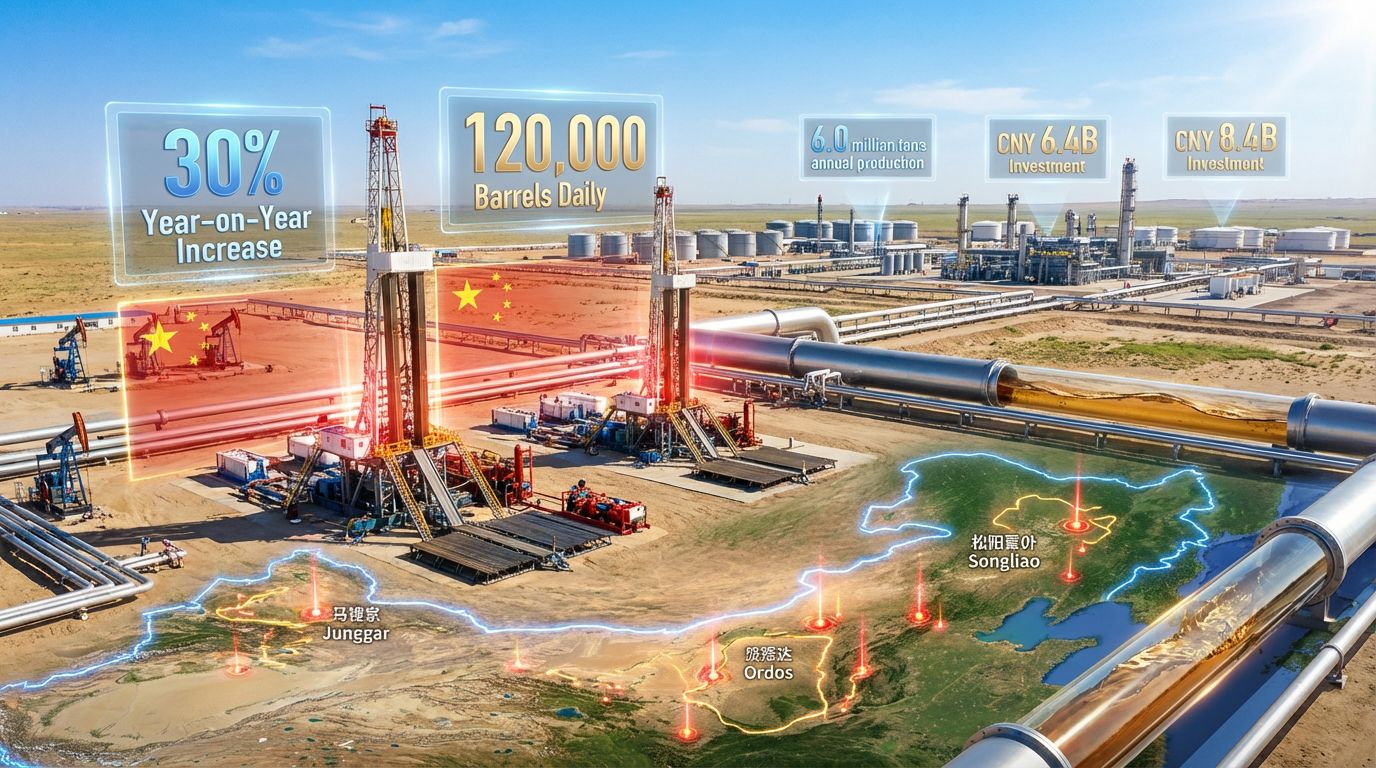
Energy security imperatives shape China's unconventional resource development far beyond conventional market economics. State-owned enterprises approach shale oil as a strategic hedge against conventional field depletion, viewing these challenging projects through a national security lens rather than purely commercial considerations. The National Energy Administration's announcement of a 30% year-on-year increase in China shale oil output during 2024, reaching 6.0 million tons annually, demonstrates this commitment translating into measurable production gains. Furthermore, geopolitical tensions have intensified focus on domestic energy resources, with oil price movements amid trade war conditions influencing strategic planning.
Energy Security Imperatives Behind Unconventional Resource Prioritization
China's approach to shale development operates under fundamentally different economic parameters than international oil companies typically apply. State-owned operators pursue high-risk, high-cost unconventional projects regardless of global oil price fluctuations, driven by national priorities that prioritize energy independence over short-term profitability. This strategic calculus becomes particularly relevant as conventional domestic fields face steeper decline rates and require supplementation from alternative sources.
The geographical distribution of China's unconventional resources across nine distinct basins creates both opportunities and operational complexity. These basins include Ordos, Junggar, Songliao, Sichuan, Qaidam, Santanghu, Jiyang, North Jiangsu, and Bohai Bay, representing a diverse geological portfolio that requires basin-specific development approaches and varying technical solutions.
State-Owned Enterprise Investment Patterns in High-Risk Projects
Government-controlled operators demonstrate willingness to absorb technical risks and extended development timelines that typically deter private international companies. This institutional patience allows for sustained investment in pilot projects and technology development programs that may not generate immediate returns but contribute to long-term energy security objectives.
The acceleration of exploration activities and sustained capital allocation to shale projects reflects a structural shift in Chinese energy strategy. Rather than waiting for technology costs to decline or geological understanding to mature, state-owned enterprises actively invest in capacity building and operational experience accumulation across multiple geological settings.
Geological Resource Distribution Across Nine Key Basins
China's shale oil resources span diverse geological environments, each presenting distinct technical challenges and development opportunities. The eastern basins, including Jiyang, North Jiangsu, and Bohai Bay, feature ultra-deep formations requiring specialised drilling and completion techniques. Western basins like Ordos and Junggar offer different geological characteristics but face infrastructure and logistics challenges due to remote locations.
This geographical diversity necessitates differentiated technical approaches rather than standardised development models. Each basin requires customised drilling programmes, completion designs, and production optimisation strategies based on local geological conditions and reservoir characteristics.
How Do China's Shale Reserves Compare to Global Unconventional Resources?
China's unconventional oil resources face fundamentally different geological and technical challenges compared to North American shale formations. The complex and deep reservoir geology, combined with reserves scattered across valleys and lower well productivity rates, creates a distinct development environment that requires modified extraction approaches and higher production costs.
Basin-by-Basin Resource Assessment and Production Potential
International interest in China's unconventional sector has waned, particularly following Saudi exploration licenses offering more attractive investment conditions globally. The following table illustrates the current development status across major Chinese basins:
| Basin | Resource Classification | Current Development Status | Technical Complexity Level |
|---|---|---|---|
| Ordos | High potential tight oil | Active commercial development | Moderate |
| Junggar | Significant unconventional reserves | Pilot and early commercial projects | High |
| Songliao | Proven shale oil resources | Commercial production underway | Moderate-High |
| Jiyang | Ultra-deep shale formations | Advanced exploration phase | High |
| Bohai Bay | Deep unconventional resources | Exploration and pilot development | Very High |
Technical Challenges vs. U.S. Shale Development Models
Chinese shale formations operate under geological conditions that differ significantly from established U.S. unconventional plays. The deeper reservoir depths, more complex structural geology, and scattered resource distribution create operational challenges that standard horizontal drilling and hydraulic fracturing techniques must be adapted to address.
Current Chinese shale projects produce between 10,000 to 50,000 barrels per day individually, representing substantially lower per-project output compared to major U.S. shale operations. This productivity differential reflects both geological constraints and the early development stage of Chinese unconventional operations.
Reserve Quality Analysis: Depth, Complexity, and Recovery Rates
The scattered nature of China's shale reserves across valleys and complex geological structures requires more extensive drilling programmes to achieve production targets comparable to concentrated U.S. formations. Lower well productivity rates necessitate higher well density to maintain economic viability, increasing overall development costs per unit of production.
Chinese operators face the challenge of adapting hydraulic fracturing and horizontal drilling techniques to formations that exhibit different permeability characteristics, rock mechanics properties, and fluid saturation patterns compared to established North American unconventional plays.
What Production Milestones Signal China's Shale Oil Market Maturation?
The 30% year-on-year increase in China shale oil output during 2024 represents significant percentage growth from a relatively small production base. Reaching 6.0 million tons annually (approximately 120,000 barrels per day) demonstrates progress in transitioning pilot projects toward commercial-scale operations, though individual project outputs remain constrained by geological and technical factors. However, China oil geopolitics remain complex as the nation balances domestic production with import dependencies.
2024 Output Growth Analysis: 30% Year-on-Year Increase Breakdown
The substantial production growth reflects accelerated development across multiple basins and operators rather than breakthrough performance at individual projects. This distributed growth pattern indicates systematic advancement in Chinese unconventional development capabilities rather than isolated successes at specific locations.
State-owned enterprises have demonstrated ability to maintain production growth momentum despite challenging geological conditions and higher development costs compared to conventional fields. This sustained expansion suggests institutional commitment to building long-term unconventional production capacity.
Current Production Scale: 120,000 Barrels Daily Context
China's shale oil sector achieved 6.0 million tons of annual production in 2024, representing rapid growth from a small base, though individual project outputs remain significantly below conventional field levels.
The national 120,000 barrels per day figure represents aggregated output from multiple projects across different basins and operators. Individual projects contribute between 10,000 and 50,000 barrels daily, indicating that current scale requires combining numerous smaller operations to achieve meaningful production volumes.
Pilot Project Performance vs. Commercial Viability Thresholds
Most current shale oil operations remain in pilot or early commercial phases with limited capacity compared to established conventional developments. Production growth faces constraints from challenging geological conditions that limit the scaling potential of individual projects to conventional field output levels.
The transition from pilot projects to full commercial development depends on demonstrating sustained production rates and economic returns that justify expanded capital investment across broader acreage positions within each basin. Additionally, US‑China trade war impacts continue influencing strategic investment decisions.
Which Companies Lead China's Unconventional Oil Investment Strategy?
PetroChina dominates China's shale oil production landscape, accounting for approximately 85% of national unconventional output with 5.1 million tons produced in 2024. This market leadership reflects the company's early entry into shale development and sustained investment in building operational capabilities across multiple basins. Moreover, China's largest shale oil production base achieved significant milestones with cumulative output reaching remarkable levels.
PetroChina's Multi-Basin Development Portfolio
Changqing Oilfield Ordos Basin Operations:
-
The Qingcheng project at Changqing oilfield achieved 20 million tons cumulative production by November 2025
-
Designated as China's largest shale base in the Ordos Basin
-
Represents the most mature and successful Chinese unconventional development to date
Xinjiang Jimsar Project Expansion Plans:
-
Active capacity expansion programme targeting increased production from established reserves
-
Strategic importance for western China energy security and regional development
-
Integration with existing conventional production infrastructure
Daqing Gulong Development Timeline:
-
Awaiting full-scale development authorisation and investment commitment
-
Potential to materially offset declines at mature conventional fields
-
Critical for maintaining overall Daqing field complex production levels
Sinopec's Eastern China Shale Focus Areas
Sinopec increased capital expenditure for shale and ultra-deep oil exploration by 30% in 2025, lifting spending to CNY 8.4 billion in the first three quarters from CNY 6.4 billion in 2024. This investment acceleration demonstrates sustained commitment to unconventional resource development despite technical challenges.
Jiyang Basin Breakthrough Discoveries:
-
The Shengli Jiyang project represents Sinopec's largest shale asset
-
Reported breakthroughs in ultra-deep shale oil exploration techniques
-
Focus on developing specialised drilling and completion technologies
North Jiangsu Exploration Activities:
-
Part of Sinopec's eastern China unconventional resource concentration strategy
-
Integration with existing refining and petrochemical infrastructure
-
Development of regional unconventional resource clusters
Bohai Bay Ultra-Deep Resource Targeting:
-
Advanced exploration of ultra-deep unconventional formations
-
Technology development for extreme depth drilling and completion
-
High-risk, high-potential resource evaluation programmes
Capital Expenditure Trends and Investment Allocation
| Company | 2024 Investment | 2025 Projected | Primary Focus Areas |
|---|---|---|---|
| Sinopec | CNY 6.4 billion | CNY 8.4 billion | Eastern basins, ultra-deep formations |
| PetroChina | Substantial allocation | Continued expansion | Ordos, Xinjiang, Heilongjiang |
The September 2025 Xinxing and Qintong discoveries announced by Sinopec represent 180 million tons combined proven reserves in eastern China. However, production from these reserves is not expected before 2030, indicating extended development timelines for major new discoveries. Substantial growth milestone achievements demonstrate the sector's expanding capabilities despite technical challenges.
Why Haven't International Oil Companies Embraced China's Shale Potential?
International operators have demonstrated limited interest in Chinese shale oil development, with major companies like Shell and ExxonMobil scaling back their involvement in China's unconventional sector. This withdrawal pattern reflects multiple factors including geological challenges, regulatory constraints, and economic viability concerns.
Foreign Investment Withdrawal Patterns: Shell and ExxonMobil Case Studies
The reduced participation of international operators creates rising investment burdens for Chinese state-owned enterprises, which must shoulder greater technical and financial risks without foreign partnership support. This withdrawal occurs despite China's significant unconventional resource potential, suggesting that geological and regulatory factors outweigh resource attraction for international companies.
International companies evaluate Chinese shale opportunities against global portfolio alternatives, where complex geological conditions, higher development costs, and extended development timelines may not compete favourably with unconventional opportunities in North America or other international markets. Furthermore, tariffs' global impact has complicated international partnership structures.
Regulatory Environment and Partnership Structure Limitations
Foreign participation constraints and partnership structure limitations contribute to international operator reluctance to commit substantial capital to Chinese unconventional development. These regulatory factors, combined with technical challenges, create investment environments that may not align with international company strategic priorities and risk-return requirements.
Economic Viability Concerns for International Operators
The combination of complex geology, lower well productivity, higher development costs, and regulatory constraints creates economic profiles that international operators may find insufficiently attractive compared to alternative global opportunities. Chinese state-owned enterprises operate under different economic criteria that prioritise energy security over purely commercial returns.
What Technical Barriers Limit China's Shale Oil Scaling Potential?
China's unconventional oil development faces geological challenges that differentiate it significantly from North American shale operations. The complex and deep reservoir geology, combined with reserves scattered across valleys, creates operational difficulties that constrain production scaling and increase development costs per unit of output.
Geological Complexity vs. U.S. Shale Formations
Chinese shale formations exhibit structural complexity and depth characteristics that require modified drilling and completion approaches compared to established U.S. unconventional techniques. The scattered distribution of reserves across complex geological structures necessitates more extensive drilling programmes to achieve comparable production levels.
Lower well productivity rates in Chinese formations mean that achieving commercial production targets requires higher well density and more intensive development patterns. This geological reality increases capital requirements and extends development timelines compared to more productive North American shale plays.
Well Productivity Comparisons and Economic Break-Even Analysis
Current Chinese shale projects demonstrate well productivity levels significantly below U.S. unconventional operations. Individual projects produce between 10,000 and 50,000 barrels per day, representing productivity constraints that limit economic returns and require higher sustained oil prices to achieve commercial viability.
The productivity differential reflects both geological factors and the early development stage of Chinese unconventional techniques. Continued technology development and operational experience may improve well performance over time, but geological constraints establish fundamental productivity limitations.
Infrastructure Requirements for Remote Basin Development
Remote basin locations, particularly in western China, require substantial infrastructure investment to support unconventional development operations. Pipeline connections, processing facilities, and logistics support systems must be developed to enable commercial production from geologically challenging locations.
The scattered nature of Chinese shale resources across multiple basins prevents economies of scale that characterise concentrated U.S. shale development. Each basin requires customised infrastructure development, increasing overall system costs and extending development timelines.
How Will Recent Discoveries Impact Long-Term Production Forecasts?
The Xinxing and Qintong discoveries announced in September 2025 represent 180 million tons of combined proven reserves in eastern China, demonstrating continued exploration success in Chinese unconventional formations. However, production from these reserves is not anticipated before 2030, indicating substantial development lead times for major discoveries.
Xinxing and Qintong Reserve Discoveries: 180 Million Ton Impact Assessment
These discoveries represent significant resource additions to China's proven unconventional reserve base, though the 5+ year development timeline from discovery to production reflects the complex development requirements for Chinese shale formations. The proven reserve classification indicates geological certainty regarding resource volumes but not production timeline acceleration.
The eastern China location of these discoveries aligns with Sinopec's strategic focus on developing regional unconventional resource clusters that can integrate with existing infrastructure and processing capabilities.
Development Timeline Projections Through 2030
Major new discoveries require extended development periods that include pilot drilling programmes, completion optimisation, infrastructure development, and regulatory approvals before achieving commercial production. The post-2030 production timeline for recent discoveries indicates that near-term production growth must come from expansion of existing projects rather than new resource development.
Production Plateau Scenarios and Mature Field Decline Offset Potential
Current production growth trajectories face constraints from the technical challenges of scaling individual projects to conventional field output levels. Incremental gains from unconventional projects may be largely offset by declines at ageing conventional fields, particularly major producers like Daqing.
The pace of unconventional production growth remains insufficient to offset depletion in established conventional fields, indicating that shale oil serves as production supplement rather than replacement for conventional domestic output.
What Role Does Shale Oil Play in China's 2030 Energy Independence Goals?
China shale oil output represents an incremental contribution to domestic production rather than a transformational shift in energy security. While production growth can supplement conventional field output, current technical and economic constraints limit the potential for unconventional resources to fundamentally alter China's energy import dependency.
National Energy Security Strategy Integration
Unconventional oil development aligns with broader energy security objectives by diversifying domestic production sources and reducing reliance on specific conventional fields or regions. The distributed nature of shale resources across multiple basins provides geographic diversification for domestic energy production.
State-owned enterprise investment in unconventional development reflects long-term strategic planning that prioritises building domestic production capacity even when short-term economics may not justify commercial development under pure market criteria.
Import Dependency Reduction Targets and Realistic Contribution Levels
While shale oil production growth can supplement China's crude output, current technical and economic constraints make it unlikely to fundamentally transform the country's energy import dependency or match conventional field production levels.
The current 120,000 barrels per day of shale oil production represents a small fraction of China's total crude oil consumption, which exceeds 14 million barrels daily. Even with sustained growth, unconventional production scaling faces geological and technical constraints that limit its potential contribution to energy independence goals.
Domestic Production Supplementation vs. Transformation Potential
Unconventional oil development serves as production supplementation that can partially offset conventional field declines rather than creating new production capacity sufficient to substantially reduce import requirements. The role of shale oil within China's energy strategy focuses on production maintenance rather than dramatic expansion.
Long-term production forecasts suggest that incremental gains from unconventional projects will be largely offset by declines at mature conventional fields, indicating that shale development contributes to production stability rather than substantial growth.
Frequently Asked Questions About China's Shale Oil Development
What is China's current daily shale oil production capacity?
China produces approximately 120,000 barrels per day of shale oil as of 2024, representing 6.0 million tons annually. This production comes from multiple projects across nine basins, with individual projects contributing between 10,000 and 50,000 barrels daily.
Which Chinese provinces have the most promising shale oil resources?
The most significant unconventional resources are located in:
-
Ordos Basin (Inner Mongolia/Shaanxi): PetroChina's largest shale production base
-
Eastern China basins (Shandong, Jiangsu): Sinopec's primary development focus
-
Xinjiang Province: Jimsar project with expansion potential
-
Heilongjiang Province: Gulong project awaiting full development
How do production costs compare between Chinese and American shale operations?
Chinese shale operations require higher production costs compared to U.S. unconventional development due to complex geology, deeper formations, lower well productivity, and infrastructure requirements for remote locations. Specific cost differentials are not publicly disclosed by operators.
When will China's major shale discoveries begin commercial production?
Recent major discoveries like Xinxing and Qintong (180 million tons combined reserves) are not expected to begin production before 2030. Existing projects at Changqing, Jimsar, and Jiyang are currently in commercial production phases with ongoing capacity expansion programmes.
Investment Implications and Market Outlook Through 2030
China's shale oil development represents a sustained investment commitment by state-owned enterprises despite technical challenges and economic constraints. The 30% capital expenditure increase by Sinopec and continued expansion by PetroChina indicate institutional determination to build unconventional production capacity over extended timelines.
Production Growth Trajectory Modelling Under Different Scenarios
| Scenario | 2025 Projection | 2030 Forecast | Key Development Assumptions |
|---|---|---|---|
| Conservative | 6.5 million tons | 8.0 million tons | Current technology, limited project expansion |
| Moderate | 7.2 million tons | 12.0 million tons | Improved efficiency, successful new project development |
| Optimistic | 8.0 million tons | 18.0 million tons | Technology breakthroughs, major discovery acceleration |
Technology Development Requirements for Commercial Viability
Scaling Chinese shale oil production to levels that meaningfully impact national energy security requires technological advances in:
-
Drilling efficiency for complex geological formations
-
Completion optimisation for low-permeability reservoirs
-
Production enhancement techniques for scattered reserve development
-
Cost reduction strategies for deep, challenging formations
Supply Chain Impact on China's Petrochemical Sector Development
Increased domestic shale oil production provides feedstock diversification for China's petrochemical industry, though volumes remain insufficient to substantially alter refining industry dynamics or reduce crude oil import dependency. The light, sweet characteristics of much shale oil production may benefit specific refinery configurations optimised for such feedstocks.
Regional development benefits accrue to areas with significant unconventional development, creating local economic activity and infrastructure investment that supports broader industrial development in provinces with major shale operations.
Disclaimer: Production forecasts and investment projections represent analysis based on current technical capabilities and announced development plans. Actual results may vary significantly based on technological developments, geological discoveries, regulatory changes, and global energy market conditions. This analysis is for informational purposes and should not be considered investment advice.
Investment decisions in China's energy sector should consider the long-term strategic nature of state-owned enterprise operations, which may prioritise energy security objectives over short-term commercial returns. International investors should carefully evaluate regulatory requirements, partnership structures, and technical risk factors before committing capital to Chinese unconventional energy development opportunities.
Could Your Portfolio Benefit From China's Energy Transformation?
China's accelerating shale oil development, with 30% year-on-year production growth reaching 6.0 million tons annually, signals significant opportunities for investors tracking energy security plays and resource development projects. Discovery Alert's proprietary Discovery IQ model delivers instant notifications on major ASX mineral discoveries, empowering subscribers to identify actionable opportunities in the energy and resources sector before broader market recognition. Begin your 30-day free trial today and position yourself ahead of emerging commodity trends that could reshape investment landscapes.