June 3, 2026
Understanding Congo's Strategic Position in Global Lithium Markets
Africa's critical minerals landscape faces unprecedented transformation as supply chain dynamics shift toward strategic resource partnerships. The continent holds an estimated $29.5 trillion in mineral wealth, yet value capture remains constrained by infrastructure limitations and processing capacity gaps. This structural challenge creates opportunities for integrated development models that combine extraction with downstream processing capabilities.
The global lithium market represents a cornerstone of energy transition infrastructure, with demand projections indicating substantial growth through 2030. Current market conditions reflect oversupply dynamics primarily driven by Chinese production scaling and strategic inventory accumulation. Understanding these macro trends provides essential context for evaluating new production entries and their potential market impact, particularly as China's Zijin Mining Congo lithium output prepares to enter commercial operations.
When big ASX news breaks, our subscribers know first
What Makes Congo's Manono Deposit a Strategic Lithium Asset?
Resource Scale and Geological Significance
The Manono lithium deposit ranks among the world's largest undeveloped hard-rock lithium resources, containing substantial pegmatite formations with commercially viable mineral concentrations. Industry analysis indicates ore grades averaging 1.51% lithium oxide (Li₂O), positioning the deposit competitively against established operations globally.
For perspective, Australia's Greenbushes mine processes ore grading 1.0-1.5% Li₂O and currently represents the world's largest hard-rock lithium operation. The Pilbara Minerals operation in Western Australia processes similar grade material at approximately 1.3% Li₂O, demonstrating that Manono's geological characteristics align with proven commercial extraction models.
Furthermore, the integration with australia lithium innovations demonstrates how advanced processing techniques can optimise resource extraction efficiency across different geological settings.
Key Production Metrics:
- Annual mining capacity: 5 million tonnes raw ore
- Spodumene concentrate output: 500,000 tonnes annually
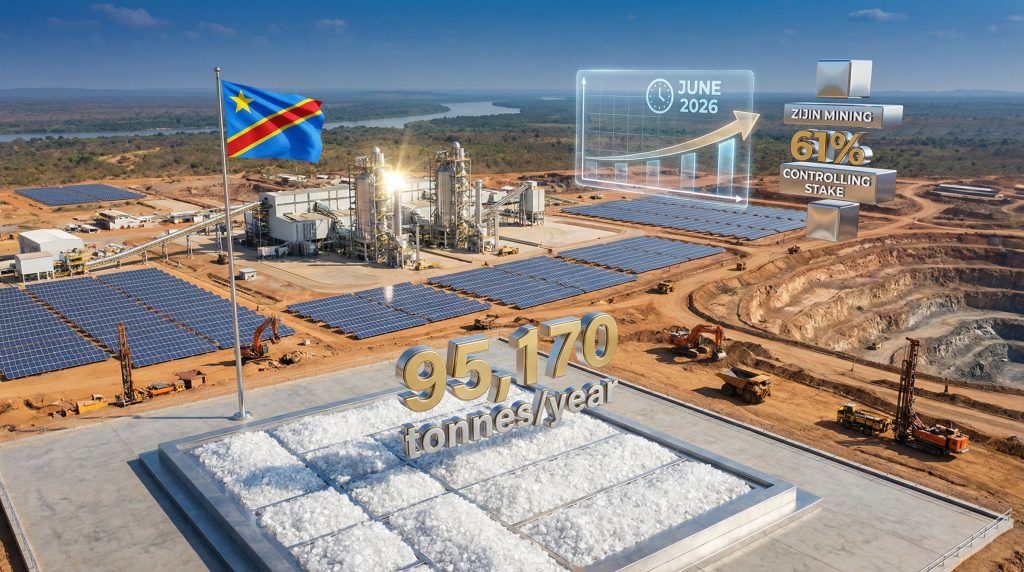
- Final product target: 95,170 tonnes crude lithium sulfate per year
- Processing methodology: Dense media separation and acid leaching
The selection of lithium sulfate as the primary output product indicates integration with downstream processing networks, typically located in China where further refinement occurs. This intermediate product approach reduces transportation costs while maintaining product quality for international buyers, particularly those operating a battery-grade lithium refinery.
Infrastructure Development and Energy Security
Congo's infrastructure requirements for lithium processing demand substantial energy resources. The project incorporates a phased energy development strategy combining renewable and traditional power sources to ensure operational reliability.
Power Supply Architecture:
- Phase I solar farm commissioning providing baseline renewable capacity
- Hydroelectric facility rehabilitation utilising Congo's extensive water resources
- Initial allocation: 44 megawatts through Cominiere's Katamba Mining subsidiary
- Scaling potential: 120 megawatts for expanded operations and community development
Congo possesses approximately 775 GW of technically feasible hydropower potential according to World Bank assessments, with minimal current utilisation. The Manono project's energy infrastructure development creates precedents for additional industrial applications while supporting local community electrification initiatives.
Environmental management protocols address acid mine drainage prevention, a critical consideration in lithium extraction operations. River diversion works and water treatment systems ensure compliance with Democratic Republic of Congo environmental regulations updated in 2023.
How Does Zijin Mining's Joint Venture Structure Maximise Control?
Ownership Distribution and Operational Authority
China's Zijin Mining Congo lithium output operates through a carefully structured partnership providing Chinese operational control while maintaining Congolese state participation. The joint venture allocates 61% ownership to Zijin Mining with the remainder held by Cominiere, Congo's state mining entity.
This ownership distribution grants Zijin unilateral decision-making authority over technical operations, financial management, and commercial strategies. Under standard corporate governance frameworks, 61% ownership typically enables controlling stakeholder dominance without requiring consensus from minority partners.
Marketing Rights Concentration:
According to statements from Cominiere Managing Director Alpha Monga Mwidia, all Phase 1 production output will be marketed exclusively by Zijin Mining. This arrangement extends to Cominiere's proportional share, creating centralised sales coordination under Chinese management.
The marketing rights structure provides Zijin with comprehensive control over:
- Price discovery and buyer relationship management
- Volume allocation and shipping coordination
- Quality specifications and delivery scheduling
- Strategic inventory management decisions
Financial Architecture and Investment Framework
The project's $1 billion total financing structure reflects asymmetric capital contribution models common in Chinese resource partnerships across Africa. Zijin provides the majority of direct financial investment while Cominiere contributes non-monetary assets including permits, infrastructure access, and governmental relations management.
However, this approach aligns with broader trends in zijin mining global strategy that emphasises strategic resource acquisition across emerging markets.
Risk Allocation Mechanisms:
| Component | Zijin Mining | Cominiere |
|---|---|---|
| Capital Investment | Primary contributor | Limited financial exposure |
| Operational Risk | Full responsibility | Minimal direct exposure |
| Revenue Share | 61% of net proceeds | 39% of net proceeds |
| Marketing Control | Exclusive authority | Passive participation |
This arrangement isolates Cominiere from direct financing risk while maintaining upside revenue participation. The structure resembles Chinese resource extraction partnerships in Zambia, Ghana, and other African nations where state-owned entities function as permit holders and political risk mitigators rather than equal capital contributors.
Cominiere's non-financial contributions include mining permit transfers following dispute resolution, power supply allocation, and transportation corridor access. While these assets possess substantial economic value, they do not appear as balance sheet equity, creating favourable terms for the Congolese partner.
Why Did Production Timeline Shift from Q1 to June 2026?
Market Timing and Price Environment Considerations
The revised production timeline from Q1 2026 to June 30, 2026 reflects both operational readiness requirements and strategic market positioning. Lithium prices have experienced substantial volatility, declining approximately 86% from late-2022 peaks when battery-grade lithium carbonate reached $60,000-$68,000 per tonne.
Current pricing levels suggest market stabilisation around $8,400-$9,520 per tonne lithium carbonate equivalent, influenced by Chinese stockpiling strategies and domestic production expansion. This price environment creates challenges for new entrants while potentially offering strategic entry opportunities for well-financed operations.
In addition, market analysis from mining industry evolution experts suggests that strategic timing considerations increasingly influence production schedules across global mining operations.
Market Dynamics Influencing Timeline:
- Chinese battery-grade lithium carbonate production exceeded global demand by an estimated 200,000+ tonnes annually during 2023-2024
- Strategic inventory accumulation by Chinese entities totalled approximately 300,000-500,000 tonnes of refined lithium
- Monthly price variations of ±15-20% create uncertainty for production planning
- Global lithium spot markets exhibit high volatility impacting contract negotiations
Infrastructure Completion and Operational Readiness
Hard-rock lithium processing facility commissioning requires extensive testing and calibration phases before commercial production begins. The 4-6 month timeline extension suggests critical path dependencies in several operational areas.
Commissioning Requirements:
-
Mining Infrastructure Development
- Open-pit preparation and waste rock management systems
- Haul road construction and maintenance protocols
- Equipment installation and safety system verification
-
Processing Plant Optimisation
- Crushing and dense media separation equipment calibration
- Roasting kiln temperature optimisation for spodumene conversion
- Acid leaching circuit balancing for consistent product quality
-
Quality Control Systems
- Product testing against buyer specifications
- Trace element monitoring and purity verification
- Moisture content management and packaging protocols
-
Regulatory Compliance
- Environmental impact assessment completion
- Safety inspection certification under DRC mining regulations
- Water treatment system approval and monitoring protocols
Each commissioning phase typically requires 3-6 months for hard-rock lithium operations based on industry experience at Greenbushes, Pilbara, and similar facilities. The June 2026 target provides additional buffer time for system optimisation and market readiness assessment.
What Legal and Operational Risks Surround the Manono Project?
AVZ Minerals Arbitration and Permit Disputes
The Manono deposit remains subject to ongoing arbitration proceedings initiated by AVZ Minerals following permit cancellation and reassignment. The Democratic Republic of Congo government transferred mining rights from AVZ to the Zijin-Cominiere joint venture, creating legal uncertainties that affect operational planning.
Current Dispute Status:
- AVZ Minerals maintains arbitration proceedings challenging permit reassignment
- Safety incidents reported involving operational interference near AVZ staff locations
- Procedural concerns regarding blasting activities and site access protocols
- Legal compliance framework under DRC mining code requires resolution
Despite arbitration proceedings, Cominiere leadership expresses confidence that operations remain compliant with existing law and that legal disputes do not affect production schedules. This position contrasts with more cautious approaches adopted by Western operators in similar circumstances, as reported by Mining Technology.
Comparative Risk Approaches:
U.S.-backed KoBold Metals, which holds rights on adjacent areas of the deposit, announced construction delays pending ownership issue resolution. This conservative approach reflects different risk tolerance levels between Chinese and Western investment philosophies in disputed mining jurisdictions.
Alpha Monga Mwidia characterised the operational philosophy as reflecting pragmatic differences, noting that Chinese systems prioritise operational continuity while Western approaches emphasise legal certainty before major investments.
Regulatory Environment and Government Relations
The Democratic Republic of Congo's mining code, updated in 2023, requires comprehensive environmental impact assessments and remediation bonds for large-scale mineral extraction operations. Compliance with these regulations necessitates ongoing government cooperation and regulatory oversight.
Government Partnership Benefits:
- State partnership through Cominiere provides political risk mitigation
- Direct government revenue participation creates incentive alignment
- Local infrastructure development generates community support
- Strategic resource control advances national economic objectives
Cominiere's role extends beyond equity participation to include operational support through power supply allocation and infrastructure coordination. This integrated partnership model reduces regulatory friction while ensuring government oversight of strategic mineral development.
How Does This Project Fit China's Global Lithium Strategy?
African Critical Minerals Acquisition Framework
China's Zijin Mining Congo lithium output represents a systematic component of Chinese critical minerals security strategy across Africa. Chinese entities have established similar resource extraction partnerships in multiple African nations, creating diversified supply chains for battery manufacturing and energy storage applications.
The approach mirrors Belt and Road Initiative infrastructure investments where Chinese companies provide capital and technical expertise in exchange for long-term resource access and strategic partnerships. This model creates mutual dependencies while advancing Chinese supply chain security objectives.
Furthermore, the strategic implications extend beyond individual projects to encompass broader energy security in mining considerations that influence global resource allocation patterns.
Strategic Partnership Characteristics:
- State-owned entity collaboration reducing political risk
- Integrated infrastructure development benefiting local communities
- Technology transfer and capacity building programmes
- Direct integration with Chinese downstream processing networks
Global Capacity Building and Market Positioning
Zijin Mining targets 250,000-300,000 tonnes lithium carbonate equivalent (LCE) capacity by 2028, positioning the company among major global lithium suppliers. The Manono project contributes significantly to this capacity expansion while establishing African supply chain diversification.
Integration with Chinese Battery Supply Chain:
- Direct shipping to Chinese lithium processing facilities
- Quality specifications aligned with battery manufacturing requirements
- Volume coordination with Chinese automotive and energy storage demand
- Strategic inventory management supporting price stability objectives
This vertical integration approach contrasts with Western supply chain diversification efforts that prioritise geographic distribution and supplier independence. Chinese strategy emphasises controlled supply chains with predictable quality and delivery characteristics.
Competition with Western lithium development focuses on speed of deployment and operational efficiency rather than purely economic factors. Chinese willingness to proceed despite legal uncertainties demonstrates commitment to strategic resource acquisition beyond short-term financial optimisation.
The next major ASX story will hit our subscribers first
What Are the Economic Implications for Congo's Mining Sector?
First Lithium Production Milestone and Precedent Setting
Congo's inaugural lithium production represents a transformative milestone for the nation's mineral diversification strategy. The country's mining sector has historically concentrated on copper and cobalt extraction, with limited value-added processing capabilities.
Technology Transfer and Capacity Building:
- Local workforce training in lithium processing techniques
- Engineering capability development for mineral processing
- Quality control and laboratory analysis skill development
- Project management and logistics coordination experience
The project creates employment opportunities across multiple skill levels while establishing technical capabilities that support future lithium development projects. Congo possesses additional lithium deposits that could benefit from knowledge transfer and infrastructure development arising from the Manono operation.
Revenue Projections and Government Participation:
Through Cominiere's 39% stake, the Democratic Republic of Congo government receives direct revenue participation in lithium production. At current lithium prices and projected production volumes, annual revenue could reach tens of millions of dollars, providing significant contribution to government budgets.
Infrastructure Development Spillover Effects
Power generation capacity developed for the Manono project creates opportunities for surrounding communities and additional industrial development. The 120 MW ultimate capacity substantially exceeds project requirements, enabling regional electrification and economic development initiatives.
Community Development Benefits:
- Residential electrification for previously underserved areas
- Small business development supported by reliable power access
- Healthcare and educational facility power supply improvements
- Transportation infrastructure upgrades supporting regional commerce
Water treatment and environmental management systems established for mining operations can be adapted for municipal applications. The technical expertise and infrastructure investments create foundation for additional mineral processing and industrial development projects.
Economic diversification beyond traditional copper and cobalt mining reduces commodity price dependence while creating skilled employment opportunities. The lithium sector's growth potential provides long-term economic development prospects for the region.
How Will Global Markets Respond to Congo's Lithium Entry?
Supply Chain Diversification and Market Dynamics
China's Zijin Mining Congo lithium output introduces new geographical diversity to global lithium supply chains currently dominated by Australian and South American production. This diversification could influence pricing dynamics and strategic stockpiling decisions by major consuming nations.
Market Impact Considerations:
- Reduced concentration risk for battery manufacturers
- Alternative supply route development for non-Chinese markets
- Competitive pressure on existing lithium producers
- Strategic inventory management implications for consuming nations
Western governments and battery manufacturers have expressed interest in reducing Chinese lithium processing dominance. Congo's entry as a new supplier creates opportunities for alternative trade relationships, though initial production will primarily serve Chinese markets through Zijin's marketing control, as noted by MiningMX.
Investment and Development Opportunities
The Manono project's success could attract additional international investment to Congo's lithium sector. Adjacent exploration permits PE12453 and PE13427 possess geological characteristics suggesting additional lithium deposits suitable for development.
Future Development Scenarios:
| Development Phase | Capacity Target | Timeline | Investment Required |
|---|---|---|---|
| Phase 1 (Current) | 95,170 tonnes/year | June 2026 | $1 billion |
| Phase 2 Expansion | 150,000-200,000 tonnes/year | 2028-2030 | $1.5-2 billion |
| Regional Development | Multiple projects | 2030+ | $5+ billion |
Katamba Mining's 70% stake in additional permit areas provides expansion possibilities through the existing joint venture structure. International mining companies may pursue partnerships or competitive projects as Congo's lithium sector demonstrates commercial viability.
Technology advancement integration and processing efficiency improvements could reduce production costs while increasing output quality. These operational enhancements support long-term competitiveness against established lithium operations globally.
What Does This Mean for Critical Minerals Security?
Geopolitical Implications and Resource Competition
China's expanding influence in Africa's critical minerals sector creates strategic implications for global energy transition supply chains. The Manono project demonstrates Chinese capability to develop complex mining projects in challenging jurisdictions while maintaining operational control.
Resource Diplomacy Considerations:
- Chinese infrastructure investment creating long-term economic dependencies
- Western response strategies emphasising alternative partnership models
- Strategic competition for African critical mineral resources
- Economic leverage implications for global battery supply chains
Western governments have announced initiatives to compete with Chinese resource acquisition in Africa, including development finance institution support and alternative partnership models. However, Chinese willingness to accept higher political risk and provide comprehensive infrastructure development creates competitive advantages in many African contexts.
Future Production Scaling and Market Evolution
The global energy transition requires substantial lithium supply expansion to support electric vehicle adoption and energy storage deployment. Congo's entry as a significant lithium producer contributes to meeting projected demand growth through 2030 and beyond.
Long-term Supply Chain Implications:
- Reduced dependence on current major producing nations
- African critical minerals integration with global supply chains
- Technology transfer and processing capability development
- Strategic positioning for future battery chemistry evolution
Market demand growth projections for lithium-ion batteries suggest continued expansion opportunities for efficient, low-cost producers. Congo's geological advantages and infrastructure development create potential for sustained market participation as global demand scales.
Phase 2 development potential and capacity expansion plans depend on market conditions, technological advancement, and continued political stability. The project's success establishes precedents for additional African lithium development while demonstrating Chinese commitment to strategic resource partnerships.
Investment Disclaimer: The information presented in this analysis is for educational purposes only and should not be considered investment advice. Lithium markets involve substantial volatility, political risk, and operational uncertainties. Investors should conduct independent research and consult qualified advisors before making investment decisions related to critical minerals or African mining operations.
Key Statistics Summary:
| Metric | Value | Context |
|---|---|---|
| Project Investment | ~$1 billion | Total development cost |
| Annual Output Target | 95,170 tonnes lithium sulfate | Phase 1 production capacity |
| Zijin Ownership Stake | 61% | Controlling interest percentage |
| Ore Grade | 1.51% Li₂O | Comparable to major global operations |
| Production Timeline | June 2026 | Revised from Q1 2026 target |
| Power Capacity | 44-120 MW | Phased energy development |
| Lithium Price Decline | 86% from 2022 peaks | Market context for timing |
Ready to Capitalise on the Next Major Lithium Discovery?
Discovery Alert's proprietary Discovery IQ model delivers instant notifications on significant ASX mineral discoveries, helping subscribers identify actionable opportunities ahead of the broader market. With lithium demand projected to surge through 2030 and projects like Congo's Manono deposit reshaping global supply chains, positioning yourself for the next breakthrough discovery could prove transformational for your portfolio—explore Discovery Alert's dedicated discoveries page to see how historic mineral finds have generated substantial returns and begin your 14-day free trial today.