June 3, 2026

Understanding the Mechanics of Solution-Based Copper Extraction
The mining industry stands at a technological crossroads where traditional excavation methods face mounting environmental and economic pressures. Solution-based extraction technologies are emerging as transformative alternatives, fundamentally altering how Taseko Florence Copper Project commissioning processes can access and develop copper deposits. Unlike conventional open-pit operations that require massive earth movement and create extensive waste streams, in-situ copper recovery (ISCR) operates through controlled chemical dissolution processes conducted entirely underground.
This technology represents a paradigm shift in mineral extraction philosophy. Rather than bringing ore to surface processing facilities, ISCR brings the processing chemistry directly to the mineral deposit. The approach eliminates the need for traditional mining infrastructure including haul roads, crushing circuits, and tailings storage facilities. The environmental implications extend beyond simple footprint reduction, encompassing fundamental changes in water consumption patterns, energy requirements, and waste generation profiles.
When big ASX news breaks, our subscribers know first
Technical Architecture of Modern ISCR Operations
Wellfield Infrastructure and Solution Circulation Systems
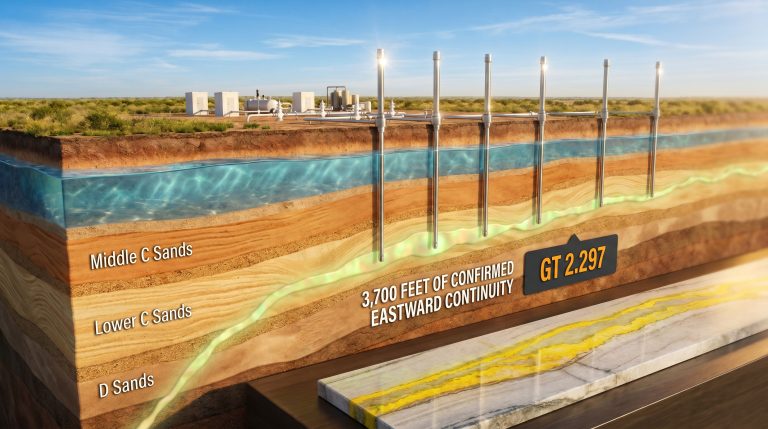
The foundation of any ISCR operation lies in its wellfield design and solution management systems. At facilities like the recently commissioned Florence Copper project in Arizona, the infrastructure centres on strategically positioned injection and production wells that create controlled flow patterns through copper-bearing geological formations.
The Florence operation demonstrates the sophistication required for commercial-scale ISCR implementation. The wellfield acidification process began in early November 2025, progressing rapidly through systematic injection rate optimisation. By early December 2025, all production wells within the commercial wellfield achieved stable solution circulation, indicating successful establishment of underground flow dynamics.
Key performance metrics from the Florence commissioning reveal the precision required for effective ISCR operations:
• Flow Rate Achievement: Injection rates met or exceeded design expectations, accelerating acidification timelines
• Solution Chemistry Evolution: Copper grades in recovered solutions progressively increased to levels suitable for downstream processing
• System Integration: Seamless transition from wellfield operations to solvent extraction processing occurred within the planned timeline
The current expansion programme employs three drilling rigs simultaneously, supporting both wellfield enlargement and flow optimisation. This multi-rig approach enables continuous wellfield development while maintaining operational flexibility for system modifications.
Solvent Extraction and Electrowinning Integration
The SX/EW plant represents the surface manifestation of ISCR technology, where copper-laden solutions undergo purification and metal recovery. At Florence, the commissioning process has progressed without significant operational challenges, positioning the facility for imminent cathode production.
The technical specifications for modern SX/EW plants require precise coordination between solution chemistry and processing parameters. Furthermore, copper investment strategies must consider how copper concentrations in recovered solutions reach minimum thresholds for effective solvent extraction, typically achieved through controlled acidification progression and optimised circulation rates.
Processing Timeline Milestones:
| Phase | Timeline | Technical Achievement |
|---|---|---|
| Acidification Initiation | November 2025 | Chemical dissolution commenced |
| Production Well Circulation | December 2025 | Full wellfield solution flow established |
| SX/EW Commissioning | January 2026 | Plant systems operational |
| First Cathode Production | Within weeks | Commercial copper output begins |
The transition from construction to operations demonstrates the integration complexity inherent in ISCR projects. Unlike traditional mining where excavation and processing operate independently, ISCR requires synchronised wellfield and plant operations from project inception.
Chemical Engineering Fundamentals in Underground Leaching
Acidification Chemistry and Dissolution Kinetics
The core of ISCR technology lies in controlled acid injection that facilitates copper mineral dissolution within the host geological formation. However, the Taseko Florence Copper Project commissioning process requires precise understanding of mineralogical composition, groundwater chemistry, and formation permeability characteristics.
At Florence, the acidification process employs systematic acid injection through strategically positioned wells, creating localised zones of enhanced copper solubility. The injection rates achieved exceeded design expectations, indicating favourable formation characteristics and optimised injection pressure management.
The progression of copper grades in production wells reflects the advancing acidification front as it encounters various copper mineral phases. Different copper minerals exhibit distinct dissolution rates under acidic conditions:
• Oxide Minerals: Rapid dissolution under mild acidic conditions
• Secondary Sulfides: Moderate dissolution rates requiring sustained acid contact
• Primary Sulfides: Slower dissolution requiring extended exposure and potential oxidant addition
Formation Hydrology and Solution Management
Effective ISCR operations depend on understanding and controlling groundwater flow patterns within the target formation. The wellfield design must account for natural hydraulic gradients, formation permeability variations, and potential solution migration pathways.
The Florence project's success in achieving rapid circulation establishment suggests favourable hydrogeological conditions and effective well spacing optimisation. Consequently, the ability to maintain controlled solution flow while achieving target copper recovery rates represents a critical technical achievement in ISCR implementation.
Environmental Performance Characteristics of ISCR Technology
Resource Consumption and Waste Generation Profiles
ISCR technology fundamentally alters the environmental footprint associated with copper production through elimination of conventional mining infrastructure requirements. The approach removes the need for open-pit excavation, ore transportation, and tailings impoundment construction.
Modern in-situ recovery operations achieve substantial reductions in surface disturbance while eliminating traditional waste streams entirely, representing a fundamental shift toward sustainable mineral extraction methodologies.
The environmental advantages extend beyond simple footprint reduction. For instance, ISCR operations require significantly less energy input compared to conventional mining due to eliminated hauling, crushing, and grinding requirements. Water consumption patterns also differ substantially, with solution-based recovery requiring precise water balance management rather than the massive water volumes associated with conventional processing.
Operational Efficiency and Scalability Factors
The Florence project demonstrates scalability potential inherent in ISCR technology. The three-rig drilling programme enables continuous wellfield expansion while maintaining existing production levels. This operational flexibility contrasts with conventional mining where capacity expansion requires substantial infrastructure development.
Key operational advantages include:
• Modular Expansion: Additional wells can be installed without disrupting existing operations
• Process Optimisation: Solution circulation parameters can be adjusted in real-time based on formation response
• Infrastructure Efficiency: Minimal surface facilities required compared to conventional mining operations
• Regulatory Compliance: Reduced environmental impact simplifies permitting and monitoring requirements
Commercial Viability and Production Economics
Capital Investment and Construction Timelines
The Florence project's progression from construction completion to operational startup demonstrates the capital efficiency potential of ISCR technology. The facility achieved commissioning status within established timelines, indicating effective project management and technical execution.
Construction activities transitioned seamlessly to operational phases, with wellfield acidification commencing immediately following infrastructure completion. This rapid transition contrasts with conventional mining projects where extensive equipment commissioning and ramp-up periods typically extend project timelines.
Production Ramp-Up and Output Projections
The 2026 ramp-up strategy at Florence emphasises systematic capacity expansion through coordinated wellfield development and processing optimisation. In addition, first copper cathode production is anticipated within weeks of SX/EW plant startup, as confirmed by Taseko's latest operational update, representing an aggressive but achievable production timeline.
Production Development Phases:
-
Initial Cathode Production: Establishes processing capability and product quality verification
-
Wellfield Expansion: Three-rig drilling programme supports increased solution flow rates
-
Optimisation Phase: Fine-tuning circulation patterns and processing parameters for maximum efficiency
-
Commercial Production: Full-scale operation achieving design capacity targets
Comparative Analysis: ISCR versus Conventional Mining Methods
Operational Methodology Differences
| Aspect | ISCR Technology | Conventional Open-Pit |
|---|---|---|
| Ore Access | Chemical dissolution in-place | Physical excavation and transport |
| Processing Location | Underground treatment | Surface plant processing |
| Waste Generation | Minimal surface waste | Extensive overburden and tailings |
| Infrastructure Requirements | Wellfield and compact plant | Haul roads, crushers, mills, tailings |
| Energy Profile | Solution circulation pumping | Hauling, crushing, grinding |
| Water Management | Closed-loop solution circulation | Large-scale water consumption |
Technology Maturation and Industry Adoption
The successful Taseko Florence Copper Project commissioning represents a significant milestone in ISCR technology validation within the copper sector. The project demonstrates that solution-based recovery can achieve commercial production scales while maintaining operational reliability.
Industry adoption of ISCR technology has been gradual, primarily due to geological constraints and technical complexity requirements. However, successful operations like Florence provide proof-of-concept validation that may accelerate broader industry interest.
The next major ASX story will hit our subscribers first
Market Implications and Supply Chain Considerations
Domestic Production Enhancement
The Florence project contributes to North American copper supply diversification by establishing domestic production capacity through environmentally sustainable methodologies. This strategic positioning aligns with increased emphasis on supply chain resilience and reduced import dependence, particularly important given current global copper supply constraints.
The project's location in Arizona places production within established copper industry infrastructure while benefiting from favourable regulatory environments for innovative mining technologies. This geographic advantage supports both operational efficiency and market access optimisation.
Technology Transfer and Replication Potential
Successful ISCR implementation at Florence creates opportunities for technology application at similar geological settings throughout the southwestern United States and internationally. The operational knowledge and technical expertise developed through the project can be leveraged for future ISCR developments.
Key factors supporting technology replication include:
• Geological Understanding: Enhanced knowledge of favourable formation characteristics
• Engineering Optimisation: Proven wellfield design and operational parameters
• Regulatory Framework: Established permitting pathways for ISCR projects
• Economic Validation: Demonstrated commercial viability and operational efficiency
Investment Perspective and Financial Implications
Capital Allocation and Return Characteristics
ISCR projects typically exhibit different capital allocation patterns compared to conventional mining developments. The reduced infrastructure requirements can result in lower initial capital commitments, while operational cash flow profiles may differ due to distinct production ramp-up characteristics.
The Florence project's transition from construction to production phases indicates effective capital deployment and project execution. Furthermore, the ability to achieve operational status within planned timelines suggests favourable project economics and technical risk management. For instance, understanding copper price growth drivers becomes crucial for evaluating long-term project viability.
Risk Assessment and Mitigation Strategies
ISCR technology presents unique risk profiles that differ from conventional mining operations. Geological uncertainty regarding formation permeability and mineral distribution can impact production forecasts. However, the modular nature of wellfield development enables incremental risk management through phased expansion.
Primary Risk Factors:
• Formation Heterogeneity: Variable copper grades and permeability characteristics
• Solution Management: Maintaining controlled flow patterns and preventing migration
• Regulatory Compliance: Groundwater protection and environmental monitoring requirements
• Technology Performance: Achieving design recovery rates and solution chemistry targets
Future Trajectory of In-Situ Recovery Technologies
Industry Transformation Potential
The successful commissioning at Florence positions ISCR technology as a viable alternative for specific geological settings and market conditions. The demonstration of commercial-scale production capabilities may catalyse increased industry investment in solution-based recovery development.
Long-term industry transformation will likely depend on regulatory evolution, technological advancement, and economic competitiveness compared to conventional mining methods. The environmental advantages of ISCR technology align with increasing sustainability requirements in the mining sector, potentially creating opportunities for copper‑uranium investments and gold‑copper exploration.
Technological Innovation and Development Pathways
Future ISCR development may incorporate advanced monitoring technologies, enhanced solution chemistry optimisation, and improved wellfield design methodologies. Integration with digital mining technologies could enable real-time process optimisation and predictive maintenance capabilities.
The Florence project provides a foundation for technological advancement through operational experience and performance data collection. This information base supports continued innovation in solution-based recovery methodologies and their application to diverse geological settings.
Conclusion: Sustainable Mining Through Chemical Innovation
The completion of construction and commencement of operations at the Taseko Florence Copper Project commissioning represents a significant milestone in sustainable mining technology implementation. The successful transition from wellfield acidification through SX/EW plant commissioning demonstrates the technical viability of large-scale ISCR operations.
The project's achievements extend beyond simple production metrics to encompass validation of environmentally responsible mining methodologies. By eliminating traditional waste streams and reducing resource consumption requirements, ISCR technology offers a pathway toward more sustainable mineral extraction practices.
For industry stakeholders, the Florence project provides tangible evidence of ISCR technology's commercial potential and operational reliability. The successful implementation of complex chemical and engineering systems within planned timelines indicates mature technology readiness and effective project management capabilities.
Looking forward, the broader adoption of ISCR technology will likely depend on geological suitability assessments, regulatory framework development, and continued technological advancement. The operational experience gained at Florence will inform future project development and contribute to industry-wide understanding of solution-based recovery implementation.
The transformation of copper production through chemical innovation represents more than technological advancement; it embodies a fundamental shift toward sustainable resource extraction that balances economic objectives with environmental stewardship responsibilities.
Interested in Copper Mining Investment Opportunities?
Discovery Alert's proprietary Discovery IQ model delivers real-time alerts on significant copper discoveries across the ASX, instantly empowering subscribers to identify actionable opportunities ahead of the broader market. Understand why historic discoveries can generate substantial returns by visiting Discovery Alert's dedicated discoveries page, showcasing examples of exceptional market outcomes, and begin your 30-day free trial today to position yourself ahead of the market.