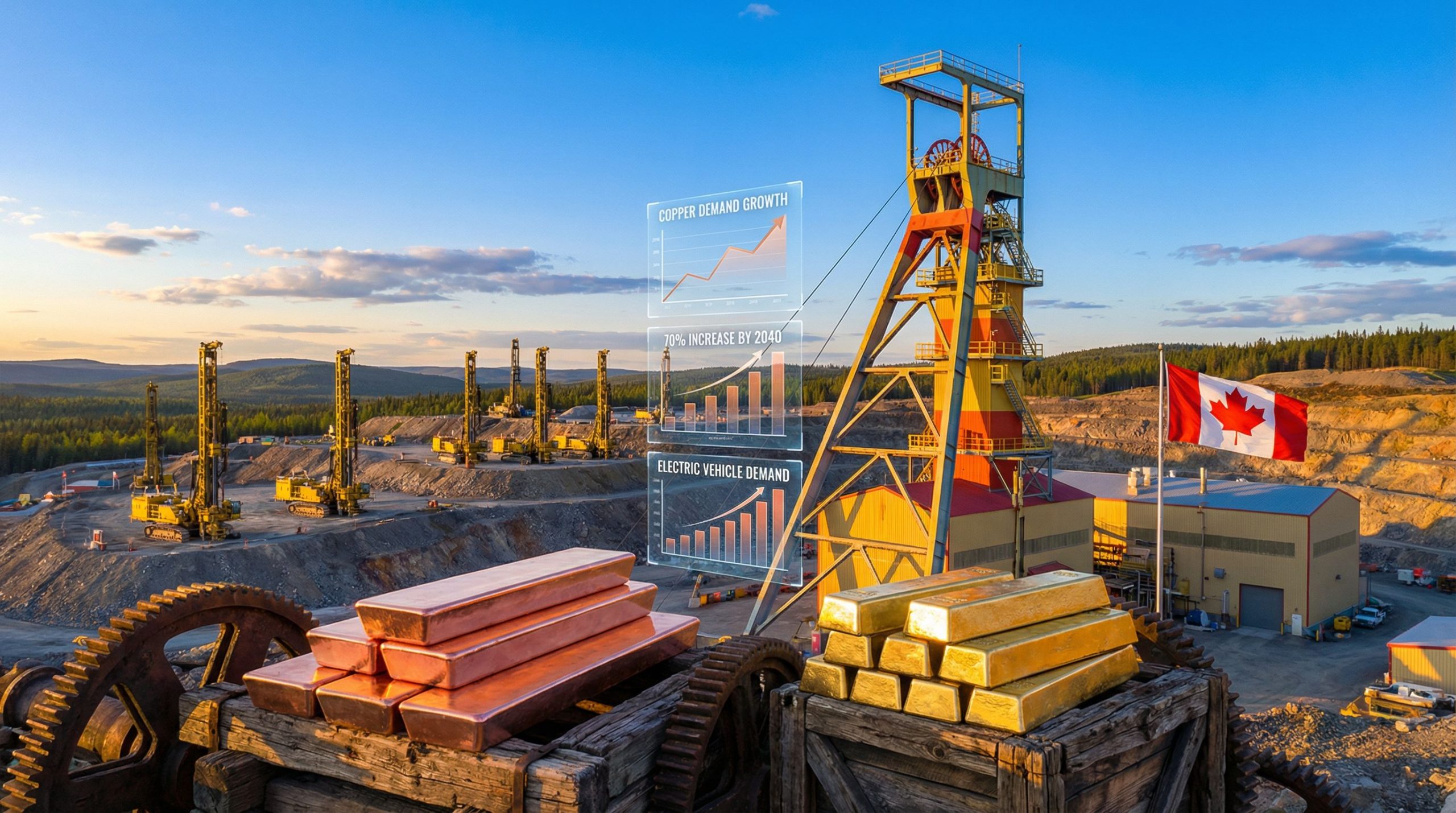
Understanding the New Copper Market Paradigm
The global commodities landscape is experiencing a profound transformation as industrial metals enter an era of structural supply-demand imbalance. This shift represents more than cyclical price volatility; it signals a fundamental realignment of resource allocation priorities driven by competing forces of geopolitical tensions, technological acceleration, and environmental imperatives. Among all industrial metals, copper stands at the epicenter of this transformation, with surging copper prices reflecting both immediate market dislocations and longer-term secular trends that could reshape entire industries.
Traditional demand patterns for copper, historically tied to construction activity and manufacturing output, are being superseded by new consumption drivers that exhibit different elasticity characteristics and growth trajectories. The convergence of energy transition infrastructure requirements, artificial intelligence computing expansion, and strategic resource security concerns has created an unprecedented demand profile that mining supply chains struggle to accommodate. Furthermore, copper investment trends continue evolving as institutional investors recognise the strategic importance of this critical metal.
What's Driving Copper Prices to Unprecedented Territory?
The Perfect Storm of Supply Constraints and Strategic Demand
Current copper market dynamics reflect an intersection of multiple powerful forces converging simultaneously. New York copper price highs reached an all-time high of US$11,532 per tonne in late 2025, with current trading levels maintaining elevation at US$11,489 per tonne, representing a remarkable 31.0% year-to-date gain. These price levels far exceed historical norms and suggest structural changes in underlying market fundamentals.
The energy transition's copper intensity creates demand characteristics fundamentally different from traditional industrial applications. Unlike construction or manufacturing uses, renewable energy infrastructure and grid modernisation represent largely inelastic demand that must be satisfied regardless of price levels to meet climate commitments and energy security objectives.
Understanding the Global Supply-Demand Imbalance
Mining supply challenges extend beyond temporary operational disruptions to encompass deeper structural constraints. According to commodities analyst Helen Amos from BMO Capital Markets, mining companies face "real difficulties maintaining and growing supply," indicating systemic production challenges rather than isolated incidents.
| Supply Challenge Category | Impact Level | Timeline | Resolution Difficulty |
|---|---|---|---|
| Existing mine depletion | High | Ongoing | Extremely difficult |
| New project development delays | Very High | 5-10 years | Moderate |
| Environmental regulations | Moderate | 2-5 years | Difficult |
| Concentrate processing bottlenecks | High | 1-3 years | Moderate |
The transition from historical supply surplus to projected deficits represents a fundamental shift in market structure. However, global copper supply forecast models indicate challenges in maintaining production levels. Traditional mining response mechanisms, where higher prices incentivise new production, face unprecedented constraints from environmental regulations, community opposition, and extended project development timelines.
Strategic Sectors Reshaping Copper Consumption Patterns
Energy infrastructure modernisation requires copper intensity levels far exceeding traditional applications. Each megawatt of renewable capacity demands substantial copper content for generators, transformers, transmission lines, and grid integration systems. This creates cumulative demand effects as multiple countries simultaneously pursue aggressive renewable energy targets.
The artificial intelligence revolution introduces entirely new categories of copper consumption through data center expansion and advanced computing infrastructure. Unlike cyclical industrial demand, AI-driven copper requirements exhibit sustained growth characteristics tied to technological advancement rather than economic cycles.
Key Insight: The disconnect between traditional GDP-linked copper consumption and emerging technology-driven demand patterns suggests conventional economic models may underestimate future price support levels.
Defence and strategic infrastructure investments create additional demand sources with different price sensitivity characteristics than commercial applications. National security considerations often override cost optimisation, creating inelastic demand segments that provide price floors during economic downturns. Moreover, projects like Argentina copper project demonstrate the global scale of resource development initiatives.
How Are Geopolitical Forces Amplifying Price Volatility?
The Tariff Uncertainty Rollercoaster of 2025
United States tariff policies have created unprecedented price volatility as market participants attempt to navigate policy uncertainty. According to a Small Caps analysis, the anticipation of substantial tariffs on copper imports has triggered strategic positioning across global supply chains, with traders implementing front-running strategies to avoid tariff exposure.
Helen Amos identified this price arbitrage dynamic as "probably the most dominant factor driving prices higher at the moment," distinguishing between fundamental supply constraints and policy-driven market distortions. This dual-factor price support suggests current elevated levels reflect both structural and temporary influences.
The front-loading phenomenon creates artificial demand spikes as importers accelerate shipment schedules to beat tariff implementation deadlines. This behaviour temporarily distorts traditional supply-demand metrics and complicates fundamental analysis of market conditions.
Supply Chain Nationalism and Strategic Resource Security
Trade policy uncertainty extends beyond immediate tariff concerns to encompass broader supply chain security considerations. Countries increasingly view copper access as a strategic imperative rather than purely commercial consideration, leading to inventory building and bilateral trade arrangements that bypass traditional market mechanisms.
Long-term implications include potential fragmentation of global copper markets along geopolitical lines, reducing market efficiency and increasing price volatility. Regional price differentials may persist as trade restrictions limit arbitrage opportunities that traditionally maintained global price convergence.
Which Market Fundamentals Support Sustained Higher Prices?
Structural Supply Challenges Beyond Current Disruptions
Project development timelines for new copper mining capacity range from 7-15 years from discovery to production, creating inherent supply inelasticity that prevents rapid response to price signals. Environmental and community approvals add additional delays, with many promising projects facing indefinite postponement due to regulatory constraints.
Mining companies must address declining ore grades at existing operations while simultaneously developing more remote and technically challenging deposits. This combination increases both capital requirements and operational costs, raising the floor price necessary to justify new investment.
Concentrate availability bottlenecks affect refined copper production even when mining output remains stable. Processing capacity constraints and transportation limitations create secondary supply restrictions that compound primary mining challenges. In addition, mineral exploration insights reveal the complexities facing discovery teams in this challenging environment.
The Energy Transition's Copper Intensity Revolution
Renewable energy infrastructure exhibits copper requirements far exceeding traditional power generation methods. Wind turbines require approximately 4-5 times more copper per megawatt than conventional power plants, while solar installations demand substantial copper content for inverters, transformers, and connection systems.
Grid modernisation multiplies these effects as existing transmission infrastructure requires upgrading to accommodate distributed renewable generation and bidirectional power flows. Smart grid technologies, energy storage systems, and electric vehicle charging networks create additional copper demand layers that compound renewable energy requirements.
- Solar PV systems: 4-5 tonnes copper per MW installed capacity
- Wind turbines: 3-4 tonnes copper per MW capacity
- Grid modernisation: 2-3x existing transmission copper content
- Energy storage: 1-2 tonnes copper per MWh battery capacity
Technology Sector's Emerging Copper Appetite
Data center expansion driven by artificial intelligence computing requirements creates unprecedented copper demand growth. Modern high-performance computing facilities require advanced cooling systems, redundant power distribution, and specialised electrical infrastructure that significantly exceeds traditional data center specifications.
The deployment of 5G telecommunications networks and edge computing infrastructure adds another demand layer, with small cell installations and fiber optic networks requiring substantial copper content per coverage area. Unlike previous telecommunications upgrades, 5G implementation demands much higher infrastructure density.
What Do Price Forecasts Reveal About Market Expectations?
Analyst Consensus and Divergent Scenarios
Current copper price levels at US$11,489 per tonne reflect market expectations of sustained supply-demand imbalances extending well into 2026. The combination of structural supply constraints and accelerating demand from multiple sectors creates conditions for sustained price elevation beyond historical cyclical patterns.
Portfolio manager Jun Bei Liu from Ten Capital characterises copper as "the tech of the resources sector," indicating institutional recognition of its critical role in technological transformation. Her identification of copper companies in the "sweet spot" suggests professional investors expect continued price strength to benefit equity valuations.
Market positioning evidence:
- Sandfire Resources (ASX: SFR): +83.5% year-to-date, trading AUD $17.08
- Capstone Copper (ASX: CSC): +39.9% in 2025, trading AUD $14.17
- Strong institutional endorsement from experienced fund managers
Risk Factors That Could Accelerate or Moderate Prices
Upside catalysts include accelerated energy transition timelines, additional geopolitical supply disruptions, or faster-than-expected artificial intelligence deployment requiring expanded data center infrastructure. Economic stimulus programmes focused on infrastructure modernisation could significantly increase copper demand beyond current projections.
Downside risks centre on potential demand destruction if surging copper prices rise to levels that trigger material substitution or delay project implementation. Chinese economic stimulus measures could temporarily increase supply availability if domestic production responds to price incentives.
The probability-weighted scenario analysis suggests asymmetric risk distribution, with upside potential exceeding downside exposure due to supply inflexibility and diverse demand sources exhibiting different price sensitivity characteristics.
How Should Investors Position for the Copper Supercycle?
Direct Exposure Through Commodity Markets
COMEX copper futures provide direct price exposure for sophisticated investors comfortable with leverage and margin requirements. Contract specifications allow precise position sizing, though volatility demands careful risk management and adequate capital reserves for margin calls during price swings.
Exchange-traded funds focused on copper provide simplified access for retail investors seeking commodity exposure without futures market complexity. These vehicles typically track copper prices through futures contracts or physical holdings, offering liquidity and transparent pricing.
Physical copper investment remains limited for individual investors due to storage and insurance costs, though some specialised investment products offer allocated storage solutions for larger positions seeking direct metal ownership.
Equity Exposure Across the Value Chain
Major miners with significant copper exposure offer leveraged participation in price appreciation while providing operational diversification across multiple commodities. Companies like BHP and Rio Tinto generate substantial copper revenues alongside iron ore and other metals, reducing single-commodity risk.
Mid-tier producers with expansion potential may offer higher leverage to copper price movements. According to Jun Bei Liu's analysis, Sandfire Resources (ASX: SFR) and Capstone Copper (ASX: CSC) represent well-positioned companies in the current market environment.
Exploration companies in promising jurisdictions provide highest potential returns but carry correspondingly elevated risks. These investments require careful evaluation of management experience, geological potential, and regulatory environments affecting development probability.
- Processing and refining operations benefit from increased throughput volumes and potentially improved margins
- Service companies supporting mining operations experience increased demand for equipment and expertise
- Technology providers developing mining efficiency solutions gain from increased industry capital allocation
Portfolio Construction and Risk Management
Correlation analysis reveals copper's relationships with other asset classes vary significantly during different market regimes. During supply-driven price movements, copper may exhibit reduced correlation with broader equity markets, while demand-driven cycles typically show higher correlation with economic growth indicators.
Geographic diversification principles suggest exposure across multiple mining jurisdictions to reduce country-specific regulatory, political, and operational risks. Different regions face varying environmental restrictions, taxation policies, and infrastructure development challenges.
Operational diversification across mining stages (exploration, development, production) and copper applications (mining, processing, recycling) provides protection against specific industry segment challenges while maintaining overall copper exposure.
What Are the Long-Term Implications of Current Price Dynamics?
Incentive Effects on New Supply Development
Sustained high copper prices create powerful incentives for new mine development, though response times remain constrained by regulatory approval processes and technical challenges. Required price levels for marginal project economics vary significantly based on location, ore grade, and infrastructure access.
Current price levels approach or exceed the economic thresholds for many previously unviable projects, potentially adding future supply capacity if sustained long enough to justify development commitments. However, the timeline for new capacity to reach market extends 7-15 years from initial investment decisions.
Technology innovations in extraction and processing may improve project economics and reduce environmental impacts, potentially accelerating development timelines and reducing minimum viable price levels. Advanced heap leaching, bioleaching, and automated mining systems offer potential efficiency improvements.
Demand Destruction and Substitution Thresholds
Critical price levels that trigger material substitution vary by application, with some uses offering limited alternatives while others provide economically viable substitutes at elevated copper prices. Electrical applications generally offer fewer substitution opportunities due to copper's superior conductivity characteristics.
Recycling economics improve substantially at current price levels, increasing secondary supply availability and reducing reliance on primary mining production. Enhanced recycling efficiency and collection systems become economically justified, potentially providing significant supply additions.
Efficiency improvements across applications may reduce copper intensity per unit of output, though these gains often require years to implement and may be offset by increased total demand from expanding applications.
Macroeconomic Consequences of Sustained High Prices
Inflation transmission through industrial supply chains becomes increasingly significant as copper content represents material cost components in construction, manufacturing, and infrastructure projects. Furthermore, higher copper prices directly impact renewable energy deployment costs, potentially affecting climate transition timelines.
Geopolitical implications of resource scarcity include increased competition for mining assets, potential conflicts over mineral-rich territories, and accelerated development of alternative supply sources in politically stable regions. Strategic stockpiling and bilateral trade agreements may fragment traditional market mechanisms.
Central bank policies may need to account for commodity price impacts on inflation expectations, particularly if energy transition requirements maintain elevated demand for extended periods regardless of economic cycles. According to Wood Mackenzie's analysis, supply constraints may persist longer than traditional economic models suggest.
Frequently Asked Questions About Copper Price Dynamics
Why is copper more volatile than other industrial metals?
Copper's volatility stems from its dual role as both an industrial commodity tied to economic cycles and a strategic material for technological transformation. Supply constraints from long project development cycles combine with demand fluctuations from multiple sectors operating on different timelines, creating complex price dynamics.
The London Metal Exchange withdrawal activity and futures market positioning amplify price movements, while geopolitical factors affecting trade policies add additional volatility layers. Unlike metals with fewer applications, copper's diverse end-use markets create multiple demand shock possibilities.
How do copper prices affect renewable energy adoption?
Higher copper prices directly increase the capital costs of renewable energy projects, particularly wind and solar installations with high copper intensity. However, most renewable energy deployment occurs within policy frameworks that prioritise emission reduction goals over pure economic optimisation.
Government subsidies, carbon pricing mechanisms, and regulatory mandates often absorb copper cost increases, maintaining renewable energy deployment schedules despite higher material costs. Long-term power purchase agreements provide revenue certainty that justifies higher upfront capital investments.
What role does China play in global copper price formation?
China represents approximately 50% of global copper consumption, making Chinese economic policies and industrial activity primary drivers of demand cycles. Chinese strategic reserve purchases and domestic inventory building can significantly impact global market balances.
Manufacturing output changes in China create immediate copper demand fluctuations, while infrastructure spending programmes generate sustained consumption increases. Trade policies affecting copper imports and exports between China and other regions influence global price formation and regional arbitrage opportunities.
Are current copper prices sustainable long-term?
Current price levels reflect both temporary factors (tariff uncertainty, front-loading) and structural changes (energy transition, supply constraints). The sustainability depends on how quickly supply responds to price incentives and whether demand growth from new applications continues accelerating.
Historical precedent suggests commodity price spikes eventually trigger supply responses that moderate prices, though the timeline varies significantly. Consequently, current supply constraints appear more structural than previous cycles, potentially supporting elevated prices for extended periods.
Conclusion: Navigating the New Copper Market Reality
Key Takeaways for Investors and Industry Participants
The current copper market environment represents a fundamental shift from historical patterns, driven by the convergence of supply constraints, energy transition requirements, and geopolitical factors. Surging copper prices reflect both immediate market dislocations and longer-term structural changes that may persist for years.
Investment opportunities span direct commodity exposure through futures and ETFs, equity positions in mining companies across the development spectrum, and related service providers benefiting from increased industry activity. Companies like Sandfire Resources (ASX: SFR) and Capstone Copper (ASX: CSC), trading at AUD $17.08 and AUD $14.17 respectively, represent institutional favourites positioned to benefit from sustained elevated prices.
Timeline expectations for supply-demand rebalancing extend far beyond typical commodity cycles due to extended mine development periods and accelerating demand from technological transformation. New supply capacity requires 7-15 years from investment decision to production, while energy transition and AI-driven demand continue expanding rapidly.
Strategic considerations for different market participants:
- Institutional investors: Focus on diversified exposure across mining companies, geographies, and development stages
- Retail investors: Consider ETF-based commodity exposure combined with established mining company equities
- Industrial consumers: Evaluate long-term supply contracts and hedging strategies to manage price volatility
- Policy makers: Address regulatory barriers constraining new supply development while supporting strategic stockpiling
The copper market's evolution from traditional industrial commodity to strategic technology enabler creates investment opportunities and challenges requiring sophisticated analysis of supply-demand fundamentals, geopolitical factors, and technological trends. Success in this environment demands understanding both immediate market dynamics and longer-term structural transformation affecting global resource allocation.
Disclaimer: This analysis contains forward-looking statements and price projections based on current market conditions and publicly available information. Commodity investments carry substantial risks including price volatility, geopolitical uncertainty, and operational challenges. Past performance does not guarantee future results. Investors should conduct independent research and consult qualified financial advisors before making investment decisions.
Ready to Capitalise on the Next Major Copper Discovery?
Discovery Alert's proprietary Discovery IQ model delivers real-time alerts on significant copper and mineral discoveries across the ASX, empowering subscribers to identify actionable opportunities ahead of the broader market. With copper prices surging to record highs and supply constraints creating unprecedented investment conditions, explore Discovery Alert's discoveries page to understand how major mineral discoveries can generate substantial returns, then begin your 30-day free trial to position yourself ahead of the market.