August 24, 2026
The global metals markets operate within complex systems where supply chain disruptions can cascade through entire economies. Modern commodity trading reflects intricate relationships between geological constraints, technological advancement, and macroeconomic forces that shape resource allocation across industries. Understanding these dynamics becomes critical when examining how a copper supply deficit emerges and persists across multi-decade cycles.
Understanding the Copper Supply-Demand Fundamentals
Defining the Supply Deficit Phenomenon
Market mechanics in commodity sectors create unique conditions where persistent undersupply can develop gradually, then accelerate beyond traditional price correction mechanisms. Unlike equity markets where supply can theoretically expand through new offerings, physical commodity markets face geological and operational constraints that limit production flexibility.
A copper supply deficit represents a sustained period where annual mine production fails to meet global consumption requirements, forcing markets to draw down existing inventories. This differs fundamentally from temporary shortages caused by logistics disruptions or seasonal demand variations.
Key metrics for measuring supply gaps include:
- Annual production versus consumption ratios across major consuming regions
- Strategic inventory levels held by governments and major industrial consumers
- Treatment and refining charges that indicate concentrate availability
- Exchange warehouse stock levels on major trading platforms like the London Metal Exchange
Current Market Position and Price Dynamics
Recent copper price movements reflect underlying supply tensions that extend beyond normal market volatility. Furthermore, copper price trends in 2025 show significant upward pressure, with London Metal Exchange copper futures reaching elevated levels as inventory stocks decline to multi-year lows.
LME warehouse inventories serve as critical market indicators, representing immediately available refined copper for industrial consumption. When these stocks fall below approximately 150,000 tonnes, markets typically experience heightened price sensitivity to supply disruptions.
The relationship between physical shortages and financial market responses creates feedback loops where:
- Rising prices signal scarcity to industrial consumers
- Higher costs prompt demand destruction in price-sensitive applications
- Financial speculation can amplify or dampen physical market signals
- Long-term contracts insulate some consumers from spot price volatility
When big ASX news breaks, our subscribers know first
What Are the Primary Drivers Behind Copper Demand Growth?
Electrification Revolution and Infrastructure Transformation
The transition toward electrified transportation and renewable energy systems creates unprecedented copper consumption requirements across multiple sectors simultaneously. Electric vehicles require substantially more copper than internal combustion engines due to battery thermal management systems, high-current wiring, and electromagnetic motor components.
Industry analysis indicates electric vehicles typically contain 80-180 kilograms of copper compared to 15-25 kilograms in conventional vehicles. This differential reflects the copper-intensive nature of:
- Battery cooling systems requiring extensive copper piping networks
- High-voltage wiring harnesses connecting battery packs to motors
- Electromagnetic motor windings in traction motors and generators
- Onboard charging infrastructure and DC-AC conversion systems
Renewable energy installations compound this demand through grid modernisation requirements. Wind turbine installations require 3,500-5,000 kilograms of copper per megawatt of capacity, primarily for generator windings, transformer connections, and transmission infrastructure linking remote generation sites to population centres.
Smart city development adds another demand layer through:
- 5G network infrastructure requiring dense small-cell installations
- Internet of Things devices with embedded sensors and communication systems
- Intelligent transportation systems coordinating traffic flow and autonomous vehicles
- Building automation systems managing energy consumption and security
Emerging Technology Sectors Reshaping Consumption
Artificial intelligence infrastructure buildout represents a significant new copper demand vector that few market analysts fully anticipated. Data centres supporting AI workloads require substantially more cooling capacity than traditional server farms, driving copper consumption through:
| Application Sector | Copper Content per Unit | Projected Growth Rate 2025-2030 |
|---|---|---|
| Electric Vehicles | 80-180 kg per vehicle | 25% annually |
| Wind Turbines | 3,500-5,000 kg per MW | 15% annually |
| AI Data Centres | 2,000-4,000 kg per facility | 30% annually |
Defence and aerospace applications create specialised demand for high-purity copper alloys used in radar systems, electronic warfare equipment, and satellite communication arrays. These applications typically pay premium pricing for specific copper grades, supporting higher-cost production from domestic sources in strategic consuming nations.
How Severe Is the Current Supply Constraint Crisis?
Production Disruptions Across Major Mining Regions
The global copper supply chain faces multiple simultaneous disruptions that compound to create system-wide constraints. Indonesian operations at the Grasberg mine complex have experienced significant operational challenges, whilst the morenci mine recovery efforts highlight broader industry challenges with output reductions extending through the second quarter of 2026.
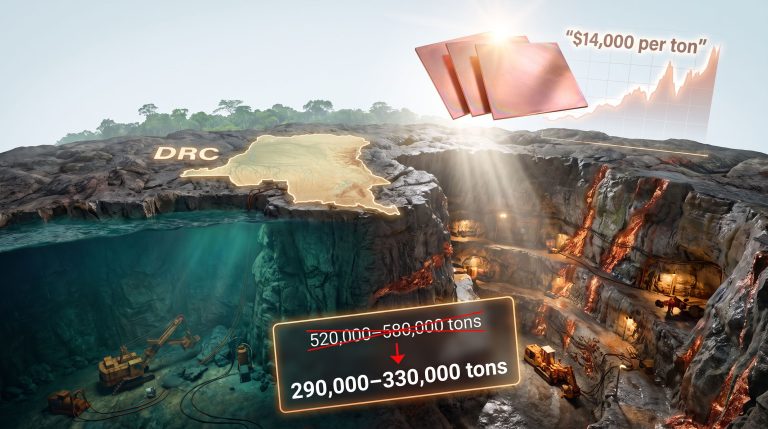
Democratic Republic of Congo mining operations face infrastructure vulnerabilities that periodically disrupt concentrate shipments to international smelters. The Kamoa-Kakula copper complex has encountered flooding incidents that temporarily reduced concentrate production and transportation capacity.
Chilean operations confront unique challenges combining resource depletion with operational cost inflation. The El Teniente mine, operated by state-owned Codelco, exemplifies industry-wide trends of declining ore grades and increased processing complexity that limit production expansion despite strong price incentives.
Industry executives report operational cost increases of 25-30% primarily driven by fuel price inflation stemming from geopolitical developments. These cost pressures affect mining profitability and constrain investment in production expansion projects.
Structural Supply Chain Vulnerabilities
Concentrate shortages force Chinese smelting operations to reduce output by 5-10%, creating bottlenecks in refined copper production that affect global supply availability. China's dominance in copper refining, representing 40-45% of global capacity, creates systemic vulnerabilities when concentrate supply disruptions occur.
Moreover, the situation has reached critical levels as copper prices have hit record highs while smelters face mounting strategic pressures.
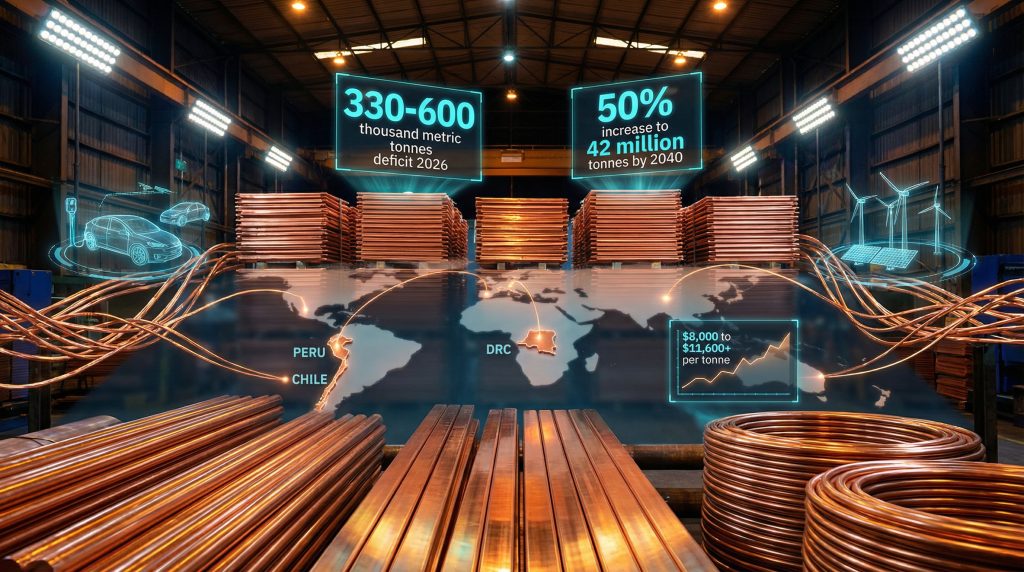
Critical Supply Alert: Refined copper deficits are projected to reach 330,000-600,000 metric tonnes in 2026, representing the most severe shortage in over a decade. This shortage follows a 200,000-tonne deficit in 2025, indicating an accelerating trend that challenges traditional market balancing mechanisms.
Transportation and logistics constraints compound production disruptions through:
- Port congestion at major shipping terminals handling copper concentrate
- Rail capacity limitations connecting remote mines to processing facilities
- Trucking shortages affecting last-mile delivery to industrial consumers
- Container availability for refined copper shipments to international markets
The technical relationship between copper concentrate availability and refining capacity creates cascading effects throughout the supply chain. Copper concentrate typically contains 25-30% copper content, requiring smelting and refining to produce 99.99% pure cathode copper suitable for industrial applications.
Why Can't Mining Companies Scale Production Fast Enough?
Geological and Technical Constraints
Copper ore grades have declined approximately 40% since 1991 across major global deposits, fundamentally altering mining economics and operational requirements. Lower-grade ores require processing larger volumes of material to extract equivalent copper quantities, increasing energy consumption, water usage, and waste generation per unit of refined output.
This grade decline creates cascading operational impacts:
- Increased stripping ratios requiring removal of more overburden per tonne of ore
- Higher energy intensity for grinding, flotation, and concentration processes
- Expanded tailings storage requiring larger environmental management systems
- Water treatment complexity managing increased processing volumes and chemical usage
Water scarcity particularly affects operations in Chile's Atacama Desert and Peru's Andean regions, where copper mines compete with agricultural and municipal users for limited freshwater resources. Mining operations increasingly rely on desalination plants and water recycling systems that require substantial capital investment and ongoing energy costs.
Capital Investment and Development Timeline Challenges
Mining project development timelines span 10-17 years from initial discovery to commercial production, reflecting the complex sequence of geological assessment, environmental permitting, engineering design, and construction phases. This extended timeline prevents rapid supply responses to price signals or demand growth.
Exploration spending has declined approximately 50% below 2010 levels, constraining the pipeline of future copper projects. Industry executives report that Chile already faces shortages of skilled labour and engineering capabilities, creating bottlenecks that could slow project execution even when funding becomes available.
The discovery drought affecting the copper sector has yielded only 14 new major deposits over the past decade, despite technological advances in geological surveying and exploration techniques. This scarcity of new high-grade deposits forces the industry to develop increasingly complex projects in remote locations with challenging operating conditions.
Regulatory and Permitting Bottlenecks
Regulatory approval processes create significant delays for new copper projects across major producing regions. Peru and Chile, despite their status as leading global copper producers, both struggle with permitting timelines that extend well beyond statutory requirements.
Industry leaders emphasise that regulatory frameworks must establish and enforce permitting timelines to provide investment certainty for long-term project development. Extended environmental assessment processes and community consultation requirements, while necessary for responsible development, create planning uncertainties that discourage capital allocation to new projects.
Past instances of resource scarcity have resulted in project cost overruns and schedule delays as contractors and equipment manufacturers face capacity constraints during industry boom periods. This creates cyclical patterns where underinvestment during low-price periods contributes to supply shortages during subsequent demand growth phases.
Which Regions Face the Greatest Supply Risk Exposure?
Geographic Concentration Risks
Global copper production exhibits significant geographic concentration that creates systemic supply vulnerabilities. However, the global copper supply forecast indicates that current production shares reveal how a small number of countries control the majority of global mining output, creating potential chokepoints for international supply chains.
| Region | Production Share | Primary Risk Factors | Mitigation Strategies |
|---|---|---|---|
| Chile | 28% | Water scarcity, labour disputes | Desalination, automation |
| Peru | 12% | Political instability, permitting delays | Policy reform, community engagement |
| DRC | 8% | Infrastructure constraints, governance | Investment in logistics, partnerships |
Political stability concerns affect investment confidence in several major producing regions where resource nationalism trends influence foreign ownership policies and taxation frameworks. Recent examples include mining royalty increases, restrictions on foreign investment in strategic sectors, and export control mechanisms that affect international supply chains.
Processing and Refining Dependencies
China's dominance in copper refining capacity, representing 40-45% of global processing capability, creates strategic dependencies for consuming nations seeking supply chain security. This concentration risk extends beyond mining to include:
- Smelting technology and specialised equipment manufacturing
- Concentrate treatment and quality specifications for international trade
- Refined copper standards that determine product acceptability in global markets
- Financial markets for copper trading and price discovery mechanisms
Limited alternative processing infrastructure development outside China constrains supply chain diversification options for major consuming nations. Building new smelting and refining capacity requires substantial capital investment and technical expertise that few countries possess at commercial scale.
Vulnerability to trade disputes affects copper supply chains through potential tariffs, export restrictions, or technology transfer limitations that could disrupt established trading relationships and processing arrangements.
What Are the Long-Term Deficit Projections?
Demand Trajectory Through 2040
Global copper consumption is projected to increase approximately 50% by 2040, reaching 42 million tonnes annually compared to current consumption levels. Net-zero climate scenarios suggest even more aggressive demand growth, potentially pushing requirements to 50 million tonnes by 2035 as electrification accelerates across transportation, power generation, and industrial applications.
The artificial intelligence sector alone could add 250,000-550,000 tonnes of annual copper demand by 2030 as hyperscale data centres expand to support machine learning workloads. This represents entirely new demand that compounds existing growth trends in electric vehicles, renewable energy, and grid modernisation.
Emerging applications continue expanding copper consumption through:
- Quantum computing infrastructure requiring specialised electromagnetic shielding
- Space technology development using copper in satellite communication systems
- Medical device manufacturing incorporating copper's antimicrobial properties
- Advanced manufacturing processes utilising copper's thermal and electrical conductivity
Supply Peak and Decline Scenarios
Current mining operations and committed development projects suggest global copper production may reach a ceiling of approximately 33 million tonnes by 2030. Post-2030 production faces decline scenarios as existing mines reach resource depletion and new project development fails to maintain replacement rates.
The new project pipeline appears insufficient to meet growing demand requirements, with most planned expansions targeting incremental production increases rather than major new capacity additions. This supply constraint reflects the combination of:
- Geological scarcity of high-grade copper deposits in accessible locations
- Capital intensity of new mine development requiring multi-billion dollar investments
- Technical complexity of processing lower-grade ores and challenging geological conditions
- Environmental standards that increase development costs and timeline requirements
Industry experts confirm that a substantial shortfall in copper supply continues to widen as demand accelerates.
Long-term deficit projections suggest a gap of 10 million metric tonnes by 2040, representing approximately 25% of total projected demand. This massive shortfall would fundamentally alter copper market dynamics and force significant changes in consumption patterns across multiple industries.
The next major ASX story will hit our subscribers first
How Do Substitution and Recycling Factor Into Supply Solutions?
Material Substitution Limitations
Aluminium represents the primary alternative to copper in electrical applications, but performance trade-offs limit substitution potential in many critical uses. Aluminium conductors require approximately 60% larger cross-sectional areas to carry equivalent electrical current, creating space constraints in compact applications like electric vehicles and consumer electronics.
Silver offers superior electrical conductivity but faces availability constraints and pricing premiums that make widespread substitution economically unviable. Silver production totals approximately 25,000 tonnes annually compared to copper's 20+ million tonnes, highlighting the scale limitations of alternative materials.
Technical barriers prevent copper replacement in specialised applications including:
- High-frequency electrical systems where copper's conductivity characteristics are irreplaceable
- Thermal management applications requiring copper's heat transfer properties
- Corrosion-resistant environments utilising copper alloys' durability characteristics
- Precision manufacturing depending on copper's machining and forming properties
Recycling Potential and Constraints
Copper recycling currently recovers approximately 35% of annual consumption from end-of-life products and manufacturing waste streams. Recycling efficiency improvements could potentially increase recovery rates, but infrastructure limitations and collection logistics constrain expansion potential.
Economic viability thresholds for recycling operations depend on copper prices, energy costs, and regulatory frameworks governing waste processing. Higher copper prices improve recycling economics but also increase costs for primary applications, creating complex market dynamics.
Infrastructure requirements for enhanced copper recovery include:
- Collection systems for end-of-life electronics and vehicles containing copper components
- Processing facilities capable of separating copper from complex product assemblies
- Quality control systems ensuring recycled copper meets purity specifications for reuse
- Transportation networks connecting waste sources to processing facilities
What Investment Implications Emerge From Supply Deficits?
Commodity Price Forecasting Models
Financial institutions project copper prices reaching $12,075 per metric tonne as an average for 2026, with potential peak pricing scenarios approaching $12,500 per metric tonne during the second quarter. These forecasts reflect expectations of continued tight supply conditions and strong demand growth from electrification sectors.
Long-term price support from sustained deficit conditions creates investment implications across multiple asset classes:
- Mining equity valuations benefit from higher commodity prices and improved profit margins
- Infrastructure development costs increase due to raw material inflation pressures
- Technology sector expenses rise as copper-intensive products face input cost pressures
- Inflation expectations adjust to reflect commodity price impacts on broad economic indexes
Currency dynamics affect copper pricing and investment returns as the commodity trades primarily in US dollars whilst production costs incur local currency expenses. Exchange rate fluctuations can amplify or dampen investment returns for international mining operations.
Sector Investment Opportunities and Risks
Mining companies with established copper operations benefit directly from higher commodity prices through improved cash flows and expansion option values. However, development-stage projects face increased capital costs for equipment, labour, and materials that offset some benefits from higher output pricing.
Those examining copper-uranium investment insights will find compelling opportunities in dual-commodity projects that leverage shared infrastructure and geological expertise.
Infrastructure investment requirements create opportunities in:
- Transportation and logistics supporting expanded mining operations
- Processing technology improving extraction efficiency and reducing environmental impact
- Alternative energy systems reducing mining operational costs and regulatory constraints
- Recycling infrastructure capturing value from secondary copper sources
Technology sector cost pressures from raw material inflation could accelerate innovation in copper-efficient designs and alternative materials research. Companies developing substitution technologies or improving copper utilisation efficiency may benefit from sustained high pricing environments.
Which Policy Interventions Could Address Supply Constraints?
Regulatory Reform Priorities
Streamlined permitting processes for critical mineral projects could reduce development timelines and encourage investment in new production capacity. Environmental assessment standardisation across major producing regions would provide regulatory certainty for international mining companies planning multi-jurisdictional operations.
International cooperation frameworks for supply security might include:
- Bilateral agreements facilitating mining investment and technology transfer
- Strategic stockpile coordination preventing competitive hoarding during shortage periods
- Technical standards harmonisation reducing trade barriers for refined copper products
- Research collaboration advancing extraction technology and environmental protection methods
Policy makers face trade-offs between environmental protection, community consultation requirements, and supply security objectives that require careful balance to achieve multiple policy goals simultaneously.
Strategic Reserve and Stockpiling Considerations
Government stockpile policies vary significantly across major consuming nations, with some countries maintaining strategic reserves whilst others rely primarily on commercial inventory management. The effectiveness of stockpiling depends on reserve size, release mechanisms, and coordination with private sector inventory policies.
Private sector inventory management strategies balance carrying costs against supply security requirements. Companies in copper-intensive industries must evaluate optimal inventory levels considering price volatility, supply reliability, and working capital constraints.
Emergency allocation mechanisms during severe shortages could include priority systems for critical applications such as infrastructure maintenance, national security requirements, and essential manufacturing processes. However, such mechanisms require advance planning and stakeholder coordination to implement effectively.
Frequently Asked Questions About Copper Supply Deficits
How Long Will the Copper Shortage Last?
Duration projections for the copper supply deficit depend on multiple variables including new mine development timelines, demand growth rates from electrification sectors, and potential breakthrough technologies affecting consumption patterns. Most industry analysts project persistent deficits extending through the 2030s based on current development pipelines and demand forecasts.
Resolution requires both supply expansion through new project development and demand moderation through efficiency improvements, substitution adoption, and recycling enhancement. The timeline for achieving supply-demand balance depends on policy responses, investment priorities, and technological advancement rates.
Can Technology Innovation Solve the Supply Problem?
Processing efficiency improvements and extraction technology advances could increase copper recovery from existing ore bodies and enable development of previously uneconomic deposits. Automation technologies may reduce operational constraints and labour shortages that limit production capacity expansion.
Exploration technology enhancements, including satellite geological surveying and artificial intelligence-assisted data analysis, could improve discovery rates for new copper deposits. However, technology innovation timelines may be insufficient to address near-term supply constraints given mining development lead times.
What Sectors Will Be Most Affected by Copper Shortages?
Electric vehicle manufacturing faces potential production constraints as copper availability limits battery production, motor manufacturing, and charging infrastructure development. Automotive companies may need to redesign products for copper efficiency or develop alternative technologies.
Renewable energy project delays could result from material availability constraints affecting wind turbine manufacturing, solar panel production, and grid connection infrastructure. This could slow progress toward climate goals if copper shortages limit clean energy deployment rates.
Construction and infrastructure development cost increases may affect project economics and delay maintenance programmes for aging electrical systems, transportation networks, and industrial facilities requiring copper-intensive upgrades.
Conclusion: Navigating the Copper Supply Challenge
Strategic Response Framework
Addressing the copper supply deficit requires a multi-pronged approach combining supply expansion, demand management, and supply chain resilience improvements. International cooperation becomes essential given the global nature of copper markets and the concentration of production in relatively few countries.
Investment priorities for addressing structural constraints include:
- Exploration technology development improving discovery success rates
- Processing innovation enabling utilisation of lower-grade ore bodies
- Infrastructure development connecting remote deposits to global markets
- Human capital development training skilled workers for modern mining operations
Timeline for Market Rebalancing
Short-term outlook through 2026-2027 indicates continued tight market conditions as demand growth outpaces production capacity expansion. Supply chain disruptions and geopolitical tensions may create additional volatility during this period.
Medium-term prospects suggest gradual supply response by the early 2030s as new projects reach commercial production and efficiency improvements increase output from existing operations. However, this timeline remains vulnerable to development delays and regulatory constraints.
Long-term considerations extend beyond 2035 when sustainable supply-demand equilibrium becomes increasingly challenging to achieve without significant changes in consumption patterns, technological breakthroughs, or major new geological discoveries.
The copper supply deficit represents one of the most significant commodity market challenges of the next decade, with implications extending across multiple sectors and national economies. Successfully navigating this challenge requires coordinated responses from industry, government, and international organisations to ensure adequate supply for global electrification and technological advancement.
Investment Disclaimer: This analysis contains forward-looking statements and projections that involve significant uncertainties. Commodity prices, mining operations, and market conditions can change rapidly due to factors beyond prediction or control. Readers should conduct independent research and consult qualified professionals before making investment decisions related to copper markets or mining securities.
Ready to Capitalise on Copper Market Opportunities?
Discovery Alert's proprietary Discovery IQ model delivers real-time alerts on significant copper and mineral discoveries across the ASX, empowering investors to identify actionable opportunities ahead of market movements. With copper supply deficits projected to reach critical levels and prices hitting record highs, explore how historic mineral discoveries have generated substantial returns for early investors and begin your 14-day free trial today.