
July 24, 2026
How Corporate Energy Procurement Is Reshaping Global Power Markets
The transformation of global electricity markets increasingly depends on large-scale institutional buyers who commit decades-long purchasing agreements before renewable energy facilities even begin construction. This strategic approach to energy procurement has evolved from a niche sustainability initiative into a fundamental driver of grid modernization, creating ripple effects that extend far beyond corporate balance sheets.
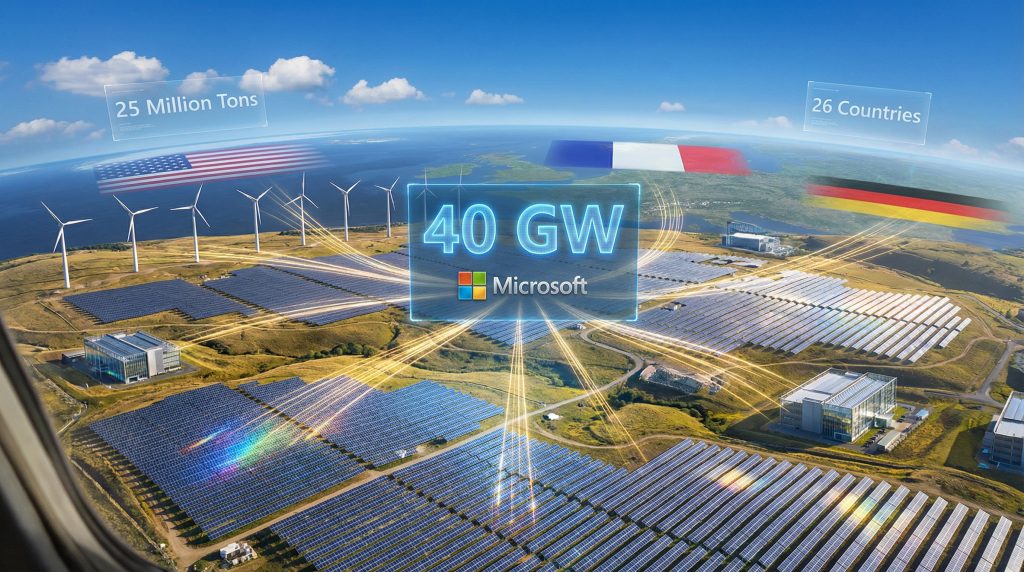
Microsoft's achievement of 40 GW contracted renewable energy capacity represents more than an environmental milestone. It demonstrates how systematic, diversified procurement strategies can simultaneously hedge against energy price volatility while accelerating the deployment of clean energy infrastructure across multiple continents. This approach has established new benchmarks for corporate energy strategy and grid transformation.
When big ASX news breaks, our subscribers know first
Strategic Framework Behind Microsoft's Renewable Energy Achievement
The path to Microsoft renewables goal 40 GW contracted capacity involved a methodical approach that prioritised risk distribution over cost minimisation. Rather than pursuing the lowest-cost renewable energy sources in isolated markets, the strategy emphasised geographic diversification, technology variety, and partnership stability.
Multi-Partner Risk Management Architecture
Microsoft's procurement strategy involved over 400 separate agreements with 95+ utilities and developers across 26 countries. This granular distribution approach provides several strategic advantages:
- Regulatory risk mitigation: Spreading exposure across diverse policy environments
- Weather pattern diversification: Balancing renewable energy production across different climate zones
- Currency hedging: Natural protection against foreign exchange fluctuations
- Supply chain resilience: Reduced dependency on any single developer or technology provider
The five-year timeline from Microsoft's 2020 carbon negative commitment to achieving the 40 GW milestone demonstrates the scalability of systematic corporate procurement when supported by appropriate partnership frameworks and financial structures.
Power Purchase Agreement Mechanics and Duration Strategy
Corporate PPAs typically involve 10-15 year contract durations, providing renewable energy developers with the revenue certainty necessary to secure project financing. These agreements create a foundation for infrastructure investment that extends beyond the immediate corporate buyer's needs.
The long-term nature of these contracts serves multiple strategic purposes:
- Price stability: Protection against energy market volatility
- Budget predictability: Fixed or index-based pricing for long-term planning
- Infrastructure catalyst: Enabling grid upgrades and transmission investments
- Market development: Supporting renewable energy deployment in emerging markets
Furthermore, these extended commitments help address many of the energy transition challenges that organisations face when implementing large-scale renewable strategies.
Understanding the Scale: 40 GW Renewable Energy Capacity Analysis
The magnitude of 40 GW contracted renewable energy capacity becomes clearer when analysed against residential consumption patterns and grid infrastructure requirements. This capacity theoretically generates enough electricity to power approximately 10 million US homes annually, though the actual impact depends on capacity factors and technology mix.
Online Capacity vs. Development Pipeline
Microsoft's current portfolio demonstrates the complex timeline involved in large-scale renewable procurement:
- 19 GW online: Currently generating power and delivering electricity
- 21 GW in development: Projects under construction or in planning phases
- Pipeline ratio: 52.5% of contracted capacity still under development
This distribution reflects the typical 2-4 year development timeline from contract signing to commercial operation for renewable energy projects. The substantial pipeline component indicates that the full environmental and economic benefits of Microsoft's procurement strategy will materialise over the next several years.
Technology Mix and Geographic Distribution
While specific technology breakdowns require verification from Microsoft's sustainability reporting, large-scale corporate renewable procurement typically emphasises portfolio balance:
Solar photovoltaic installations generally provide:
- Capacity factors ranging from 15-25% depending on location
- Lower installation costs in high-irradiance regions
- Shorter development timelines compared to wind projects
Wind energy projects typically offer:
- Capacity factors of 25-35% for onshore installations
- Higher capacity factors in optimal wind resource areas
- Longer development timelines but potentially lower long-term costs
Hydroelectric partnerships can provide:
- Capacity factors exceeding 35-50% in suitable locations
- Enhanced grid stability and predictable generation patterns
- Long-term asset value with extended operational lifespans
Partnership Models Driving Large-Scale Renewable Development
Microsoft's success in achieving its Microsoft renewables goal 40 GW contracted resulted from strategic partnerships that balanced scale with risk management. The approach involved both large-scale strategic alliances and numerous smaller tactical agreements.
Major Strategic Partnerships
Brookfield Alliance represents the largest single component of Microsoft's renewable portfolio:
- 10.5 GW contracted capacity (26% of total portfolio)
- Geographic focus: United States and European markets
- Project diversity: Mixed renewable technology portfolio
- Strategic significance: Demonstrates the viability of multi-gigawatt corporate partnerships
ENGIE Collaboration provides European market access:
- 416+ MW contracted capacity
- Regional focus: France and Germany
- Technology emphasis: Solar and wind installations
- Market development: Supporting renewable growth in established European markets
Distributed Partnership Strategy
Beyond major alliances, Microsoft's approach involved extensive smaller-scale agreements:
- Remaining partners: 95+ utilities and developers managing 29+ GW
- Deal structure: Over 400 separate agreements
- Geographic spread: 26 countries providing global diversification
- Risk distribution: No single partner represents more than 26% of portfolio
| Partnership Type | Capacity (GW) | Percentage of Portfolio | Geographic Focus |
|---|---|---|---|
| Brookfield Alliance | 10.5 | 26.3% | US & Europe |
| ENGIE Collaboration | 0.4+ | 1.0% | France & Germany |
| Distributed Partners | 29.1+ | 72.7% | Global (24 countries) |
Grid Infrastructure Impact and Community Benefits
Corporate renewable energy procurement at Microsoft's scale creates substantial infrastructure development beyond the renewable generation facilities themselves. The 40 GW contracted capacity necessitates significant grid modernisation investments to deliver power from generation sites to consumption centres.
Transmission Infrastructure Requirements
Large-scale renewable energy deployment requires coordinated grid infrastructure development:
- Transmission line upgrades: Connecting remote renewable resources to load centres
- Substation modernisation: Installing or upgrading electrical substations for power delivery
- Grid balancing systems: Adding flexibility to manage variable renewable generation
- Distribution infrastructure: Modernising local grids to accommodate distributed renewable energy
Economic Development Through Energy Infrastructure
Microsoft's renewable energy partnerships generate economic benefits extending beyond electricity production:
Local workforce development includes:
- Training programs for renewable energy installation and maintenance
- Long-term employment in facility operations and management
- Skills development applicable to broader energy industry needs
Community investment programs typically provide:
- Direct contributions to local government through property taxes
- Land lease payments supporting rural economic development
- Educational partnerships focusing on renewable energy technology
- Infrastructure improvements benefiting local communities
In addition, these developments contribute significantly to broader energy security insights by diversifying energy supply chains and reducing dependence on volatile fossil fuel markets.
Carbon Reduction Economics and Financial Strategy
Microsoft's renewable energy strategy represents a strategic hedge against both regulatory carbon pricing and energy market volatility. The company has achieved 25 million tons of Scope 2 emissions reduction since 2020 through renewable energy procurement.
Long-Term Cost Management Through Price Stability
Corporate PPAs provide predictable energy costs through several mechanisms:
- Fixed pricing structures: Protection against fossil fuel price volatility
- Index-based escalation: Controlled cost increases tied to inflation rather than commodity prices
- Volume commitments: Guaranteed access to contracted renewable energy capacity
- Risk transfer: Shifting development and operational risks to specialised renewable energy companies
This approach provides significant advantages over traditional energy sourcing, particularly when considering natural gas price forecast volatility and oil price volatility patterns that affect conventional energy markets.
Carbon Negative Pathway Economics
Microsoft's 2030 carbon negative target requires continued expansion beyond the current 40 GW contracted capacity. The company's "100/100/0 vision" aims for zero-carbon energy consumption around the clock, necessitating additional technological innovations:
- Energy storage integration: Balancing intermittent renewable generation with constant consumption
- Grid-scale battery systems: Supporting renewable energy delivery during non-generation periods
- Advanced grid management: Optimising renewable energy use across global operations
- Carbon removal technologies: Addressing historical emissions beyond operational reductions
The next major ASX story will hit our subscribers first
Data Center Growth and Renewable Energy Demand Scaling
Microsoft's renewable energy procurement strategy must accommodate rapidly increasing energy consumption driven by artificial intelligence and cloud computing expansion. Data centres require consistent, high-reliability power supply, making renewable energy integration both challenging and strategically important.
Energy Intensity Considerations for AI Infrastructure
Modern data centres supporting AI workloads demonstrate significantly higher energy intensity compared to traditional computing applications. This trend requires careful coordination between renewable energy capacity expansion and infrastructure development:
- Load growth projections: Anticipating future energy requirements based on AI deployment plans
- Reliability requirements: Ensuring renewable energy partnerships can support critical computing infrastructure
- Geographic alignment: Matching renewable energy development with data centre expansion plans
- Storage integration: Incorporating battery storage to provide consistent power delivery
Consequently, companies are increasingly exploring battery metals investment opportunities to support these energy storage requirements and ensure grid stability.
Comparative Analysis: Corporate Renewable Energy Leaders
Microsoft's achievement of 40 GW contracted renewable energy positions the company among the largest corporate renewable energy buyers globally. This scale provides insights into the evolution of corporate energy procurement strategies across the technology sector.
Industry Leadership and Market Development
Corporate renewable energy procurement has emerged as a competitive differentiator among technology companies, with early market participants gaining advantages in:
- Cost advantages: Securing renewable energy contracts before market maturation
- Partnership relationships: Establishing long-term relationships with preferred developers
- Grid infrastructure: Catalysing transmission and distribution investments
- Regulatory influence: Shaping policy development through demonstrated demand
Procurement Strategy Variations
Different approaches to corporate renewable energy procurement reflect varying risk tolerances and strategic objectives:
Concentrated procurement strategies focus on:
- Large-scale partnerships with established developers
- Geographic concentration in optimal renewable resource areas
- Technology specialisation based on cost optimisation
- Simplified management through fewer contractual relationships
Diversified procurement approaches emphasise:
- Risk distribution across multiple partners and geographies
- Technology mix optimisation for portfolio balance
- Market development through varied partnership structures
- Operational flexibility through diverse contract terms
Future Implications for Renewable Energy Markets
Microsoft's Microsoft renewables goal 40 GW contracted achievement demonstrates how corporate demand can drive renewable energy market development at unprecedented scales. This approach has established patterns likely to influence future industry development.
Corporate Demand as Market Catalyst
Large-scale corporate procurement provides renewable energy developers with several advantages:
- Revenue certainty: Long-term contracts reducing project financing costs
- Market validation: Corporate commitments justifying infrastructure investments
- Geographic expansion: Corporate demand enabling renewable development in new markets
- Technology advancement: Scale requirements driving innovation in renewable technologies
Policy and Regulatory Evolution
Corporate renewable energy procurement at Microsoft's scale requires supportive regulatory frameworks:
- Grid access policies: Ensuring transmission infrastructure can accommodate large-scale renewable development
- Interconnection standards: Streamlining the process for connecting renewable facilities to electricity grids
- Cross-border energy trade: Enabling international renewable energy partnerships
- Market structure reform: Adapting electricity markets to accommodate large-scale corporate procurement
According to Reuters reporting on Microsoft's renewable achievements, the company continues to set industry benchmarks for corporate renewable energy procurement.
Strategic Blueprint for Enterprise Decarbonisation
Microsoft's path to 40 GW contracted renewable energy capacity provides a replicable framework for large-scale corporate decarbonisation. The strategy balances risk management with environmental objectives while creating measurable economic benefits.
Key Strategic Elements for Corporate Replication
Organisations seeking to replicate Microsoft's renewable energy success should consider:
Portfolio diversification across:
- Geographic regions to minimise regulatory and weather risks
- Technology types to optimise cost and reliability
- Partnership structures to balance scale with flexibility
- Contract durations to align with corporate planning cycles
Partnership development focusing on:
- Established developers with proven execution capabilities
- Regional specialists with local market knowledge
- Financial capacity to support multi-year development timelines
- Technology expertise relevant to specific renewable resources
Regulatory navigation requiring:
- Understanding of local energy market structures
- Coordination with grid operators for interconnection planning
- Compliance with cross-border energy trading regulations
- Engagement with policy makers on market development needs
Long-Term Market Transformation
The success of Microsoft's renewable energy strategy signals broader market evolution toward corporate-driven clean energy deployment. This transformation extends beyond individual company benefits to create systemic changes in energy infrastructure development.
However, challenges remain significant. "The scale of infrastructure investment required to support global renewable energy deployment necessitates continued coordination between corporate procurement, government policy, and grid modernisation initiatives," according to industry analysts.
As more corporations adopt similar procurement strategies, the combined effect accelerates renewable energy deployment, grid modernisation, and energy market evolution. Microsoft's Microsoft renewables goal 40 GW contracted achievement demonstrates that corporate leadership in renewable energy procurement can drive market transformation at the scale required for global decarbonisation.
The blueprint established through this achievement provides a foundation for accelerated corporate renewable energy adoption, creating pathways for other organisations to implement similarly ambitious decarbonisation strategies while supporting broader clean energy market development.
Are You Looking to Diversify Your Energy Investment Portfolio?
The massive scale of corporate renewable energy procurement—like Microsoft's 40 GW achievement—is driving unprecedented demand for critical minerals essential to energy transition technologies, powered by Discovery Alert's proprietary Discovery IQ model. Explore Discovery Alert's dedicated discoveries page to understand how major mineral discoveries have historically delivered substantial returns, then begin your 14-day free trial to position yourself ahead of the market in this rapidly evolving energy infrastructure boom.