June 3, 2026
The global supply chain transformation accelerated by geopolitical tensions has created unprecedented opportunities for allied nations to collaborate on critical minerals energy security manufacturing. Traditional approaches to industrial development, which relied heavily on domestic mining operations and vertically integrated supply chains, are giving way to more flexible partnership models that leverage existing infrastructure and expertise across friendly nations. This shift represents a fundamental reimagining of how strategic materials reach end markets.
Strategic Partnership Models Reshape Manufacturing Investment Patterns
The emergence of international manufacturing partnerships in critical materials reflects broader changes in how industrial policy objectives intersect with commercial realities. Rather than pursuing complete supply chain independence, allied nations increasingly recognise that selective cooperation can achieve strategic goals more efficiently than isolated domestic development.
This approach offers several distinct advantages over traditional industrial policy frameworks. Foreign partners bring established manufacturing expertise, reducing technical risk and accelerating time-to-market for new facilities. Capital requirements are distributed across multiple stakeholders rather than concentrated in government programs or domestic companies.
Market access becomes more predictable when international partners contribute existing customer relationships and distribution networks. Furthermore, mining industry trends indicate that collaboration models are becoming essential for competitive positioning.
The LS Cable rare earth magnet plant proposal represents this collaborative model in action. South Korea's LS Cable & System is studying the feasibility of establishing rare earth permanent magnet manufacturing capabilities at their existing Chesapeake, Virginia operations, though the project remains in early evaluation stages rather than committed development.
According to industry sources, the initiative reflects broader market forces rather than policy mandates alone. The focus on downstream magnet manufacturing, rather than upstream mining or separation, demonstrates how companies are targeting the highest-value segments of critical materials supply chains where margins and strategic leverage concentrate most effectively.
When big ASX news breaks, our subscribers know first
Manufacturing Economics Drive Location and Partnership Decisions
Understanding the financial dynamics of magnet manufacturing requires examining both capital requirements and operational economics across different production stages. Modern permanent magnet facilities involve complex metallurgical processes that demand substantial upfront investment in specialised equipment and environmental controls.
| Production Stage | Capital Requirements | Technical Complexity | Operational Considerations |
|---|---|---|---|
| Powder Preparation | $15-25M per line | High | Inert atmosphere handling, environmental controls |
| Pressing & Forming | $20-30M per line | Medium-High | Precision tooling, equipment calibration |
| Sintering Operations | $25-35M per line | High | High-temperature furnaces, energy consumption |
| Finishing & Coating | $10-20M per line | Medium | Tight tolerances, quality assurance systems |
The proposed Virginia facility would compete in a global market where Chinese manufacturers maintain 80-90% market dominance across neodymium-iron-boron (NdFeB) permanent magnets. This concentration reflects decades of integrated supply chain development, from rare earth mining through finished magnet production.
Competitive positioning for new Western facilities depends largely on access to separated rare earth materials and metallurgical expertise. Industry assessments indicate that magnet manufacturing requires reliable feedstock supplies, specialised workforce capabilities, environmental permitting for processing waste streams, and long-term customer commitments to justify capital deployment.
The economics favour facilities that can leverage existing infrastructure and customer relationships. Co-location with complementary manufacturing operations offers potential cost advantages through shared utilities, workforce, and logistics systems. This strategic approach may explain LS Cable's interest in expanding their Chesapeake submarine cable operations to include magnet production capabilities.
Market Demand Fundamentals Support Long-Term Viability
Permanent magnet demand growth is driven by multiple converging trends across automotive, energy, and industrial sectors. Electric vehicle adoption rates continue accelerating globally, with each EV requiring 1-3 kg of rare earth magnets depending on motor design and vehicle size.
Offshore wind development represents another significant demand driver, particularly relevant to LS Cable's existing submarine cable business. Each megawatt of offshore wind capacity requires approximately 200-600 kg of permanent magnets for direct-drive generator systems, creating natural synergies between cable installation and magnet supply capabilities.
Industrial automation and robotics applications generate steady demand for precision motors using high-performance magnets. In addition, defence and aerospace applications, while smaller in volume, command premium pricing and offer long-term contract stability that can anchor commercial facility planning.
Geopolitical Framework Influences Investment Attractiveness
The strategic context surrounding rare earth magnet production extends beyond commercial considerations to encompass national security and allied cooperation objectives. Current U.S. policy frameworks actively encourage domestic and allied manufacturing of critical materials through various incentive mechanisms.
Defence applications create particularly compelling strategic rationales for domestic magnet production. Moreover, defence critical materials requirements continue expanding across multiple platforms.
Key military systems requiring high-performance permanent magnets include:
- Precision-guided munitions: Javelin anti-tank missiles and similar weapons systems
- Aviation platforms: F-35 Joint Strike Fighter motor and actuator systems
- Naval propulsion: Submarine and surface vessel electric drive components
- Surveillance systems: Radar installations and satellite communication equipment
The LS Cable rare earth magnet plant concept aligns with broader "friend-shoring" initiatives that prioritise supply chain partnerships among democratic allies. This approach offers strategic benefits beyond pure domestic production by distributing geopolitical risks across multiple friendly nations while maintaining supply security.
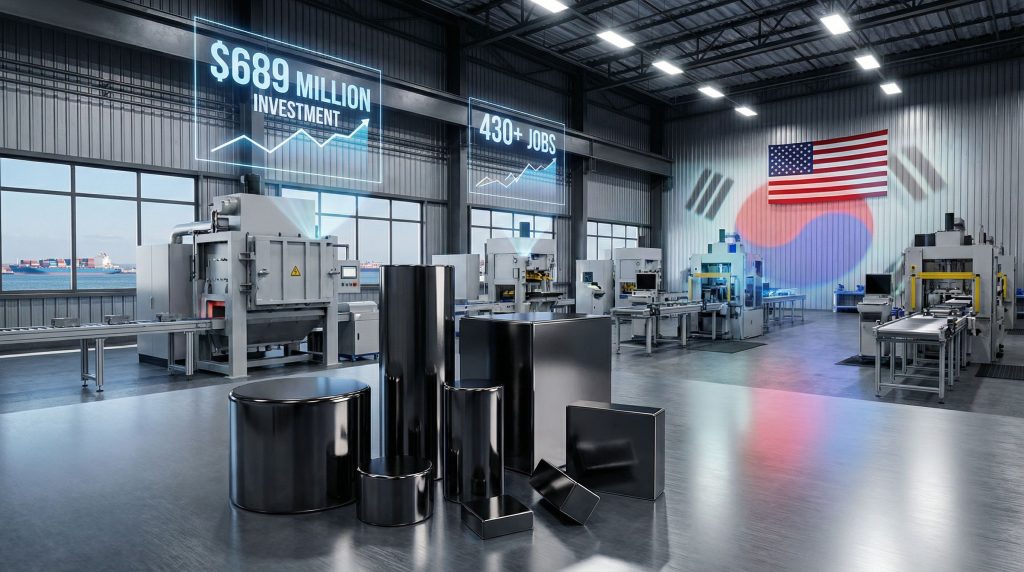
Korean industrial capabilities bring proven manufacturing excellence to American critical materials objectives. LS Cable & System's $689 million Virginia expansion demonstrates the scale and resources necessary for major industrial investments. Their global footprint spans power transmission, telecommunications infrastructure, and specialised industrial materials.
However, strategic independence remains limited even with domestic manufacturing if upstream materials continue requiring imports from potentially hostile sources. Furthermore, the US–China trade war impact continues influencing supply chain planning decisions.
A Virginia-based magnet facility would still depend on separated rare earth oxides, most of which originate from Chinese-controlled processing operations.
Regional Advantages Support Manufacturing Competitiveness
Location selection for rare earth magnet manufacturing depends on multiple operational factors that influence both startup costs and ongoing competitiveness. The Chesapeake region offers several advantages that could support successful facility development.
Port Infrastructure: Hampton Roads provides deep-water access for importing raw materials and exporting finished products. The port complex handles significant container volumes and maintains established relationships with Asian shipping lines that would be essential for rare earth feedstock imports.
Existing Industrial Base: LS Cable's current submarine cable operations create potential synergies through shared infrastructure, workforce, and customer relationships. The offshore wind industry relies on both submarine cables and permanent magnets, creating natural cross-selling opportunities.
Transportation Networks: Interstate highway connections and rail infrastructure support efficient distribution to major East Coast automotive and industrial markets. Proximity to Washington D.C. facilitates government customer relationships for defence applications.
Regulatory Environment: Virginia maintains business-friendly policies and has actively courted advanced manufacturing investments. State economic development agencies offer various incentive packages for qualifying industrial projects.
The regional workforce benefits from maritime and manufacturing heritage, though magnet production would require specialised training in metallurgical processes and precision manufacturing techniques. However, community colleges and technical schools in the Hampton Roads area could potentially develop targeted programmes to support workforce needs.
Supply Chain Integration Challenges Remain Significant
Despite location advantages, the proposed facility would face substantial technical and commercial challenges that have historically limited Western magnet manufacturing competitiveness. Access to high-quality separated rare earth materials represents the most fundamental constraint.
Current U.S. rare earth separation capacity remains limited relative to potential magnet manufacturing demand. The Mountain Pass mine in California produces rare earth concentrates, but most separation processing occurs overseas. Consequently, this creates ongoing dependency on Chinese or Chinese-linked processors for critical feedstock materials.
Key Technical Requirements:
- Material Specifications: Defence and aerospace applications require ultra-high purity separated oxides with minimal contamination
- Metallurgical Expertise: Successful sintering and heat treatment processes demand specialised knowledge that takes years to develop
- Quality Control Systems: Consistent magnetic properties require precise process control and testing capabilities
- Environmental Management: Rare earth processing generates waste streams requiring specialised handling and disposal
Processing costs in the U.S. typically exceed Chinese equivalents due to higher labour costs, more stringent environmental regulations, and smaller production scales. Furthermore, critical raw materials facility development faces similar challenges across Western nations.
New facilities must achieve sufficient volume to realise economies of scale while building customer relationships that justify premium pricing.
Economic Impact Analysis for Regional Development
Manufacturing facility investments create multiple layers of economic impact extending beyond direct employment to encompass supplier networks, service industries, and broader regional development effects. The proposed LS Cable rare earth magnet plant could generate significant benefits for the Hampton Roads economy.
Direct Employment Projections:
| Job Category | Estimated Positions | Average Salary Range |
|---|---|---|
| Production Workers | 180-220 | $45,000-65,000 |
| Technical Staff | 80-120 | $65,000-85,000 |
| Engineering Roles | 40-60 | $85,000-120,000 |
| Management/Admin | 30-50 | $75,000-150,000 |
Economic Multiplier Effects: Manufacturing jobs typically generate additional employment in supporting industries. Each direct manufacturing job creates an estimated 1.5-2.5 additional jobs in supplier networks, logistics, and service sectors.
Tax Revenue Generation: Industrial facilities contribute property taxes, corporate income taxes, and payroll taxes that support local government services and infrastructure development. Virginia's corporate tax rate of 6% applies to manufacturing profits above established thresholds.
Skills Development: Advanced manufacturing operations often partner with regional educational institutions to develop specialised training programmes. These partnerships benefit broader regional workforce development beyond the immediate facility needs.
The magnet manufacturing sector offers particular advantages for regional industrial cluster development. In addition, permanent magnets serve multiple end markets, creating potential for attracting complementary manufacturers in automotive, renewable energy, and industrial equipment sectors.
Competitive Positioning Within Global Supply Chains
Establishing viable rare earth magnet manufacturing outside China requires careful positioning within existing global supply networks rather than attempting complete supply chain independence. Successful facilities typically focus on specific market segments where they can achieve competitive advantages.
Premium Application Focus: Defence, aerospace, and high-performance automotive applications often justify higher costs for supply security and quality assurance. These markets emphasise reliability and performance over pure cost minimisation.
Rapid Delivery Capability: Proximity to end customers enables shorter lead times and more responsive service compared to trans-Pacific shipping from Asian manufacturers. Just-in-time manufacturing increasingly values local supply flexibility.
Technical Customisation: Western manufacturers can offer closer collaboration on magnet design optimisation and application-specific solutions. Engineering support and rapid prototyping capabilities create differentiation beyond commodity production.
Supply Chain Security: Government customers and security-conscious commercial buyers increasingly prefer domestic or allied suppliers to reduce geopolitical risks in critical applications.
The LS Cable rare earth magnet plant proposal reflects this strategic positioning approach by leveraging existing customer relationships and infrastructure rather than pursuing greenfield commodity production. Integration with submarine cable operations creates natural synergies in offshore wind and grid modernisation markets.
Market analysis suggests that specialised, higher-value magnet applications offer better prospects for Western manufacturers than competing directly with Chinese commodity production. However, success depends on identifying specific customer needs where security, quality, and service outweigh pure cost considerations.
The next major ASX story will hit our subscribers first
Policy Framework Alignment and Support Mechanisms
Current U.S. federal policy strongly supports domestic and allied critical materials manufacturing through multiple legislative and regulatory initiatives. These frameworks create favourable conditions for projects like the proposed Virginia magnet facility.
Defence Production Act: Title III authorities enable government investment in critical materials production capacity, including rare earth magnets for defence applications. The Department of Defence has allocated hundreds of millions of dollars for rare earth supply chain development.
CHIPS and Science Act: Advanced manufacturing incentives include tax credits and grants for semiconductor and related technology production. Rare earth magnets qualify as critical components in many covered applications.
Inflation Reduction Act: Clean energy manufacturing tax credits support domestic production of components used in renewable energy systems, including permanent magnets for wind turbine generators.
Infrastructure Investment and Jobs Act: Grid modernisation and electrification funding creates demand for American-made components while supporting supply chain development through various grant programmes.
These policy frameworks offer multiple potential support mechanisms for viable magnet manufacturing projects:
- Investment tax credits of up to 30% for qualifying manufacturing equipment
- Production tax credits for certain clean energy applications
- Government procurement preferences favouring domestic suppliers
- Grant funding for research and development activities
- Loan guarantees reducing financing costs for strategic investments
Furthermore, policy support extends beyond federal initiatives to include state-level incentives. Virginia offers various manufacturing incentives including property tax abatements, worker training grants, and expedited permitting for qualifying projects.
Investment Risk Assessment and Mitigation Strategies
Major industrial investments in emerging supply chains face multiple risk categories that require comprehensive evaluation and mitigation planning. The rare earth magnet sector presents both unique opportunities and significant challenges for potential investors.
Market and Competitive Risks
Demand Volatility: While long-term trends support magnet demand growth, short-term market cycles can affect pricing and capacity utilisation. Electric vehicle adoption rates, renewable energy development pace, and defence spending levels all influence demand patterns.
Chinese Competition: Existing Chinese manufacturers maintain cost advantages through integrated supply chains, government support, and economies of scale. Competitive responses to Western market entry could include aggressive pricing or supply restrictions.
Technology Evolution: Magnet technology continues advancing, with research into reduced or rare-earth-free alternatives potentially disrupting demand for current NdFeB magnet specifications.
Operational and Technical Risks
Feedstock Access: Dependence on imported separated rare earth materials creates ongoing supply chain vulnerability. Price volatility and availability constraints could affect facility economics.
Workforce Development: Specialised metallurgical expertise takes time to develop domestically. Initial operations may require imported technical personnel while training local workforce capabilities.
Environmental Compliance: Rare earth processing generates waste streams requiring careful environmental management. Regulatory changes or community opposition could affect operational permits.
Quality Achievement: Consistent production of high-performance magnets requires precise process control. Initial production runs often experience quality issues while optimising manufacturing parameters.
Financial and Strategic Risks
Capital Requirements: Magnet manufacturing requires substantial upfront investment with multi-year payback periods. Cost overruns or construction delays could affect project viability.
Customer Development: Building relationships with major automotive, industrial, and defence customers takes time and requires consistent quality demonstration.
Regulatory Changes: Shifts in trade policy, environmental regulations, or defence procurement requirements could affect project economics.
Currency Exposure: International feedstock purchases and potential export sales create foreign exchange risk requiring active management.
Future Scenarios and Strategic Implications
The proposed LS Cable rare earth magnet plant represents a test case for broader questions about Western critical materials manufacturing viability. Multiple scenarios could influence project outcomes and industry development patterns.
Scenario 1: Accelerated Reshoring – Growing geopolitical tensions drive aggressive government support for domestic critical materials production. Substantial subsidies and procurement preferences enable Western facilities to compete effectively with Chinese producers.
Scenario 2: Technology Disruption – Breakthrough developments in magnet recycling, alternative materials, or manufacturing processes reduce barriers to entry and change competitive dynamics substantially.
Scenario 3: Normalised Competition – Chinese market dominance continues with limited Western market share gains. Niche applications and premium markets support modest facility development without broad supply chain transformation.
Scenario 4: Supply Chain Fragmentation – Regional trading blocs develop separate supply chains with limited cross-border integration. Allied nations prioritise supply security over economic efficiency.
Each scenario implies different strategic approaches for companies, investors, and policymakers. Success factors vary significantly depending on how geopolitical, technological, and market forces evolve over the coming decade.
Monitoring Indicators for Strategic Planning
Several key metrics will indicate which scenario is materialising and inform strategic decision-making:
Policy Indicators:
- Federal funding allocations for critical materials programmes
- Defence procurement policies favouring domestic suppliers
- Trade restrictions on Chinese rare earth imports
- Allied cooperation frameworks and joint investment initiatives
Market Indicators:
- Rare earth pricing trends and volatility patterns
- Electric vehicle adoption rates and magnet specifications
- Renewable energy development pace and component sourcing
- Industrial automation growth in magnet-intensive applications
Technology Indicators:
- Alternative magnet material research progress
- Recycling technology commercial viability
- Manufacturing process innovations reducing costs
- Quality control systems enabling consistent production
Competitive Indicators:
- Chinese manufacturer responses to Western market entry
- Other allied nation magnet facility announcements
- Customer qualification timelines and requirements
- Supply chain partnership development patterns
The Virginia facility proposal will provide valuable market intelligence regardless of final investment decisions. Feasibility study results will indicate whether commercial-scale magnet manufacturing can achieve competitiveness under current conditions or requires additional policy support for viability.
Industry stakeholders should monitor development progress closely as outcomes will influence broader critical materials supply chain strategies. Rare Earth Exchanges' analysis suggests this project represents "a test case for U.S. supply chain reality". Success could catalyse additional allied investment, while challenges might redirect focus toward alternative approaches such as increased recycling, material substitution, or different geographic locations.
Disclaimer: This analysis contains forward-looking statements and projections based on current information and assumptions. Actual outcomes may differ materially from expectations due to market conditions, policy changes, technological developments, and other factors beyond current visibility. Investment decisions should consider comprehensive due diligence and professional advice appropriate to specific circumstances.
Looking to Capitalise on Critical Materials Manufacturing Opportunities?
Discovery Alert's proprietary Discovery IQ model delivers instant notifications on significant ASX mineral discoveries, including critical materials essential for manufacturing and energy security applications. Explore how historic discoveries have generated exceptional returns and begin your 30-day free trial today to position yourself ahead of the market in this rapidly evolving sector.