Cyprium Metals Ltd
Cyprium Metals Identifies Extensive Copper Mineralisation in Nifty Waste Dump
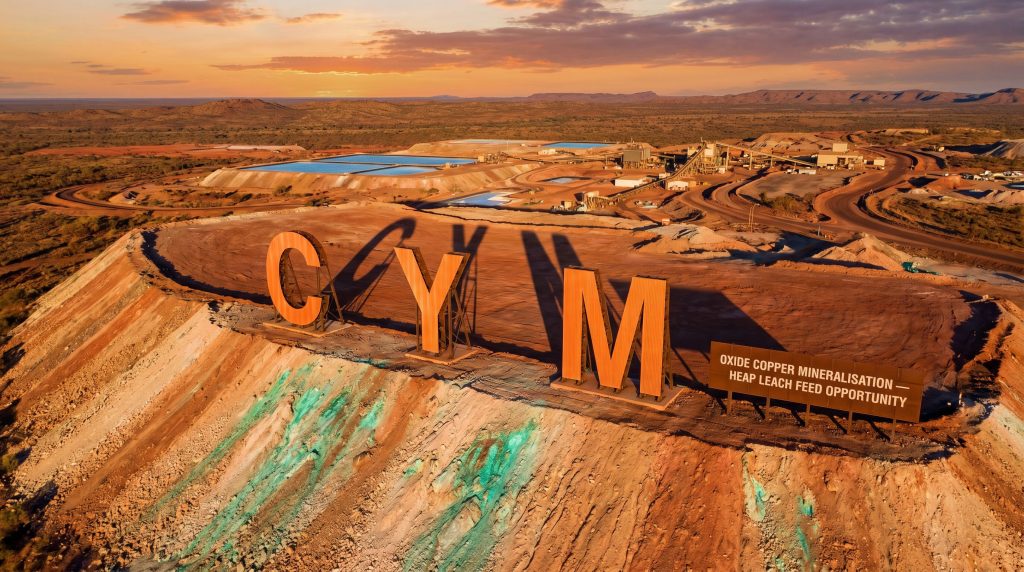
Cyprium Metals Limited (ASX: CYM) has reported extensive oxide copper mineralisation from a reverse circulation (RC) drilling program on the historical waste dump beside the Nifty open pit in Western Australia's Paterson region. According to the ASX announcement, 133 holes for 2,697 metres have defined a main mineralised zone measuring approximately 750 metres by 250 metres, with multiple intercepts beginning at surface and grades that compare closely with the company's existing open pit reserve grade.
The result is particularly relevant because this material is already above ground, sitting approximately 1.2 kilometres from the existing heap leach pads via established haul roads. It is being assessed as a potential future feed source for the refurbished heap leach and solvent extraction electrowinning (SXEW) circuit at Nifty. Furthermore, Cyprium confirmed that additional drilling, metallurgical test work, and a maiden Mineral Resource Estimate (MRE) are planned.
What Did the Executive Chairman Say?
"What was set aside in the 1990s as being waste or low grade is now potentially economic, no different to our open pit that has a 0.9% Reserve grade or nearly twice what is often being advanced in greenfield developments today," said Matt Fifield, Executive Chairman of Cyprium Metals.
"We're bringing 2026 market conditions, mechanical horsepower and technology to 1993 geology."
When big ASX news breaks, our subscribers know first
Drill Results Indicate Broad Surface Mineralisation
In the report, Cyprium highlighted several stronger intercepts from the main mineralised zone:
| Hole ID | From (m) | To (m) | Interval (m) | Cu % | Higher-grade include |
|---|---|---|---|---|---|
| 26NFLG050 | 0 | 9 | 9 | 1.00% | 4m @ 1.83% Cu from 2m |
| 26NFLG060 | 0 | 7 | 7 | 1.11% | 3m @ 1.55% Cu from 2m |
| 26NFLG021 | 0 | 9 | 9 | 0.80% | 2m @ 1.56% Cu from 5m |
| 26NFLG049 | 0 | 7 | 7 | 1.03% | 3m @ 1.71% Cu from 1m |
| 26NFLG026 | 0 | 7 | 7 | 0.90% | 3m @ 1.50% Cu from 1m |
| 26NFLG055 | 0 | 8 | 8 | 0.86% | 5m @ 1.16% Cu from 0m |
| 26NFLG002 | 2 | 17 | 15 | 0.45% | 3m @ 1.58% Cu from 2m |
| 26NFLG009 | 6 | 19 | 13 | 0.45% | 2m @ 2.03% Cu from 17m |
| 26NFLG097 | 0 | 6 | 6 | 0.94% | 4m @ 1.15% Cu from 1m |
| 26NFLG094 | 0 | 24 | 24 | 0.43% | 3m @ 1.35% Cu from 1m |
| 26NFLG095 | 0 | 6 | 6 | 0.90% | 3m @ 1.12% Cu from 2m |
A key feature is that many intervals start at 0 metres. That matters because, according to the announcement, this is historical dump material rather than ore that would first need to be mined from an open pit or underground development.
Cyprium also noted that drilling was completed on a 40m x 40m grid, with the central area infilled to 20m x 20m. For investors, closer drill spacing generally improves confidence in the continuity of mineralisation and supports future resource estimation work.
Why Does Waste Dump Copper Matter?
The educational point in this update is straightforward: a waste dump is not always barren material. In mining, rock that was uneconomic at one point in time may become more attractive later if prices rise, treatment methods improve, or existing infrastructure lowers the cost to process it.
At Nifty, the open pit operated from 1993 to 2003 when copper prices were below US$1/lb, according to Cyprium. At that time, lower-grade oxide material was reportedly set aside rather than processed. The current drilling suggests that parts of that discarded material contain meaningful copper grades, including visible oxide copper minerals such as malachite.
Key Terms Explained
For non-specialist readers, several terms in the announcement are worth clarifying:
| Term | Meaning |
|---|---|
| Waste dump | Rock mined in the past and placed in storage because it was not economic to process at the time |
| Oxide copper | Near-surface copper mineralisation altered by weathering, often suitable for acid-based recovery methods |
| Heap leach | A process where ore is stacked on a lined pad and irrigated with solution to dissolve copper |
| SXEW | A refining process that extracts copper from solution and produces copper cathode |
| RC drilling | A fast drilling method that brings rock chips to surface for sampling |
| MRE | A formal estimate of the size and grade of mineralisation prepared under reporting standards |
Why does this matter commercially? Because above-ground oxide material may offer lower development complexity than fresh ore. There is no need to remove overburden or complete primary mining to access it. That does not guarantee economics, but it can meaningfully improve the starting position.
Scout Drilling Suggests Broader Potential Beyond the Main Zone
The main zone is not the full extent of work completed. In addition to the core drilling area, Cyprium reported 38 scout holes for 797 metres at roughly 100-metre intervals along accessible haul roads, testing the wider waste dump footprint.
Several scout holes returned encouraging oxide copper intersections:
| Scout hole | Reported interval | Cu % | Include |
|---|---|---|---|
| 26NFLG069 | 3m from 18m | 0.88% | 1m @ 1.36% Cu |
| 26NFLG118 | 1m from 0m | 1.33% | n/a |
| 26NFLG035 | 6m from 0m | 0.38% | 1m @ 1.21% Cu from 2m |
| 26NFLG143 | 6m from 10m | 0.53% | 1m @ 1.89% Cu from 11m |
According to the company, these results require follow-up drilling to define the extent of mineralisation within the broader dump area. That is important because the currently defined 750m x 250m zone may not capture the full inventory of copper-bearing material.
However, this remains an exploration result rather than a declared resource. Even so, scout drilling that returns oxide copper across multiple areas adds weight to the case for a larger mineralised footprint.
How the Waste Dump Fits the Nifty Restart Plan
In the announcement, Cyprium framed the waste dump results within its broader phased restart of the Nifty Copper Complex. Phase 1 involves re-leaching existing above-ground heap leach pads and refurbishing the Nifty SXEW plant to support an initial production capacity of approximately 6,000 tonnes per annum of copper cathode. The company said the current commissioning focus is on the newer B Train section of the plant.
The existing SXEW plant was historically expanded to a peak productive capacity of 25,000 tonnes per annum, according to Cyprium. Future expansion would mainly involve refurbishing additional cells and mixer settlers in the older A Train, rather than constructing an entirely new plant.
What Are the Key Oxide Feed Opportunities?
Within that framework, the waste dump is one of several oxide feed opportunities being evaluated, alongside:
- Shallow oxide material in the open pit identified in the Nifty pre-feasibility study
- Mineralised zones within the waste dump identified in this drilling update
- Potential higher-rate copper recovery from existing heap leach pads
For investors, the attraction is infrastructure leverage. If additional oxide feed can be sourced close to the existing plant and pads, future expansion studies may be able to build on sunk capital already present at site.
What Happens Next?
Cyprium outlined a defined forward work programme for the waste dump mineralisation. According to the announcement, next steps include further drilling in the core area, follow-up testing around positive scout holes, a maiden MRE by an external consultant, and initial metallurgical test work.
| Activity | Detail |
|---|---|
| Core zone drilling | Further drilling to test and infill the main mineralised area where limits remain undefined |
| Scout hole follow-up | Systematic drilling around encouraging step-out results in the broader waste dump |
| Maiden MRE | External consultant to prepare a first formal resource estimate for mineralised waste dump zones |
| Metallurgical test work | Initial work focused on ore sorting and acid leachability |
The metallurgical programme is especially important. Grade alone does not determine value. The company still needs to establish how efficiently copper can be recovered from the dump material using the planned process route.
For less technical readers, acid leachability refers to how readily the copper dissolves in acid during processing. Better leachability can improve potential copper recovery, whilst ore sorting is a pre-treatment method that may help separate higher-value material from lower-value rock before processing begins.
Why Does This Update Matter to Investors?
The significance of this announcement lies in the combination of grade, surface access, and existing infrastructure. Several intercepts sit around or above 1.0% Cu, comparing favourably with many oxide or near-surface copper development concepts. Cyprium's own chairman referenced the Nifty open pit reserve grade of 0.9% Cu in that context.
In addition, the material is reported to be above ground, reducing dependence on immediate mining development and supporting the company's description of the waste dump as a possible low-cost feed source. The location is also practical, with the dump approximately 1.2km from existing heap leach pads via established haul roads.
There are, however, still several steps before this can be assessed in economic terms. A maiden resource has not yet been published, metallurgical characteristics remain to be tested, and any future integration into expanded cathode production capacity would depend on further technical and commercial studies.
The next major ASX story will hit our subscribers first
Key Takeaways From the Nifty Waste Dump Drilling
Cyprium's ASX update points to a waste dump that may hold considerably more copper value than historical operators could justify recovering under 1990s copper prices. The reported drilling has outlined a sizeable main zone, returned multiple near-surface oxide copper intercepts, and identified wider targets through scout drilling.
The next catalysts are clear:
- Further drilling to define size and continuity
- A maiden MRE to convert exploration results into a formal inventory
- Metallurgical test work to assess processing suitability
- Potential integration into expanded Nifty cathode plans
For investors tracking ASX copper stocks, Cyprium Metals, or the Nifty Copper Complex restart, this announcement adds a meaningful new data point to the company's brownfield growth pathway. The central question now is whether follow-up drilling and test work can convert these exploration results into a practical oxide feed source for future production expansion.
Exploring Opportunities in Small-Cap ASX Copper Companies?
Discovery Alert's proprietary Discovery IQ model delivers real-time alerts on significant ASX mineral discoveries — instantly empowering subscribers to identify actionable copper opportunities ahead of the broader market — and you can explore historic examples of major mineral discoveries and their exceptional returns before starting your 14-day free trial at Discovery Alert to position yourself ahead of the next significant find.