Dalaroo Metals Ltd
- ASX Code: DAL
- Market Cap: $25,845,848
Dalaroo Metals Zeroes In on the Source: 2026 Mapping Reveals a Far More Complex Rare Earth System at Blue Lagoon
The Dalaroo Metals Blue Lagoon rare earth project update in Greenland marks a significant step forward in understanding what the company describes as a district-scale rare earth and critical mineral system. Dalaroo Metals Ltd (ASX: DAL | OTCQB: DALMF) has reported that its accelerated 2026 exploration programme at the 100%-owned Blue Lagoon Rare Earth Project in southern Greenland is rapidly improving geological understanding of the underlying mineralised system.
According to the latest ASX announcement, detailed mapping, surface sampling and lagoon work are now defining the likely hard-rock source rocks that feed rare earth-bearing sediments across the Blue Lagoon basin. Furthermore, all workstreams remain on schedule despite weather-related logistical changes.
When big ASX news breaks, our subscribers know first
From Surface Discovery to Defined Rare Earth System
The 2025 inaugural field season at Blue Lagoon established the project as an early-stage rare earth discovery with scale.
All 113 samples collected in 2025 from lagoon and surrounding surficial sediments reportedly returned anomalous rare earth mineralisation, defining a coherent mineralised corridor of approximately 2.7 kilometres. Peak values included:
- 0.81% Total Rare Earth Oxides (TREO)
- 4.42% ZrO₂ (zirconium oxide)
- 99 ppm hafnium (Hf)
Selected zirconium and hafnium-rich sediment samples from the 2025 programme are summarised below:
| Sample ID | ZrO₂ | HfO₂ |
|---|---|---|
| 26818D | 4.42% | 98 ppm |
| 26817D | 4.09% | 99 ppm |
| 26808D | 3.82% | 82 ppm |
| 26820D | 3.58% | 61 ppm |
| 26803D | 3.13% | 62 ppm |
| 26806D | 2.85% | 73 ppm |
These results were reported by Dalaroo Metals Ltd to confirm a laterally extensive rare earth and critical mineral system within lagoon and surrounding sediments. The current 2026 programme is framed around moving from surface discovery to an integrated understanding of the rare earth system, including its hard-rock sources and sedimentary pathways.
The 2026 field campaign has been expanded in both scale and technical scope. Instead of only collecting more surface samples, Dalaroo Metals Ltd is integrating:
- Detailed geological mapping and structural interpretation
- Hard-rock sampling
- Surface geochemistry (stream sediment, soil, rock chips)
- Lagoon sediment sampling using a Van Veen grab sampler
- Hand auger drilling in shallow sediments
- Ground Penetrating Radar (GPR) surveying of the lagoon floor
- Mineralogical investigations
- Preliminary metallurgical studies
The company states that these datasets will be combined into a single coordinated exploration model to support future drilling and project advancement.
What the 2026 Mapping Is Revealing
According to the announcement, approximately 65% of the planned geological mapping has now been completed. Early results are reported to have materially advanced understanding of the intrusive rocks that likely act as the source of rare earth-bearing sediments.
Key geological observations reported to date:
| Geological feature | Reported significance |
|---|---|
| Four distinct granite units | Indicate multiple intrusive phases within a large, evolved alkaline complex, considered prospective for rare earth enrichment. |
| Beryl-bearing pegmatites (Western Ridge) | Beryl is described as a late-stage mineral associated with highly fractionated granitic systems, which can be linked to enrichment in rare earth elements and other metals. |
| Numerous aplite sills | Late-stage, fine-grained intrusive bodies interpreted as highly evolved magmatic phases capable of concentrating rare earth elements and incompatible metals. |
| Interpreted eudialyte-bearing alkaline granites | Eudialyte is an important zirconium and rare earth-bearing mineral in alkaline systems globally. The interpretation is subject to laboratory confirmation. |
| Widespread heavy mineral sands in eastern drainage systems and beaches | Support the concept that the Blue Lagoon basin functions as a natural trap for dense, rare earth-bearing minerals. |
Field mapping has identified pink alkaline granites containing minerals interpreted to be consistent with eudialyte, a complex silicate mineral that can host both zirconium and rare earth elements. Petrographic and laboratory confirmation is pending.
Importantly, the announcement notes that several of the highest-grade heavy mineral samples from 2025 were collected immediately downslope from these pink alkaline granites. This spatial relationship is reported by Dalaroo Metals Ltd to support the interpretation that these granites may be a key source of the rare earth-bearing heavy mineral assemblages in the lagoon sediments.
The mapping programme is also refining lithological contacts, structural relationships and alteration patterns. According to the company, these observations are strengthening the geological framework and assisting in locating potential hard-rock source areas for the mineralised sediments.
"The identification of four distinct granite units, numerous aplite sills, beryl-bearing pegmatites and interpreted eudialyte-bearing alkaline granites demonstrates that the project hosts a far more evolved intrusive system than previously recognised. These observations provide valuable clues to the source of the rare earth-bearing heavy minerals previously identified within the lagoon sediments," said John Morgan, Chief Executive Officer of Dalaroo Metals Ltd.
Understanding the Source-to-Sink Model
What Is the Source-to-Sink Model?
The source-to-sink model used by Dalaroo Metals Ltd describes the full path that minerals take from their original formation in hard rock (the source) to their eventual concentration in sediments (the sink).
In simple terms:
-
Source
- Rare earth-bearing minerals form in fertile alkaline intrusive rocks such as granites, pegmatites and aplite sills.
- These rocks may contain minerals like zircon and, pending confirmation, eudialyte.
-
Transport
- Weathering breaks down the intrusive rocks.
- Dense minerals are released and move downslope via streams and drainage systems, especially to the east of Blue Lagoon.
-
Sink
- The Blue Lagoon basin and adjacent beaches act as a low-energy environment where dense minerals can settle and accumulate.
- Over time, this process can produce naturally concentrated heavy mineral sands in sediments and along foreshores.
Why Does This Model Matter for Investors?
For investors, the source-to-sink model provides a logical explanation for how the high zirconium, hafnium and rare earth grades reported from sediments could be generated and repeatedly replenished.
If the model continues to be supported by data:
- The lagoon and associated drainage systems may act as an efficient natural concentrator of heavy minerals.
- The consistency of heavy mineral sands across multiple drainage systems, as reported, suggests these processes operate at a project-wide scale, rather than being isolated occurrences.
- A clear link from fertile source rocks to mineral-rich sediments can help prioritise drilling targets and focus metallurgical testwork on the most relevant mineral assemblages.
Dalaroo Metals Ltd reports that ongoing surface sampling, mapping and lagoon work are designed specifically to test and refine this model.
The 2026 Programme: Progress at a Glance
The company has provided the following progress summary for key workstreams in the 2026 field season:
| Work stream | Progress to date | Status |
|---|---|---|
| Geological mapping | ~65% complete | On schedule |
| Surface sampling | ~40% complete | On schedule |
| Lagoon sediment sampling | ~50% complete | On schedule |
| Ground Penetrating Radar (GPR) | Commenced | On schedule |
| Hand auger drilling | Underway | Replaced mechanised augers due to weather |
| Preliminary metallurgical studies | Underway | Integrated with sampling |
Weather in the early season limited the movement of mechanised auger equipment and impacted the original fixed base camp setup. In response, Dalaroo Metals Ltd has:
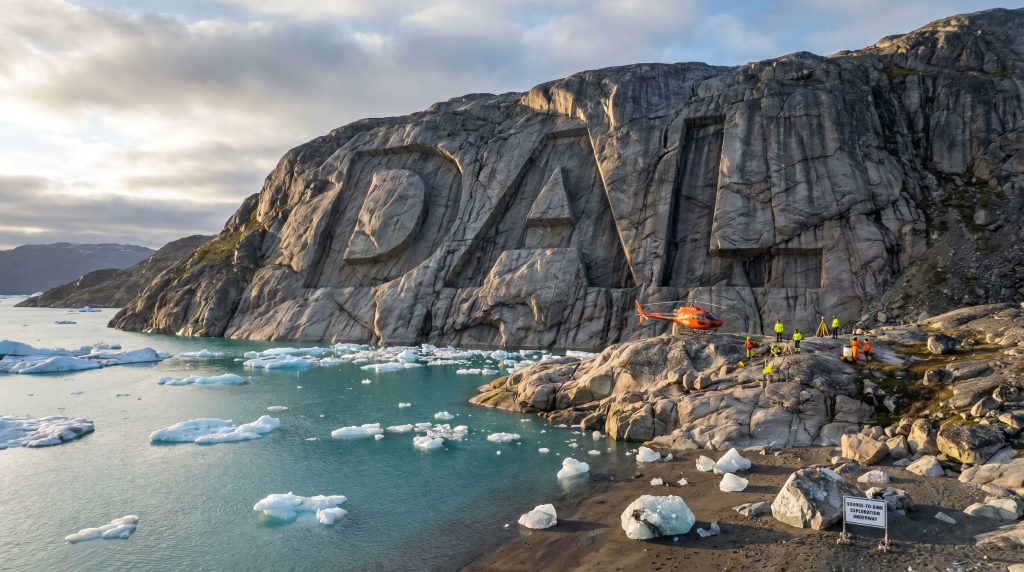
- Transitioned to a helicopter-supported fly-camp model to improve access across the project area.
- Replaced planned mechanised auger drilling with hand auger drilling, which is reported to be providing valuable shallow subsurface samples.
The company states that these operational changes have not impacted exploration objectives, and that all core activities remain on schedule.
"The scale of the eastern drainage systems has also exceeded expectations. These extensive catchments provide an efficient natural transport pathway capable of delivering weathered material from multiple fertile intrusive bodies into the Blue Lagoon basin, exactly as predicted by our source-to-sink exploration model," said Trystan Hughes, Exploration Manager – Greenland and Western Australia at Dalaroo Metals Ltd.
Ground Penetrating Radar: Building the First 3D Picture
A key new component of the 2026 programme is the Ground Penetrating Radar (GPR) survey across lagoon sediments.
GPR is a geophysical method that sends radar pulses into the ground or seabed to map subsurface layers. In the Blue Lagoon context, Dalaroo Metals Ltd reports that the survey, which is expected to take two to three days, aims to:
- Measure sediment thickness across the lagoon basin.
- Define subsurface stratigraphy, including layering and changes in sediment type.
- Identify buried channels or depositional features that may control heavy mineral accumulation.
When integrated with lagoon sediment assays, surface sampling and geological mapping, this will form the first three-dimensional assessment of the lagoon sediment architecture. The company indicates that this combined dataset should materially improve targeting for future shallow drilling and help locate zones where heavy minerals are concentrated.
How Rare Earth Systems Form in Alkaline Intrusions
To place Blue Lagoon in context, it is useful to outline how rare earth element (REE) systems commonly form in alkaline intrusive complexes, the type of setting described for this project.
1. Magma Generation and Intrusion
- Deep in the crust, magma enriched in alkali elements (sodium and potassium) and volatile components can form.
- This alkaline magma rises and intrudes into older rocks, cooling slowly to form bodies of granite, syenite and related rock types.
2. Magmatic Evolution and Fractionation
- As the magma cools, common minerals such as feldspar and quartz crystallise first.
- Elements that do not fit easily into these early minerals, including many rare earth elements and zirconium, remain in the remaining melt.
- This process, known as fractional crystallisation, gradually concentrates rare earths and other metals in the later stages of the magma.
3. Late-Stage Intrusions: Pegmatites and Aplite Sills
- The remaining highly evolved melt may form pegmatites (very coarse-grained veins) and aplite sills (fine-grained sheets).
- These bodies can be enriched in rare metals such as REE, zirconium, niobium and metals associated with beryl.
- At Blue Lagoon, the reported presence of beryl-bearing pegmatites and aplites fits this late-stage, metal-enriched magmatic phase.
4. Formation of REE-Bearing Minerals
- In some alkaline systems, minerals like eudialyte can form.
- Eudialyte is a complex silicate mineral that can host both zirconium and rare earth elements within its structure.
- According to the announcement, minerals interpreted as consistent with eudialyte have been identified in pink alkaline granites at Blue Lagoon, with laboratory confirmation pending.
5. Weathering and Concentration in Sediments
- Over geological time, surface exposure and weathering break down the intrusive rocks.
- Denser minerals, including zircon, eudialyte fragments and other heavy minerals, are released and transported downslope by water.
- In enclosed or semi-enclosed basins such as lagoons, these dense grains can settle and become naturally concentrated in specific layers or beach zones, forming heavy mineral sands.
The Blue Lagoon system described by Dalaroo Metals Ltd appears to follow this general pattern: evolved alkaline intrusions as the source, extensive drainage channels as the transport mechanism, and lagoon and beach environments as the sink where heavy minerals accumulate. For investors and industry observers, this framework helps explain why both the hard-rock intrusive phases and the sedimentary environment are central to the current exploration strategy.
Southern Greenland: An Emerging Rare Earth Province
The Blue Lagoon Rare Earth Project is located within the Paleoproterozoic rift province of South Greenland, intruded by Mesoproterozoic Gardar-age alkaline complexes. These intrusions are described in the announcement as being recognised globally for their association with critical mineral systems.
Key geological points include:
- Blue Lagoon is within the Helene alkaline granite, part of the Nunarsuit Complex, the largest and among the youngest of the Gardar intrusions in South Greenland.
- The project area is bounded to the east by extensive alkalic syenite, a rock type also often associated with critical mineral enrichment.
- The combination of fertile alkaline intrusive rocks, large drainage catchments and an enclosed lagoon environment is presented by Dalaroo Metals Ltd as a favourable setting for concentrating rare earth elements, zirconium and hafnium.
The broader region is attracting increasing exploration attention:
| Project | Company | Stage | Mineralisation style |
|---|---|---|---|
| Blue Lagoon Rare Earth Project | Dalaroo Metals Ltd | Exploration (2026 program in progress) | Sediment-hosted system with alkaline granite source rocks |
| Ilua Rare Earth Project | Amaroq Ltd. | Maiden drilling commenced June 2026 | Pegmatite-hosted rare earths |
| Tanbreez Rare Earth Project | Critical Metals Corp. | Resource expansion; holds exploitation licence | Heavy rare earth element deposit |
The ASX announcement notes that, together with Blue Lagoon, these projects indicate that southern Greenland is emerging as an important province for rare earth elements and critical minerals. However, each project targets different mineralisation styles and sits at different stages of advancement.
Dalaroo Metals Ltd reports that it now controls a strategically located land position in one of southern Greenland's most active emerging rare earth districts, with approved exploration licences and additional licence applications in progress.
Upcoming Catalysts to Watch
The company has outlined several near-term milestones for the current field season:
- Completion of GPR survey across the lagoon floor.
- Completion of lagoon sediment sampling, including scanning of the lagoon floor.
- Completion of geological mapping, with around 35% remaining.
- Laboratory assay results from hard-rock samples and heavy mineral concentrates.
- Confirmation of rare earth-bearing mineral assemblages, including the interpreted eudialyte.
- Outcomes from preliminary metallurgical investigations on representative material.
- Target generation for follow-up drilling, based on integrated geological, geochemical and geophysical datasets.
From an investment perspective, the most immediate focus points are likely to be laboratory confirmation of the interpreted eudialyte-bearing alkaline granites, assay results from both hard-rock and sediment concentrates, and the first 3D geological and sediment model of Blue Lagoon, which can sharpen drill targeting and inform the next phase of exploration planning.
The next major ASX story will hit our subscribers first
Why Investors Are Watching Dalaroo Metals Ltd at Blue Lagoon
According to the ASX announcement, several features make Blue Lagoon a project of interest to investors tracking rare earth exploration:
- 100% ownership — Dalaroo Metals Ltd retains full exposure to potential exploration upside at Blue Lagoon.
- Consistent early results — A 2.7 km mineralised system with anomalous rare earths in all 113 samples from the 2025 season provides a coherent starting dataset.
- Evidence of an evolved intrusive system — Four distinct granite units, beryl-bearing pegmatites, numerous aplite sills and interpreted eudialyte-bearing granites all point to a complex alkaline intrusive complex.
- Validation of the source-to-sink model — Widespread naturally concentrated heavy mineral sands across multiple eastern drainage systems and beach foreshores support the concept of a large-scale, efficient natural concentration system.
- District-scale context — The presence of other active rare earth projects in the Gardar Alkaline Province, including Ilua and Tanbreez, provides important regional context.
- Multiple near-term data points — Ongoing
Want to Learn More About Dalaroo Metals and the Blue Lagoon Rare Earth Project?
With a 100%-owned district-scale rare earth system taking shape in southern Greenland, a rapidly evolving geological picture, and multiple near-term catalysts approaching, Dalaroo Metals Ltd (ASX: DAL | OTCQB: DALMF) is a company worth keeping a close eye on. To learn more about the Blue Lagoon Rare Earth Project, the 2026 exploration programme, and the broader investment case for Dalaroo Metals, visit the company's official website at www.dalaroometals.com.au.