July 21, 2026
The Ownership of the World's Most Iconic Diamond Brand Is Changing Hands
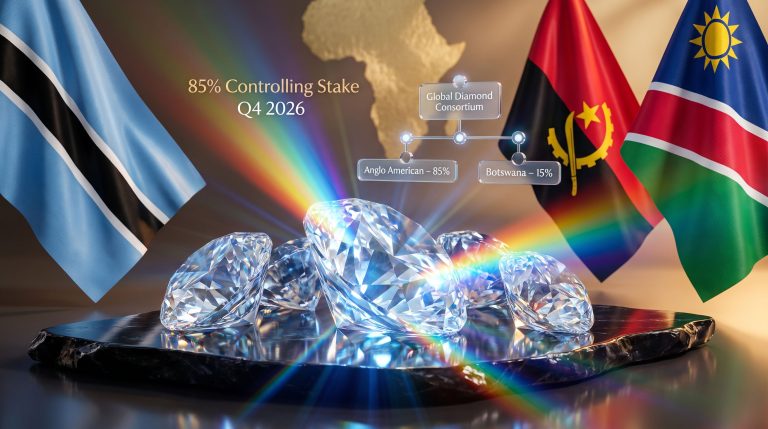
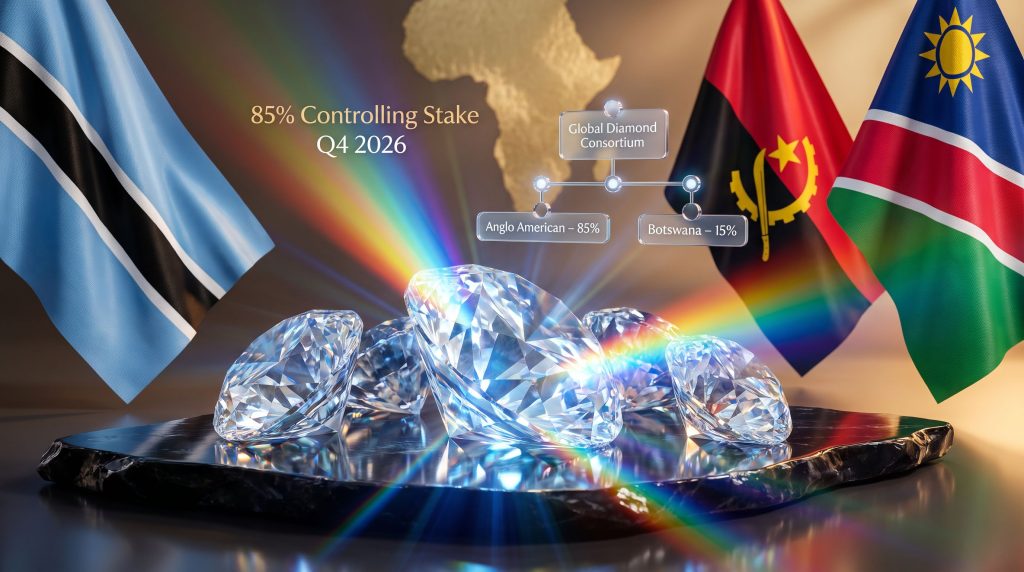
Few commodity businesses carry the cultural and commercial weight of De Beers. For most of the twentieth century, the company functioned less like a mining operation and more like a centralised pricing authority for the entire global rough diamond market. Its single-channel selling system, known as the sightholder model, gave De Beers the power to determine who received rough diamonds, at what price, and under what conditions. That era of near-total market control has long since passed, but the brand's gravitational pull on the diamond industry remains extraordinary. Against that backdrop, the decision by Anglo American to divest its 85% controlling stake in De Beers is not simply a corporate transaction. It is a structural realignment of one of the most consequential commodity businesses in the world, arriving at the worst possible moment for the natural diamond sector.
When big ASX news breaks, our subscribers know first
Why Timing Shapes Everything About the Botswana De Beers Bidder Process
The natural diamond market is navigating its most difficult period in decades. Lab-grown diamonds, once a niche curiosity, have achieved sufficient scale and consumer acceptance to structurally compress rough diamond prices across multiple quality categories. De Beers itself has reduced sight prices on multiple occasions in recent trading cycles, reflecting weakened sightholder appetite. Consumer demand in the two most critical end markets, China and the United States, has softened materially.
Furthermore, the Venetia mine in South Africa, one of De Beers' flagship underground operations, has been placed on care and maintenance for approximately two years, representing a deliberate rationalisation of output during a period of oversupply and margin compression.
What Does Weak Market Demand Actually Signal?
This context explains something that would otherwise seem puzzling: why one of the most prominent potential acquirers, a group led by former De Beers CEO Bruce Cleaver, withdrew entirely from the bidding. According to reporting by MiningMX, Cleaver's group concluded that given the current state of the De Beers business and the prevailing conditions in the broader diamond market, it was genuinely difficult to identify an acceptable return profile over any reasonable near-term investment horizon. That is a striking admission from someone with deep operational familiarity with the asset.
The withdrawal raised immediate questions about whether any credible buyer would remain standing. The answer, as of July 2026, is yes. However, the profile of that buyer reveals a great deal about what it actually takes to underwrite De Beers at this juncture. These consolidation pressures in mining are increasingly reshaping how acquirers assess risk across major commodity assets.
The Global Diamond Consortium: Who They Are and Why They Matter
Anglo American ran a competitive process among three shortlisted parties before settling on the Global Diamond Consortium as its preferred acquirer. The consortium is understood to be led by Gareth Penny, who served as Managing Director of De Beers from 2006 to 2010. His institutional knowledge of the business spans the period when De Beers was actively dismantling its historic single-channel selling monopoly and repositioning itself as a competitive rough diamond marketer.
Penny's involvement signals something specific to industry observers: the preferred Botswana De Beers bidder is not approaching De Beers as a distressed asset play requiring wholesale reinvention. The intention appears to be a recovery of the existing model, grounded in operational continuity, rather than a transformation of De Beers into something fundamentally different. James Allan, a former diamond analyst, described the selected consortium as closely matching the profile of the group Penny was expected to lead, according to MiningMX's reporting.
Beyond Penny's leadership, the consortium is reported to include a Qatari sovereign investment fund and Israeli businessman Nir Livnat, alongside representatives from diamond-producing nations in the region. This combination of patient sovereign capital and experienced operational leadership directly addresses the two most significant objections raised by Cleaver's group: the inability to project near-term returns, and the governance complexity of a business with significant African sovereign co-ownership.
| Bidder Profile | Status | Key Differentiator |
|---|---|---|
| Global Diamond Consortium (Gareth Penny-led) | Preferred Bidder | Operational expertise, sovereign capital, regional producer inclusion |
| Bruce Cleaver-led group | Withdrawn | Cited unfavourable near-term return on investment profile |
| Third shortlisted party | Undisclosed | Details not publicly confirmed |
Botswana's Position: Pre-Emption Rights, Financing Gaps, and a Policy Contradiction
The most consequential variable in this transaction is not the preferred bidder itself. It is what Botswana decides to do with the legal rights it already holds. Botswana's resource ownership ambitions reflect a broader pattern seen across resource-rich nations seeking to convert mineral endowment into meaningful industrial ownership.
Botswana currently owns 15% of De Beers and retains constitutionally significant pre-emptive rights over any change in the company's majority ownership. Botswana's minister for state president, defence and security, Moeti Mohwasa, confirmed to parliament that the government retains complete freedom to respond to the preferred bidder selection in one of three ways:
- Join the Global Diamond Consortium as a direct equity partner within the transaction structure.
- Exercise its pre-emptive rights independently, potentially supported by a third-party sovereign co-financier.
- Accept the transaction as structured, retaining its existing 15% position without increasing exposure.
Can Botswana Actually Afford a Majority Stake?
President Duma Boko has consistently articulated an ambition to increase Botswana's stake in De Beers to a majority position exceeding 50%. That ambition, however, collides with a stark fiscal reality. Botswana is actively exploring financing arrangements with both the United Arab Emirates and Oman to generate the sovereign capital required for a meaningful stake increase.
James Campbell, Managing Director of UK-listed Botswana Minerals, a firm specialising in diamond exploration, noted in MiningMX's reporting that President Boko has encountered similar financing difficulties to those that ultimately derailed the Cleaver bid. Campbell also identified a deeper strategic tension. Botswana has publicly committed to diversifying its economy away from diamond dependency, a policy direction driven by recognition that diamond revenues cannot underpin national development indefinitely.
A significant incremental investment in De Beers would, as Campbell observed, sit in direct contradiction to that stated economic strategy.
This tension between national ownership ambition and fiscal prudence is not unique to Botswana. It is a structural challenge that has constrained resource-rich African nations for generations: the desire to convert resource endowment into meaningful industrial ownership, without the immediate capital base to execute at scale.
Three Scenarios for Botswana's Decision
Scenario 1: Partnership Within the Consortium
Botswana negotiates a defined equity tranche inside the Global Diamond Consortium's ownership structure. Financing burden is shared across multiple parties, and Botswana gains board-level representation without bearing full acquisition cost. The risk is that a minority position may limit Botswana's ability to influence operational and commercial decisions at critical moments.
Scenario 2: Independent Acquisition with Gulf Sovereign Backing
UAE or Oman co-finances a Botswana stake increase, potentially toward majority ownership. This would create a genuinely novel African-Gulf sovereign ownership model for a globally recognised luxury commodity brand. Governance complexity would increase significantly, with potentially competing strategic priorities across multiple sovereign shareholders.
Scenario 3: Passive Retention of the Existing 15% Stake
Botswana declines to increase its position, conserves fiscal resources for economic diversification priorities, and allows the consortium to proceed. The risk is a meaningful reduction in Botswana's strategic influence over De Beers at a juncture when the company's operational and commercial direction will be set for years to come.
The Sightholder System and Why It Matters to the New Owners
One aspect of this transaction that receives less attention than ownership percentages is the De Beers sightholder model, which underpins the company's commercial relationship with the downstream cutting and polishing industry. Sightholders are approved rough diamond buyers who attend periodic sales events, known as sights, at which De Beers presents pre-allocated boxes of rough diamonds at non-negotiable prices.
The model has historically given De Beers extraordinary price-setting power, but in the current environment of suppressed demand and lab-grown competition, sightholders have increasingly returned boxes or reduced their purchase commitments. Any new ownership structure must restore sightholder confidence in the continuity and predictability of trading arrangements.
This is not a cosmetic concern. Sightholder relationships represent the commercial spine of De Beers' revenue model, and uncertainty around ownership can directly translate into reduced demand at sights, further compressing the company's revenue base during the transition period.
Angola, Namibia, and the Emerging Architecture of African Diamond Sovereignty
Botswana's minister Mohwasa specifically described the consortium's intention to incorporate Angola and Namibia within its regional framework as a positive structural development. This framing is significant. Angola's Catoca mine ranks among the largest diamond-producing operations in Africa by volume. Namibia's Namdeb Holdings, a longstanding De Beers joint venture, gives Namibia direct operational exposure to both offshore and onshore diamond recovery.
In addition, both nations have historically been price-takers within the De Beers system rather than participants in its governance. The broader African mining finance trends suggest that sovereign co-investment models are becoming increasingly central to how major transactions on the continent are structured and financed.
If the multi-sovereign framework is realised, the implications extend beyond this single transaction:
- Producer nations would gain upstream influence over pricing strategy, production policy, and brand positioning for the first time at a governance level.
- The model could serve as a precedent for how African resource nations collectively negotiate ownership positions in globally significant commodity enterprises.
- International sightholders and commercial partners would need to engage with a governance structure that incorporates both commercial and sovereign priorities, requiring greater transparency around decision-making processes.
The risk embedded in this architecture is real. When multiple sovereign entities hold equity positions in the same operating company, decisions around production levels, dividend distributions, and capital allocation can become subject to inter-governmental negotiation rather than purely commercial logic. That dynamic is manageable when sovereign interests are aligned, and genuinely difficult when they diverge.
The next major ASX story will hit our subscribers first
Deal Timeline and Conditions Precedent
Mohwasa confirmed that the transaction is expected to reach financial close during the fourth quarter of 2026, subject to conditions that include Botswana's formal approval. Anglo American stated it continues to progress the competitive sale process and will communicate further updates when appropriate.
The key conditions that must be satisfied before closing include:
- Botswana's government determination on whether and how to exercise its pre-emptive rights.
- Regulatory clearance across multiple jurisdictions, reflecting De Beers' operational footprint across southern Africa, Canada, and international trading hubs.
- Financing confirmation from all consortium members, including sovereign co-investors.
- Maintenance of sightholder and commercial partner confidence in trading continuity throughout the transition.
The timeline is ambitious given the geopolitical and financing complexity involved. A Q4 2026 closing would represent approximately five months from the July 2026 preferred bidder announcement, a compressed window for a transaction of this structural novelty.
What the De Beers Sale Reveals About the Future of Natural Diamonds
At its core, this transaction forces a reckoning with a question the diamond industry has been reluctant to confront directly: can natural diamonds sustain a premium over lab-grown alternatives through brand and provenance alone, or does the value proposition require fundamental reconstruction? The answer will shape not only De Beers but the global mining landscape for strategic commodities more broadly.
The Global Diamond Consortium's composition suggests its answer leans toward the former. Penny's leadership profile, the inclusion of patient sovereign capital, and the emphasis on operational continuity all point to a recovery strategy built on reinforcing what De Beers already is, rather than transforming it into something else.
Consequently, the broader context of mining industry consolidation means the De Beers transaction will be scrutinised closely by investors and sovereign entities across the sector. Whether the strategy is sufficient in a market where laboratory-grown diamonds can now be produced at a fraction of the cost of mined stones, and marketed with increasing sophistication, remains the central unanswered question facing every Botswana De Beers bidder stakeholder in this transaction.
This article contains forward-looking statements and analysis based on publicly reported information as of July 2026. It does not constitute financial or investment advice. Readers should conduct independent due diligence before making any investment decisions related to companies or assets discussed herein.
Want to Stay Ahead of the Next Major Mineral Discovery on the ASX?
While the De Beers transaction illustrates how transformative commodity ownership shifts can be, Discovery Alert's proprietary Discovery IQ model delivers real-time alerts on significant ASX mineral discoveries — turning complex data across more than 30 commodities into clear, actionable insights the moment they hit the market. Explore historic discoveries and the returns they generated to understand the scale of opportunity, then begin your 14-day free trial to position yourself ahead of the broader market.