June 3, 2026
The current Druzhba oil pipeline stoppage has exposed critical vulnerabilities in Europe's energy infrastructure, forcing Central European nations to confront the strategic limitations of their Soviet-era energy dependencies. Furthermore, this disruption illustrates how geopolitical tensions can rapidly transform from distant concerns into immediate economic challenges affecting millions of consumers and industrial operations.
The Strategic Foundation of Europe's Energy Vulnerability
Central European energy security rests heavily on infrastructure networks that were designed in a different geopolitical era. The Druzhba oil pipeline system, stretching approximately 4,000 kilometers across multiple national boundaries, represents one of the most critical arteries in this complex energy web. This pipeline network, whose name translates to "friendship" in Russian, has historically carried substantial crude oil volumes from Russian production facilities to refineries throughout Central Europe.
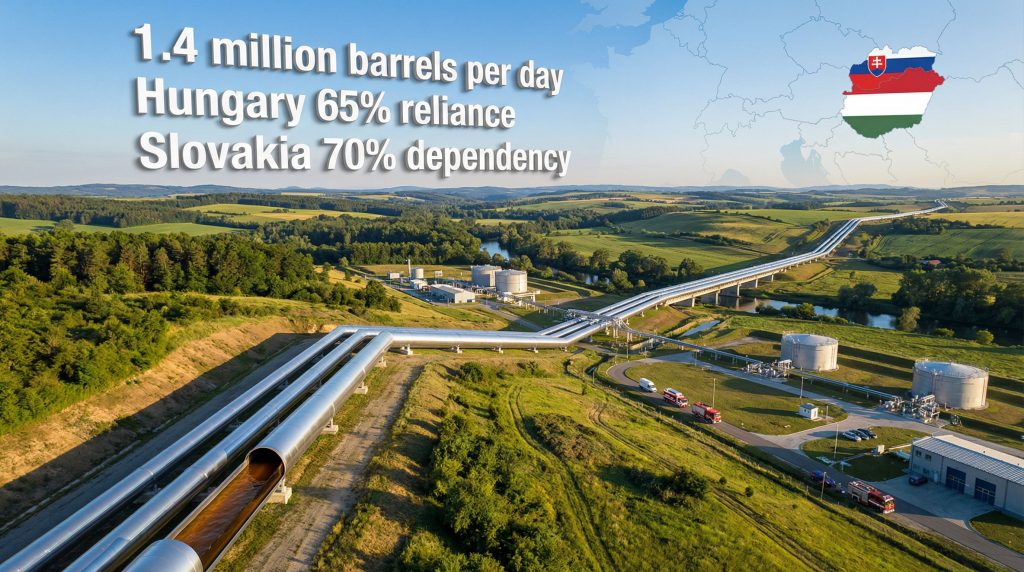
The pipeline's southern branch has traditionally supplied crucial energy resources to Hungary and Slovakia, creating dependency relationships that have persisted through multiple political transformations. Hungary's reliance on Russian crude via this route has historically exceeded 60%, while Slovakia's dependency has reached approximately 70% of total crude imports. These dependency ratios highlight the challenge facing European policymakers who must balance energy security with geopolitical considerations.
The economic advantages of pipeline transport over seaborne alternatives have reinforced these dependencies. Pipeline transportation typically offers cost savings of $15-20 per barrel compared to maritime shipping routes through the Mediterranean. These cost differentials become particularly significant for landlocked Central European nations that face additional transportation challenges in accessing global crude oil markets.
Legacy Infrastructure and Modern Dependencies
The Druzhba system's technical specifications reveal the complexity of replacing such infrastructure. Operating at high pressures with sophisticated pump stations positioned at regular intervals, the pipeline requires specialized equipment and expertise for maintenance and operation. The system's design capacity approaches 1.4 million barrels per day across all branches, though the southern section serving Central Europe operates at lower throughput levels.
Critical infrastructure points include the Brody oil hub and multiple pumping stations that maintain pressure and flow rates across vast distances. These facilities utilize high-pressure pump systems, automated control mechanisms, and redundant monitoring technologies typical of long-distance crude transport networks.
When big ASX news breaks, our subscribers know first
Infrastructure Damage and Escalating Tensions
The current crisis originated from multiple incidents that disrupted normal operations throughout the pipeline network. On January 27, 2026, Russian military strikes damaged facilities at the Brody hub, causing significant disruption to crude oil flows. The technical assessment revealed damage to high-pressure pump systems and control mechanisms, creating operational challenges that could not be rapidly resolved.
The situation escalated further when Ukrainian forces conducted drone strikes on the Kaleykino pumping station on February 24, 2026. This counter-strike targeted a key Russian pumping facility serving the same pipeline system, demonstrating how energy infrastructure has become a strategic target in the broader conflict. Consequently, the Druzhba pipeline has become a focal point of escalating tensions between Russia and Ukraine, with both sides targeting critical infrastructure.
Technical Challenges in Restoration
Pipeline pump station repairs involve complex technical considerations that extend restoration timelines significantly. Replacement of high-pressure pump components typically requires 60-120 days depending on equipment availability and supply chain constraints. Specialized pump equipment often has 8-16 week lead times from manufacturers, particularly when components must meet specific technical specifications.
Control system restoration adds additional complexity, as modern pipeline operations depend on sophisticated monitoring and automated safety systems. Testing and certification procedures must be completed before returning damaged sections to full operational status, ensuring system integrity and regulatory compliance.
Supply Chain Adaptation and Emergency Responses
Central European nations have activated multiple response mechanisms to address the supply disruption. Croatia's Adria pipeline has emerged as a crucial alternative route, with capacity expansion efforts targeting 120,000 barrels per day throughput to Mediterranean terminals. This represents a significant increase from historical utilization levels but remains well below the disrupted Druzhba capacity.
| Supply Route | Capacity (bpd) | Transit Cost | Lead Time | Reliability |
|---|---|---|---|---|
| Druzhba (pre-crisis) | 250,000 | $2.50/barrel | 3 days | 95% |
| Adria Pipeline | 120,000 | $12.80/barrel | 7 days | 88% |
| Seaborne to Rijeka | 80,000 | $18.50/barrel | 14 days | 82% |
Strategic petroleum reserve deployment has become necessary across affected regions, though specific quantities and depletion rates vary by country. Most EU member states maintain strategic reserves equivalent to 90 days of net imports, providing temporary buffer capacity during supply disruptions.
Refinery Operational Adjustments
The disruption has forced major operational changes at Central European refineries. Slovnaft, operated by MOL Group, has reportedly reduced throughput to 60% capacity as alternative crude sourcing arrangements are established. This represents a 40% production curtailment with significant economic consequences for regional fuel markets.
Refinery adaptation to different crude types requires technical adjustments including:
- Recalibration of distillation parameters for varying crude characteristics
- Product yield optimization to maintain gasoline, diesel, and fuel oil ratios
- Quality specification adjustments to meet regulatory standards
- Potential temporary shutdowns of specialized processing units
MOL Group's operational cost increases have been estimated at €45 million monthly, reflecting the premium costs associated with alternative crude sourcing and reduced operational efficiency. These increased costs ultimately translate to higher prices for consumers and industrial users throughout the region.
Economic Ripple Effects Across Multiple Sectors
The disruption extends beyond immediate energy markets into chemical, transportation, and industrial sectors dependent on stable crude oil supplies. Petrochemical production facilities require consistent feedstock availability for manufacturing basic chemicals including ethylene and propylene, which serve as building blocks for plastics and specialty chemical production.
Transportation fuel distribution networks face supply pressure, particularly during winter heating seasons when demand for diesel and heating oil typically peaks. Industrial facilities dependent on fuel oil for heating and process applications must secure alternative suppliers at higher costs.
Regional Price Volatility and Market Dynamics
Energy price volatility has increased across affected markets as supply uncertainties create risk premiums in commodity trading. Moreover, the ongoing oil price rally has been influenced by these supply disruptions, whilst oil price movements remain volatile amid geopolitical uncertainties. In contrast to the current volatility, some analysts predict stagnant oil prices if supply routes are quickly restored.
The chemical industry confronts feedstock availability concerns that could affect:
- Polyethylene and polypropylene manufacturing capacity
- Specialty chemical production schedules
- Downstream pharmaceutical and consumer product manufacturing
- Export competitiveness for chemical-intensive industries
Policy Responses and Diplomatic Tensions
European Union institutions have found themselves balancing energy security priorities against broader foreign policy objectives. European Commission President Ursula von der Leyen publicly requested Ukrainian acceleration of repair efforts, indicating institutional recognition of energy supply urgency over other policy considerations.
Hungary's response has demonstrated how energy security concerns can override EU solidarity mechanisms. Hungary blocked new EU sanctions on Russia and an EU loan to Ukraine in direct response to the oil supply stoppage, illustrating the political leverage created by energy dependencies.
"The disruption has revealed fundamental tensions within EU energy policy between collective security objectives and individual member state energy needs."
Russian officials have framed the disruption as a broader European security issue. Russian Foreign Ministry Spokeswoman Maria Zakharova characterized Ukrainian actions as threatening the energy security of Hungary, Slovakia, and the whole of Europe, attempting to shift blame away from the initial infrastructure strikes. However, EU member states remain divided over how to respond to the ongoing crisis, with Slovakia even halting emergency power supplies to Ukraine.
Accelerated Infrastructure Development
The crisis has prompted acceleration of alternative infrastructure projects previously planned for longer timelines. The Hungary-Serbia pipeline project has reportedly received timeline advancement to 2027 completion, though technical and financing challenges remain significant.
EU's REPowerEU plan implementation has gained renewed urgency as member states recognise the strategic vulnerability created by concentrated supply dependencies. Strategic petroleum reserve capacity expansion proposals are under consideration to provide greater buffer capacity for future disruptions.
Long-Term Strategic Implications and Scenario Planning
Three primary scenarios could emerge from the current Druzhba oil pipeline stoppage, each carrying different implications for European energy markets and infrastructure investment priorities.
Scenario 1: Technical Resolution and Normalised Operations
Rapid restoration of pipeline operations within 60-90 days would represent the most optimistic outcome. This scenario requires:
- Successful procurement of specialised pump equipment
- Diplomatic arrangements permitting repair access in contested areas
- Technical cooperation between Ukrainian and Russian pipeline operators
- Temporary cost absorption by refineries and affected governments
Under this scenario, current supply arrangements would likely revert to historical patterns, though strategic reserve policies might be enhanced to provide greater future resilience.
Scenario 2: Permanent Supply Route Reconfiguration
Extended disruption could force permanent restructuring of Central European crude supply chains. This scenario involves:
- Druzhba pipeline decommissioning for Russian crude transport
- Alternative crude sourcing becoming permanent commercial arrangements
- Regional energy price structures permanently adjusting to reflect higher transportation costs
- Accelerated development of alternative pipeline infrastructure
Investment implications include substantial capital expenditure for new pipeline construction, expanded port terminal capacity, and enhanced crude-by-rail logistics capabilities.
What happens if energy infrastructure becomes a regular target?
The most concerning scenario involves energy infrastructure becoming a standard component of geopolitical conflict. This development would require:
- Massive infrastructure hardening investment across European energy networks
- Enhanced security protocols for critical pipeline and refinery facilities
- Development of more distributed and resilient energy supply systems
- Fundamental revision of European energy security doctrine
The next major ASX story will hit our subscribers first
Investment Implications and Risk Management
Energy infrastructure resilience has emerged as a premium valuation factor for investors evaluating European energy companies. Traditional risk assessment models must now incorporate geopolitical infrastructure targeting as a material risk factor rather than a remote possibility.
Furthermore, the current crisis highlights broader energy transition challenges that many nations face when moving away from fossil fuel dependencies. Additionally, global trade tensions continue to complicate international energy relationships and supply chain stability.
Strategic Positioning for Market Participants
Investment strategies require adaptation to the new risk environment:
- Infrastructure diversification becomes essential for energy-intensive industrial operations
- Alternative energy source development gains strategic priority beyond environmental considerations
- Regional energy security considerations influence government policy and corporate planning
- Supply chain resilience assessment extends beyond traditional operational risk management
Companies with exposure to Central European energy markets must evaluate emergency response capabilities and develop contingency plans for extended supply disruptions. Political risk insurance consideration has become necessary for energy infrastructure investments previously considered low-risk.
Market Psychology and Behavioural Adaptations
The Druzhba oil pipeline stoppage has demonstrated how quickly energy security concerns can override other policy priorities. Market participants must recognise that energy supply reliability may receive higher priority than cost optimisation in future European energy policy decisions.
This shift in priorities creates opportunities for:
- Alternative energy infrastructure development
- Strategic storage capacity expansion
- Enhanced supply chain monitoring and security technologies
- Regional energy independence solutions
The current disruption serves as a catalyst for accelerated transformation of European energy markets, forcing adaptation to geopolitical realities that may persist beyond the resolution of current conflicts. Energy market participants must prepare for a more fragmented, security-focused operational environment where infrastructure resilience commands premium valuations and strategic importance.
Want to Capitalise on Energy Market Disruptions?
Discovery Alert's proprietary Discovery IQ model identifies mining companies positioned to benefit from critical mineral shortages and energy infrastructure challenges like the current Druzhba pipeline crisis. Stay ahead of market developments by accessing real-time alerts on strategic mineral discoveries that could reshape global supply chains, and begin your 14-day free trial today to secure your investment advantage.