## Eastern Mediterranean Energy Opportunities
In the midst of post‐conflict reconstruction, the rising focus on syrian president chevron oil gas exploration cooperation has sparked numerous debates among energy experts. Furthermore, regional investments, evolving market dynamics and strategic corporate partnerships are reshaping the energy landscape. Moreover, ongoing discussions extend into facets like the OPEC meeting impact, which influence global oil production forecasts.
The geopolitical environment remains fluid. However, complex technical and financial challenges require in‐depth risk assessments. Consequently, energy integration plans are evolving alongside broader market reforms, such as the US oil production decline amid shifting global supply trends.
## Strategic Energy Architecture in the Eastern Mediterranean Basin
Syria’s strategic location along the Mediterranean coast offers new opportunities. Its 180‐kilometre coastline provides critical access to hydrocarbon zones. In addition, this access could support new export routes amid evolving export strategies like the energy exports challenges.
Moreover, the region’s geological formations are comparable to those unlocking new discoveries in adjacent fields. Domestic production trends have shown significant contraction during the conflict period. In addition, recent partnerships are renewing hope for infrastructure rejuvenation and market rebalancing.
## Corporate Investment Strategies in Post-Conflict Energy Development
International companies are re‐evaluating opportunities in challenging environments. The recent syrian president chevron oil gas exploration cooperation discussions have renewed interest in advancing deepwater explorations. Accordingly, companies are assessing risk through political insurance mechanisms and extensive consortium frameworks.
However, the involvement of major energy corporations also reflects underlying shifts in global policy. For instance, evolving frameworks such as the US policy change on energy indicate nuanced regulatory reforms that could facilitate engagement in conflict‐affected regions. Moreover, external market signals continue to motivate new ventures.
### What About International Cooperation?
Chevron Corporation has shared insights in confidential talks regarding technical and regulatory matters. Oil cooperation talks reported by oil cooperation talks suggest that international dialogue on energy investments is intensifying. Furthermore, these discussions align with broader corporate goals to reduce risk and capture first‐mover advantages.
Additionally, long‐term strategies incorporate technology transfer initiatives and phased investment structures. In this approach, flexible partnerships will help mitigate potential setbacks caused by regional instability. Besides, emerging market trends point to an inclination for diversification in energy supply bases.
## Gulf Cooperation Council Regional Energy Investment Patterns
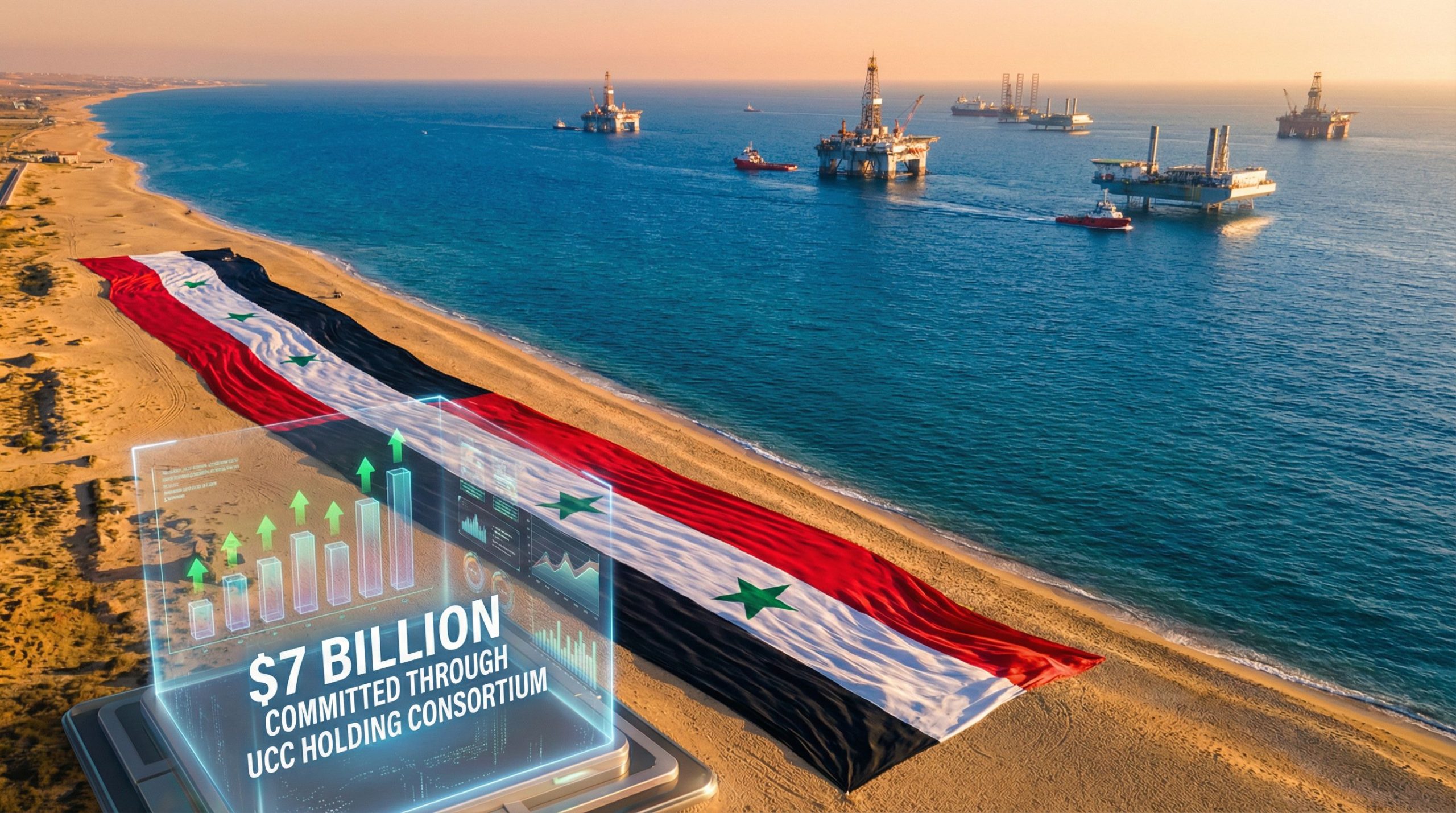
Regional investors have focused extensively on Syrian energy reconstruction. Qatar’s UCC Holding has demonstrated robust commitment by investing nearly $7 billion in related infrastructure projects. Consequently, a consortium approach is paving the way for risk-sharing models in post-conflict regions.
Additionally, a recent report on US–China trade war impacts informs discussions regarding shifting market dynamics. Moreover, Gulf countries are exploring similar opportunities to diversify their portfolios while ensuring energy security. Each investment plan underscores the significance of stable operating frameworks and intergovernmental dialogues.
### Key Investment Components
• Lead Investors: Prominent regional players drive the initial capital, facilitating project onset.
• Risk Sharing: Consortium structures distribute project risks among multiple investors.
• Technology Transfer: This supports capacity building within local industries while enhancing operational efficiency.
• Phased Development: Structured over time, these initiatives reduce the impact of volatility through short‐term milestones.
Such patterns mirror successful models previously witnessed in other regions, helping to stabilise local economies and ensuring long‐term energy resilience.
## Offshore Development Technical Infrastructure Requirements
Developing offshore resources demands advanced drilling technology and upgraded maritime logistics. Consequently, Syrian infrastructure must be significantly improved to attract international capital. For instance, regional projects underscore the need for enhanced seismic surveys and deepwater drilling capacity.
Equally important is the installation of subsea pipelines and specialised port facilities. Moreover, strategic developments along the continental shelf are driving renewed interest in scalable infrastructure projects. In addition, industry experts emphasise the need for phased upgrades to onshore processing facilities.
### Critical Offshore Components
• Seismic Survey Capabilities: Implement multi-dimensional surveys for accurate mapping.
• Drilling Platforms: Equip semi-submersible units for varied water depths.
• Pipeline Networks: Introduce economically viable pipeline systems.
• Port Upgrades: Enhance terminals for efficient offshore logistics.
Furthermore, these technical requirements reflect lessons learned from analogous developments in Cyprus's Aphrodite field and Egypt's Zohr field, both highlighting the importance of balancing technical expertise with regulatory safety measures.
## Geopolitical Risk Assessment and Investment Frameworks
Investment in Syria’s energy sector inevitably involves navigating complex regulatory environments. Political risks, territorial disputes and sanctions impart additional uncertainty. However, mitigative measures such as political risk insurance and strategic partnerships are being developed.
For instance, US sanctions under the Caesar Syrian Civilian Protection Act compel corporations to reassess their involvement. Meanwhile, evolving international relations may create new scenarios, as reported in recent US policy change on energy. Consequently, risk frameworks must balance market opportunities with inherent uncertainties.
### Key Considerations for Investors
• Sanctions Compliance: Ensuring adherence to international regulations.
• Political Stability: Monitoring developments closely and adjusting strategies accordingly.
• Security Coordination: Mitigating risks through multilateral agreements and risk insurance.
• Financial Flexibility: Building investment structures that respond to market volatility.
Additionally, lessons from historical conflicts underscore the importance of agile governance frameworks and robust contingency planning.
## Investment Partnership Models and Financing Structures
Multiple partnership frameworks are under review to facilitate Syrian energy sector reconstruction. In this environment, the syrian president chevron oil gas exploration cooperation narrative has opened dialogues about redistributing risks between public and private sectors.
Joint ventures, production sharing agreements and build‐operate‐transfer models offer viable solutions. Moreover, stakeholder discussions have prompted suggestions for alternative financing options, including export credit guarantees and Islamic finance structures. Significantly, the consortium approach employed by Qatar’s UCC Holding illustrates a successful risk mitigation model in high‐risk markets.
### Partnership Options
- Joint Ventures:
- International firms provide technical and operational expertise.
- Syrian entities retain sovereign management. - Production Sharing Agreements:
- Outlines revenue distribution based on production thresholds.
- Aligns incentives between foreign and local stakeholders. - Build‑Operate‑Transfer Models:
- Enables consolidated capital investment with eventual asset transfer to Syrian control.
Furthermore, additional financing includes commodity-backed structures and multilateral development bank participation. These models incentivise long-term sustainable investments, thereby benefiting both Syrian developmental goals and international corporate strategies.
## Regional Energy Market Integration and Export Potential
Syrian energy sector expansion could produce ripple effects across Eastern Mediterranean markets. For instance, exporting additional gas may diversify supplies and reduce reliance on traditional suppliers. Moreover, enhanced production capacity up to 15-20 BCM annually would transform the local market.
Domestic initiatives now blend with international export ambitions. Besides, integration with major projects such as the EastMed pipeline potentialises access to European markets. Moreover, market scenarios are evolving to consider:
• Rapid Development: Quick export capacity increases.
• Gradual Reconstruction: Prioritisation of domestic supply security.
• Consortium-led Models: Balanced domestic and export-oriented growth strategies.
Additionally, increasing domestic production could improve Syria’s energy security by reducing import reliance while boosting export revenues.
## Economic Development Impact Analysis and Multiplier Effects
Revitalising the energy sector promises widespread economic benefits. Employment creation, industrial expansion and foreign currency generation are among the fluid impacts. For instance, sector investments could generate a multiplier effect of 2.5-3.0 times on the economy. In addition, infrastructural developments drive broader economic stimulation.
Consider these key impacts:
• Direct Employment Generation: Thousands of jobs in exploration, drilling and infrastructure.
• Indirect Economic Boost: Secondary markets benefit from increased demand for services.
• GDP Growth: Enhanced production capacities that contribute billions to the national economy.
• Foreign Currency Influx: Exports may alleviate balance-of-payments challenges.
Furthermore, these benefits reflect long-term economic stability potential for a post-conflict Syria. They underscore the importance of strategic energy reform in revitalising economic prospects nationwide.
## Environmental Standards and Sustainable Development Integration
Environmental safeguards are paramount for modern energy projects. Syrian energy development must align with international environmental standards throughout project lifecycles. In addition, rigorous assessments ensure minimal ecological disruption while promoting long-term sustainability.
Key environmental focus areas include:
• Marine Ecosystem Protection: Comprehensive studies to mitigate offshore drilling impacts.
• Water Resource Management: Implementing controls to avoid groundwater contamination.
• Air Quality Monitoring: Rigorously overseeing emissions and flaring operations.
• Biodiversity Conservation: Establishing protective measures for critical habitats.
Moreover, international standards from the World Bank and IFC guide these protocols. External energy discussions further emphasise balanced approaches to economic growth and environmental stewardship.
## Development Timeline Analysis and Implementation Pathways
Timelines for energy sector reconstruction depend on political stabilisation, regulatory reforms and investment flows. The preparatory phase focuses on geological and regulatory assessments, involving investments of approximately $500 million to $1 billion. Moreover, initial development phases anticipate $3-5 billion in capital injections aimed at pilot offshore exploration and onshore infrastructure upgrades.
Subsequently, the commercial production phase envisions full-scale production with investments between $10-15 billion. In addition, these stages are contingent upon political risks, the timing of sanctions relief and international capital availability.
Indeed, the syrian president chevron oil gas exploration cooperation narrative has contributed significantly to outlining these phases. Consequently, established frameworks in joint ventures and export pipelines further incentivise rapid progress while mitigating adverse risks.
## Strategic Implications for Eastern Mediterranean Energy Security
Syrian energy reconstruction can reshape regional dynamics and boost European energy diversification. Enhanced production would reduce reliance on traditional suppliers and catalyse economic growth. Moreover, these efforts facilitate broader energy security and strategic autonomy in a volatile global market.
Key benefits include:
• Improved energy diversification for European markets.
• A resilient supply chain insulated from geopolitical shocks.
• Strengthened regional security through multilateral energy agreements.
• Innovative investment frameworks that balance risk and returns.
Furthermore, as discussed earlier, enhanced cooperation—illustrated by the syrian president chevron oil gas exploration cooperation—will ultimately drive mutually beneficial outcomes. This proactive approach could result in lasting geopolitical rebalancing and sustainable economic growth across the region.
Looking to Invest in Energy Sector Opportunities?
Discovery Alert's proprietary Discovery IQ model provides real-time alerts on significant ASX mineral and energy discoveries, instantly empowering subscribers to identify actionable opportunities ahead of the broader market. Begin your 30-day free trial today and secure your market-leading advantage in the rapidly evolving energy and resources sector.