Economic Diversification Through Regional Integration
Continental integration represents the cornerstone of sustainable economic transformation across Africa. Traditional commodity-dependent growth models have exposed African economies to external price volatility and limited value creation opportunities. The African Continental Free Trade Area (AfCFTA) framework addresses these vulnerabilities by creating pathways for structural economic diversification, supported by comprehensive energy transition insights that guide resource allocation strategies.
Regional production networks must evolve beyond raw material extraction to capture higher-value manufacturing and processing activities. Current analysis from the African Energy Chamber's 2026 Outlook Report demonstrates how resource sectors can serve as catalysts for broader industrialisation. Gas development across sub-Saharan Africa exemplifies this transformation potential, where non-associated gas resources offer pricing flexibility independent of oil market constraints, enabling domestic industrial development alongside export revenue generation.
The distinction between associated and non-associated gas production creates strategic advantages for sub-Saharan economies. Non-associated gas operations avoid the production constraints tied to oil extraction rates, providing flexibility for industrial applications including fertiliser production, petrochemical manufacturing, and metals processing. This operational independence supports the development of value-added industries that can serve both domestic and regional markets.
Infrastructure Investment as Growth Catalyst
Infrastructure development requires systematic coordination across multiple sectors to achieve transformative economic impact. The infrastructure-demand paradox emerges as a critical challenge: investors expect guaranteed demand before providing necessary infrastructure, yet demand only materialises once operational infrastructure exists. This creates structural barriers requiring government intervention through predictable regulatory frameworks and investment assurance mechanisms.
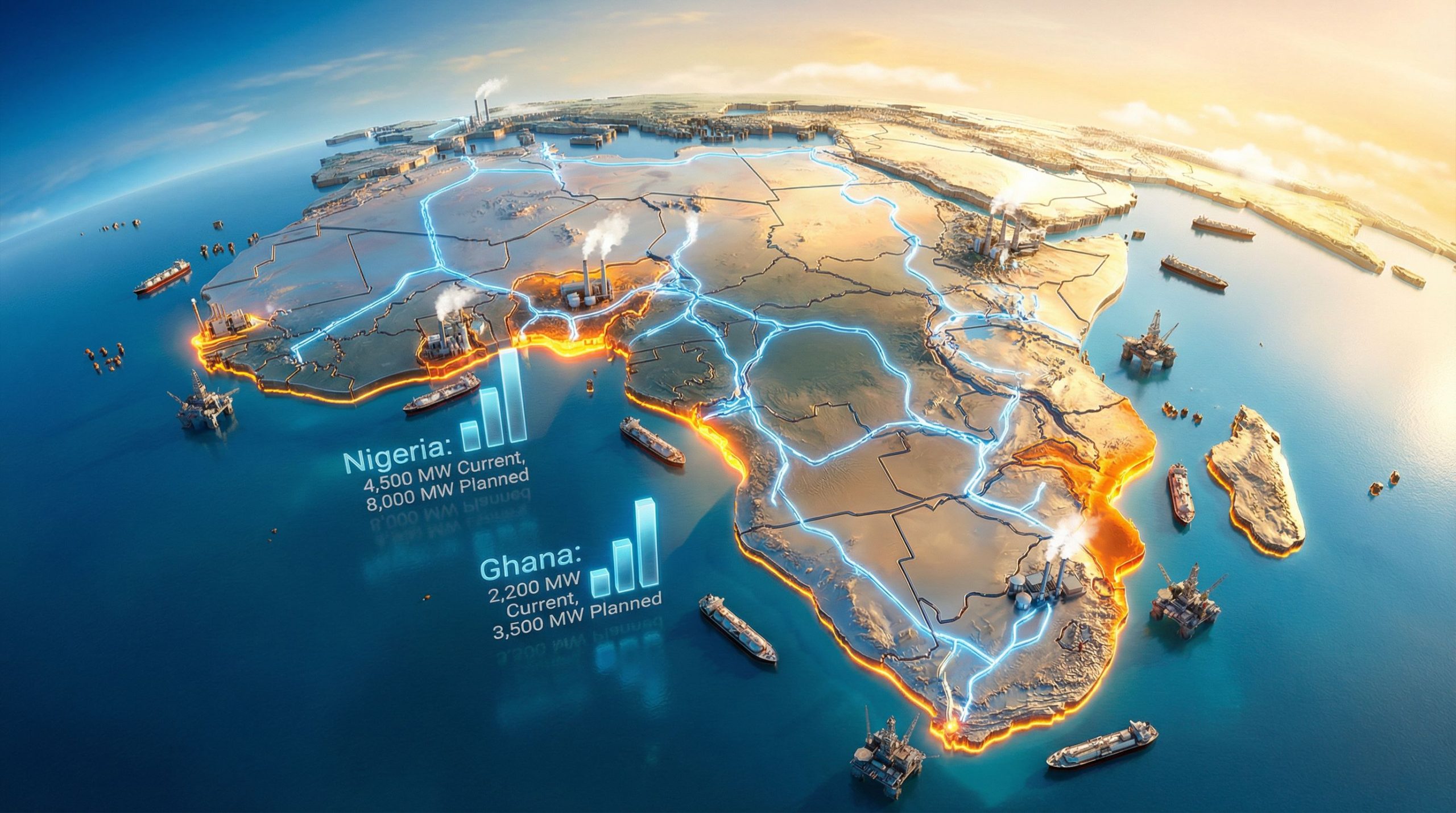
Current gas sector infrastructure development demonstrates successful approaches to overcoming these challenges. Nigeria's 12.6 GW of gas-fired power capacity supports both industrial development and residential energy access. Ghana and Mozambique have installed 2.9 GW and 1.1 GW respectively, utilising floating power ships operating on natural gas to serve coastal demand centres. These implementations show how strategic infrastructure investment can simultaneously address energy security and industrial competitiveness.
Regional infrastructure connectivity enables economies of scale across national boundaries. The Greater Tortue LNG project between Senegal and Mauritania includes domestic market obligations targeting 3 GW of gas-fired capacity by 2050, demonstrating how cross-border projects can support multiple national development objectives while achieving commercial viability.
Manufacturing Sector Transformation Strategies
Manufacturing development requires strategic focus on sectors where African economies possess comparative advantages. Agro-processing industries can transform agricultural outputs into higher-value products, retaining more economic value within domestic markets while reducing import dependence. The availability of competitively priced energy inputs becomes crucial for manufacturing competitiveness, particularly as industries navigate industry evolution trends that reshape global production patterns.
Energy-intensive manufacturing sectors benefit significantly from domestic resource availability. Sub-Saharan Africa's 400+ trillion cubic feet of recoverable gas reserves provide potential feedstock for industrial processes. Angola's National Gas Plan specifically targets manufacturing sectors with focus on reducing import reliance through domestic gas-to-product development, while Nigeria combines export strategies with domestic manufacturing support through industrial gas pricing incentives.
Mineral beneficiation represents significant untapped potential for value addition. Processing raw materials domestically rather than exporting unprocessed commodities can multiply economic returns per unit of resource extraction. This requires coordinated development of processing infrastructure, technical skills, and market access capabilities, while leveraging decarbonisation benefits that create competitive advantages in global markets.
Financial Sector Development and Capital Formation
Domestic resource mobilisation must expand beyond traditional revenue sources to support sustained development financing. Government funding currently provides 41% of infrastructure investment according to available analyses, while development partners contribute 48%, leaving private capital participation at insufficient levels of 11%. Understanding effective capital raising methods becomes essential for attracting investment in frontier markets.
Risk-sharing mechanisms become essential for attracting private investment in frontier markets. Public-private partnerships require balanced fiscal frameworks that attract investor returns while capturing adequate government revenues. Success factors identified in gas sector development include competitive pricing structures, transparent cost-sharing arrangements, and government-backed incentive frameworks that encourage producer-buyer relationships.
Capital market development enables domestic savings mobilisation for long-term investment projects. Pension fund expansion, infrastructure bond markets, and regional stock exchange linkages can channel domestic capital toward productive investments while reducing external financing dependence. Furthermore, these mechanisms create opportunities for African economies to develop sophisticated financial instruments that support Africa's economic transformation objectives.
Human Capital Development for Economic Transformation
Gender integration emerges as a critical catalyst for economic transformation. Research consistently demonstrates that economies with higher gender participation achieve superior productivity, innovation, and resilience outcomes. Strategic priorities include expanding educational access, increasing financial inclusion for women, and supporting female entrepreneurship through targeted business development programmes that address female leadership challenges across various sectors.
Skills development must align with emerging industry requirements across multiple sectors. Technical and vocational education systems require updating to serve gas-to-power infrastructure, renewable energy systems, and advanced manufacturing operations. Digital literacy becomes increasingly important as economies integrate technology solutions for financial services, logistics, and business operations.
The demographic dividend depends on strategic workforce preparation. Africa's young population represents significant potential if properly prepared for future industry requirements through education systems aligned with economic transformation objectives.
Regional Growth Performance and Success Factors
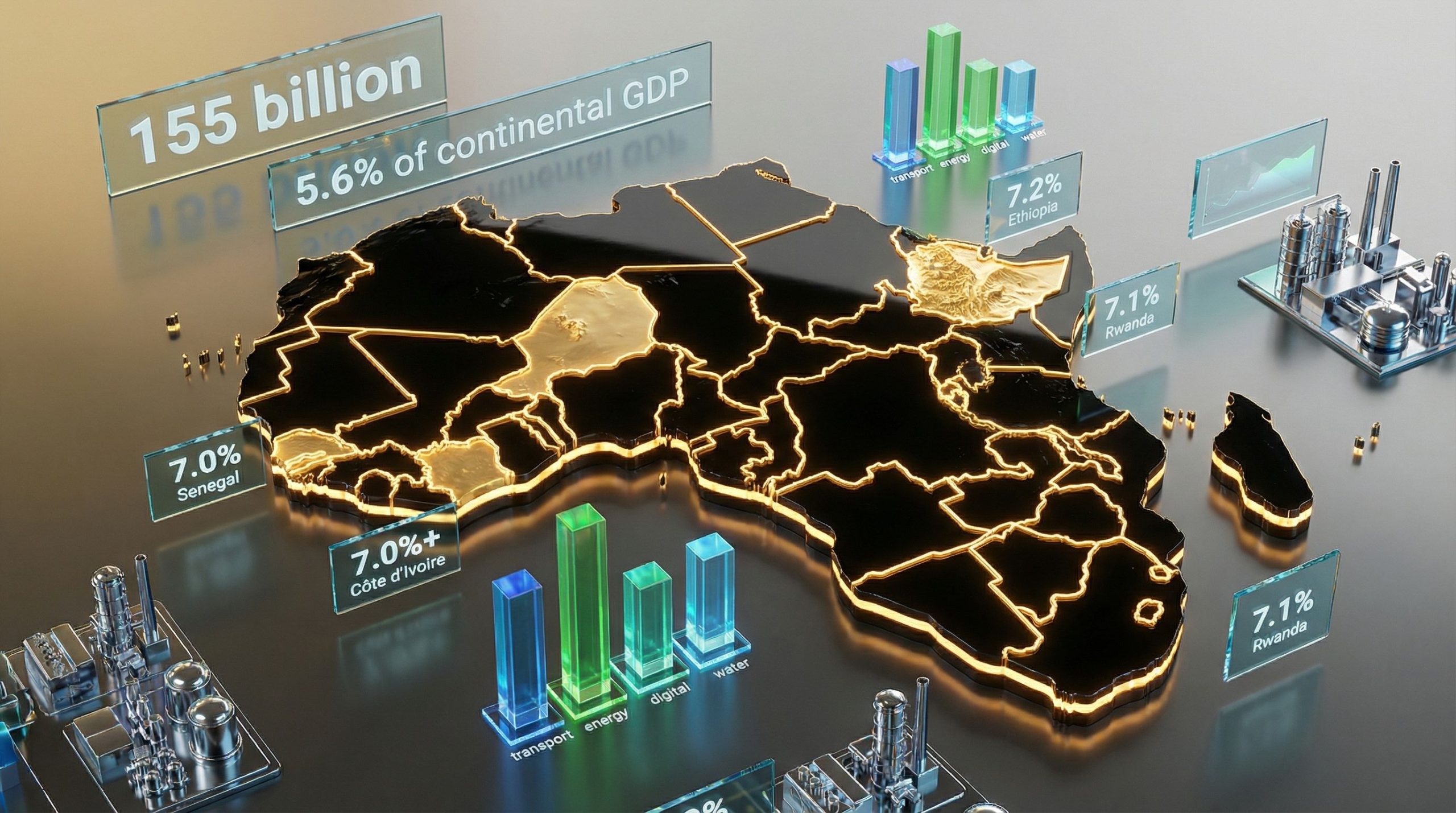
Leading African economies demonstrate common characteristics driving sustained growth performance. Ethiopia's projected 7.2% growth rate reflects sector liberalisation and investment climate reforms. Rwanda's 7.1% growth stems from infrastructure investment prioritisation and fiscal discipline maintenance. Niger and Senegal both project 7.0%+ growth driven by mining development, energy projects, and governance improvements.
These high-performing economies share several critical success factors:
- Consistent policy implementation across multiple electoral cycles
- Infrastructure investment prioritisation in transport and energy sectors
- Private sector engagement through regulatory reform initiatives
- Regional integration participation in trade and investment frameworks
Reform-driven success requires balancing multiple stakeholder interests. Countries implementing government-coordinated frameworks with domestic market obligations include Nigeria's 2020 National Gas Expansion Program, Senegal-Mauritania's Greater Tortue LNG provisions, and Angola's National Gas Plan with targeted domestic requirements. These initiatives demonstrate how coordinated policy frameworks can accelerate transformation outcomes through strategic resource development.
Climate Integration and Sustainable Development
Long-term low emissions development strategies create opportunities for sustainable competitive advantages. Climate finance mechanisms offer alternative funding sources through green bond issuance, carbon credit revenue generation, and climate adaptation fund access. These mechanisms can support infrastructure projects while advancing environmental objectives.
Gas development serves as a transitional strategy supporting renewable energy integration. The African Energy Chamber's 2026 Outlook positions gas as a bridge fuel that is cleaner than coal or oil, versatile for power generation applications, and increasingly competitive as global prices stabilise. This positioning enables economies to improve energy access while building capacity for renewable energy transitions.
Sustainable growth financing requires integration of economic development objectives with climate mitigation measures. Green industrialisation pathways can create sustainable competitive advantages while meeting international climate commitments and accessing climate finance resources.
Overcoming Structural Economic Constraints
Current economic structures present significant transformation challenges. Employment concentration in own-account and family enterprises limits productivity growth potential, while insufficient value chain integration reduces economic multiplier effects. Weak institutional frameworks continue to hamper policy implementation across multiple sectors.
The infrastructure-demand paradox requires coordinated resolution through reliable contracts, transparent pricing mechanisms, and balanced fiscal policies. Success depends on government capacity to create predictable regulatory frameworks that attract investment while advancing national economic priorities and maintaining political stability for long-term investor confidence.
External dependency reduction requires systematic diversification across multiple dimensions. Commodity price volatility exposure must be reduced through economic diversification, while external financing dependence decreases through domestic resource mobilisation capacity. Technology transfer reliance requires building indigenous innovation capabilities, and food import vulnerability must be addressed through agricultural productivity enhancement.
Strategic Implementation Framework
Africa's path to economic transformation requires coordinated implementation across infrastructure development, human capital enhancement, institutional strengthening, and regional integration. The continent's projected growth potential represents significant opportunities, but realisation depends on simultaneous progress across interconnected development dimensions.
Sub-Saharan Africa's gas sector demonstrates how resource development can deliver transformative benefits through dual strategies combining export revenue generation with domestic value creation. Current gross gas demand of approximately 55 billion cubic metres per year is projected to exceed 90 billion cubic metres by 2050, driven by residential, industrial, and power sector growth.
Success requires strategic patience, consistent policy implementation, and collaborative partnerships between governments, private sector actors, and international development partners. With effective execution of interconnected transformation strategies, African economies can position themselves as global growth centres while advancing long-term development objectives.
The framework for Africa's path to economic transformation must integrate multiple strategic elements: continental trade integration through AfCFTA implementation, infrastructure investment coordination, manufacturing sector development, financial system strengthening, human capital development, and sustainable growth practices. Coordinated implementation across these dimensions can unlock Africa's transformation potential and establish the continent as a driver of global economic growth.
Looking to Invest in Africa's Economic Transformation?
Discovery Alert's proprietary Discovery IQ model delivers real-time insights on mineral discoveries that drive Africa's resource-based transformation, helping investors identify actionable opportunities before broader markets recognise their potential. Begin your 30-day free trial today to position yourself ahead of the transformative developments reshaping African economies and global commodity markets.