
August 11, 2026
Ecuador's Regulatory Restructuring: A Strategic Gamble in South American Mining
The global mining sector increasingly resembles a strategic chess match, where regulatory frameworks determine which nations capture international investment and which fade into resource development obscurity. South America's mining landscape faces unprecedented transformation pressures, driven by energy transition demand for copper, lithium, and gold, while traditional regulatory approaches struggle to balance environmental protection with economic development imperatives.
Ecuador's position within this continental resource competition has historically reflected cautious environmental gatekeeping rather than aggressive investment attraction. The nation's February 2026 regulatory overhaul represents a calculated pivot toward streamlined development pathways, fundamentally altering the risk-reward equation for international mining capital across the Andean region.
When big ASX news breaks, our subscribers know first
Understanding Ecuador's Strategic Mining Framework Revolution
Ecuador's National Assembly approval of President Daniel Noboa's comprehensive mining package on February 26, 2026, passed with a narrow margin of 77 votes in favour, 70 against, and 4 abstentions. This slim parliamentary victory reflects the deep political divisions surrounding the nation's Ecuador mining investment reform strategy and environmental protection priorities.
The reforms target systemic bottlenecks that have constrained Ecuador's mining sector expansion since the only two major operations, Fruta del Norte gold mine and Mirador copper mine, commenced production in 2019. Furthermore, the government's identification of approximately 400 illegal mining sites nationwide underscores the security and environmental challenges that legitimate mining operations face without comprehensive regulatory reform.
Three-Tier Authorisation Architecture
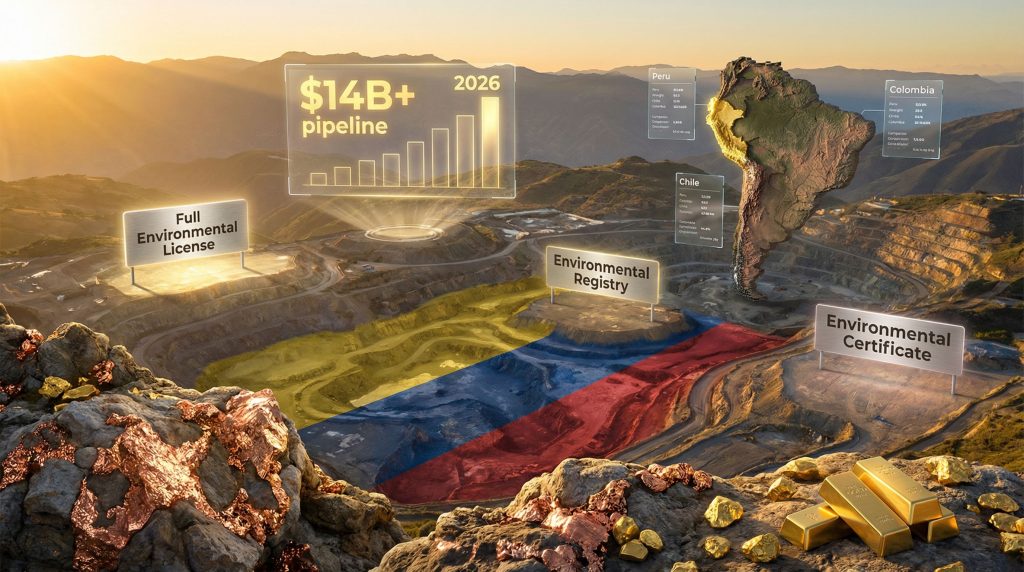
The centrepiece of Ecuador's mining investment reform involves replacing traditional environmental licensing with a sophisticated three-tier authorisation system. This differentiated approach provides streamlined permitting processes whilst maintaining environmental oversight:
- Full Environmental Licence: Comprehensive assessment requirements for high-impact mining operations
- Environmental Registry: Streamlined procedures targeting medium-risk project development
- Environmental Certificate: Expedited approval pathways for low-impact mining activities
This approach aims to eliminate administrative delays whilst maintaining environmental oversight proportional to operational risk. However, the technical specifications for classifying projects across these tiers remain undisclosed, creating implementation uncertainty for international investors evaluating development strategies.
Military-Protected Mining Zones
The establishment of military-protected mining zones addresses Ecuador's illegal mining crisis through direct security infrastructure deployment. Environment and Energy Minister Inés Manzano's quantification of 400 illegal mining sites provides the operational baseline justifying military intervention in mining-designated areas.
This security-first approach differentiates Ecuador's strategy from neighbouring countries pursuing primarily regulatory or fiscal incentive mechanisms for mining sector development. In addition, the protected zone concept creates operational security guarantees that could prove decisive for international mining companies evaluating political risk factors.
Comparative Regional Mining Investment Strategies
Ecuador's environmental authorisation restructuring contrasts sharply with alternative approaches across South America's resource-rich nations. Understanding these strategic differences illuminates Ecuador's competitive positioning within regional mining investment flows, particularly considering how different countries approach their respective mining claims framework systems.
| Country | Primary Strategy | Implementation Period | Target Sector |
|---|---|---|---|
| Ecuador | Environmental streamlining | 2026-2027 | Copper and gold development |
| Peru | Tax incentive expansion | 2024-2025 | Large-scale copper operations |
| Chile | Lithium nationalisation balance | 2023-2025 | Strategic mineral control |
| Colombia | Anti-illegal mining enforcement | 2024-2026 | Security infrastructure |
Chile's lithium sector reforms targeting 430,000 tonnes annual production by 2034 represent state-controlled resource development, contrasting with Ecuador's private investment facilitation approach. Consequently, Peru's tax incentive strategies focus on operational cost reduction, whilst Ecuador prioritises regulatory process acceleration.
Colombia's emphasis on anti-illegal mining enforcement mirrors Ecuador's protected zone concept, suggesting regional recognition that security infrastructure requirements precede sustainable mining development in areas with significant illegal activity.
Investment Opportunity Analysis and Development Pipeline
Ecuador's mining investment reform creates immediate development opportunities across multiple project stages and commodity focuses. The regulatory restructuring particularly benefits projects previously constrained by environmental permitting bottlenecks, especially in light of recent mining permits reforms seen globally.
Advanced Development Projects
The Cascabel/Alpala copper-gold project represents Ecuador's most significant near-term development opportunity, with preliminary assessments indicating potential first production by 2028. This timeline assumes successful navigation of the new environmental authorisation system and resolution of community engagement requirements.
Los Cangrejos copper development has progressed through advanced exploration stages, positioning the project for accelerated permitting under Ecuador's streamlined registry pathway. For instance, the project's medium-risk classification could benefit significantly from expedited environmental authorisation procedures.
Economic Impact Projections
Ecuador's existing mining operations generated substantial government revenues in 2024, though specific figures require verification through official Ministry of Energy and Mines reports. The expansion potential represents multiplicative increases in tax and royalty contributions, assuming successful development of pipeline projects.
Conservative Development Scenario:
- Additional 150,000 tonnes annual copper production by 2028
- 300,000-400,000 ounces additional gold production annually
- Estimated government revenue increase of 200-300% from current levels
Optimistic Expansion Scenario:
- Additional 300,000 tonnes annual copper production by 2030
- 500,000-750,000 ounces additional gold production annually
- Government revenue multiplication factor of 4-5x current contributions
Primary Investment Risk Assessment Framework
Ecuador mining investment reform success depends on navigating interconnected political, environmental, and operational risk factors that could undermine the regulatory restructuring's intended benefits.
Indigenous and Environmental Opposition
The indigenous organisation Ecuarunari articulated comprehensive opposition to the mining reforms, stating that the changes favour large transnational mining companies whilst undermining environmental protection and community rights. This opposition reflects broader concerns about the regulatory restructuring's impact on traditional consultation processes.
Environmental advocacy groups characterised the environmental licence replacement as weakening state environmental controls, suggesting the three-tier system reduces regulatory rigour rather than optimising administrative efficiency. These critiques create potential legal challenge foundations that could delay reform implementation.
Infrastructure and Operational Constraints
Ecuador's mining sector expansion faces several fundamental infrastructure limitations, which could affect the broader exploration licenses impact that the nation seeks to achieve:
- Electricity Supply Stability: 2024 power shortages affected mining export capacity, highlighting energy infrastructure vulnerabilities
- Transportation Networks: Limited road and port infrastructure for remote mining operations
- Skilled Labour Availability: Workforce development requirements for expanded mining operations
- Community Relations: Prior consultation requirements creating potential project delays
The government's incorporation of electricity sector privatisation provisions within the mining reforms suggests recognition that energy infrastructure constraints require parallel resolution for successful mining expansion.
Global Market Impact and Supply Chain Implications
Ecuador's potential doubling of mining exports through successful reform implementation could contribute 2-3% to global copper supply by 2030, assuming pipeline project development proceeds according to optimistic timelines.
How Will Ecuador's Copper Production Affect Global Markets?
Ecuador's copper reserves and potential production increases position the nation as a strategic alternative supplier during periods of political or operational instability in traditional copper-producing regions. The country's geographic proximity to major consuming markets provides logistical advantages over African or Asian copper suppliers.
Current global copper market dynamics favour new supply sources, with energy transition demand creating sustained price support for copper development projects. Ecuador's entry into expanded copper production aligns with favourable long-term demand fundamentals.
Gold Production Expansion
Ecuador's high-grade gold deposits offer significant production expansion potential under streamlined environmental authorisation procedures. The nation's geological characteristics suggest multiple undeveloped gold opportunities that could benefit from regulatory acceleration.
"Ecuador's gold production expansion occurs within a global market experiencing supply constraints and sustained investment demand, creating favourable development economics for new operations," according to recent mining sector analysis.
The next major ASX story will hit our subscribers first
Strategic Investment Approaches and Due Diligence Priorities
International mining companies evaluating Ecuador opportunities must navigate the reformed regulatory landscape whilst addressing persistent political and operational risks through comprehensive due diligence frameworks.
Regulatory Compliance Mapping
Understanding Ecuador's three-tier environmental authorisation system requires detailed analysis of project classification criteria and approval timelines. Companies must assess which authorisation pathway applies to specific project characteristics and operational scales.
Key Due Diligence Areas:
- Environmental Impact Classification: Determining high, medium, or low-impact project designation
- Community Engagement Requirements: Understanding prior consultation obligations under new framework
- Security Infrastructure Access: Evaluating protected mining zone benefits and operational constraints
- Permitting Timeline Projections: Realistic assessment of authorisation process duration
Investment Return Analysis
Ecuador's cost structure and geological characteristics create potentially attractive investment returns for well-positioned projects:
- Copper Projects: Estimated IRR of 18-25% for major developments under favourable metal price scenarios
- Gold Operations: Projected IRR of 22-30% reflecting high-grade deposit characteristics
- Polymetallic Projects: Diversified revenue streams reducing single-commodity price exposure
These projections assume successful navigation of regulatory processes and resolution of community engagement requirements without significant delays or cost overruns.
Long-Term Implications for South American Resource Development
Ecuador's mining reform success could catalyse similar regulatory modernisation initiatives across South America, potentially reshaping the continent's position within global mining supply chains.
Countries observing Ecuador's investment attraction outcomes may adopt comparable environmental authorisation streamlining measures, creating regional competition for international mining capital. This regulatory modernisation trend could accelerate South American mining development whilst challenging traditional African and Asian supply dominance.
The integration of state mining company ENAMI EP partnerships with private sector expertise represents a hybrid development model balancing national resource control with international capital and technology access. This approach could influence resource development strategies across commodity-dependent South American economies.
Regional Mining Investment Flows
Ecuador's regulatory restructuring occurs within broader South American mining investment trends driven by energy transition metal demand and geopolitical supply chain diversification priorities. The nation's success in attracting international investment could redirect capital flows from traditional mining jurisdictions facing political instability or regulatory uncertainty.
Brazil's mining sector faces ongoing environmental compliance challenges, whilst Argentina's economic instability creates investment uncertainty. Consequently, Ecuador's stable regulatory framework combined with geological potential could position the country as a preferred regional investment destination.
What Are the Future Development Scenarios?
Ecuador mining investment reform represents a strategic inflection point with multiple potential outcomes depending on implementation effectiveness and international investor response patterns, as detailed in various mining industry reports.
Successful Implementation Scenario: Streamlined environmental authorisation processes attract $10-15 billion in new mining investments over 2026-2030, doubling Ecuador's mining sector contribution to national GDP whilst maintaining environmental protection standards through effective oversight.
Moderate Success Scenario: Partial reform implementation achieves $5-8 billion in new investments, expanding copper and gold production by 150-200% whilst navigating ongoing community engagement challenges and infrastructure constraints.
Implementation Challenges Scenario: Legal challenges and community opposition delay reform benefits, limiting new investment to $2-4 billion whilst existing operations continue under previous regulatory frameworks with minimal expansion.
The outcome depends critically on government capacity to balance investment attraction with environmental stewardship and community engagement. International mining companies must assess Ecuador's long-term regulatory stability and operational risk factors.
Ecuador's mining investment reform success will ultimately be measured through tangible increases in international investment, expanded production capacity, and sustainable community development outcomes that demonstrate the viability of streamlined environmental authorisation approaches across Latin America's resource-rich nations.
Ready to Capitalise on South American Mining Opportunities?
Discovery Alert's proprietary Discovery IQ model delivers real-time alerts on significant mineral discoveries across global markets, including emerging opportunities in regions undergoing regulatory transformation like Ecuador. Stay ahead of market movements by exploring Discovery Alert's dedicated discoveries page, showcasing historic examples of how major mineral announcements can generate exceptional returns, and begin your 14-day free trial today to position yourself advantageously in the evolving mining investment landscape.