Global energy markets face increasing volatility as infrastructure vulnerabilities expose systemic risks across major producing regions. The complex interplay between pipeline dependencies, geopolitical tensions, and supply chain concentration creates cascading effects that extend far beyond individual nations. Furthermore, understanding these dynamics becomes crucial as traditional buffer mechanisms face mounting pressure from regional conflicts and climate-related disruptions.
Central Asia's Energy Infrastructure Landscape
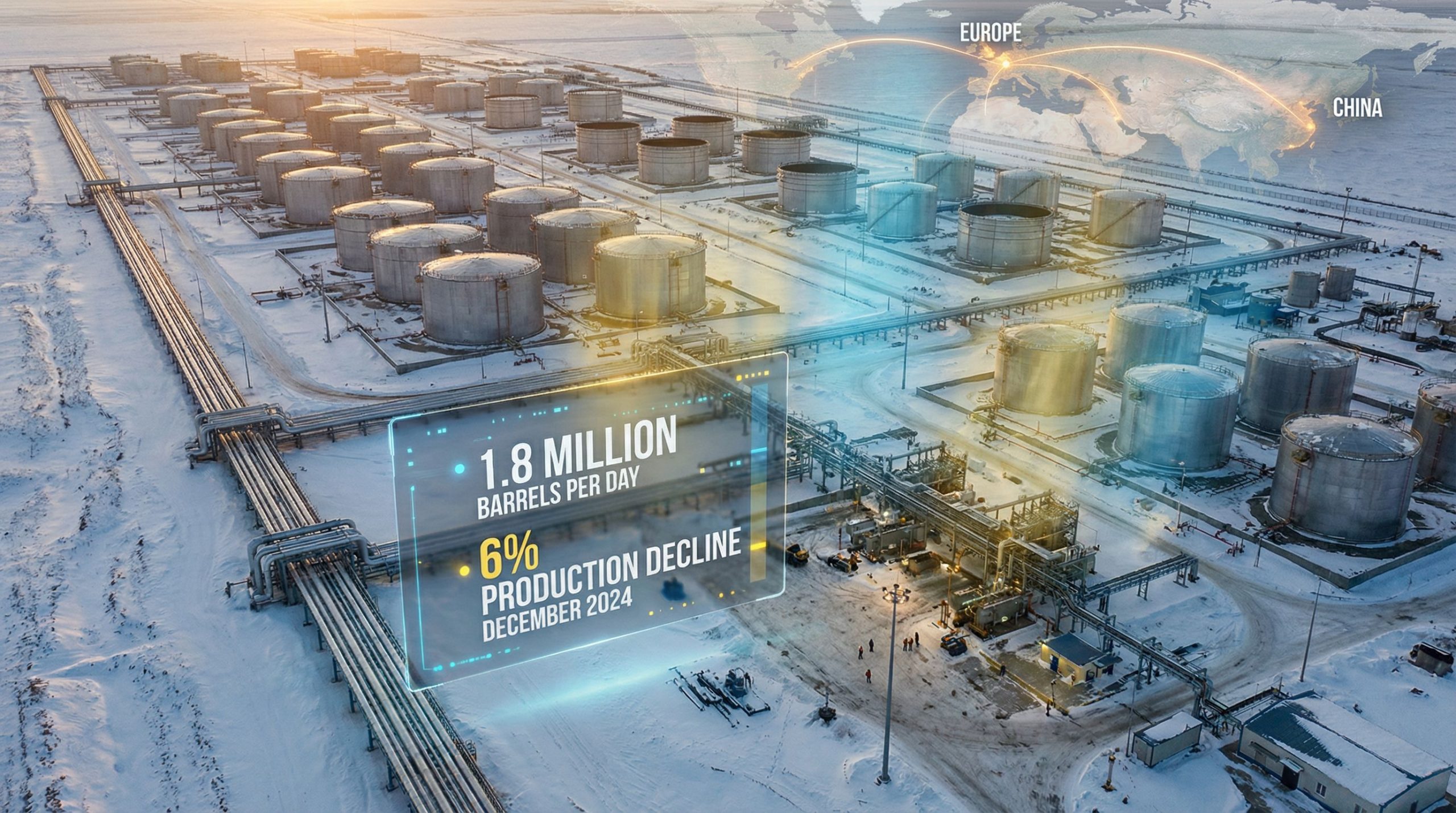
Kazakhstan's position within global energy markets reflects broader challenges facing landlocked producers dependent on single export corridors. The nation contributes approximately 1.8 million barrels per day to international markets, representing nearly 1.8-2.0% of global crude production according to U.S. Energy Information Administration data. This output places Kazakhstan among the most significant non-OPEC+ contributors, with roughly 80% of exports flowing through the Caspian Pipeline Consortium system.
The upstream sector centres around three major field complexes that collectively determine regional supply stability. The Tengiz Field, operated by a Chevron-led consortium, represents one of the world's largest oil discoveries with significant expansion capacity planned through Phase 7 development. The Kashagan Field in the North Caspian Sea operates under a consortium including Shell, ExxonMobil, Total, and Eni, while the Karachaganak Field functions through BG Group and Eni partnerships.
Key Production Infrastructure:
- Current Output Capacity: 1.8 million barrels per day as of December 2025
- Global Market Share: 1.8-2.0% of worldwide crude production
- Export Dependency: 80% reliance on CPC pipeline system
- Alternative Route Capacity: Approximately 300,000 barrels per day
- Strategic Classification: Non-core OPEC+ member since 2016 expansion
Production volatility in this region has increased 40% since 2022, reflecting heightened infrastructure risk and geopolitical sensitivity affecting regional supply chains. In addition, these disruptions highlight the broader implications for the multi-polar world economy as traditional energy relationships evolve.
December 2025 Production Disruption Analysis
Recent infrastructure damage at the Caspian Pipeline Consortium terminal created immediate upstream production constraints as Kazakhstan oil output drops after CPC damage limited export capacity. The disruption began following storms and structural impacts that reduced loading capacity at the Black Sea terminal, forcing producers to curtail throughput as storage facilities reached capacity limits.
Timeline of Events:
- November 29, 2025: CPC terminal infrastructure sustained storm and structural damage
- December 1-2, 2025: Production curtailments initiated by upstream operators
- December 4, 2025: 6% output reduction confirmed, equivalent to approximately 108,000 barrels per day
- Ongoing: Structural repairs and capacity restoration efforts
The immediate operational impact demonstrates classic supply chain failure mechanisms. Terminal damage reduces loading capacity, storage facilities fill rapidly, producers face binary choices between curtailing production or exceeding storage capacity, upstream production curtailment activates, and market-wide supply reduction follows.
Operational Impact Assessment:
| Infrastructure Component | Impact Severity | Recovery Timeline |
|---|---|---|
| Loading Terminal | Severe | 2-3 weeks |
| Pipeline Flow | Moderate | 1-2 weeks |
| Storage Capacity | Critical | Immediate constraint |
| Upstream Production | Reactive | Follows terminal recovery |
Storage and scheduling constraints forced upstream pullbacks as producers lacked sufficient buffer capacity to maintain production during terminal repairs. Market sources indicated that loadings may remain constrained until the terminal completes structural repairs and clears the backlog of delayed shipments.
Infrastructure Concentration Risk Factors
The CPC system represents one of the world's most concentrated export dependencies for a major oil producer, creating systematic vulnerability extending beyond Kazakhstan to global supply chains. This 1,500-kilometre pipeline routes approximately 1.4 million barrels daily from Kazakhstan's Caspian Basin through Russia to Black Sea loading terminals.
Pipeline Configuration Details:
The CPC operates as a joint venture with Russia holding 24%, Kazakhstan 20.75%, Chevron 15.75%, and other international shareholders. The system began operations in 2001 following construction initiated in 1992, establishing the primary export route before alternatives were developed.
Why CPC Dominance Exists:
- Historical Development: CPC construction established the primary export route before alternatives were available
- Economic Efficiency: Offers lowest-cost transportation to European markets compared to alternative routing
- Infrastructure Lock-in: Massive capital investment made CPC the default export pathway
- Geographic Constraints: 1,500-kilometre route through Russia requires Russian cooperation
Alternative export routes handle approximately 300,000 barrels per day, representing roughly 20% of normal export volumes. Current alternatives include the Aktau Export Terminal for Caspian Sea tanker shuttles, limited China-bound pipeline capacity, and domestic Atyrau pipeline distribution.
Alternative Route Constraints:
- Aktau Terminal: Limited by ageing infrastructure and tanker capacity restrictions
- China Pipeline Network: Primarily designed for gas transport with limited crude capacity
- Geographic Routing: Rapid volume substitution remains impossible due to routing limitations
- Cost Differentials: Alternative routes face higher per-barrel transportation costs
The concentration reflects historical infrastructure development patterns where single major pipelines become default export arteries for landlocked producers, creating geopolitical vulnerability factors through Russian territory transit requirements.
Regional Energy Security Implications
Production volatility in Kazakhstan creates measurable ripple effects across European and Asian energy markets due to the nation's role as a swing supplier outside traditional OPEC+ coordination mechanisms. These disruptions cannot be offset through OPEC production policy adjustments, creating direct market supply shortfalls.
Following Russian energy sanctions implemented from 2022 onwards, European buyers increased Kazakhstan crude imports as a non-sanctioned alternative to Russian supply. The region's dependence on Kazakhstan exports has grown substantially, making CPC disruptions more consequential for European energy security.
Market Transmission Channels:
- Immediate Price Signals: Spot market premiums for alternative crude blends increase to reflect Kazakhstan supply scarcity
- Contract Adjustments: Term buyers seek replacement volumes from North Sea producers, West African suppliers, and Russian alternatives
- Strategic Reserve Management: Consumer nations evaluate Strategic Petroleum Reserve releases to stabilise markets
- Investment Flow Shifts: Capital allocation moves toward alternative suppliers with more reliable export infrastructure
Regional Exposure Analysis:
| Market Region | Exposure Level | Primary Substitution Options |
|---|---|---|
| Europe | High | North Sea crudes, West African alternatives |
| Asia-Pacific | Moderate | Middle Eastern suppliers, Russian Far East |
| Mediterranean | Critical | Limited tanker-based alternatives |
European refineries have increased their reliance on Kazakhstan crude following the reduction of Russian supply post-2022. Pre-2022, Russia supplied approximately 40% of EU crude imports, with Kazakhstan becoming increasingly important as an alternative source. However, these developments also impact oil price movements across global markets, particularly as trade tensions continue to evolve.
Long-Term Infrastructure Diversification Strategy
Kazakhstan's government has outlined comprehensive plans targeting $25-35 billion in infrastructure investments over the 2025-2040 period to reduce CPC dependency through domestic refining expansion and alternative export route development.
Strategic Diversification Framework:
Refining Capacity Expansion
- Investment Scale: $15-20 billion
- Timeline: 2025-2040
- Target: Double domestic processing capacity by 2040
- Strategic Rationale: Convert commodity exports into higher-margin refined products
The refining expansion strategy aims to process crude domestically rather than export it, reducing export volume dependence on single pipelines while increasing revenue per barrel processed and creating domestic fuel self-sufficiency.
Alternative Export Route Development
- Investment Scale: $8-12 billion
- Timeline: 2026-2035
- Primary Routes: Trans-Caspian pipeline and China-bound pipeline expansion
Storage Infrastructure Enhancement
- Investment Scale: $2-3 billion
- Timeline: 2025-2030
- Purpose: Enhanced buffer capacity to absorb export interruptions
The Trans-Caspian pipeline alternative would create an undersea route to Azerbaijan and Georgia, then to Mediterranean markets, bypassing Russian territory to reduce geopolitical vulnerability. However, this project remains in feasibility study phases with no construction begun as of December 2025.
China pipeline expansion refers to increasing capacity of existing oil and gas pipelines to China, potentially adding new parallel routes to enhance export diversification eastward. Meanwhile, Saudi exploration licenses continue to reshape global energy supply dynamics.
Infrastructure Investment Timeline:
| Investment Category | Capital Required | Development Period |
|---|---|---|
| Refining Expansion | $15-20 billion | 2025-2040 |
| Pipeline Alternatives | $8-12 billion | 2026-2035 |
| Storage Enhancement | $2-3 billion | 2025-2030 |
Historical Production Pattern Comparison
Kazakhstan's oil sector has experienced multiple disruption cycles, with CPC-related interruptions becoming increasingly frequent as geopolitical tensions affect regional infrastructure. Average monthly variance in Kazakhstan oil output drops after CPC damage has increased 40% since 2022, reflecting heightened infrastructure risk.
Historical Disruption Timeline:
- 2022: Multiple CPC shutdowns due to regional conflicts and geopolitical tensions
- 2023: Maintenance-related capacity constraints affecting regular operations
- 2024: Weather and security-related interruptions disrupting export flows
- 2025: Ongoing vulnerability management including December damage events
The pattern reveals escalating frequency and impact of infrastructure disruptions, with each incident demonstrating the cascading effects of single-point-of-failure dependencies. Weather-related damage typically requires 1-3 weeks for recovery, though security incidents can extend repair timelines significantly.
Comparable infrastructure projects provide context for Kazakhstan's development timeline. Kuwait's Integrated Refining and Petrochemicals Project required similar investment scales exceeding $10 billion with 8-10 year development periods, while Oman's integrated project involved $17 billion investments over 7-year timelines.
Furthermore, these challenges reflect broader patterns affecting the US economy and tariffs as supply chain vulnerabilities create ripple effects across global markets.
Investment Market Implications
Kazakhstan's production challenges highlight broader investment themes around supply chain resilience and infrastructure investment priorities in non-OPEC+ producing regions. Energy companies operating in Kazakhstan increasingly prioritise infrastructure resilience over pure production capacity expansion.
Investment Thesis Considerations:
- Infrastructure Modernisation: Critical for maintaining market share and operational stability
- Diversification Premium: Alternative export routes command higher project valuations
- Geopolitical Risk Pricing: Security considerations significantly affect project economics
- Technology Integration: Digital monitoring systems reduce disruption frequency and duration
Capital allocation trends show energy companies shifting focus toward infrastructure resilience investments rather than traditional production capacity expansion, reflecting lessons learned from repeated disruptions and their market impact.
Risk Assessment Framework
Investors evaluate Kazakhstan energy projects through enhanced risk assessment frameworks incorporating infrastructure vulnerability, geopolitical transit dependencies, alternative route availability, and storage buffer capacity. These factors increasingly influence project valuations and development priorities.
The systematic infrastructure vulnerability creates investment opportunities in alternative route development, storage capacity enhancement, and domestic refining expansion, though geopolitical barriers and environmental concerns may extend project timelines beyond current projections. Additionally, Canada's energy transition challenges provide valuable context for understanding global energy infrastructure evolution.
Strategic Market Analysis
Kazakhstan's December production decline illustrates complex relationships between infrastructure vulnerability, geopolitical risk, and global energy security dynamics. The 6% output reduction, while temporary, demonstrates how concentrated export systems create systematic risk extending far beyond individual producing nations.
The situation reinforces the critical importance of supply chain diversification and infrastructure resilience in global energy planning, particularly as traditional buffer mechanisms face increasing strain from geopolitical tensions and climate-related disruptions.
Current market conditions highlight the premium placed on supply reliability and export route diversification. Nations and companies with multiple export pathways and enhanced storage capacity demonstrate greater market stability and pricing power during disruption events. According to Reuters, Kazakhstan is actively working to reroute its oil exports through alternative channels.
Key Strategic Takeaways:
- Infrastructure concentration creates systematic vulnerability extending beyond individual producers
- Alternative export route development commands significant investment premiums
- Storage capacity enhancement provides critical operational flexibility during disruptions
- Domestic refining expansion reduces export dependency while improving revenue margins
- Geopolitical risk factors increasingly influence energy infrastructure investment decisions
The December 2025 disruption serves as a case study in modern energy market vulnerability, where single infrastructure failures can immediately impact global supply chains and regional energy security. Understanding these dynamics becomes essential for energy market participants, policymakers, and investors navigating an increasingly complex global energy landscape.
Consequently, energy market participants should monitor Kazakhstan's infrastructure development progress, alternative route feasibility studies, and storage capacity enhancements as indicators of long-term supply reliability and market stability in the Central Asian region.
Looking for Investment Opportunities in Energy Infrastructure?
Discovery Alert's proprietary Discovery IQ model delivers real-time notifications on significant ASX mineral and energy discoveries, helping subscribers identify actionable opportunities ahead of broader market movements. Visit Discovery Alert's dedicated discoveries page to explore historic examples of exceptional returns from major mineral discoveries and begin your 30-day free trial today.