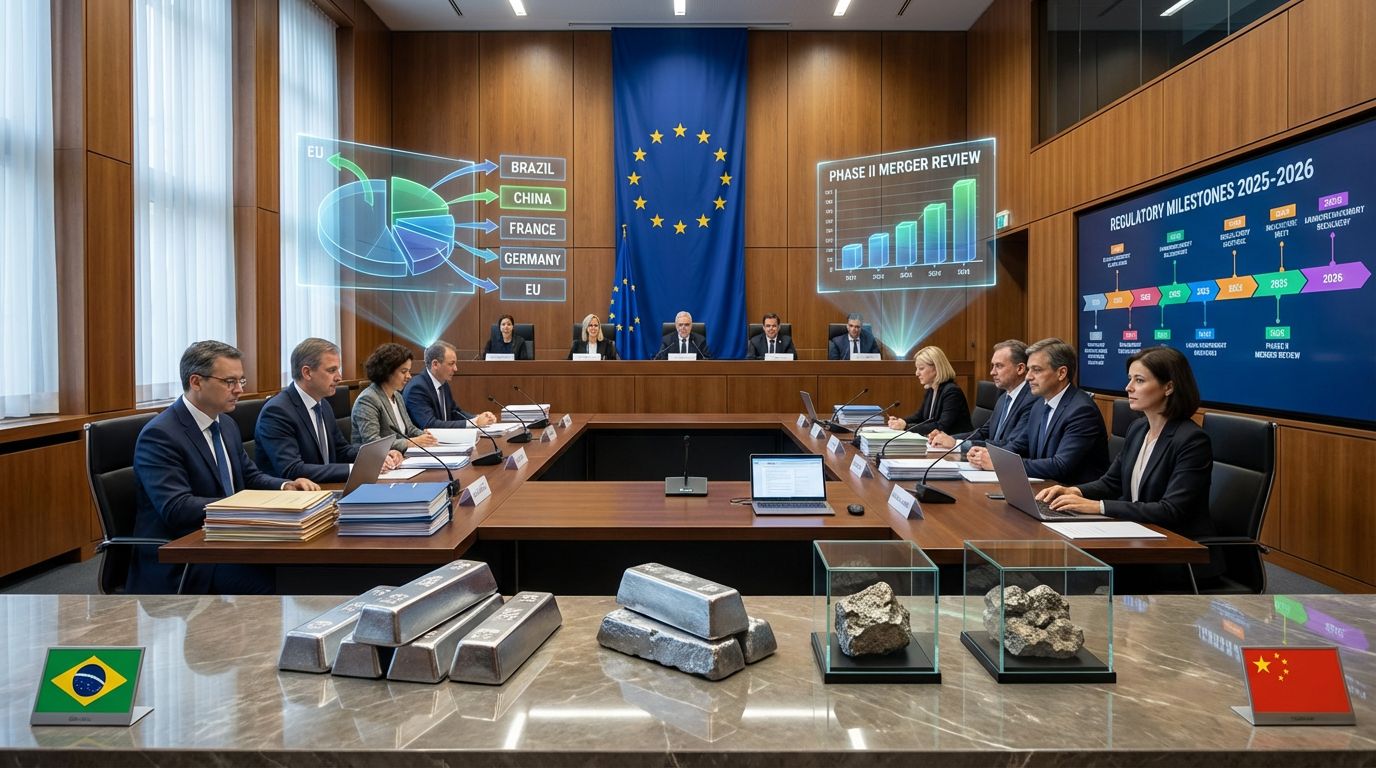
The global transformation toward clean energy technologies has fundamentally altered the strategic importance of battery metals and specialty alloys. European industrial policy increasingly recognises that sustainable manufacturing competitiveness depends on secure access to critical raw materials, particularly those required for stainless steel production and energy transition technologies. The EU pauses investigation of Anglo MMG nickel deal demonstrates how regulatory frameworks are evolving to address these complex supply chain considerations.
This emerging regulatory landscape reflects deeper questions about supply chain sovereignty, state-owned enterprise influence in strategic sectors, and the balance between open market principles and national security considerations. Furthermore, the intersection of these factors creates complex regulatory scenarios where traditional competition analysis must incorporate geopolitical risk assessment and long-term industrial resilience planning.
What Triggered the European Commission's Intervention in Cross-Border Nickel Transactions?
The European Commission's decision to pause the EU pauses investigation of Anglo MMG nickel deal on November 24, 2025 reflects fundamental concerns about critical mineral supply chain security. The investigation suspension occurred after the parties failed to provide requested documentation within prescribed deadlines, triggering automatic clock suspension mechanisms under EU Merger Regulation procedures.
Key regulatory triggers include:
- Concentration of ferro-nickel production capacity under state-controlled ownership
- Potential supply diversion affecting European stainless steel manufacturers
- Strategic implications of transferring Brazilian nickel assets to Chinese state-owned entities
- Broader geopolitical considerations regarding critical mineral supply chain resilience
According to European Commission records and Reuters reporting, the core concern centres on potential supply diversion scenarios where MMG Limited could redirect ferro-nickel output away from European markets, potentially harming downstream steel producers. This investigation emerges within broader regulatory anxiety over global supply chains for critical minerals and China's dominant market position across multiple strategic sectors.
The transaction involves MMG Limited, whose largest shareholder is China Minmetals Corporation, a state-owned Chinese enterprise, acquiring Anglo American's Brazilian nickel operations. Consequently, this ownership structure raises additional scrutiny regarding the deal's strategic implications for European industrial users who depend on reliable ferro-nickel supplies.
Understanding Phase II Merger Reviews: When Do They Apply?
Phase II investigations represent the European Commission's most intensive level of merger scrutiny, reserved for transactions that raise significant competition concerns requiring detailed analysis beyond initial Phase I assessments. For instance, these reviews become necessary when the proposed acquisition could substantially alter market dynamics or create dominant positions affecting consumer welfare.
Phase II Review Characteristics:
| Review Stage | Timeline | Legal Basis | Key Features |
|---|---|---|---|
| Phase I | 25 working days | EUMR Article 6(1)(a) | Initial compatibility assessment |
| Phase II | 90 working days (extendable) | EUMR Article 10(3) | Comprehensive market analysis |
| Clock Suspension | Upon information gaps | EUMR Article 10(3) | Timeline pauses until compliance |
| Remedies Period | Additional 15-65 days | EUMR Article 9(6) | Negotiating structural commitments |
Suspension Mechanisms Under EUMR
The Commission possesses authority to suspend review timelines when parties fail to submit complete and correct documentation. According to EUMR Article 10(3), the investigation timeline pauses with effect for all parties concerned until the Commission receives the requested information in satisfactory form.
This mechanism prevents rushed regulatory analysis while penalising non-cooperation through extended deal completion uncertainty. The November 24, 2025 suspension of the EU pauses investigation of Anglo MMG nickel deal exemplifies this procedural protection, where missing documentation prevents proper competitive effects assessment.
Recent Phase II Precedents:
- Microsoft/Activision Blizzard (2023): Extended Phase II review lasting over 16 months, ultimately cleared with behavioural remedies
- Siemens/Alstom (2019): Phase II investigation resulted in prohibition due to competition concerns in railway equipment markets
- Broadcom/Qualcomm (2018): Parties abandoned transaction during Phase II review due to regulatory opposition
Why Ferro-Nickel Supply Security Matters for European Industrial Policy
European stainless steel production depends heavily on reliable ferro-nickel inputs, making supply security a critical component of broader industrial competitiveness strategies. However, the Commission's analysis of the EU pauses investigation of Anglo MMG nickel deal focuses on whether foreign state-controlled acquisition could create supply vulnerabilities affecting downstream manufacturers.
This concern directly relates to critical minerals energy security, as European policymakers recognise the strategic importance of maintaining diverse supply sources for essential materials.
Strategic Industrial Considerations:
Supply Chain Resilience: Ferro-nickel represents a specialised intermediate product with limited geographic production diversity, creating potential bottlenecks for European stainless steel manufacturers requiring consistent raw material flows.
- Downstream Impact: Stainless steel producers require predictable ferro-nickel costs and availability for production planning and pricing competitiveness
- Alternative Sources: Limited ferro-nickel production capacity exists outside major mining jurisdictions controlled by state-owned enterprises
- Price Stability: Concentrated ownership structures could enable supply manipulation affecting European industrial competitiveness
- Technology Integration: Ferro-nickel specifications directly impact stainless steel quality parameters and production efficiency
Market Structure Dynamics
According to U.S. Geological Survey data, global nickel production remains geographically concentrated in Indonesia, Philippines, and Russia. Ferro-nickel specifically represents a specialty intermediate product requiring laterite ore processing technology, further concentrating production capacity in specific regions and ownership structures.
The European steel sector's dependence on imported ferro-nickel creates strategic vulnerabilities when supply sources become concentrated under foreign state control. Furthermore, this concern extends beyond traditional competition analysis to encompass industrial policy objectives regarding supply chain sovereignty and manufacturing resilience.
How State Ownership Influences Regulatory Assessment
The involvement of China Minmetals Corporation as MMG's controlling shareholder adds significant complexity to the Commission's evaluation, reflecting broader European concerns about strategic asset ownership by foreign state entities in critical sectors. Additionally, this situation exemplifies the government intervention in minerals that has become increasingly common globally.
Enhanced Regulatory Scrutiny Framework:
State-owned enterprise acquisitions receive intensified analysis when involving critical raw materials, infrastructure, or technologies deemed essential for European economic security. The Anglo MMG nickel deal investigation exemplifies this enhanced scrutiny approach, where traditional competition concerns intersect with strategic autonomy considerations.
Assessment Factors for State-Owned Enterprises:
- Control Structure Analysis: Direct and indirect government influence pathways over commercial decisions
- Strategic Alignment: Consistency between corporate strategy and national industrial policy objectives
- Historical Behaviour Patterns: Previous supply allocation decisions and pricing strategies in comparable markets
- Remedy Enforceability: Whether proposed commitments can be effectively monitored and enforced against state-backed entities
EU Foreign Subsidy Regulation Context
The European Union's Foreign Subsidy Regulation (Regulation EU 2022/1031), effective from July 2023, enables the Commission to assess foreign subsidies benefiting undertakings in EU markets. State-owned enterprise acquisitions fall within this regulatory framework, permitting investigation of whether foreign subsidies distort competition and authorisation to impose structural or behavioural remedies.
This regulatory evolution reflects European policy makers' recognition that state-owned entities may prioritise national strategic objectives over profit maximisation, potentially complicating traditional competition remedies and market behaviour predictions.
What Information Gaps Caused the Investigation Suspension?
The Commission's November 24, 2025 decision to pause the review timeline indicates substantial deficiencies in documentation provided by the transaction parties, though specific details remain confidential under EUMR procedural confidentiality provisions.
Typical Information Requirements in Critical Mineral Transactions:
- Market Definition Documentation: Comprehensive market share analysis across relevant product and geographic markets, including ferro-nickel supply chain mapping
- Supply Allocation Plans: Post-merger intentions regarding production capacity allocation between domestic and export markets
- Competitive Landscape Assessment: Analysis of alternative suppliers and their capacity constraints
- Customer Impact Analysis: Detailed evaluation of European ferro-nickel purchaser dependencies and switching costs
- Internal Strategic Documents: Management presentations and board materials revealing transaction strategic rationale
Consequences of Documentation Deficiencies
The suspended EU pauses investigation of Anglo MMG nickel deal creates several implications for the transaction parties:
- Extended Timeline Uncertainty: Deal completion timeline becomes unpredictable pending information resubmission
- Increased Transaction Costs: Additional legal, financial, and advisory expenses during extended review period
- Market Speculation Risk: Prolonged uncertainty may affect stock valuations and financing commitments
- Potential Remedy Enhancement: Comprehensive information provision may lead to more restrictive conditions for approval
According to EUMR procedural requirements, the investigation timeline will resume only after the Commission receives complete and correct documentation addressing identified deficiencies.
Analysing Proposed Remedies: Why Supply Guarantees Failed
Earlier market reports suggested potential remedy structures involving Anglo American purchasing ferro-nickel from MMG's Brazilian operations for European resale, but the Commission apparently rejected this approach as insufficient to address underlying competition concerns.
Remedy Structure Inadequacies:
Enforcement Challenges:
- Difficulty monitoring long-term supply commitments across international boundaries
- Limited Commission jurisdiction over post-merger operational decisions by state-owned entities
- Uncertainty regarding dispute resolution mechanisms for supply allocation conflicts
Price Mechanism Concerns:
- Absence of transparent pricing methodologies for ferro-nickel transfer arrangements
- Potential for manipulation through related-party transaction pricing
- Market price discovery limitations in concentrated supply structures
Structural Effectiveness Questions:
- Anglo American's limited experience as ferro-nickel trading intermediary
- Capacity constraints for serving as reliable European market supplier
- Remedy duration and renewal mechanisms remain undefined
Alternative Remedy Frameworks
More effective remedy structures might include:
- Asset Divestiture: Separation of European-serving production capacity to independent operators
- Long-term Supply Contracts: Binding commitments to European customers with predetermined pricing formulas
- Independent Oversight: Third-party monitoring of supply allocation decisions and market behaviour
- Capacity Reservation: Guaranteed ferro-nickel availability for European markets during supply constraint periods
How Deal Extension Deadlines Accommodate Regulatory Uncertainty
The parties' strategic decision to extend transaction completion deadlines reflects standard practice in complex cross-border mergers facing regulatory scrutiny, particularly when investigations involve state-owned enterprise acquisitions of strategic assets. This approach aligns with broader trends in nickel market trends where regulatory uncertainty increasingly affects deal completion timelines.
Timeline Management Framework:
| Original Timeline | Extended Timeline | Strategic Rationale |
|---|---|---|
| November 18, 2025 | June 30, 2026 | Accommodate Phase II completion |
| Financing validity | Extended accordingly | Maintain deal structure integrity |
| Due diligence currency | Refreshed documentation | Prevent information obsolescence |
| Regulatory approvals | Sequential processing | Multiple jurisdiction coordination |
Extension Strategy Benefits:
- Regulatory Accommodation: Provides sufficient timeline for comprehensive Phase II analysis completion
- Market Stability: Reduces speculation about deal termination due to timeline pressures
- Negotiation Flexibility: Enables thorough remedy discussion and structural modifications
- Financing Preservation: Maintains committed capital availability throughout extended review period
The June 2026 extended deadline for the Anglo MMG nickel deal indicates parties' confidence in ultimate regulatory approval, while acknowledging the complex analysis required for state-owned enterprise acquisitions in critical mineral sectors.
What This Case Reveals About EU Critical Minerals Policy
The EU pauses investigation of Anglo MMG nickel deal reflects broader European Union initiatives to secure reliable access to materials essential for green energy transition and industrial competitiveness, representing a significant evolution in competition policy methodology. This development connects to broader discussions about establishing a European CRM facility to enhance supply chain resilience.
Policy Integration Framework:
Critical Raw Materials Act Implementation
The European Union's Critical Raw Materials Act establishes strengthened supply chain resilience requirements, directly influencing merger analysis in strategic sectors. This legislation mandates consideration of supply security alongside traditional competition factors.
Strategic Autonomy Objectives
European policymakers increasingly prioritise reducing dependence on single-source suppliers for essential materials, particularly when those sources involve non-allied state-owned enterprises.
Green Deal Supply Requirements
The European Green Deal's implementation requires reliable battery and renewable energy material availability, making ferro-nickel supply security directly relevant to climate policy success.
Industrial Strategy Coordination
Maintaining European manufacturing competitiveness in strategic sectors requires integrated approach combining competition policy, trade policy, and industrial development initiatives.
Regulatory Evolution Indicators:
- Enhanced Due Diligence: State-owned enterprise transactions face systematically higher information requirements
- Geopolitical Risk Integration: Traditional competition analysis now incorporates strategic security considerations
- Remedy Sophistication: Structural commitments address supply security concerns beyond price and output parameters
- Multi-Jurisdictional Coordination: European decisions increasingly consider allied nation security interests
Implications for Future Cross-Border Mining Acquisitions
The suspended investigation establishes important precedents for how European regulators will evaluate foreign state-owned enterprise acquisitions of critical mineral assets serving European markets, fundamentally altering transaction planning requirements. These developments parallel initiatives like the critical minerals strategic reserve that other nations are implementing to ensure supply security.
Regulatory Expectation Framework:
Enhanced Scrutiny Standards
Future transactions involving state-owned enterprises in critical mineral sectors should anticipate Phase II investigations as standard procedure rather than exceptional circumstance.
Remedy Complexity Requirements
Simple behavioural commitments will likely prove insufficient; structural remedies addressing supply security concerns will become regulatory expectations.
Information Provision Standards
Parties must prepare comprehensive documentation addressing not only competition effects but also strategic security implications and alternative supplier analysis.
Multi-Stakeholder Engagement
Early consultation with European industrial users, member state governments, and allied nation regulators will become essential for successful transaction completion.
Industry Response Adaptations:
- Transaction Structure Innovation: Development of partnership arrangements addressing sovereignty concerns while enabling commercial efficiency
- Supply Chain Diversification: Investment in European-based processing and refining capacity to reduce import dependencies
- Regulatory Strategy Integration: Competition compliance merged with broader strategic communication and stakeholder engagement
- Alternative Financing Models: Structures reducing state-owned enterprise control while maintaining commercial viability
Broader Market Implications for Nickel Supply Chains
The investigation's ultimate outcome could significantly influence global nickel market dynamics, particularly regarding Chinese state-owned enterprises' expansion strategies into Western-serving assets and supply route diversification initiatives.
Global Market Restructuring Potential:
Supply Route Diversification
European ferro-nickel purchasers may accelerate efforts to develop alternative supplier relationships, potentially reshaping global trade flows and pricing dynamics.
Investment Pattern Shifts
The regulatory uncertainty surrounding the Anglo MMG nickel deal may influence Chinese state-owned enterprises to focus expansion efforts on allied-nation assets or domestic capacity development.
Technology Transfer Implications
Enhanced regulatory scrutiny may affect willingness to share processing technology and operational expertise across geopolitical boundaries.
Price Volatility Considerations
Extended regulatory uncertainty contributes to market instability, affecting forward pricing and long-term contract negotiations throughout the ferro-nickel supply chain.
Strategic Market Adaptations:
- Allied-Nation Mining Investment: Increased capital allocation toward mining projects in jurisdictions with aligned strategic interests
- Processing Capacity Expansion: European investment in domestic ferro-nickel processing capabilities to reduce import dependencies
- Long-term Contract Evolution: Development of supply agreements incorporating security-of-supply provisions and alternative sourcing mechanisms
- Technology Partnership Models: Innovation in joint venture structures balancing commercial efficiency with strategic security requirements
Balancing Competition Policy with Strategic Security Considerations
The suspended EU pauses investigation of Anglo MMG nickel deal illustrates the complex evolution of European competition policy toward incorporating strategic economic security considerations alongside traditional market analysis, establishing important precedents for future cross-border transactions in critical sectors.
This regulatory approach reflects fundamental questions about balancing open market principles with supply chain sovereignty requirements in an increasingly multipolar global economy. However, the investigation's outcome will likely establish crucial precedents for how democratic governments evaluate foreign state-owned enterprise acquisitions of strategic assets while maintaining competitive market structures.
The case demonstrates that traditional competition law frameworks require substantial adaptation to address contemporary geopolitical realities affecting critical mineral markets. Consequently, European policymakers must navigate the tension between maintaining open investment policies that encourage capital formation and protecting strategic industrial interests that underpin long-term economic competitiveness.
As the global economy continues its transition toward clean energy technologies, the intersection between competition policy and strategic resource security will likely become more prominent in regulatory decision-making. The Anglo MMG nickel deal investigation represents an important test case for these evolving regulatory frameworks.
Future Regulatory Development:
The Commission's ultimate decision will provide crucial guidance regarding acceptable remedy structures, information requirements, and strategic security considerations in critical mineral sector transactions. This precedent will influence both transaction planning and regulatory enforcement across multiple jurisdictions seeking to balance commercial openness with strategic resilience.
The evolving regulatory landscape requires sophisticated transaction planning that integrates traditional competition analysis with comprehensive strategic security assessment, fundamentally altering how cross-border acquisitions in critical sectors are structured and evaluated.
Ready to Capitalise on Critical Minerals Market Opportunities?
Discovery Alert's proprietary Discovery IQ model delivers real-time alerts on significant ASX mineral discoveries, including critical battery metals and strategic commodities that drive European industrial policy. Explore historic examples of exceptional returns from major mineral discoveries and begin your 30-day free trial today to position yourself ahead of evolving market dynamics.