Prominence Energy Ltd
- ASX Code: PRM
- Market Cap: $5,090,029
- Shares On Issue (SOI): 1,696,676,388
Field Survey Program: A Strategic Approach to Hydrogen Discovery
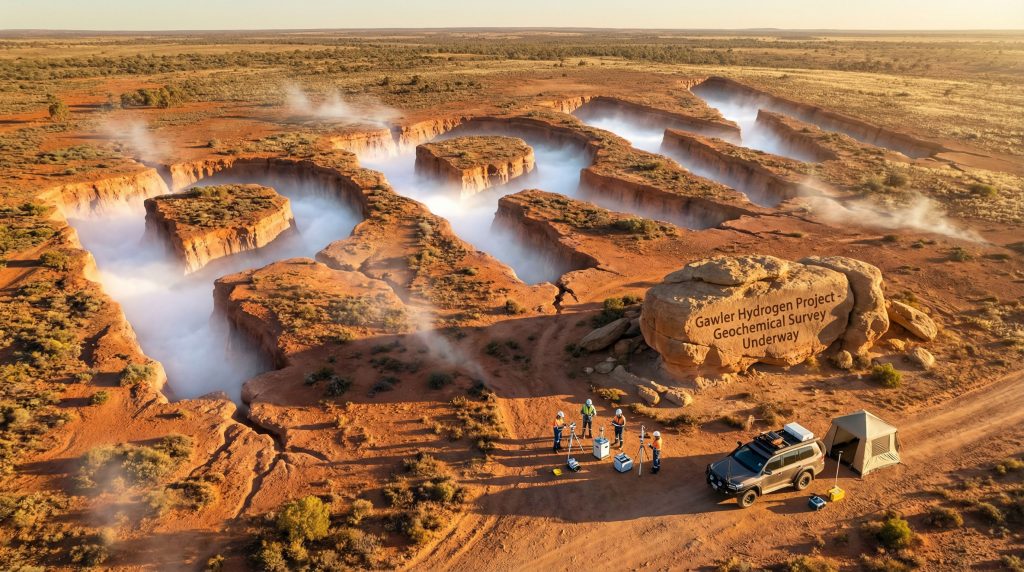
The upcoming geochemical survey represents a cost-effective and environmentally conscious approach to natural hydrogen exploration, combining two proven methodologies that are designed to rapidly screen the licence area.
Soil Gas Sampling provides rapid, low-impact screening capabilities that enable direct detection of near-surface hydrogen (H₂) and helium (He) migration. The technique allows efficient regional coverage across the licence area while identifying structural pathways and active gas seepage zones that could indicate deeper hydrocarbon systems.
Water Bore Sampling complements the soil gas survey by delivering formation-scale geochemical analysis. The company can test subsurface formations using existing bore infrastructure, providing detailed hydrogeochemical data for modelling whilst identifying zones of increased water-rock interaction that may indicate active geological processes.
The survey is scheduled to commence in April 2026 and is expected to take approximately two weeks to complete, subject to final planning and regulatory approvals. This timeline positions Prominence to rapidly advance its understanding of the hydrogen potential across PEL 803 during the optimal field season.
When big ASX news breaks, our subscribers know first
Program Objectives: Building the Foundation for Future Development
The geochemical survey has been designed with four key objectives that management states will directly inform Prominence's future exploration strategy:
| Objective | Purpose | Expected Impact |
|---|---|---|
| Detect and map natural hydrogen and helium anomalies | Identify areas of highest gas concentration | Priority zone identification for follow-up work |
| Identify structural controls on gas migration | Understand geological pathways and controls | Optimise future drilling and seismic programs |
| Prioritise zones for follow-up activities | Guide seismic and drilling programs based on results | Maximise exploration efficiency and cost management |
| Build regional geochemical dataset | Create comprehensive baseline data across PEL 803 | Support long-term development planning and modelling |
Management Commentary
Dr Krista Davies, Chief Operating Officer, emphasised the strategic importance of this program: "This initial geochemical program is an important step in systematically screening PEL 803 for natural hydrogen and helium. Soil gas and water bore sampling are cost-effective, low-impact techniques that can provide direct evidence of active gas migration. The results will help refine and prioritise our future seismic activities, which we anticipate to commence in the second half of 2026."
Understanding Natural Hydrogen: The Next Frontier in Clean Energy
What is Natural Hydrogen?
Natural hydrogen, also known as white or gold hydrogen, refers to hydrogen gas that occurs naturally in geological formations through various processes including water-rock interactions, organic matter decomposition, and radiolysis of water by natural radioactivity. Unlike manufactured hydrogen produced through electrolysis or steam methane reforming, natural hydrogen can potentially be extracted directly from subsurface formations.
The geological processes that generate natural hydrogen include serpentinisation reactions between water and iron-rich rocks, radiolysis of groundwater by naturally occurring radioactive elements, and decomposition of organic matter in sedimentary rocks. Furthermore, these processes can occur at various depths and temperatures, creating potential for both shallow and deep hydrogen accumulations.
Why Natural Hydrogen Matters for Energy Investors
Natural hydrogen represents a potentially transformative energy resource that could significantly alter the economics of hydrogen production. Current hydrogen production methods are energy-intensive and often carbon-intensive, with costs ranging from $3-8 per kilogram depending on the production method and energy source.
Early-stage natural hydrogen discoveries globally have suggested production costs could be substantially lower than conventional methods, though commercial viability remains to be proven. Mali's Bourakebougou field, one of the few operating natural hydrogen projects worldwide, reportedly produces hydrogen at costs well below conventional methods, though detailed economic data remains limited.
The global hydrogen market is projected to reach $201 billion by 2025, driven by decarbonisation policies and industrial demand. Countries including Australia have established hydrogen strategies targeting significant production capacity, creating potential market opportunities for cost-competitive natural hydrogen sources.
Strategic Timeline: From Geochemical Survey to Seismic Operations
Prominence has outlined a systematic progression pathway following the completion of the geochemical survey, with clear milestones designed to advance project understanding whilst managing exploration costs.
Q2 2026 Activities:
- Complete geochemical survey in April 2026
- Analyse results and identify priority zones through Q2
- Plan follow-up seismic activities based on geochemical findings
- Engage with seismic contractors and regulatory authorities
H2 2026 Planned Activities:
- Commence seismic operations targeting priority zones
- Refine geological understanding and structural controls
- Prepare potential drilling programs based on integrated dataset
This systematic approach demonstrates the company's commitment to methodical, science-based exploration while maintaining cost discipline through the use of established exploration techniques adapted for hydrogen exploration.
Investment Thesis: Positioning for the Hydrogen Economy
Prominence Energy natural hydrogen exploration presents several investment considerations for resource sector investors:
Early-Mover Positioning: The company is pursuing natural hydrogen exploration whilst the sector remains in early stages globally, potentially positioning it ahead of larger competitors who have yet to establish significant hydrogen exploration programs.
Strategic Location Benefits: The Gawler region in South Australia offers established infrastructure including road networks, power supply, and proximity to industrial centres. The state government has expressed support for hydrogen projects through its Hydrogen Action Plan, providing a supportive regulatory environment.
Systematic Exploration Approach: The progression from technical de-risking through geochemical surveys to seismic operations demonstrates disciplined exploration methodology designed to maximise success probability whilst managing exploration costs through staged programs.
Dual-Resource Potential: The program targets both natural hydrogen and helium, providing multiple potential revenue streams and risk diversification. However, helium markets have shown supply constraints in recent years, creating potential value in helium discoveries independent of hydrogen commercialisation.
Low-Impact Operations: The use of existing infrastructure and low-impact survey techniques may align with environmental and social governance requirements that increasingly influence resource project development and financing.
Market Context and Sector Development
The natural hydrogen exploration sector has gained increased attention following high-profile discoveries and government policy support for hydrogen development. Australia's National Hydrogen Strategy targets the country becoming a major hydrogen exporter by 2030, though this strategy has primarily focused on manufactured hydrogen rather than natural sources.
Recent policy developments including the Australian Government's Hydrogen Headstart program, which provides up to $2 billion in funding support, demonstrate government commitment to hydrogen sector development. Whilst this program currently targets manufactured hydrogen, successful natural hydrogen discoveries could potentially access similar support mechanisms.
The South Australian government has established specific hydrogen project support through its Hydrogen Action Plan and related initiatives, creating a supportive environment for hydrogen exploration and development activities.
The next major ASX story will hit our subscribers first
Near-Term Catalysts and Exploration Timeline
Investors can expect regular updates on survey progress and results through Q2 2026 as Prominence advances its inaugural field program. The systematic approach provides clear newsflow catalysts:
April 2026: Commencement of field operations and initial survey results
Q2 2026: Survey completion and preliminary data analysis
H2 2026: Seismic program planning and potential commencement
The anticipated progression to seismic operations in the second half of 2026 provides a defined timeline for continued exploration activity and potential value catalysts, subject to geochemical survey results and ongoing evaluation.
This structured approach allows investors to track progress against defined milestones whilst the company advances its understanding of the natural hydrogen potential across its strategic land position in South Australia's emerging hydrogen exploration province.
Consequently, the convergence of global hydrogen demand growth, supportive government policy, and Prominence Energy natural hydrogen exploration creates multiple pathways for potential value creation as the company advances through its planned exploration sequence.
Ready to Explore Natural Hydrogen Investment Opportunities?
With Prominence Energy's systematic approach to natural hydrogen exploration commencing in April 2026, the company is positioning itself at the forefront of this emerging sector. The planned geochemical survey represents the first step in what could be a transformative journey towards unlocking South Australia's natural hydrogen potential. To discover more about Prominence Energy's strategic exploration programme, their PEL 803 licence position, and how you can participate in the natural hydrogen opportunity, visit www.prominenceenergy.com.au for comprehensive company information and the latest project updates.