Fortescue's exceptional performance during November 2025 highlighted the importance of defensive characteristics within Australia's mining sector, as Fortescue shares performance in November demonstrated remarkable resilience amid broader market weakness. The global mining landscape has entered a period of heightened volatility, driven by shifting geopolitical tensions, evolving commodity demand cycles, and unprecedented monetary policy divergences across major economies.
These macro forces are reshaping how investors evaluate mining equities, particularly those exposed to iron ore and copper markets where supply-demand fundamentals continue evolving rapidly. Within this complex environment, Australia's major mining corporations have demonstrated varying degrees of resilience, with their November 2025 performance patterns revealing important insights about operational flexibility, market positioning, and investor sentiment dynamics.
Market Context Reveals Underlying Mining Sector Strength
ASX 200 Weakness Creates Relative Performance Opportunities
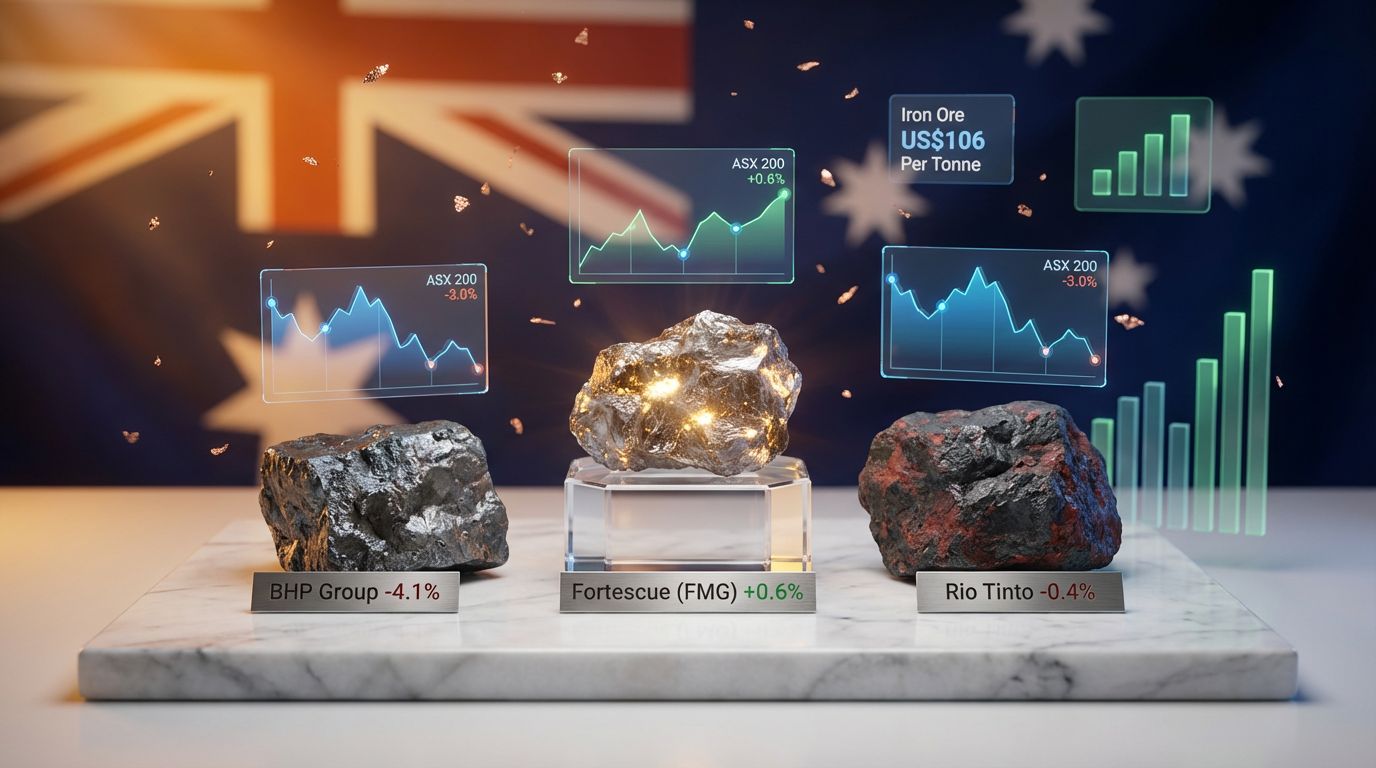
November 2025 witnessed significant headwinds across Australian equity markets, with the ASX 200 declining approximately 3.0% during the month. This broader market weakness created a challenging backdrop for all sectors, including resources, yet mining companies displayed notably different responses to these conditions.
The benchmark's decline reflected various concerns including interest rate uncertainty, global growth concerns, and sector rotation dynamics. However, commodity price stability provided a supportive foundation for resource companies, allowing some to demonstrate relative strength even amid broader market weakness.
Commodity Price Resilience Supports Sector Fundamentals
Iron ore prices maintained stability around US$106 per tonne throughout November, providing crucial support for Australia's major iron ore producers. This price level represents a significant achievement given ongoing concerns about Chinese steel demand and global economic growth uncertainties.
Furthermore, copper markets delivered even stronger performance, with prices reaching US$11,189 per tonne and achieving remarkable 28% year-to-date gains. This copper rally reflects growing industrial demand, particularly from renewable energy infrastructure development and electric vehicle manufacturing expansion.
Consequently, these copper investment insights suggest that diversified mining companies with copper exposure benefited significantly from this price appreciation. In addition, the broader mining industry evolution continues to favour companies adapting to technological advances and sustainability requirements.
The copper market's exceptional 28% annual gain demonstrates the metal's critical role in global electrification trends, supporting mining companies with diversified commodity exposure and strong copper production profiles.
Fortescue's Silent Strength Drives November Outperformance
Performance Metrics Highlight Market Leadership
Table: November 2025 Mining Sector Performance Comparison
| Company | Opening Price (Oct 31) | Closing Price (Nov 30) | Monthly Change | vs ASX 200 Outperformance |
|---|---|---|---|---|
| Fortescue (FMG) | $21.29 | $21.41 | +0.6% | +3.6% |
| BHP Group | $43.45 | $41.67 | -4.1% | -1.1% |
| Rio Tinto | $132.87 | $132.28 | -0.4% | +2.6% |
| ASX 200 Index | – | – | -3.0% | Benchmark |
Fortescue shares performance in November represented exceptional relative performance, delivering 3.6 percentage points of outperformance versus the ASX 200. This achievement becomes even more significant considering the challenging market environment and absence of major company-specific catalysts.
Market Positioning Without Major Catalysts
Fortescue shares performance in November proved particularly noteworthy given the company released no price-sensitive announcements during the month. This suggests the stock's resilience reflected underlying investor confidence in the company's operational efficiency, cost management capabilities, and strategic positioning within iron ore markets.
Several factors likely contributed to Fortescue shares' defensive characteristics:
- Low-cost production profile providing margin protection during commodity price volatility
- Strong operational efficiency metrics supporting consistent cash flow generation
- Strategic focus on iron ore avoiding complexity from diversified commodity exposure
- Attractive dividend yield appealing to income-focused investors during uncertain times
Furthermore, Fortescue's investor relations platform provides comprehensive insights into the company's strategic direction and operational updates for interested stakeholders.
Technical and Sentiment Analysis
The stock's ability to generate positive returns without specific catalysts indicates strong underlying demand from institutional investors. This pattern often reflects portfolio rebalancing toward defensive mining positions and recognition of Fortescue's operational improvements.
However, global trade tensions continue to influence investor sentiment across the resources sector, making defensive positioning increasingly attractive.
BHP's Challenging November Reflects Multiple Headwinds
China's Strategic Pricing Initiatives Create Pressure
BHP faced the most significant decline among Australia's major iron ore producers, with shares falling 4.1% during November. This underperformance reflected specific challenges beyond broader market weakness, particularly concerning China's evolving approach to iron ore procurement and pricing.
Chinese government directives to domestic steel mills regarding iron ore purchasing practices created uncertainty for major suppliers. While the immediate impact on BHP's exports remained limited, these policy shifts signal potential longer-term challenges for iron ore pricing mechanisms and supplier relationships.
Key aspects of China's pricing strategy include:
- Reduced purchases of certain iron ore grades to increase pricing leverage
- Domestic steel mill coordination to create unified bargaining positions
- Alternative supplier cultivation to reduce dependence on traditional sources
- Strategic reserve building during favourable pricing periods
Anglo American Acquisition Abandonment Impact
BHP's November announcement regarding the cessation of acquisition discussions with Anglo American also influenced investor sentiment. While the company emphasised confidence in its organic growth strategy, the abandoned transaction highlighted several important considerations.
The decision reflected BHP's disciplined approach to capital allocation, prioritising shareholder returns over potentially dilutive acquisitions. However, it also raised questions about the company's growth prospects and ability to expand production capacity through external opportunities.
Market reaction suggested investors viewed the abandoned acquisition as both positive and negative:
Positive factors:
- Capital discipline preservation
- Focus on core operations rather than complex integrations
- Reduced execution risk from large-scale acquisitions
Negative considerations:
- Limited growth options through organic expansion
- Competitive disadvantage versus companies successfully executing acquisitions
- Reduced diversification opportunities across commodities and geographies
Operational Excellence Amid Strategic Challenges
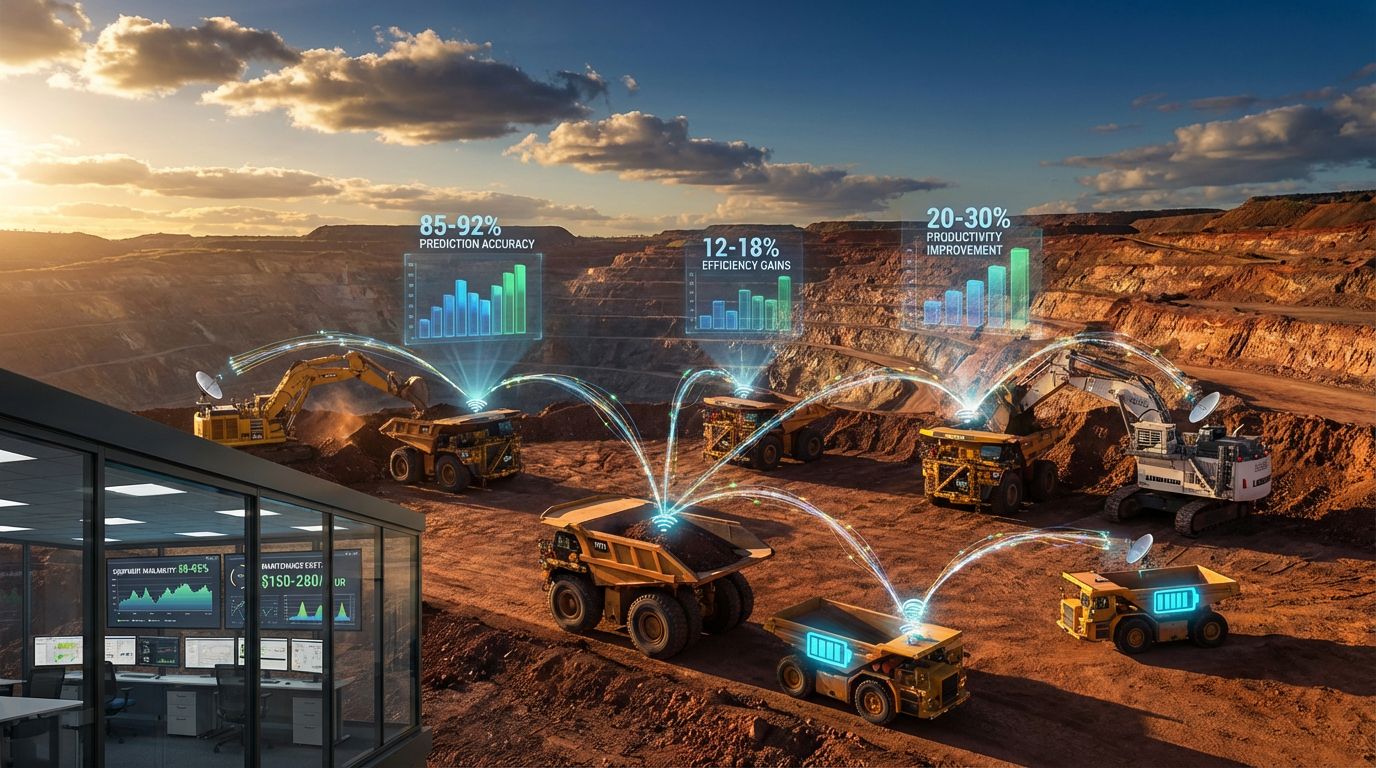
Despite November's share price weakness, BHP's underlying operational performance remained robust. The company continues benefiting from world-class asset portfolio across multiple commodities and technological advancement improving productivity and cost efficiency.
For instance, detailed historical performance data demonstrates how mining companies navigate various market cycles and maintain operational excellence during challenging periods.
Commodity Market Dynamics Support Long-term Sector Outlook
Iron Ore Market Stability Analysis
The US$106 per tonne iron ore price level achieved during November represents a crucial equilibrium point balancing supply and demand fundamentals. This pricing provides sufficient margins for efficient producers while reflecting realistic demand expectations from Chinese steel markets.
Several factors support iron ore price stability, including Chinese infrastructure spending maintaining steady steel demand and supply discipline from major producers managing production levels. Quality premiums favouring high-grade iron ore producers and transportation cost dynamics affecting regional pricing differentials further contribute to market stability.
Copper's Strategic Importance Grows
Copper's 28% year-to-date surge reflects fundamental shifts in global industrial demand patterns. The metal's exceptional performance demonstrates its critical role in renewable energy infrastructure requiring substantial copper content and electric vehicle manufacturing driving unprecedented demand growth.
This copper rally particularly benefits mining companies with diversified operations, providing natural hedging against iron ore price volatility while capturing growth in electrification trends. Moreover, understanding iron ore price trends helps investors anticipate how commodity cycles might evolve throughout 2026.
Investment Strategy Implications for Mining Sector
Defensive Mining Positions Gain Prominence
November's performance patterns highlight the value of defensive characteristics within mining portfolios. Fortescue shares performance in November demonstrates how operational efficiency and financial strength can provide downside protection during volatile periods.
Key defensive mining characteristics include low-cost production providing margin resilience, strong balance sheets enabling consistent dividend payments, and operational flexibility allowing rapid response to market changes. Geographic diversification reducing country-specific risks also contributes significantly to defensive positioning.
Sector Rotation Patterns Create Opportunities
The divergent performance among major miners suggests active sector rotation based on company-specific fundamentals rather than broad-based commodity exposure. This creates opportunities for selective investors focusing on quality metrics including production costs and reserve grades.
Management execution demonstrated through operational improvements, strategic positioning within evolving commodity demand cycles, and financial strength enabling growth investments and shareholder returns all contribute to investment decision-making frameworks.
Risk-Adjusted Returns Framework
Evaluating mining investments requires sophisticated risk-adjusted return analysis considering operational risks, market risks, and regulatory risks. Operational risks include production disruptions from technical or weather-related factors and cost inflation affecting profit margins.
Market risks encompass commodity price volatility impacting revenue streams and currency fluctuations affecting international operations. Regulatory risks involve environmental compliance costs and restrictions alongside taxation changes affecting profitability.
Macroeconomic Factors Shaping Future Performance
China's Industrial Policy Evolution
Chinese government policies continue exerting substantial influence over Australian mining companies through various mechanisms. Steel production targets directly affect iron ore demand, while environmental regulations influence domestic mining and processing.
Trade policy shifts impact bilateral commodity flows, and infrastructure investment drives underlying commodity consumption. Understanding these policy dynamics requires monitoring multiple indicators including steel production data and environmental compliance costs.
Global Supply Chain Restructuring
International supply chain evolution affects mining companies through changing demand patterns and logistical requirements. Regionalisation trends potentially reduce long-distance commodity shipping, while strategic stockpiling creates periodic demand surges for critical materials.
Alternative supplier development increases competition for traditional exporters, and transportation infrastructure investments affect delivery cost structures. These factors combine to create complex operational environments requiring adaptive strategies.
Currency and Monetary Policy Impacts
Exchange rate fluctuations significantly influence mining company profitability through multiple channels. Revenue translation from USD-denominated commodity sales and cost base exposure to local currency inflation affect bottom-line performance.
Capital investment requirements for expansion and maintenance, alongside debt servicing costs for companies with international borrowings, create additional complexity in financial management across volatile market conditions.
Strategic Positioning for Future Market Conditions
Performance Ranking Analysis
November's results provide clear ranking among Australia's major iron ore producers. Fortescue demonstrated exceptional defensive characteristics, Rio Tinto showed modest resilience relative to market conditions, and BHP faced multiple headwinds requiring strategic adaptation.
These rankings reflect both short-term factors and underlying operational strengths that may persist across different market conditions. Consequently, implementing key investment strategies becomes crucial for navigating these performance differentials effectively.
Long-term Investment Considerations
Successful mining sector investment requires balancing multiple time horizons. Short-term factors include commodity price trends and volatility patterns, quarterly production and cost performance, and management guidance alongside market sentiment shifts.
Medium-term considerations encompass reserve replacement and expansion investments, technological advancement adoption and productivity gains, plus regulatory environment evolution and compliance costs.
Long-term drivers involve global electrification trends affecting commodity demand, climate policy impacts on mining operations and markets, and geopolitical shifts influencing trade patterns and supply chains.
Key Investment Takeaways
Performance Leadership Insights
Fortescue emerged as November's standout performer among Australia's major iron ore producers, gaining 0.6% while BHP declined 4.1% and Rio Tinto fell 0.4%, against an ASX 200 backdrop of -3.0%. This performance differential reflects both company-specific strengths and broader market dynamics favouring defensive mining positions.
Strategic Portfolio Implications
November's results demonstrate the importance of quality-focused mining investment approaches, emphasising operational efficiency, financial strength, and strategic positioning over pure commodity exposure. Investors benefit from understanding these performance drivers when constructing mining sector allocations for 2026 market conditions.
Disclaimer: This analysis contains forward-looking statements and market forecasts that involve inherent uncertainties and risks. Mining sector investments are subject to commodity price volatility, operational risks, and regulatory changes that may significantly affect future performance. Past performance does not guarantee future results, and investors should conduct thorough due diligence before making investment decisions.
Looking to Capitalise on ASX Mining Opportunities?
Discovery Alert's proprietary Discovery IQ model instantly identifies significant mineral discoveries across the ASX, helping investors spot actionable opportunities like the defensive mining positions that outperformed during November's market volatility. Begin your 30-day free trial today and position yourself ahead of major discoveries that could transform your mining portfolio.