Fortuna Metals Ltd
- ASX Code: FUN
- Market Cap: $34,475,350
Fortuna Metals Drills Deeper into Mkanda as Maiden Resource Estimate Approaches
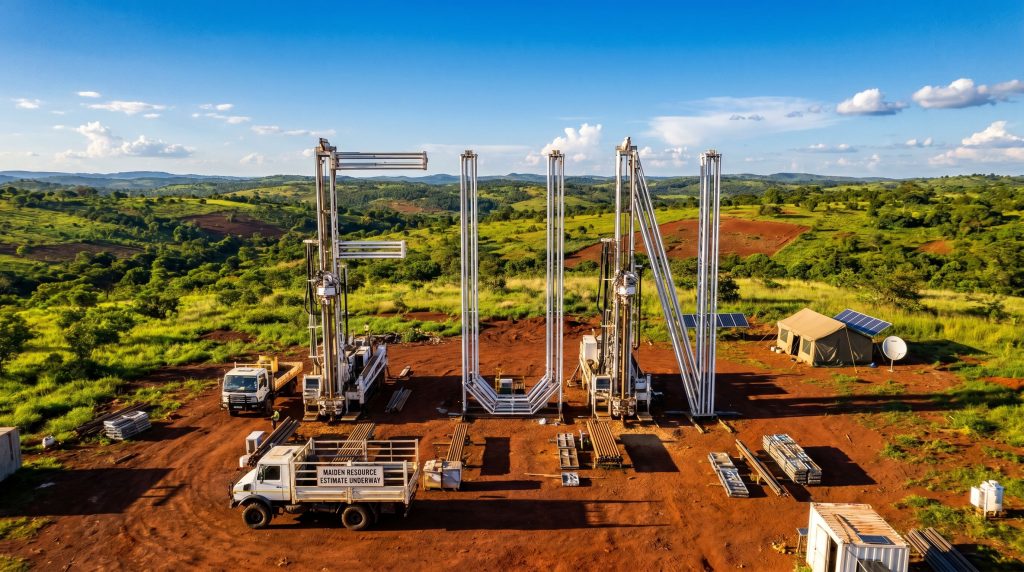
Fortuna Metals Ltd (ASX: FUN) has commenced a 5,000 metre aircore drilling program at its Mkanda Project in Malawi, targeting deeper mineralised zones in high grade areas. The Fortuna Metals Mkanda Project aircore drilling and maiden resource estimate programme represents a major catalyst, testing the resource potential at depth and complementing 10,713 metres of hand auger drilling already completed. This work supports a maiden Inferred Mineral Resource Estimate (MRE) anticipated for release in July 2026.
The update marks a shift in focus for Fortuna Metals Ltd from early-stage discovery towards resource definition and potential project advancement across rutile, graphite and possible rare earth mineralisation.
"The progress at Mkanda is truly exciting as we look to release our maiden inferred resource estimate very soon. This is a great achievement given we acquired the project in September of last year, to now be in this position in under 12 months is a great achievement. The pace that we continue to operate is a testament to the team in Malawi and the confidence we have in the project to deliver a world class rutile and graphite resource.
The team and I are pleased to have commenced aircore drilling at Mkanda which allows us to drill the high grade areas to the limit of the free dig saprolite. This has the potential to materially uplift overall resources as seen at Kasiya, when it went from ~644Mt to ~1,800Mt resource by drilling deeper to ~20m depth with the aircore rig," said Tom Langley, CEO of Fortuna Metals Ltd.
When big ASX news breaks, our subscribers know first
A Project Advancing at Speed
Fortuna Metals Ltd acquired the Mkanda and Kampini Projects in September 2025. In less than 12 months, the company reports a substantial amount of field work at Mkanda, including both reconnaissance and infill drilling programs.
Hand auger drilling completed to date:
| Drilling activity | Holes completed | Total metres | Average depth |
|---|---|---|---|
| 2025 first‑pass reconnaissance (400 m x 400 m spacing) | 675 | ~5,400 m | ~8 m |
| 2026 infill program (200 m x 200 m spacing) | 648 | 5,313 m | 8.2 m |
| Total hand auger drilling | 1,323 | 10,713 m | ~8 m |
Key points from the program described in the announcement include:
- 2025 drilling focused on first‑pass reconnaissance over large areas on a 400 m x 400 m grid.
- 2026 hand auger work shifted to infill drilling on a 200 m x 200 m grid, aimed at both:
- building resource potential, and
- supporting a move to higher confidence resource categories in future updates.
- The hand auger dataset is expected to form the basis of the maiden Inferred MRE targeted for July 2026.
The newly commenced 5,000 metre aircore program is planned to run through July, August and September 2026, and is reported to be focused on high grade areas where deeper weathered material is interpreted.
What Is Aircore Drilling and Why Does It Matter at Mkanda?
Understanding Aircore Drilling
Aircore drilling is a mechanised drilling technique that uses a rotating drill bit and compressed air to lift broken rock and soil to the surface through an inner tube.
Key characteristics include:
- It is usually conducted with a truck‑ or trailer‑mounted rig.
- It produces relatively clean, continuous samples.
- It is suited to soft to moderately hard, weathered rocks.
In contrast, hand auger drilling uses a manually turned auger pushed into soft ground. It is low cost and flexible but typically limited to shallow depths of around 8–10 metres in soft material.
The Fortuna Metals Mkanda Project aircore drilling and maiden resource estimate programme is now using aircore technology to test deeper within the saprolite — the weathered rock horizon where rutile and graphite are concentrated.
Saprolite, Free‑Dig Conditions and Why Depth Matters
Several geological terms are central to the Mkanda story:
Key geological terms – quick reference
- Saprolite: Deeply weathered rock that retains the original rock structure but has had some minerals removed by chemical weathering. Heavy minerals like rutile can become concentrated here.
- Free‑dig saprolite: Saprolite soft enough to excavate without blasting, potentially reducing mining costs if a project proceeds to development.
- Hand auger drilling: Manual drilling in soft near‑surface material, usually to about 8–10 m depth.
- Aircore drilling: Mechanised drilling with compressed air, typically reaching 15–25 m in weathered profiles.
- Inferred Mineral Resource Estimate (MRE): An early‑stage resource category under the JORC Code based on limited data where geological continuity is assumed but not fully confirmed.
According to the ASX announcement, the high grade rutile deposit at nearby Kasiya (Sovereign Metals Ltd, ASX: SVM) is interpreted as a residual placer or eluvial heavy mineral deposit. The enrichment process occurred when tropical weathering during the Tertiary removed lighter, more mobile minerals from the upper ~5–10 metres, leaving a higher proportion of heavy minerals such as rutile in place.
At Mkanda, hand auger drilling has already shown high grade core zones extending to end of hole (up to 10 m), flanked by 2–4 metre thick surface zones of mineralisation. However, hand auger drilling does not routinely test below about 8–10 m.
Furthermore, the aircore program is designed to drill to the limit of the free‑dig saprolite, which at Kasiya extended to around 20 metres depth. From an investor perspective, the key technical question is: how far down does the enriched, free‑dig mineralised layer continue at Mkanda?
Kasiya Comparison and Potential Scale Implications
The CEO of Fortuna Metals Ltd highlighted the Kasiya experience as an analogue. According to Sovereign Metals Ltd, Kasiya's resource reportedly increased from approximately 644 million tonnes to approximately 1,800 million tonnes when aircore drilling extended depth to around 20 metres.
Fortuna Metals Ltd is drawing on this regional example to guide strategy; however, the company has not reported any resource figures for Mkanda yet. Any potential scale will only be quantifiable once the maiden Inferred MRE is released and further aircore results are incorporated.
Mkanda's Location Next to a World‑Class Deposit
Proximity and Geological Setting
The Mkanda and Kampini Projects cover 658 km² in Malawi, around 20 km south of the Kasiya rutile project operated by Sovereign Metals Ltd.
Key characteristics from the announcement include:
- Kasiya is described by Sovereign Metals Ltd as:
- the largest rutile deposit in the world, and
- the second largest flake graphite deposit.
- Kasiya has also reported monazite mineralisation hosting heavy rare earths, which has prompted Fortuna Metals Ltd to consider rare earth elements as part of its assessment at Mkanda.
Fortuna's projects are stated to cover the majority of the 70 km strike extent of the Lilongwe Plain weathered gneiss — the same geological formation that hosts mineralisation at Kasiya.
Comparable Mineralisation Style
According to the ASX release, Mkanda hand auger results show high grade core zones of rutile and graphite mineralisation to end of hole (up to 10 m), flanked by surface‑only zones generally 2–4 m thick.
This geometry is reported to be similar to Kasiya, where enrichment is linked to in‑situ weathering rather than high‑energy river transport that forms traditional beach or river sand placer deposits. The company states that this repeated similarity across broader areas of Mkanda provides confidence in the geological model, although Mkanda remains at an earlier exploration stage.
Infrastructure and In‑Country Capability
The announcement highlights a series of infrastructure and logistical factors relevant to any potential future development:
- The central part of the projects is approximately:
- 20 km from Lilongwe, Malawi's capital city
- 25 km from rail access, with rail located 11 km from the northern project boundary, connecting to the Nacala rail corridor
- linked to the Nacala deep water port in Mozambique
- The projects are stated to be about 15 km from high‑capacity power lines.
- There is reported to be plentiful fresh water for potential processing options.
These attributes suggest that, if economic mineralisation is confirmed and the project advances, Mkanda could have access to key infrastructure components early in its lifecycle.
In‑Country Laboratory Investment
Fortuna Metals Ltd has also commissioned its own in‑country laboratory for the initial steps of preparing samples for heavy mineral separation (HMS). The company expects this to reduce overall assay costs and speed up assay turnaround times, allowing faster decision‑making and improved drilling guidance in 2026 and beyond.
For investors, quicker feedback loops between drilling and results can support more responsive exploration, consequently improving the quality of resource models over time.
Multi‑Commodity Exposure: Rutile, Graphite and Rare Earths
Rutile and Titanium Market Context
The ASX announcement emphasises rutile as a central commodity for Fortuna Metals Ltd at Mkanda. Natural rutile is a high‑grade titanium feedstock used in titanium pigment production, titanium metal, welding electrodes and advanced manufacturing applications.
The company cites current rutile prices of approximately US$1,100–1,300 per tonne. In addition, titanium is described as having an increasing role in next‑generation robotics and humanoid systems due to its high strength, low weight and durability in demanding applications.
The announcement also references research suggesting that traditional rutile deposits are being depleted, with legacy producers in decline and a potentially tighter supply outlook. For investors in Fortuna Metals Ltd, this provides commodity context rather than project‑specific economics.
Graphite Credits and Potential Value Impact
Graphite is another focus commodity for Fortuna Metals Ltd. The company notes that coarse flake graphite is known in the broader region. At Kasiya, graphite credits reportedly lift the ore reserve grade from 0.96% rutile to 1.51% rutile equivalent (RutEq) when included, according to Sovereign Metals Ltd.
Technical note – rutile equivalent (RutEq)
Rutile equivalent (RutEq) is a way of combining multiple products (for example rutile and graphite) into one comparable number. It converts the value of each product into an equivalent rutile grade, helping analysts compare deposits and understand the combined economic effect of several minerals in one ore body.
Fortuna Metals Ltd is assessing graphite in parallel with rutile at Mkanda. While no resource figures or economic contribution from graphite have yet been reported, the Kasiya example illustrates how graphite can potentially improve overall project economics when present in meaningful quantities.
Rare Earth Elements and Monazite
The announcement states that rare earths and graphite analysis is being undertaken in parallel, following Sovereign Metals Ltd's reporting of heavy rare earths hosted in monazite at Kasiya. At Mkanda, potential rare earth mineralisation is described as a priority for further analysis, progressing alongside rutile and graphite assessment.
No rare earth grades or resource numbers are reported for Fortuna Metals Ltd at this stage; consequently, rare earths should currently be viewed as an upside target rather than a defined resource.
Upcoming Catalysts and Project Timeline
Fortuna Metals Ltd has outlined a sequence of planned activities and anticipated news flow for Mkanda and Kampini.
Key upcoming milestones:
| Catalyst | Timing (as stated) |
|---|---|
| Maiden Inferred Mineral Resource Estimate (MRE) for Mkanda | July 2026 |
| Ongoing aircore drilling results from high grade areas | July – September 2026 |
| Further assay results from 2026 infill drilling | Throughout 2026 |
| Reconnaissance first‑pass drilling at Kampini | H2 2026 |
| Expanded, higher‑confidence resource estimates (post aircore) | H2 2026 / H1 2027 |
| Continued rare earth and graphite analysis | Throughout 2026 and H1 2027 |
The company indicates that results from Mkanda will be reported on a regular basis through 2026 and the first half of 2027. Kampini, which forms part of the same 658 km² tenement package, is scheduled for its first drilling in the second half of 2026, representing an additional exploration opportunity beyond Mkanda.
The next major ASX story will hit our subscribers first
Why Mkanda and Fortuna Metals Ltd May Interest Investors
From an investment perspective, several themes emerge from the ASX announcement regarding the Fortuna Metals Mkanda Project aircore drilling and maiden resource estimate programme:
-
Rapid operational progress:
- More than 10,700 metres of hand auger drilling in under a year.
- Transition to aircore drilling to test deeper mineralisation.
- Targeting a maiden Inferred MRE within 12 months of project acquisition.
-
Geological context:
- Projects located in the same Lilongwe Plain weathered gneiss unit as Kasiya.
- Reported similarities in mineralisation style and geometry to a world‑class deposit situated about 20 km to the north.
-
Multi‑commodity exposure:
- Primary focus on rutile (titanium) and graphite, with potential rare earths.
- Commodity settings informed by reported tight supply in rutile and ongoing interest in titanium and graphite across industrial and advanced technology sectors.
-
Infrastructure and logistics:
- Proximity to Lilongwe, rail, deep water port access via Nacala, power lines and water.
- Establishment of an in‑country sample preparation laboratory to improve the pace and cost of analytical work.
The next phase of aircore results and the maiden Inferred MRE will be key reference points for assessing the scale and quality of mineralisation at Mkanda and for understanding how Fortuna Metals Ltd may position the project along the development pathway.
Ready to Dig Deeper Into Fortuna Metals' Mkanda Opportunity?
With a maiden Inferred Mineral Resource Estimate targeting July 2026 and an aircore drilling programme now underway across high grade zones, Fortuna Metals Ltd (ASX: FUN) is rapidly advancing what could be a significant rutile, graphite and rare earth project in Malawi. Investors looking to understand the full scope of the Mkanda Project — its geological setting, multi-commodity potential, and the upcoming catalysts that could define its scale — can find out more by visiting fortunametals.limited.