Litchfield Minerals Ltd
- ASX Code: LMS
- Market Cap: $35,287,621
Geophysical Breakthrough Validates Mineral Systems Model
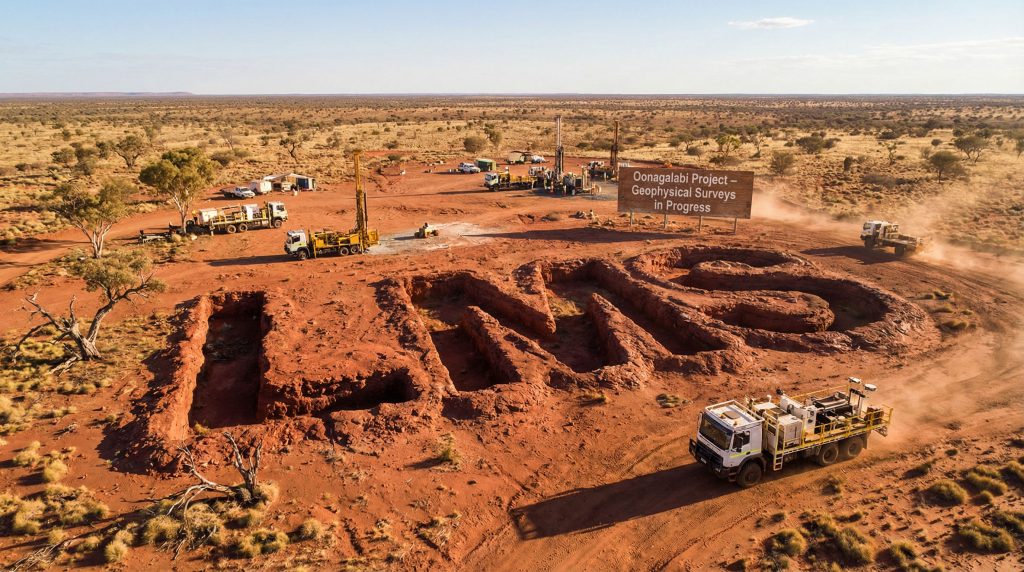
Litchfield Minerals (ASX: LMS) has delivered compelling new induced polarisation (IP) survey results from its Oonagalabi Project in the Northern Territory, significantly strengthening the company's mineral systems model and supporting expansion of the known mineralised system. The Litchfield Minerals geophysical survey results demonstrate a strong spatial correlation between magnetic structures and chargeability anomalies, providing crucial validation for the company's exploration approach as diamond drilling prepares to resume.
Key Highlights from the IP Survey Results:
- Four distinct chargeability trends identified, including a significant 5km interpreted prospective corridor between VT1 and VT2 targets
- Silverado Deeps anomaly defined at depth with chargeability commencing approximately 300m below surface
- Strong correlation between magnetic features and IP chargeability responses continues south of the known system
- VT1 IP lines intersect +12mV/V chargeability anomalies adjacent to magnetic features, reinforcing potential for both disseminated and massive sulphide mineralisation
- New geophysical data supports potential for deeper mineralisation along prospective horizons
When big ASX news breaks, our subscribers know first
Technical Breakdown: Understanding Induced Polarisation (IP) Surveying
What is IP Surveying?
Induced Polarisation (IP) is a geophysical exploration technique that measures the ability of subsurface materials to store electrical charge. When an electrical current is applied to the ground and then switched off, certain minerals—particularly sulphides—release the stored charge slowly, creating a measurable "chargeability" response.
The technique works by measuring how different rock types and minerals respond to electrical stimulation. Sulphide minerals, which often host valuable metals like gold, copper, and base metals, tend to hold electrical charge longer than other rock types, creating distinctive signatures that geophysicists can map and interpret.
Why It Matters to Investors
IP surveying is particularly effective at detecting sulphide minerals because of their electrical properties. High chargeability readings typically indicate areas where sulphide mineralisation may be present, making IP surveys a cost-effective tool for targeting drilling programmes and reducing exploration risk.
At Oonagalabi, the correlation between IP chargeability and known mineralisation provides confidence that similar geophysical signatures elsewhere in the system may indicate additional mineralised zones. Furthermore, this relationship allows explorers to systematically target drilling programmes, potentially reducing costs and improving discovery success rates.
Silverado Deeps: A New Deep Target Emerges
The most significant discovery from the recent IP survey is the Silverado Deeps anomaly, which shows chargeability responses beginning at approximately 300m below surface. This deep target spans multiple survey lines and suggests the mineralised system extends well beyond the depths tested by drilling to date.
| Silverado Deeps Key Metrics | Details |
|---|---|
| Depth to anomaly | ~300m below surface |
| Chargeability strength | +9mV/V |
| Line coverage | Lines 94700N and 93700N (1km apart) |
| Line lengths | 3.8km and 3km respectively |
| Significance | Suggests potential for deeper mineralisation |
The depth and continuity of the Silverado Deeps anomaly is described as encouraging by management, as it supports the company's interpretation that drilling to date may be testing the upper portions of the system. Consequently, there remains potential for mineralisation developing at depth along prospective horizons.
Two-dimensional inversion modelling reduces apparent chargeability with depth, resulting in deeper anomalies producing apparently lower amplitude chargeability than similar zones would near surface. However, the company considers these new anomalies significant despite showing approximately half the chargeability response of the Oonagalabi Main Zone.
"These magnetic corridors are emerging as high-priority growth vectors, and with the model still intact we see good potential to expand the mineralised footprint," said Matt Pustahya, Managing Director.
VT1 Target: 5km Prospective Corridor Takes Shape
The VT1 prospect continues to emerge as a high-priority target, with new IP data revealing +12mV/V chargeability anomalies adjacent to magnetic features. Two IP lines completed at VT1 (totalling 2.1 line-km) have identified chargeability responses that remain open to the east and west, suggesting the potential for a sizeable system.
VT1 IP Survey Results:
- Line spacing: 200m apart
- Line length: 1km each
- Chargeability: +12mV/V anomalies detected
- Interpretation: Disseminated sulphide mineralisation associated with subsurface Oonagalabi Formation
- Continuity: Anomalies remain open in both directions
The eastern line (20700E) straddles the modelled 3,000 and 1,500 Siemens ground electromagnetic conductors, whilst the western line (20500E) transects across mapped surface gossans. In addition, both lines have identified chargeability anomalies that are interpreted to represent disseminated sulphide mineralisation associated with subsurface Oonagalabi Formation.
The data suggests a 5km prospective trend between VT1 and the newly identified chargeability zones, potentially indicating a large, continuous mineralised corridor that warrants systematic testing. For instance, the IP lines at VT1 are approximately 2.5km southwest of chargeability anomalies on IP line 93700N, with management interpreting this as forming a 5km prospective trend between VT1 and VT2.
Geological Model Validation Strengthens Investment Case
The strong correlation between magnetic structures and chargeability responses provides technical validation for Litchfield's exploration model, which has proven effective at guiding targeting across the district. This relationship has been described as one of the most reliable vectors toward mineralisation at the existing Oonagalabi deposit.
Four Chargeability Trends Identified:
- Western Fold Zone Extension: Direct southwest extension from Oonagalabi
- Eastern Fold Zone Extension: Parallel trend extending from eastern fold zone
- VT1-VT2 Corridor: 5km interpreted prospective trend
- Silverado Deeps: New deep target with significant depth potential
The chargeability trends are interpreted to represent zones of potentially mineralised Oonagalabi Formation (marble, metamorphosed carbonate), consistent with known mineralisation controls at the Oonagalabi Main Zone. Six new lines of IP (13.5-line km) were extended southwest of Oonagalabi through the Silverado prospect and the Southwest Magnetic Structure.
Moreover, chargeability within the Oonagalabi Main Zone shows a strong spatial relationship with outcropping Oonagalabi Formation. Drilling has confirmed that the Eastern Fold Zone is also associated with Oonagalabi Formation that does not have any surface expression.
Diamond Drilling Program Resumes After Weather Delays
Diamond drilling operations, temporarily paused due to heavy rainfall across Central Australia, are reported to resume this week. The programme includes two additional planned holes following the completion of two diamond drill holes during the most recent campaign.
Completed Drilling Targets:
- OGRD001: Targeting the Bomb Diggity intrusion-related target
- OGDD002: Targeting the Central Main Zone for improved geological understanding
Upcoming Drilling Targets:
- Bomb Diggity follow-up hole: Testing intrusion-related target potential
- OGRC002 replication hole: Diamond drilling to obtain continuous core for detailed structural, lithological, and alteration analysis
The objective is described as gaining better visibility on the gold-bismuth-magnetite mineral assemblage, its textural relationships, and structural controls within the evolving mineral systems framework. Operations were temporarily paused for two weeks following sustained heavy rainfall, with no standby charges incurred from the drilling contractor during the period.
The OGRC002 replication target previously returned 15m @ 0.45 g/t Au, 0.17% Bi associated with strongly developed magnetite alteration.
Investment Thesis: Why This Data Matters
The latest IP results provide several compelling investment themes for Litchfield Minerals, particularly around systematic exploration and target generation capabilities.
Model Validation Reduces Risk
The strong correlation between magnetic features and chargeability responses validates the company's exploration model, providing confidence that the technical approach is sound and can be systematically applied across the broader project area. This validation reduces exploration risk by confirming the geological framework remains consistent across the district.
Scale Potential Emerges
The identification of a potential 5km prospective corridor and multiple chargeability trends suggests the Oonagalabi system may be significantly larger than currently defined. This scale potential offers substantial exploration upside, particularly given the cost-effective nature of IP surveying as a targeting tool.
Depth Extension Opportunity
The Silverado Deeps anomaly, with chargeability beginning at 300m below surface, suggests drilling to date may have only tested the upper portions of the system. Consequently, this depth extension opportunity provides additional vectors for resource expansion beyond the currently tested areas.
Multiple Target Generation
With four distinct chargeability trends identified, Litchfield has generated multiple high-quality targets for systematic testing. This approach reduces single-target risk and increases the probability of discovery success across the broader project area.
Next Steps and Catalysts
The company has outlined immediate and medium-term exploration plans following the IP survey results and drilling programme resumption.
Immediate Catalysts (Next 4-6 weeks):
- Resume diamond drilling operations this week
- Complete targeted RC drilling during current rig mobilisation
- Integrate new IP and magnetic data into ongoing modelling
Medium-term Catalysts (Next 6 months):
- Complete Phase 3 Pole-Dipole IP Survey at VT1
- Test additional targets along the identified chargeability trends
- Systematic drilling of the 5km VT1-VT2 corridor
Key Upcoming Results:
- Diamond core results from Bomb Diggity and Central Main Zone holes
- Assay results from OGRC002 replication hole
- Additional IP survey data to test corridor continuity
RC Drilling Constraints
RC rig availability remains constrained across the Northern Territory, with preferred suppliers currently busy. The larger multi-purpose diamond rig currently on site is suitable for testing only a limited number of specific targets due to terrain limitations. Several planned targets will be deferred until smaller, more mobile rigs become available.
The next major ASX story will hit our subscribers first
Why Investors Should Follow Litchfield Minerals
Litchfield Minerals has positioned itself as a systematic explorer with a validated technical approach in a prospective Northern Territory location. The company's ability to generate multiple high-quality targets through cost-effective geophysical surveys, combined with the potential for a large-scale mineralised system, creates a compelling exploration story.
Key Investment Differentiators:
- Proven exploration model with strong technical validation through magnetic-chargeability correlation
- Multiple target generation reducing single-target risk across four identified chargeability trends
- Potential for scale with 5km prospective corridor identified between VT1 and VT2
- Depth extension opportunity at Silverado Deeps with mineralisation potentially starting at 300m depth
- Experienced technical team with strong geological understanding and systematic approach
The combination of technical validation, target multiplication, and scale potential positions Litchfield as a systematic explorer operating within a proven geological framework. Furthermore, the resumption of diamond drilling provides near-term catalysts for value creation, whilst the multiple identified targets offer sustained exploration upside.
"Litchfield Minerals has demonstrated the ability to systematically generate high-quality exploration targets using validated geophysical techniques. With multiple chargeability trends identified and a potential 5km prospective corridor emerging, the company offers significant exploration upside in a proven mineralised district."
Ready to Explore Litchfield's Multi-Target Opportunity?
With four distinct chargeability trends identified, a potential 5km prospective corridor emerging, and the Silverado Deeps anomaly suggesting significant depth extension potential, Litchfield Minerals is systematically unlocking value across the Oonagalabi Project. The strong correlation between magnetic structures and chargeability responses validates the company's exploration model, whilst diamond drilling resumption provides immediate catalysts for discovery. To discover how Litchfield's validated technical approach and multiple high-quality targets could position the company for sustained exploration success, visit www.litchfieldminerals.com.au and explore their comprehensive project portfolio and strategic vision.