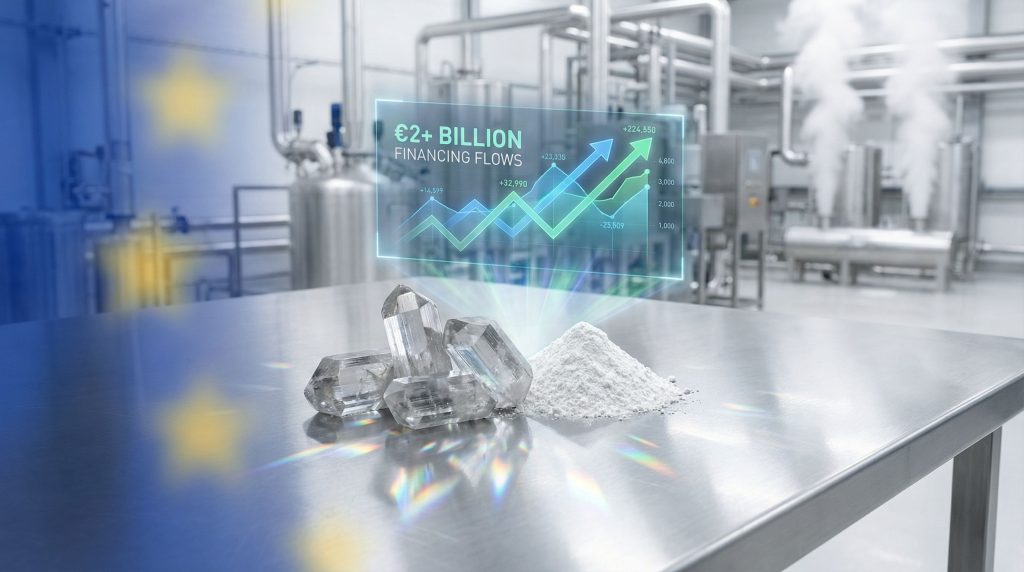
European financial institutions are revolutionising the mining sector through unprecedented financing package for German lithium project structures that prioritise supply chain security over traditional profit maximisation models. This paradigm shift represents more than mere portfolio diversification; it signals the emergence of strategic resource diplomacy where critical mineral projects receive funding structures previously reserved for essential infrastructure development.
Furthermore, these institutions are deploying multi-billion euro packages that fundamentally differ from conventional commodity investment approaches, creating new benchmarks for how strategic materials financing operates in an interconnected world economy.
Strategic Investment Architecture: Redefining Critical Minerals Financing
The financing landscape for European lithium projects has evolved beyond traditional mining investment models, incorporating unprecedented levels of institutional coordination and government backing. This transformation reflects growing recognition that battery material supply chains represent national security infrastructure rather than standard commodity assets.
Modern critical minerals financing employs a multi-layered approach where development banks, export credit agencies, and commercial lenders collaborate to distribute risk across sovereign and private entities. The European CRM Facility increasingly functions as an anchor institution, providing both capital and legitimacy that enables export credit agency participation from multiple jurisdictions.
This coordinated approach emerged from lessons learned during semiconductor and rare earth supply disruptions, where single-source dependencies created systemic vulnerabilities for entire industrial sectors. Consequently, financial institutions now structure deals that prioritise supply security alongside traditional risk-return calculations.
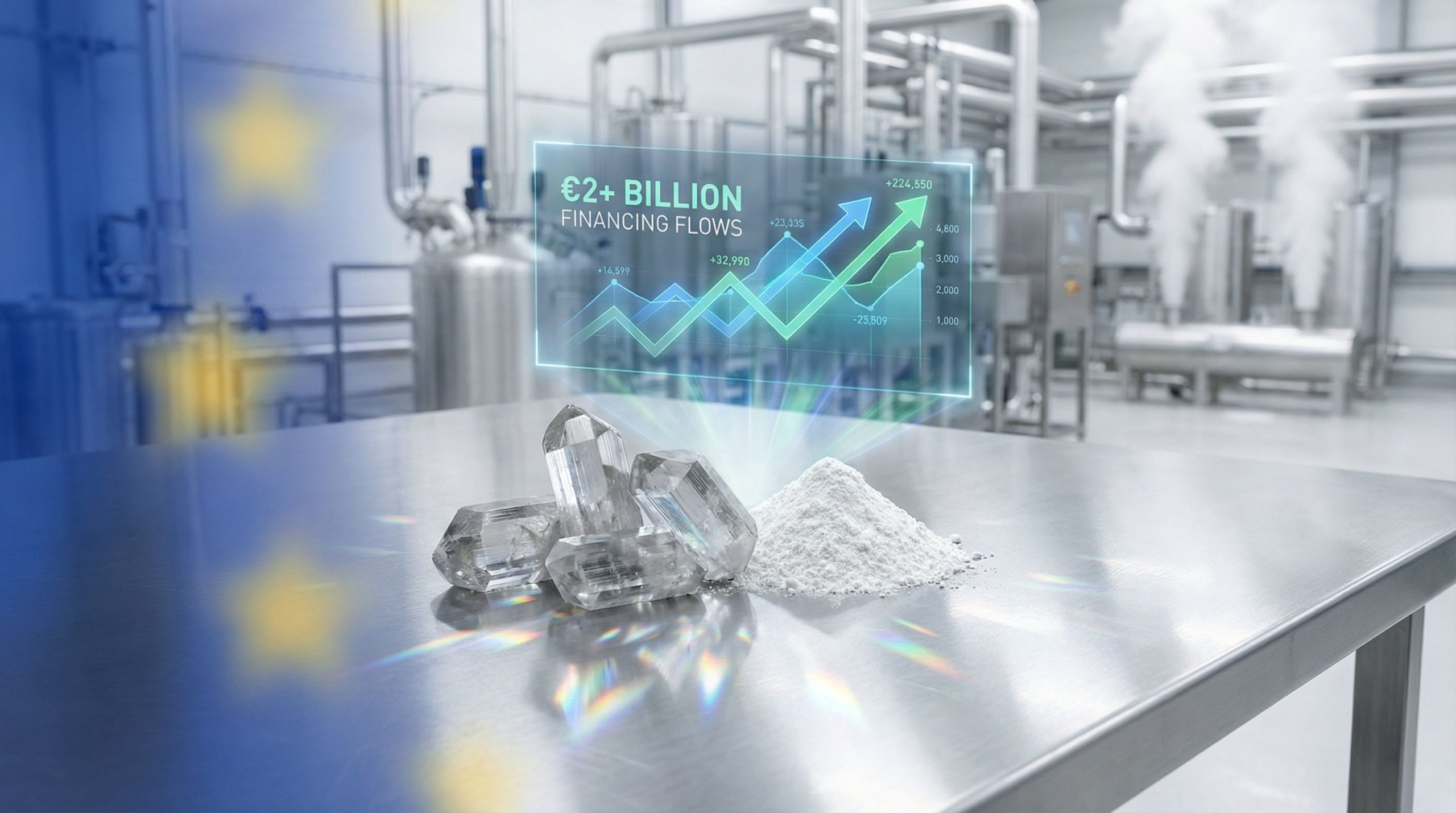
Recent developments in German lithium financing exemplify this evolution. Vulcan Energy Resources successfully secured a €2.2 billion financing package through a syndicate comprising 13 financial institutions, including the European Investment Bank, five export credit agencies, and seven commercial banks. Moreover, the project received an additional €104 million in German government grants specifically earmarked for clean lithium production capabilities.
Multi-Institutional Risk Distribution Mechanisms
The architecture of modern critical minerals financing relies on sophisticated risk-sharing frameworks that differ substantially from traditional mining project structures. European development banks typically anchor these syndicates by providing patient capital at below-market rates, enabling export credit agencies to participate with reduced political risk exposure.
Export credit agency involvement serves multiple functions beyond capital provision. These institutions facilitate cross-border trade relationships while providing implicit sovereign backing that enhances project creditworthiness. Commercial banks subsequently join syndicated structures with greater confidence due to the presence of government-backed institutions.
The Vulcan Lionheart project demonstrates this layered approach in practice. Construction is scheduled to commence with immediate effect following final investment decision approval, targeting a 2.5-year build timeline. However, the project structure enables rapid deployment of capital across multiple construction phases while maintaining milestone-based risk controls.
Francis Wedin, Executive Chair of Vulcan Energy Resources, emphasised the strategic nature of institutional support: the company secured strong backing from European and Australian government institutions specifically for its integrated lithium and renewable energy approach. This dual-purpose model attracts diverse funding sources while reducing single-commodity exposure.
Long-Term Offtake Agreements: The Foundation of Mega-Financing
Strategic supply contracts have become the cornerstone of large-scale critical minerals financing, providing revenue certainty that traditional spot-market mining projects cannot achieve. These agreements fundamentally alter project economics by establishing floor pricing mechanisms and guaranteed purchase volumes over extended periods.
The emergence of 10-year supply commitments reflects buyer recognition that supply security justifies premium pricing relative to spot market volatility. For instance, automotive manufacturers and battery producers increasingly view these contracts as essential risk management tools rather than traditional procurement arrangements.
Premium Pricing Structures and Revenue Certainty
European lithium projects consistently command price premiums through long-term contracts that reflect both transportation advantages and supply chain security benefits. Industry participants report contracted prices "well above the spot price" for projects with established offtake partnerships.
Vulcan Energy Resources structured another financing package for German lithium project around supply agreements with multiple strategic partners, including automotive manufacturer Stellantis, battery materials company LG Corp, recycling specialist Umicore, and commodity trader Glencore. These contracts provide 10-year supply commitments beginning in 2028, with approximately 72% of contracted volumes protected by floor or fixed pricing mechanisms.
This pricing protection proved essential for securing debt financing from commercial banks concerned about lithium market volatility. The floor pricing structure ensures debt serviceability even during commodity downturns while allowing participation in price upside through the remaining 28% of volumes exposed to spot pricing.
Strategic Buyer Motivations and Supply Chain Security
The willingness of strategic buyers to accept premium pricing reflects fundamental shifts in supply chain risk assessment. European automotive manufacturers increasingly prioritise supply security over marginal cost savings, particularly for battery-grade lithium essential to electric vehicle production.
Industrial buyers recognise that transport cost advantages, regulatory compliance benefits, and reduced geopolitical risks justify premium pricing for European production. This calculation becomes more pronounced as trade tensions and export restrictions affect traditional supply sources.
Market participants remain optimistic about long-term lithium demand despite current price weakness. Industry analysts cite a significant deficit of new projects receiving final investment decision approval, suggesting supply constraints will support pricing as demand growth accelerates through the energy transition.
Accelerated Construction Timelines and Capital Deployment
European lithium projects are pioneering shortened construction schedules that reduce financing risk while enabling faster response to market opportunities. The targeted 2.5-year build duration for major projects represents a significant departure from traditional mining development timelines.
This acceleration reflects several factors including streamlined permitting processes, modular construction approaches, and experienced engineering contractor availability. Additionally, European regulatory frameworks increasingly prioritise critical minerals projects through expedited approval processes and dedicated support mechanisms.
Phased Capital Deployment and Milestone Controls
Modern financing structures incorporate sophisticated capital release mechanisms tied to construction milestones and technical achievements. This approach protects lenders against cost overruns while ensuring adequate funding availability for project completion.
The Vulcan Lionheart project exemplifies this methodology through its financing package for German lithium project structured around construction phases and operational readiness milestones. The company raised €603 million in equity through institutional placement and entitlement offers at €2.24 per share, providing immediate funding for construction commencement.
Construction timeline certainty has become a critical factor in financing approval, with lenders requiring detailed engineering studies and contractor commitments before final investment decisions. Consequently, the ability to demonstrate construction capability within defined timeframes directly influences financing terms and availability.
Renewable Energy Integration: Dual Revenue Stream Innovation
The integration of renewable energy components within lithium extraction projects represents a fundamental innovation in project economics and financing attractiveness. These dual-purpose facilities generate multiple revenue streams while enhancing environmental credentials essential for ESG-focused investors.
European lithium projects increasingly incorporate renewable energy integration capabilities that utilise the same brine resources required for lithium extraction. This approach creates operational synergies while providing additional revenue streams that improve overall project economics.
Operational Synergies and Cost Optimisation
Geothermal energy production from lithium-bearing brines offers significant operational advantages including shared infrastructure, reduced environmental impact, and enhanced energy security. These synergies attract investors seeking exposure to both critical minerals and renewable energy sectors.
The renewable energy component also provides hedge benefits against lithium price volatility through diversified revenue streams. Projects can maintain operations during lithium market downturns by emphasising energy production, while benefiting from both revenue sources during favourable market conditions.
Government support for renewable energy projects enhances financing attractiveness through subsidies, tax incentives, and favourable regulatory treatment. The dual-purpose nature of these projects enables access to both critical minerals and renewable energy support programmes.
Market Dynamics Supporting European Lithium Premium
European lithium production commands sustained price premiums through multiple competitive advantages including proximity to end markets, environmental compliance, and supply chain transparency. These factors create structural pricing advantages that support premium financing terms.
Transportation cost savings relative to South American imports provide immediate economic benefits, while ESG credentials justify additional premiums among European buyers prioritising sustainable sourcing. Furthermore, the elimination of Chinese processing dependencies offers strategic value that transcends pure economic calculations.
Commodity Cycle Analysis and Investment Timing
Current market conditions present attractive entry points for long-term lithium investments despite near-term price weakness. Industry participants maintain positive outlooks based on constrained new project development and accelerating demand from energy transition policies.
The deficit of new projects receiving final investment decision approval creates medium-term supply constraints that should support pricing recovery. Established projects with secured financing enjoy significant competitive advantages as capital becomes increasingly selective.
Vulcan Energy Resources shares gained 14.6% year-to-date through December 2025, reflecting investor confidence in their major financing package for German lithium project and project fundamentals. This performance occurred despite broader lithium sector volatility, demonstrating premium valuations for projects with secured funding and strategic partnerships.
Strategic Implications for European Resource Independence
The success of multi-billion euro lithium financing packages signals a broader shift toward European resource independence through innovative financial structures. These models could be replicated across other critical minerals including rare earths, cobalt, and nickel as strategic autonomy becomes a policy priority.
Development banks are increasingly viewed as essential tools for building domestic supply chains that reduce dependency on geopolitically sensitive regions. The European Investment Bank's leadership role in lithium financing establishes precedents for similar interventions across critical materials sectors.
Investment Framework Evolution and Portfolio Positioning
Modern critical minerals investment requires sophisticated due diligence frameworks that evaluate financing structure sustainability alongside traditional geological and economic factors. The quality of offtake agreements and institutional backing has become as important as resource grade and operational capability.
Investors must assess complex multi-institutional deals for structural integrity while understanding the strategic motivations driving government participation. However, industry evolution trends increasingly prioritise jurisdictional stability over pure economic returns.
The emergence of "critical minerals diplomacy" creates new investment opportunities while introducing additional complexity around trade relationships and government policy alignment. Portfolio construction must account for both commercial returns and strategic positioning within evolving supply chain architectures.
Future Implications for Global Mining Finance
The European model of critical minerals financing represents a fundamental departure from traditional commodity investment approaches, emphasising strategic value creation over pure financial optimisation. This evolution reflects broader recognition that certain materials transcend normal commercial considerations due to their essential role in economic security.
Financial institutions are adapting investment criteria to incorporate supply chain resilience and strategic autonomy considerations alongside traditional risk-return metrics. This shift creates opportunities for projects that might not meet conventional commercial thresholds but provide essential strategic benefits.
The success of these financing models will likely influence capital allocation decisions across other critical minerals and geographic regions. North American and Australian institutions are monitoring European approaches for potential replication within their respective strategic frameworks.
As energy transition policies accelerate demand for critical materials, financing innovation will continue evolving to support supply chain development. The integration of development banks, export credit agencies, and commercial lenders provides a template for addressing large-scale infrastructure challenges that require both commercial viability and strategic coordination.
Ready to Identify the Next Major Lithium Discovery?
Discovery Alert's proprietary Discovery IQ model delivers real-time alerts on significant ASX lithium and critical minerals discoveries, instantly empowering subscribers to identify actionable opportunities ahead of the broader market. Understand why major mineral discoveries can lead to substantial market returns by exploring Discovery Alert's dedicated discoveries page, showcasing historic examples of exceptional outcomes, and begin your 30-day free trial today to position yourself ahead of the market.