
June 19, 2026
Understanding Global Energy Chokepoint Vulnerabilities
Maritime energy transport networks face unprecedented vulnerability as geopolitical tensions reshape global supply chain dynamics. The concentration of critical petroleum flows through narrow geographic passages creates systemic risks that extend far beyond immediate shipping disruptions. When military conflicts intersect with strategic waterways, the resulting Strait of Hormuz security fears create cascade effects that ripple through insurance markets, commodity pricing, and industrial supply chains worldwide.
Energy security frameworks built over decades can unravel within hours when shipping companies redirect vessels away from established routes. The complexity of modern petroleum distribution systems means that even temporary access restrictions to key maritime corridors force immediate operational adjustments across multiple industries and continents.
When big ASX news breaks, our subscribers know first
The Strategic Importance of Persian Gulf Maritime Routes
Geographic Constraints and Energy Flow Dependencies
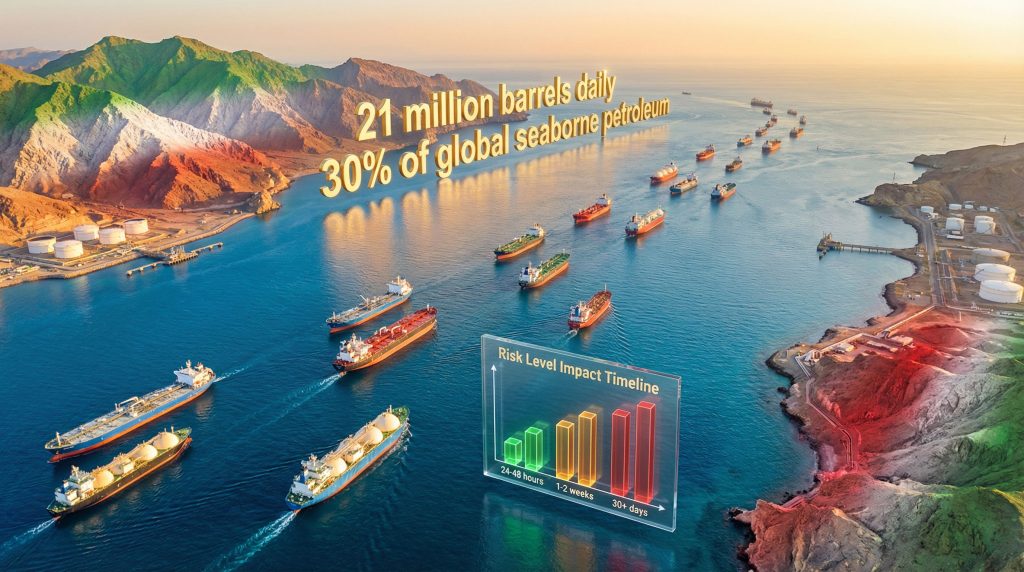
The narrow waterway connecting the Persian Gulf to global shipping lanes represents one of the world's most critical energy transportation bottlenecks. This strategic passage handles approximately 30 percent of global oil supplies along with significant volumes of liquefied natural gas, according to recent maritime industry assessments.
The geographic positioning between Iran and Oman creates natural constraints that limit alternative routing options for energy exporters. Unlike other major shipping corridors, vessels operating in this region have extremely limited diversion capabilities when security conditions deteriorate.
Key dependencies include:
• Primary export route serving major Gulf oil producers including Saudi Arabia, UAE, Kuwait, and Iraq
• Critical LNG transit corridor connecting Middle Eastern suppliers with Asian energy markets
• Gateway handling roughly one-fifth of global oil consumption through daily vessel movements
• Strategic chokepoint with minimal alternative pipeline capacity for emergency supply diversification
Regional Export Infrastructure Vulnerabilities
Gulf state energy infrastructure demonstrates significant concentration risk through its dependence on maritime export channels. The lack of extensive overland pipeline networks connecting to alternative export terminals means that shipping disruptions immediately impact global energy availability.
Saudi Arabia, despite its position as the world's largest oil exporter, relies heavily on this maritime corridor for reaching international markets. Similarly, Qatar's position as a leading LNG supplier creates direct exposure to any shipping restrictions in the region.
Immediate Market Response Patterns During Security Escalations
Vessel Positioning and Harbor Strategies
Recent shipping data reveals the scale of operational adjustments when Strait of Hormuz security fears intensify. Maritime tracking information shows at least 150 tankers, including crude oil and liquefied natural gas vessels, dropping anchor in open Gulf waters beyond the strategic waterway during heightened tensions.
These vessels clustered in safer waters off major Gulf oil producers' coasts, including Iraq and Saudi Arabia, as well as near Qatar's LNG export facilities. The positioning reflects shipping companies' prioritisation of crew safety and cargo protection over delivery schedules.
Major international carriers implemented immediate operational changes:
• CMA CGM: Instructed all vessels currently inside or bound for the Persian Gulf to proceed immediately to safe shelter
• Nippon Yusen: Directed vessels to halt transit in the area by late February
• Mitsui O.S.K. Lines: Maintained ships in safe waters citing crew and cargo safety priorities
• Hapag-Lloyd: Suspended all vessel transit through the strait until further notice
Insurance Market Disruptions and Risk Repricing
War-risk insurance classifications trigger immediate policy reassessments when regions experience military escalations. Marine insurance companies consider cancelling or repricing policies in affected areas, with brokers expecting premium increases of up to 50 percent for ships operating in zones classified as active conflict areas.
The insurance market's response creates additional economic pressure on shipping operations:
| Risk Assessment Factor | Market Impact | Timeline |
|---|---|---|
| War zone classification | Immediate policy review | 24-48 hours |
| Premium adjustments | Cost pass-through to shippers | 1-2 weeks |
| Policy cancellations | Route abandonment decisions | 2-4 weeks |
| Alternative coverage sourcing | Capacity constraints | 1-2 months |
Ship owners face difficult economic calculations when weighing insurance cost increases against potential revenue losses from avoiding the region entirely. Furthermore, these calculations become increasingly complex as global trade tensions continue to affect international shipping routes.
Economic Cascade Effects Beyond Direct Energy Impacts
Global Supply Chain Rerouting Economics
Shipping companies had already begun avoiding Red Sea and Suez Canal routes due to earlier security tensions, reverting to Cape of Good Hope diversions that increase shipping costs and extend delivery timeframes. Additional restrictions on Gulf access compound these existing disruptions.
The Cape of Good Hope alternative route creates multiple economic pressures:
• Extended transit times adding 14-21 days to typical delivery schedules
• Increased fuel consumption due to longer voyage distances
• Port congestion at alternative discharge terminals as vessel arrivals concentrate
• Inventory carrying cost increases for importers managing supply chain buffers
Manufacturing and Industrial Input Disruptions
Energy-intensive industries face immediate input cost pressures when petroleum product availability becomes uncertain. Chemical manufacturers, steel producers, and transportation companies must quickly adjust procurement strategies to maintain operational continuity.
Just-in-time supply chain models prove particularly vulnerable to shipping disruptions, forcing companies to rebuild inventory buffers and diversify supplier networks. These adjustments often require months to implement effectively, creating extended periods of operational uncertainty.
Regional Power Dynamics and Strategic Leverage
Iran's Maritime Influence Capabilities
Iran's geographic position provides significant leverage over Gulf energy exports through its control of strategic waterway access. Recent regional tensions demonstrated Tehran's willingness to use this positioning for geopolitical objectives.
Iranian actions during the March 2026 escalation included:
• Direct military strikes affecting multiple neighbouring states
• Warnings restricting transit through the critical shipping corridor
• Targeting of civilian infrastructure including commercial ports
• Ballistic missile launches affecting regional airspace security
These actions illustrate asymmetric warfare capabilities that can significantly impact global energy flows without requiring conventional military superiority.
Gulf State Defensive Positioning
Regional allies responded to increased tensions through coordinated defensive measures. The UK government urged citizens in Bahrain, Kuwait, Qatar, and UAE to shelter in place, while maritime authorities enhanced security warnings for commercial shipping.
Gulf Cooperation Council members demonstrated their vulnerability through immediate protective responses rather than offensive capabilities, highlighting their dependence on international security partnerships for maintaining energy export operations.
Investment Implications and Strategic Positioning
Energy Infrastructure Resilience Opportunities
Persistent security risks create investment opportunities in alternative energy transportation and storage infrastructure. Companies developing pipeline networks that bypass maritime chokepoints benefit from sustained geopolitical risk premiums.
Strategic Investment Insight: Energy security infrastructure investments gain significant value propositions when traditional maritime routes face recurring disruption risks.
Key opportunity areas include:
• Trans-Arabian pipeline capacity expansion projects
• Floating storage and regasification unit (FSRU) deployment programs
• Strategic petroleum reserve facility construction
• Renewable energy infrastructure reducing hydrocarbon import dependencies
In addition to infrastructure investments, energy security trends are increasingly influenced by Strait of Hormuz security fears and their impact on global supply chains.
Shipping Industry Adaptation Strategies
Maritime companies investing in route diversification capabilities demonstrate greater operational resilience during geopolitical disruptions. Ice-class vessel development for Arctic route access and larger ships optimised for Cape of Good Hope economics represent strategic positioning for persistent Middle Eastern tensions.
Maritime security technology integration becomes increasingly valuable as shipping companies seek to maintain operations in higher-risk environments while managing insurance costs and crew safety requirements.
The next major ASX story will hit our subscribers first
Oil Price Volatility and Trading Dynamics
Geopolitical Risk Premium Modelling
Oil markets demonstrate immediate sensitivity to Strait of Hormuz security developments due to the concentration of global supply flows through this corridor. Price impacts vary significantly based on disruption severity and duration expectations.
Typical market response patterns include:
| Disruption Level | Price Response | Market Duration | Strategic Response |
|---|---|---|---|
| Verbal threats | +$3-7/barrel | 1-3 weeks | Speculative positioning |
| Shipping delays | +$8-15/barrel | 3-6 weeks | Inventory building |
| Physical restrictions | +$20-35/barrel | 2-4 months | Reserve releases |
| Extended closure | +$50-80/barrel | 6+ months | Demand destruction |
Recent tensions pushed Aramco stock prices up nearly 3 percent while broader Gulf equity markets declined, reflecting market differentiation between energy producers and other regional businesses during security crises. However, the oil price rally experienced in recent months provides additional context for understanding these market dynamics.
Options Markets and Volatility Trading
Energy derivatives markets experience significant volatility expansion during Middle Eastern security escalations. Options premiums increase substantially as traders position for potential supply disruptions, creating opportunities for volatility-focused investment strategies.
Contango curve steepening occurs as forward markets price in sustained risk premiums, while regional price differentials create arbitrage opportunities for traders with flexible logistics capabilities. Furthermore, natural gas trends have shown similar sensitivity to regional security developments.
Long-Term Structural Market Changes
Alternative Energy Trade Route Development
Persistent security risks accelerate infrastructure development for energy transportation routes that avoid traditional Middle Eastern chokepoints. Arctic shipping route commercial viability assessments gain priority as companies seek to reduce dependence on geopolitically sensitive corridors.
Regional refining capacity expansion becomes strategically important to reduce crude oil transportation requirements while increasing refined product export capabilities from more secure locations.
Geopolitical Architecture Evolution
Enhanced naval cooperation between Gulf allies and Western powers represents a structural response to persistent maritime security threats. Regional security frameworks evolve beyond traditional bilateral agreements toward multilateral coordination mechanisms.
China's Belt and Road Initiative gains strategic importance as an alternative infrastructure development pathway that reduces Western energy import dependencies on Middle Eastern maritime routes. For instance, shipping companies are implementing new protocols to manage these evolving risks.
Monitoring Indicators and Risk Assessment
Early Warning Metrics for Escalation
Investors and companies monitor specific indicators that signal increasing or decreasing regional tensions:
• Daily vessel transit counts through the strategic waterway
• Insurance premium movements for Gulf-bound commercial shipping
• Strategic petroleum reserve drawdown announcements by major importing nations
• Regional diplomatic engagement frequency and substantive outcomes
Market Sentiment Assessment Tools
Financial markets provide real-time sentiment indicators through various pricing mechanisms:
• Oil futures curve shape and implied volatility levels
• Shipping rate premiums for alternative routing options
• Currency movements in major oil-importing economies
• Regional stock market performance in energy-dependent sectors
Maritime industry professionals emphasise that situational awareness requires continuous monitoring of multiple data streams rather than relying on single indicators for decision-making. Consequently, the intersection of Strait of Hormuz security fears with broader US economy pressures creates complex interdependencies that affect global markets.
Disclaimer: This analysis is for educational purposes and does not constitute investment advice. Geopolitical developments involve significant uncertainties, and actual outcomes may differ substantially from scenario projections. Readers should conduct independent research and consult financial professionals before making investment decisions based on geopolitical risk assessments.
Ready to Navigate Geopolitical Energy Investment Opportunities?
Discovery Alert's proprietary Discovery IQ model delivers real-time alerts on significant ASX mineral discoveries, instantly empowering subscribers to identify actionable opportunities that often benefit from global energy security premiums and supply chain disruptions. Understand why major mineral discoveries can lead to significant market returns by exploring Discovery Alert's dedicated discoveries page, showcasing historic examples of exceptional outcomes, and begin your 14-day free trial today to position yourself ahead of the market.