August 26, 2026
Global Energy Security Reshapes Nuclear Fuel Markets
The intersection of artificial intelligence infrastructure development and persistent geopolitical tensions has fundamentally altered nuclear fuel market dynamics, creating a uranium inflection point that defies traditional commodity logic. While traditional commodity markets respond to price signals through relatively elastic supply adjustments, uranium operates within a highly regulated framework where production capacity expansion requires multi-year lead times and significant regulatory approvals. This unique market structure creates conditions where supply shortages can persist far longer than conventional commodity cycles would suggest.
Current market fundamentals reveal a critical disconnect between accelerating nuclear capacity requirements and constrained uranium production capabilities. The global nuclear reactor fleet continues expanding, with new construction projects concentrated in Asia and policy support strengthening across developed economies. Simultaneously, uranium mining capacity faces structural bottlenecks that extend beyond simple capital allocation decisions.
Understanding Nuclear Fuel Supply Chain Vulnerabilities
The uranium supply chain comprises distinct stages, each presenting unique risks and bottlenecks. Primary uranium production through in-situ recovery and conventional mining accounts for approximately 85% of global supply, with secondary sources including recycled reactor fuel and government stockpile releases providing the remainder. This supply composition creates inherent vulnerabilities when primary production faces disruption.
Global uranium production capacity currently operates at approximately 134,000 tonnes annually according to World Nuclear Association data, though actual production typically runs below capacity due to market conditions and operational constraints. The concentration of production within a limited number of jurisdictions amplifies supply chain risks, particularly as geopolitical tensions affect traditional supplier relationships.
Table: Uranium Production Concentration Analysis
| Region | Production Share | Key Producers | Geopolitical Risk |
|---|---|---|---|
| Central Asia | 45% | Kazakhstan, Uzbekistan | Russian sphere influence |
| North America | 25% | Canada, United States | Stable regulatory environment |
| Australia | 15% | Various operators | Stable but export dependent |
| Africa | 10% | Niger, Namibia | Political instability concerns |
| Other | 5% | Distributed globally | Mixed risk profiles |
The reactor construction pipeline adds urgency to supply planning considerations. As of early 2024, the International Atomic Energy Agency reported 59 reactors under construction globally, with China accounting for the largest share of new capacity additions. This construction activity, combined with reactor life extensions in developed markets, creates sustained uranium demand growth that current production capacity struggles to accommodate.
Why Uranium Markets Defy Traditional Commodity Logic
Nuclear utilities typically contract uranium purchases 2-3 years in advance, covering 60-70% of annual fuel requirements through forward contracts. This contracting discipline creates demand visibility unavailable in spot-traded commodities like oil or copper, where immediate price signals drive purchasing decisions. However, this same contracting structure means supply shortages can persist longer than market forces would typically allow.
The regulatory complexity surrounding uranium enrichment and fuel fabrication creates additional supply rigidity. Unlike conventional mining commodities, uranium requires government-licensed enrichment facilities to convert raw material into reactor fuel. This regulatory barrier limits supply response options and concentrates market power within a small number of licensed operators.
Key contracting characteristics distinguishing uranium from other commodities include:
- Long-term price visibility: Utilities plan fuel requirements years in advance
- Supply security premiums: Buyers pay premiums for reliable delivery guarantees
- Limited spot market liquidity: Most transactions occur through bilateral contracts
- Regulatory compliance requirements: All transactions subject to nuclear non-proliferation oversight
The uranium market volatility also differs in its inventory dynamics. Unlike oil or metals, where strategic reserves provide market stability, uranium stockpiles remain largely opaque and concentrated within government or utility control. This inventory structure reduces market transparency and amplifies price volatility when supply disruptions occur.
Geopolitical Energy Security Transforms Nuclear Fuel Valuation
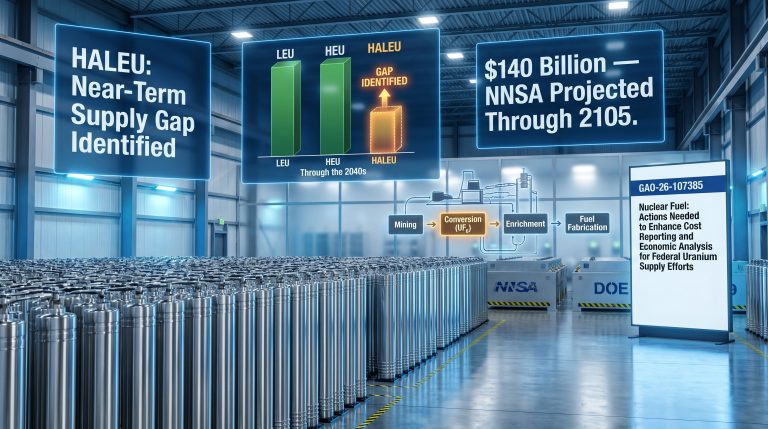
The us senate ban on russian uranium, effective August 2024 through 2040, removed significant enrichment capacity from Western markets and elevated nuclear fuel to critical infrastructure status. Russia operated approximately 45% of global enrichment capacity through Rosatom, creating supply chain vulnerabilities that traditional diversification strategies cannot quickly address.
Policy Response Mechanisms across developed economies include:
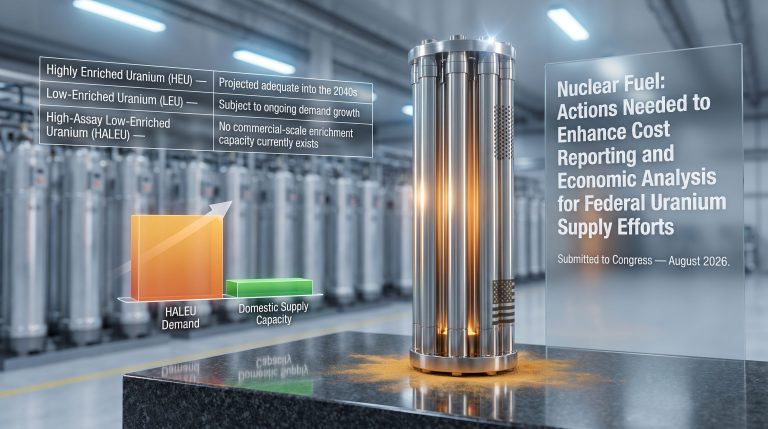
- United States: $2.72 billion commitment for domestic HALEU production capability
- European Union: Supply chain resilience initiatives targeting nuclear fuel autonomy
- Japan: Diversification programs reducing Russian enrichment dependency
- Canada: Enhanced export licensing frameworks for uranium materials
These policy interventions represent structural shifts rather than cyclical adjustments. The elevation of nuclear fuel to critical minerals status reflects recognition that energy security requires domestic or allied-controlled fuel supply chains. Furthermore, the critical minerals order creates sustained demand for uranium production outside traditional supplier relationships.
The geopolitical premium embedded in uranium pricing reflects this strategic revaluation. Market participants now price uranium with consideration for supply chain security rather than purely economic factors, creating price floors that extend beyond traditional production cost curves.
The concentration of enrichment capacity within Russian-controlled facilities created systemic vulnerabilities that energy security planners can no longer ignore. Western markets now prioritise supply chain resilience over cost optimisation.
AI Infrastructure Drives Nuclear Demand Acceleration
Artificial intelligence data centres represent a fundamental shift in electricity consumption patterns, requiring continuous baseload power with minimal carbon emissions. Current data centre power demand approaches 200 TWh globally, with projections suggesting growth to 800-1,200 TWh by 2030 as AI infrastructure deployment accelerates.
This demand profile aligns precisely with nuclear power characteristics: 24/7 availability, carbon-free generation, and grid stability support. Unlike renewable sources requiring backup power or storage systems, nuclear plants provide the reliability AI operations demand without carbon footprint concerns.
Small modular reactor development has accelerated in response to AI power requirements, with over 50 projects in various development phases globally. These advanced reactor designs promise reduced construction timelines and enhanced deployment flexibility compared to traditional large-scale nuclear plants.
Nuclear's competitive advantages for AI infrastructure:
- Consistent power output independent of weather conditions
- Minimal land use requirements compared to renewable alternatives
- Long operational lifespans supporting infrastructure investment planning
- Proven technology scalability for large power requirements
Financial Market Evolution Alters Price Discovery
The introduction of physical uranium investment vehicles has fundamentally changed market dynamics by creating persistent spot demand independent of nuclear fuel requirements. Investment funds focused on uranium accumulation now hold approximately $8.2 billion in physical uranium, representing significant market influence relative to annual production values.
Investment Vehicle Asset Concentration:
- Physical uranium trusts: $8.2 billion assets under management
- Mining-focused ETFs: $3.1 billion uranium sector exposure
- Direct equity positions: $12+ billion institutional holdings
- Commodity trading strategies: $2.8 billion uranium allocation
This $26+ billion investment capital concentration creates structural price support while amplifying volatility during supply disruptions. Financial buyers operate with different decision frameworks than utilities, potentially maintaining uranium positions through price cycles that would trigger selling from traditional market participants.
In addition, the uranium inflection point reflects this financial market evolution, where investment demand interacts with fundamental supply-demand imbalances to create sustained price pressure. Traditional uranium cycles were driven primarily by utility contracting and producer hedging, while current market dynamics incorporate speculative positioning and portfolio diversification strategies.
Supply-Demand Projections Signal Structural Shortage
Independent analysis projects global uranium demand exceeding reliable supply by 15-25 million pounds annually beginning in 2027, assuming current reactor construction schedules and production expansion timelines proceed as planned. These projections incorporate both existing reactor requirements and new capacity additions across multiple regions.
Table: Uranium Market Balance Projections
| Year | Demand (Million lbs) | Supply (Million lbs) | Deficit | Market Impact |
|---|---|---|---|---|
| 2026 | 185 | 180 | (5) | Moderate price support |
| 2027 | 195 | 185 | (10) | Sustained higher pricing |
| 2030 | 220 | 200 | (20) | Structural shortage conditions |
| 2033 | 245 | 225 | (20) | New supply response required |
These projections assume current production capacity expansion proceeds without significant delays, regulatory obstacles, or technical challenges. Historical uranium market development suggests such assumptions may prove optimistic, particularly given the complex permitting requirements for new mining operations and enrichment facilities.
Supply response challenges include:
- Multi-year permitting processes for new uranium mines
- Limited experienced workforce for ISR and conventional mining operations
- Capital market access constraints for junior uranium development companies
- Environmental regulatory compliance requirements extending project timelines
What Drives Current Price Volatility Patterns?
Uranium spot prices reached $100+ per pound in January 2024 before retreating to current levels around $80-85 per pound, demonstrating market sensitivity to supply-side developments and contracting activity. This volatility pattern differs from speculative bubbles, as price movements correlate directly with production announcements and utility contracting cycles.
Price formation factors influencing current market dynamics:
- Utility contracting gaps: 65% of post-2027 demand remains uncontracted
- Producer inventory discipline: Limited willingness to sell below production costs
- Financial buyer accumulation: Consistent monthly uranium purchases
- Geopolitical risk premiums: 10-15% price premium for supply security
The uranium inflection point manifests through this price volatility, where traditional market relationships no longer adequately explain price movements. Supply announcements create disproportionate price responses, while demand growth occurs through both traditional utility contracting and financial market participation.
However, us uranium tariff disruptions continue to complicate market pricing mechanisms. Market participants increasingly recognise that uranium pricing must reflect not only production costs but also strategic value within energy security frameworks.
Regional Market Development Creates Geographic Fragmentation
Nuclear fuel markets are experiencing geographic fragmentation as consuming nations prioritise supply chain security over cost optimisation. This trend reduces market liquidity while potentially supporting higher average realised prices through reduced competition among suppliers.
North American market development reflects U.S. policy emphasis on domestic uranium production despite higher costs compared to international alternatives. Domestic production accounted for only 8% of U.S. reactor requirements in 2024, creating substantial import dependency that energy security policies aim to reduce.
Government support mechanisms include critical minerals designation, domestic enrichment capacity investments, and strategic purchasing commitments. These policies create structural demand for domestic production independent of international price competitiveness, supporting premium pricing for North American uranium suppliers.
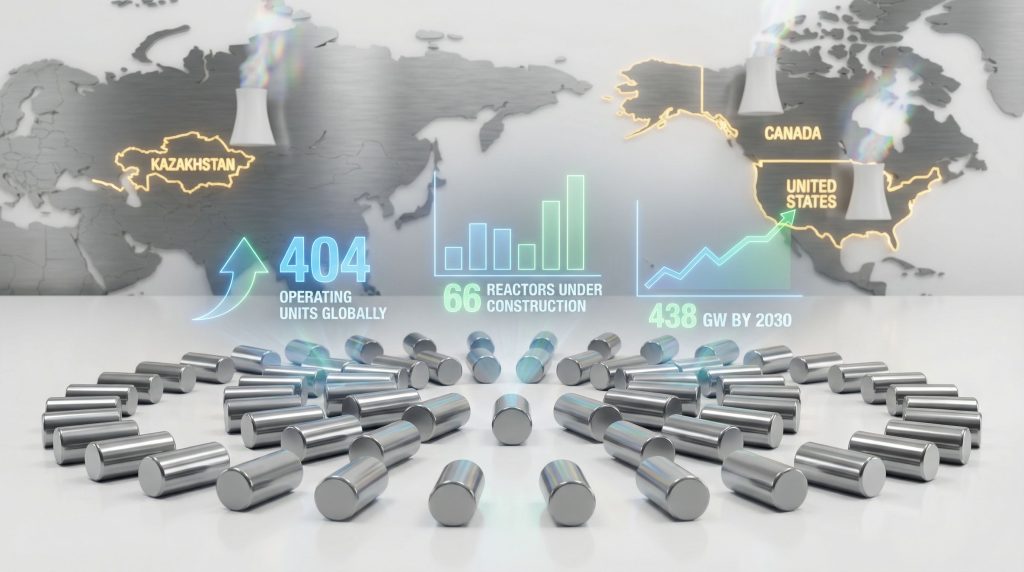
Asian market concentration presents different dynamics, with China's reactor construction programme accounting for 36 of 66 global units under construction. This concentration creates demand growth in markets with limited transparency regarding inventory levels and contracting strategies, potentially affecting global market balance calculations.
How Do Energy Transition Challenges Impact Uranium Markets?
The energy transition challenges facing developed economies create additional complexity for uranium market projections. Nuclear power plays a critical role in decarbonisation strategies, yet policy uncertainty and social acceptance issues continue affecting deployment timelines.
Nuclear's role in energy transition:
- Baseload replacement for retiring fossil fuel plants
- Grid stability support for increasing renewable penetration
- Industrial decarbonisation through electrification support
- Hydrogen production via high-temperature reactor applications
These applications expand nuclear power's relevance beyond traditional electricity generation, creating new uranium demand categories that current market analysis may underestimate. Furthermore, reactor technology development continues advancing, potentially altering uranium consumption patterns and market dynamics.
Policy frameworks increasingly recognise nuclear power as essential for achieving carbon reduction targets while maintaining energy security. This recognition supports sustained government backing for nuclear programmes despite higher upfront capital costs compared to renewable alternatives.
Investment Framework for Uranium Market Exposure
The convergence of supply constraints, demand acceleration, and financial market participation creates multiple pathways for uranium price appreciation extending beyond traditional commodity investment logic. Investment strategies must account for both fundamental market dynamics and policy-driven demand changes.
According to industry analysis from Crux Investor, supply problems continue outpacing solutions in the global uranium market. Risk-adjusted return scenarios based on current market analysis:
- Conservative case: $90-110/lb sustained pricing supports 15-20% annual returns
- Base case: $120-150/lb with periodic volatility generates 25-35% annual returns
- Optimistic case: $200+ during supply crisis periods enables 50%+ annual returns
Primary risk factors affecting investment outcomes include:
- Construction delays reducing nuclear demand growth projections
- New production capacity exceeding current supply gap estimates
- Economic recession reducing overall electricity consumption
- Technology disruption altering nuclear fuel requirements or reactor designs
Investment exposure options range from direct uranium accumulation through physical funds to equity positions in mining companies at various development stages. Each approach presents different risk-return profiles and exposure to uranium price movements.
Nuclear Renaissance Represents Structural Energy Transition
The uranium market transformation reflects broader changes in global energy infrastructure requirements rather than cyclical commodity dynamics. Energy security concerns, carbon emissions reduction policies, and AI infrastructure demands collectively drive nuclear power adoption beyond historical patterns.
This structural shift distinguishes the current uranium cycle from previous periods driven primarily by speculative investment or temporary supply disruptions. Policy support for nuclear power continues strengthening across developed economies, while reactor construction accelerates in multiple regions simultaneously.
Long-term demand drivers supporting sustained uranium market strength include:
- Reactor life extensions maintaining existing capacity beyond original design life
- Small modular reactor deployment creating new uranium demand categories
- Industrial process electrification increasing overall electricity consumption
- Energy security policies prioritising domestic or allied fuel sources
The nuclear renaissance represents recognition that baseload electricity generation requires technologies capable of operating continuously without weather dependency or fuel supply volatility. Nuclear power uniquely provides these characteristics while meeting carbon emissions reduction objectives.
Positioning for Long-Term Energy Security Transformation
Market participants seeking uranium exposure should focus on supply constraint durability, demand projection credibility, and policy support sustainability rather than short-term price movements. The structural nature of current market imbalances suggests investment horizons extending through the 2030s for optimal return realisation.
The uranium inflection point reflects fundamental changes in energy infrastructure requirements that traditional commodity analysis may inadequately capture. Energy security imperatives, climate policy objectives, and technology infrastructure demands create sustained uranium demand that current supply capacity cannot accommodate without substantial expansion.
Investment considerations for uranium market positioning include:
- Supply chain security prioritised over cost optimisation by major consumers
- Regulatory complexity extending project development timelines beyond traditional commodities
- Financial market participation creating demand independent of nuclear fuel requirements
- Technology development potentially altering uranium consumption patterns
This transformation positions uranium as both a strategic commodity and financial asset, where investment returns may exceed traditional commodity market expectations while presenting unique risks from policy changes or technology disruption.
The nuclear energy sector's evolution from niche power source to critical infrastructure component creates sustained uranium demand that current market structures struggle to accommodate efficiently. This structural imbalance underlies the uranium inflection point and supports long-term price appreciation potential.
Disclaimer: This analysis contains forward-looking statements and projections regarding uranium markets, nuclear energy development, and investment returns. Actual market conditions may differ significantly from projections due to regulatory changes, technology developments, economic conditions, or geopolitical events. Investors should conduct independent research and consider professional advice before making investment decisions. Past performance does not guarantee future results, and all investments carry risk of loss.
Ready to Capitalise on the Next Major Uranium Discovery?
Discovery Alert's proprietary Discovery IQ model delivers real-time alerts on significant uranium and mineral discoveries across the ASX, instantly empowering subscribers to identify actionable opportunities ahead of the broader market. With uranium markets experiencing structural supply shortages and elevated strategic importance, begin your 14-day free trial today and secure your market-leading advantage in this critical energy security transformation.