
July 14, 2026
The Global Energy Transition Paradigm and Morocco's Strategic Positioning
The global energy landscape stands at a critical inflection point where nations must balance energy security, economic development, and climate commitments. Countries with abundant renewable resources face unprecedented opportunities to transform from energy importers into clean energy exporters. This transformation requires sophisticated planning, substantial capital deployment, and strategic international partnerships, particularly as the critical minerals energy transition gains momentum.
Morocco exemplifies this energy transition potential through systematic development of its renewable energy infrastructure. The kingdom's geographic advantages, policy framework evolution, and commitment to large-scale clean energy production position it as a potential regional hub for green hydrogen development and export markets.
When big ASX news breaks, our subscribers know first
Understanding Morocco's Strategic Energy Infrastructure Development
Morocco's renewable energy strategy builds upon significant geographic and climatic advantages that enable large-scale green hydrogen production. The kingdom's Atlantic coastline provides strategic access to European markets, while abundant solar and wind resources in southern regions offer the foundation for industrial-scale clean energy generation.
The policy framework supporting this transition evolved through systematic planning and international cooperation. Morocco green hydrogen projects benefit from regulatory structures designed to attract foreign investment while ensuring sustainable development practices. The "Morocco Offer" initiative represents a comprehensive approach to project selection, land allocation, and investor engagement.
This strategic positioning enables Morocco to transition from its historical role as an energy importer toward becoming a significant renewable energy exporter. Furthermore, the kingdom's renewable energy capacity targets of reaching 45% to 52% by 2030 provide the foundation for expanded green hydrogen production capabilities.
Investment Framework and International Partnership Structure
The $35 billion investment commitment across Morocco green hydrogen projects represents one of the largest renewable energy initiatives in Africa. This capital deployment involves five major consortium partnerships bringing together European energy companies, renewable infrastructure specialists, and domestic partners.
The investment landscape includes diverse international players with complementary expertise:
• European Energy Majors: Bringing advanced electrolyser technology and market access
• Infrastructure Specialists: Providing renewable energy project development experience
• Maritime Logistics Partners: Contributing supply chain and export capabilities
• Local Energy Companies: Offering regulatory navigation and domestic market knowledge
Risk-return profiles across these Morocco green hydrogen projects attract different investor categories, from pension funds seeking long-term stable returns to energy companies pursuing strategic market positioning. The diversified consortium structure spreads technological, regulatory, and market risks while combining essential capabilities for project success.
Investment agreements signed in February 2026 marked a significant milestone, with preliminary land reservation agreements covering the mobilisation of public land in southern regions. These contractual frameworks regulate land use for integrated projects spanning renewable power generation, electrolysis, and green hydrogen processing. Additionally, investment strategy insights suggest that such large-scale infrastructure investments align with global trends towards sustainable asset allocation.
Land Allocation Mechanisms and Development Framework
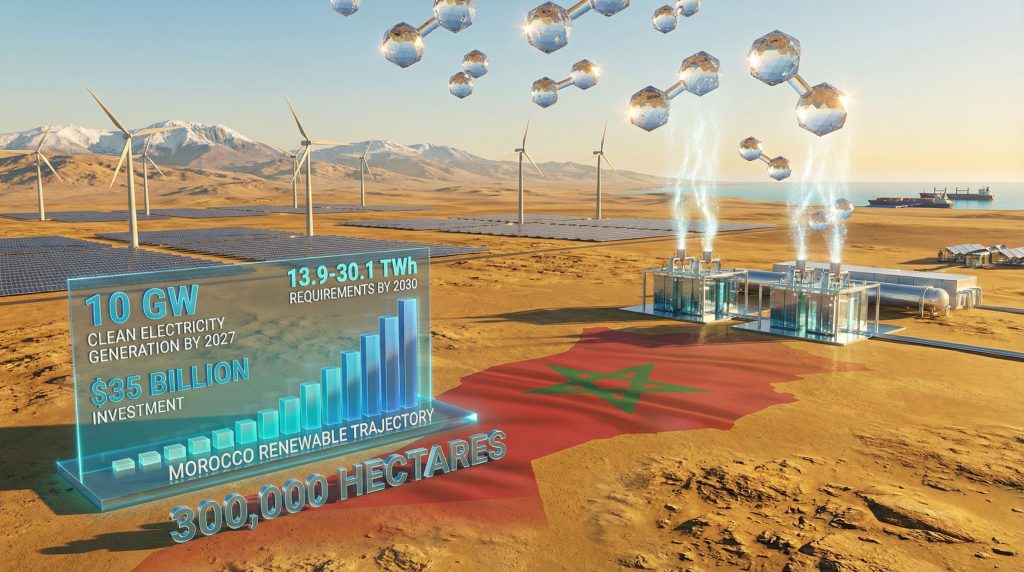
Morocco's systematic approach to land allocation represents a critical enabler for large-scale green hydrogen development. The kingdom identified nearly 1 million hectares for potential renewable energy projects, with an initial tranche of 300,000 hectares being gradually made available for development.
Individual project allocations can reach up to 30,000 hectares per consortium, enabling the scale necessary for industrial hydrogen production. This land allocation strategy balances project viability requirements with sustainable development principles and existing land use patterns.
The regulatory framework governing land access includes several key components:
• Preliminary Reservation Agreements: Establishing project milestone markers for land access
• Integrated Development Requirements: Covering renewable generation, electrolysis, and processing
• Environmental Assessment Protocols: Ensuring sustainable development practices
• Public-Private Partnership Models: Balancing commercial viability with national objectives
Land allocation in Morocco's southern regions takes advantage of areas with excellent solar and wind resources while minimising conflicts with agricultural or urban development. The systematic approach enables coordinated infrastructure development across multiple projects while maintaining operational flexibility for individual consortiums.
Technology Integration and Production Capacity Planning
Morocco green hydrogen projects integrate multiple technology components into comprehensive production ecosystems. These integrated facilities combine renewable power generation, industrial-scale electrolysis, and downstream processing capabilities to produce green hydrogen and derivative products.
Current reference facilities demonstrate the production pathway, with plans targeting 10,000 tonnes of hydrogen annually from 100 MW electrolyser systems. This establishes the technological foundation for scaling toward much larger production capacities as demand and infrastructure develop.
Morocco Green Hydrogen Technology Development Trajectory
| Technology Component | Current Scale | 2027 Targets | 2030 Projections |
|---|---|---|---|
| Electrolyser Capacity | 100 MW reference | 1,000+ MW operational | 5,000+ MW installed |
| Annual H2 Production | 10,000 tonnes pilot | 100,000+ tonnes commercial | 500,000+ tonnes export |
| Dedicated Clean Power | 45% renewable mix | 10 GW green hydrogen | 15+ GW hydrogen-focused |
| Land Under Development | 30,000 hectares allocated | 150,000 hectares active | 300,000+ hectares utilised |
The scaling potential toward 10 GW of dedicated clean electricity generation by 2027 demonstrates the industrial scale envisioned for Morocco green hydrogen projects. Demand forecasting indicates requirements of 13.9-30.1 TWh by 2030, supporting substantial export capacity development.
Green ammonia production capabilities represent a key focus area, enabling efficient transportation and storage while serving industrial fuel markets. This downstream integration adds value and provides market diversification beyond pure hydrogen applications, contributing to broader decarbonisation benefits.
European Market Access and Export Strategy
Morocco's positioning relative to European Union energy security priorities creates significant market opportunities for green hydrogen exports. The EU's hydrogen strategy establishes demand targets that exceed projected European domestic production, creating import requirements that North African suppliers can address.
Mediterranean energy corridor development facilitates the infrastructure connections necessary for large-scale energy trade. Morocco's Atlantic coastline provides alternative shipping routes that complement pipeline connections, offering flexibility and redundancy for export operations.
Several factors enhance Morocco's competitive positioning in European markets:
• Geographic Proximity: Reducing transportation costs and delivery times
• Political Stability: Supporting long-term energy partnership agreements
• Established Energy Relationships: Building on existing electricity export arrangements
• Regulatory Alignment: Harmonising standards with European requirements
Market diversification beyond Europe provides additional opportunities through industrial fuel applications, agricultural ammonia demand, and emerging transportation fuel markets. This diversified demand base reduces dependence on any single market while maximising revenue potential.
Cost advantages from abundant renewable resources enable competitive pricing in international markets. Morocco green hydrogen projects benefit from excellent solar irradiation and consistent wind patterns that support high-capacity factor renewable generation, aligning with european supply chain insights that emphasise strategic sourcing.
The next major ASX story will hit our subscribers first
International Technology Transfer and Expertise Development
Technology transfer mechanisms play crucial roles in building domestic capabilities while accessing international expertise. German technical cooperation supports reference plant development, accelerating technology deployment timelines through established best practices.
Knowledge sharing agreements between international partners and domestic entities facilitate skills development across multiple technical areas. These arrangements cover electrolyser technology, renewable energy integration, and industrial processing systems essential for comprehensive green hydrogen production.
The international consortium structure brings together complementary expertise from different markets and technology areas:
• TotalEnergies: European energy sector experience and market access
• Copenhagen Infrastructure Partners: Renewable infrastructure development specialisation
• A.P. Moller Capital: Maritime logistics and global supply chain capabilities
• Nareva: Domestic regulatory knowledge and local market understanding
Best practices integration from global renewable energy projects helps avoid common implementation challenges while adapting proven approaches to local conditions. This knowledge transfer reduces project risks and improves execution timelines.
Training programmes for construction and operational workforce development ensure adequate human resources for project implementation. These capability-building initiatives support long-term sustainability while creating domestic employment opportunities.
Economic Impact Analysis and Development Multipliers
The $35 billion investment in Morocco green hydrogen projects creates direct economic impacts through construction activity, operational employment, and technology sector development. This investment scale represents approximately 25% of Morocco's annual GDP, demonstrating the transformative potential for the national economy.
Direct economic contributions include substantial employment creation during construction phases, with ongoing operational positions supporting long-term economic development. Technology sector growth emerges through domestic participation in supply chains and maintenance operations.
Export revenue potential fundamentally transforms Morocco's energy trade balance from net importer to significant exporter. Green hydrogen and ammonia exports could generate billions in annual foreign currency earnings, supporting broader economic development objectives.
Economic Multiplier Effects Across Sectors:
• Manufacturing Integration: Domestic production capacity for renewable energy components
• Port Infrastructure Development: Export facility expansion supporting maritime trade
• Research and Development Ecosystem: University partnerships and innovation centres
• Financial Sector Growth: Project financing expertise and green investment capabilities
Economic Transformation Potential: Morocco's comprehensive green hydrogen strategy represents more than energy transition. The $35 billion commitment positions the kingdom as a renewable energy production hub serving European and global markets while creating domestic industrial capabilities and export revenues that could transform the national economy.
Regional development impacts concentrate in southern provinces where projects locate, bringing infrastructure investment and employment opportunities to areas traditionally dependent on agriculture and mining. This geographic distribution of economic benefits supports balanced national development.
Regulatory Evolution and Policy Integration
Morocco's regulatory framework evolution enables large-scale renewable energy development while maintaining environmental protection and social development standards. The integration of green hydrogen initiatives within broader national energy strategy ensures coordination with existing renewable energy programs, as demonstrated through the country's critical minerals strategy.
Land use planning accommodates industrial-scale renewable projects while protecting agricultural areas and sensitive ecosystems. Environmental impact assessment protocols ensure sustainable development practices across all project phases from construction through operations.
International compliance frameworks align Moroccan standards with European Union renewable energy directives, facilitating market access and trade relationships. Carbon accounting systems support green certification requirements that enable premium pricing in environmental markets.
The "Morocco Offer" mechanism provides comprehensive investor attraction and project selection processes. This framework evaluates technical capabilities, financial strength, and environmental commitment while ensuring competitive selection among qualified international partners.
Public-private partnership models balance commercial viability requirements with national development objectives. These arrangements protect public interests while providing investors with adequate returns and operational flexibility necessary for project success.
Implementation Challenges and Risk Management
Infrastructure development requirements present significant coordination challenges across multiple domains. Transmission grid capacity must expand to accommodate renewable energy integration, while port facilities require modification for efficient hydrogen and ammonia export operations.
Water resource management becomes critical for large-scale electrolysis operations, requiring careful planning to balance industrial needs with agricultural and domestic water requirements. Desalination facilities may become necessary to ensure adequate water supply without competing with existing uses.
Technical and Logistical Implementation Challenges:
• Equipment Procurement: International manufacturing capacity for electrolysers and renewable components
• Construction Workforce: Skilled labour development for industrial-scale renewable projects
• Maintenance Infrastructure: Operational expertise for long-term facility management
• Supply Chain Coordination: Multi-national component sourcing and delivery logistics
Weather variability impacts renewable energy generation patterns, requiring sophisticated storage and grid management systems to maintain consistent hydrogen production. Battery storage and grid-scale energy management become essential for operational reliability.
International market price volatility affects project economics, particularly during early commercial phases when production costs remain elevated. Long-term offtake agreements help manage market risks while ensuring revenue stability for investors.
Regulatory changes in export destination markets could impact demand projections and pricing assumptions. European Union policy evolution regarding hydrogen imports and carbon border adjustments requires ongoing monitoring and adaptation strategies.
Global Competitive Landscape and Strategic Positioning
Morocco green hydrogen projects compete within a rapidly expanding global market where multiple countries pursue similar export-oriented strategies. Understanding competitive dynamics helps assess Morocco's positioning and strategic advantages relative to other emerging producers.
Global Green Hydrogen Production Competitive Analysis
| Country/Region | Investment Scale | Primary Markets | Strategic Advantages |
|---|---|---|---|
| Morocco | $35 billion | Europe, Africa | EU proximity, political stability, established energy ties |
| Australia | $50+ billion | Asia-Pacific | Resource abundance, existing LNG infrastructure, mining expertise |
| Chile | $25 billion | Americas, Asia | Exceptional renewable resources, mining integration, Pacific access |
| Saudi Arabia | $110 billion | Global | Capital availability, existing energy infrastructure, strategic location |
Australia's renewable hydrogen initiatives target Asia-Pacific markets through existing liquefied natural gas infrastructure and established energy trade relationships. Chile focuses on exceptional renewable resources and integration with existing mining operations requiring hydrogen for processing.
Saudi Arabia's massive investment scale leverages sovereign wealth and existing energy infrastructure while targeting global markets through strategic geographic positioning. Each competitor brings distinct advantages that shape regional market dynamics.
Morocco's unique positioning combines European Union proximity with political stability and established energy sector relationships. These factors create competitive advantages in serving European markets where energy security concerns drive demand for reliable, proximate suppliers.
Cost competitiveness depends on renewable resource quality, infrastructure development costs, and transportation logistics to target markets. Morocco's excellent solar and wind resources support competitive production costs while Atlantic shipping routes provide efficient European market access.
Future Scenario Analysis and Strategic Pathways
Multiple scenarios could shape Morocco green hydrogen projects' ultimate success, ranging from optimistic growth trajectories to moderate development paths requiring adaptive management strategies.
Optimistic Growth Scenario assumes European demand exceeding current supply projections, technology costs declining faster than anticipated, and additional international partnerships expanding production capacity beyond initial plans. This pathway could accelerate development timelines and increase ultimate project scale.
Under optimistic conditions, Morocco green hydrogen projects might expand beyond current consortium partnerships to include additional European energy companies and Asian industrial users. Export capacity could exceed initial projections if technological advances reduce production costs and increase efficiency.
Moderate Development Pathway envisions steady implementation meeting initial production targets while gradually building market presence and operational expertise. Regional market development would complement European exports, creating diversified revenue streams and reduced market concentration risks.
This scenario emphasises phased scaling aligned with technology maturation and market development. Production capacity grows systematically while operational experience accumulates and additional investment tranches deploy based on demonstrated project success.
Challenge Response Scenarios address potential obstacles including intensified global competition, infrastructure development delays, or international policy changes affecting export market access. Adaptive strategies would emphasise cost optimisation, market diversification, and technological innovation.
Risk mitigation under challenging conditions requires flexible project structuring, diversified offtake agreements, and maintained technological competitiveness. Alternative market development and domestic utilisation could provide revenue stability during international market volatility.
Strategic Energy Transformation and Regional Impact
Morocco's green hydrogen initiative demonstrates comprehensive strategic planning that extends beyond energy production to encompass economic development, international partnership building, and regional positioning enhancement. The systematic approach creates foundations for sustainable long-term growth while addressing immediate energy transition objectives.
The $35 billion investment commitment, supported by methodical land allocation and international consortium partnerships, establishes Morocco as a potential renewable energy hub serving diverse global markets. Success requires coordinated execution across technology deployment, infrastructure development, and market access facilitation.
Regional implications extend throughout North Africa where Morocco's success could catalyse similar initiatives in neighbouring countries. The demonstration effect of successful large-scale green hydrogen production may attract additional investment and accelerate renewable energy development across the broader region.
According to recent reports from Morocco's government approval of $32.5 billion in green hydrogen projects, the kingdom is positioning itself as a major player in the global hydrogen economy. Furthermore, Morocco's comprehensive green hydrogen strategy demonstrates the country's commitment to becoming a leading renewable energy exporter.
Disclaimer: This analysis includes forward-looking projections and investment estimates that involve inherent uncertainties. Actual outcomes may differ significantly from projections due to technological, regulatory, market, or economic factors. Readers should conduct independent research before making investment decisions.
Future success depends on maintaining international competitiveness while building domestic capabilities and ensuring sustainable development practices. The strategic framework established through systematic planning provides foundations for achieving these multiple objectives simultaneously.
Ready to Capitalise on the Next Major Mineral Discovery?
Discovery Alert provides instant notifications on significant ASX mineral discoveries, powered by its proprietary Discovery IQ model, enabling subscribers to identify actionable opportunities ahead of the broader market. Understand why major mineral discoveries can lead to substantial returns by exploring historic examples of exceptional outcomes, and begin your 14-day free trial today to secure your market-leading advantage.