
June 4, 2026
Breaking Down Global Inflation Dynamics in Early 2026
Central bank policies worldwide face unprecedented complexity as economic conditions shift rapidly across developed markets. Traditional monetary frameworks encounter new challenges when inflation patterns diverge from established historical models. Australia's economic landscape presents a fascinating case study in how domestic factors can override global trends, creating unique policy dilemmas for reserve banks managing price stability mandates.
The relationship between labour market tightness and wage-price spirals has evolved significantly since the post-pandemic recovery period. Modern economies demonstrate different transmission mechanisms compared to previous inflation cycles, particularly regarding services inflation persistence and the speed of monetary policy effectiveness. Understanding these structural changes becomes crucial for investors navigating uncertain economic terrain.
When big ASX news breaks, our subscribers know first
December 2025 CPI Data Reveals Persistent Price Pressures
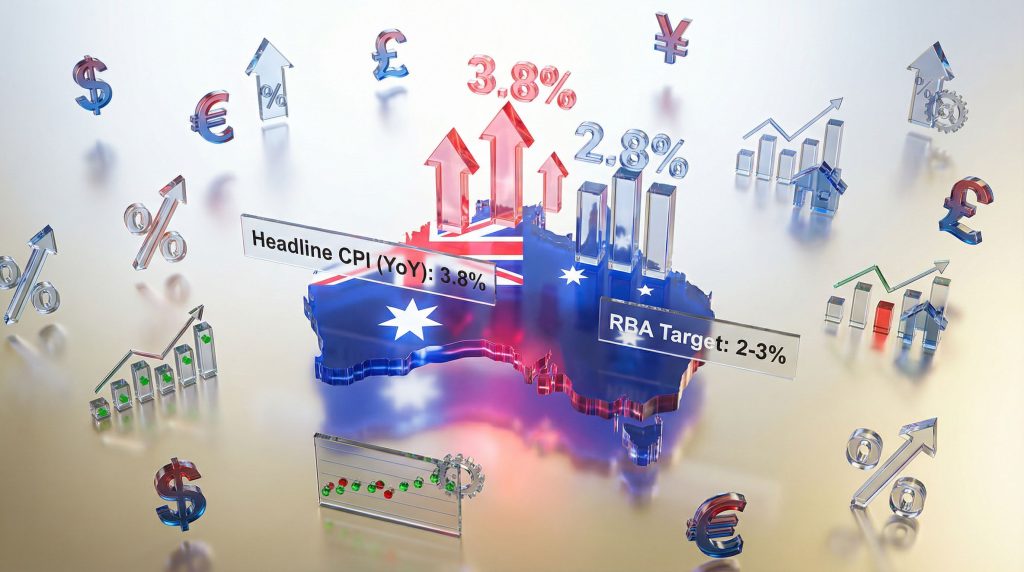
Australia's Consumer Price Index reached 3.8% year-on-year in December 2025, significantly exceeding the Reserve Bank's 2-3% target band and surprising markets that had expected a more modest increase. This represents a substantial acceleration from June 2025 levels of 1.9%, marking one of the most dramatic inflation reversals in recent Australian economic history.
The trimmed mean CPI, which excludes the most volatile price components, registered 3.4% annually, confirming that price pressures extend beyond temporary factors. This broad-based inflation suggests underlying demand-supply imbalances rather than isolated sectoral shocks driving the acceleration. Furthermore, the persistent nature of these pressures reflects how US inflation pressures can influence global markets.
Key Inflation Components December 2025:
| Category | Annual Change | Previous Quarter | RBA Target Band |
|---|---|---|---|
| Headline CPI | 3.8% | 2.8% | 2-3% |
| Trimmed Mean | 3.4% | 2.9% | 2-3% |
| Housing Costs | 5.5% | 4.2% | N/A |
| Recreation Services | 4.5% | 3.1% | N/A |
Housing costs emerged as the dominant inflationary driver, with 5.5% annual increases reflecting both rental market tightness and construction cost pressures. The acceleration in recreation and cultural services to 4.5% indicates consumer demand resilience despite broader economic uncertainties.
Mid-Year Inflation Trajectory Defied Economic Forecasts
The inflation path through 2025 confounded economists who had anticipated continued disinflation following the June low point. The steady quarterly acceleration reveals how quickly economic dynamics can shift when underlying conditions change.
2025 Inflation Timeline:
- April: 2.4% year-on-year
- June: 1.9% year-on-year (cycle low)
- September: 2.8% year-on-year
- December: 3.8% year-on-year
This trajectory suggests that labour market tightness, combined with services sector pricing power, created sustained upward pressure on costs throughout the second half of 2025. The shock inflation jump down under caught many analysts off guard, highlighting the difficulty of forecasting inflation in modern economies with complex supply chains and evolving consumer behaviour patterns.
Service sector inflation particularly accelerated during this period, reflecting wage cost pass-through in labour-intensive industries. Unlike goods inflation, which often moderates as supply chains normalise, services inflation tends to exhibit greater persistence due to its wage-sensitive nature.
Market Expectations Point Toward February Rate Increase
Financial markets currently price in approximately 75% probability of a 25 basis point rate increase at the Reserve Bank's February 2026 meeting. This reflects growing concern that inflation expectations may become entrenched above the target band without decisive policy action. In addition, Australia's inflation shock demonstrates how quickly economic conditions can deteriorate.
The unemployment rate of 4.1% represents near-full employment conditions by historical standards, supporting wage growth that could perpetuate inflation pressures. Tight labour markets create bargaining power for workers, potentially leading to wage-price spirals if inflation expectations drift higher.
Policy Challenge Analysis
The Reserve Bank confronts competing objectives: maintaining price stability while supporting economic growth. With inflation significantly above target, credibility requires policy response, yet rate increases risk economic slowdown.
Forward interest rate markets suggest terminal rates could reach 5.0-5.25% if inflation fails to moderate, representing substantial tightening from current levels. This would mark one of the most aggressive rate cycles in Australian monetary policy history.
Interest Rate Sensitivity Across Investment Sectors
Rising rate expectations create divergent impacts across equity sectors, with interest-sensitive assets facing particular pressure while some defensive sectors benefit from changing conditions. However, understanding how tariffs influence markets provides crucial context for global investment decisions.
Vulnerable Asset Classes:
- Real Estate Investment Trusts: Higher discount rates reduce present value of future cash flows
- Growth Technology Stocks: Extended duration assets face multiple compression
- Consumer Discretionary: Dual pressure from input costs and reduced purchasing power
Beneficiary Sectors:
- Financial Services: Banks gain from wider net interest margins as rates rise
- Resource Exporters: Commodity price strength offsets domestic cost inflation
- Infrastructure Assets: Inflation-linked revenue streams provide natural hedges
The banking sector particularly benefits as Australian financial institutions can typically pass rate increases to borrowers faster than they must increase deposit rates, expanding net interest margins. Major banks with substantial mortgage portfolios see immediate earnings benefits from rate cycles.
Sector Performance During Rate Cycles:
| Sector | Rate Sensitivity | Primary Driver | Expected Performance |
|---|---|---|---|
| Banks | Positive | NIM expansion | Outperform |
| REITs | Highly negative | Valuation compression | Underperform |
| Technology | Negative | Multiple compression | Underperform |
| Resources | Mixed | Currency vs commodities | Neutral |
International Inflation Comparisons Reveal Australian Divergence
Australia's inflation acceleration contrasts sharply with disinflation trends across other developed economies, creating policy isolation for the Reserve Bank. This divergence reflects unique domestic conditions rather than global inflationary pressures.
Global Inflation Landscape Early 2026:
- United States: Core PCE moderating toward 2.5% target range
- European Union: Continued disinflation despite energy base effects
- United Kingdom: Inflation declining from previous peaks
- Canada: Similar disinflationary trends to North American peers
The counter-cyclical nature of Australian inflation suggests domestic demand strength and labour market tightness overwhelm global disinflationary forces. This creates challenges for currency markets and international trade relationships. Consequently, the latest CPI data shows how quickly economic conditions can change.
Currency implications become particularly relevant as higher Australian interest rates typically support the Australian dollar, potentially moderating imported inflation but reducing export competitiveness. The Reserve Bank must balance domestic price stability with international competitiveness concerns.
The next major ASX story will hit our subscribers first
Household Economic Impact Analysis
Rising inflation combined with potential rate increases creates significant household financial pressures, particularly for middle-income mortgage holders facing dual impacts from both cost-of-living increases and higher debt servicing costs.
Household Financial Impact Modelling:
| Income Bracket | Inflation Effect | Interest Rate Effect | Net Impact |
|---|---|---|---|
| Lower Quartile | -3.8% purchasing power | Limited (renters) | Negative |
| Middle Income | -3.8% purchasing power | -$200/month mortgage | Severely negative |
| Upper Quartile | -3.8% purchasing power | +$150/month deposits | Mixed |
Variable rate mortgage holders experience immediate payment increases with each rate rise, while fixed-rate borrowers face refinancing risks when terms expire. The combination creates potential for consumer spending retrenchment across discretionary categories.
Consumer Spending Adaptation Patterns:
- Essential goods prioritisation: Food, energy, housing consuming larger budget shares
- Discretionary category cuts: Entertainment, dining, travel facing demand reduction
- Debt management focus: Accelerated repayments where possible to reduce interest exposure
Reserve Bank Policy Framework and Forward Guidance
The Reserve Bank's decision framework emphasises data-dependent monetary policy, with inflation outcomes, labour market conditions, and wage growth serving as key input variables. The December CPI reading significantly influences February meeting deliberations. Moreover, rate cuts may be ending according to recent analysis.
Communication strategy becomes crucial as markets interpret central bank signals for investment positioning. The shock inflation jump down under forces recalibration of previous forward guidance suggesting policy accommodation could continue.
Policy Decision Factors:
- Inflation persistence: Whether current levels represent temporary or structural shifts
- Wage growth trajectory: Enterprise bargaining outcomes and award rate adjustments
- Global economic conditions: International monetary policy coordination considerations
- Financial stability: Housing market impacts from rate increases
Strategic Investment Positioning for Rising Rate Environment
Portfolio construction in a rising rate environment requires careful consideration of duration risk, sector rotation opportunities, and defensive positioning strategies. Traditional asset allocation models may require adjustment for extended inflation persistence. Furthermore, investors must consider using gold as inflation hedge during uncertain times.
Recommended Portfolio Framework:
- 40% Fixed Income: Shorter duration bonds and floating rate securities
- 35% Equities: Value-oriented stocks with pricing power capabilities
- 15% Real Assets: Inflation-protected bonds and commodity exposures
- 10% Cash: Maintaining liquidity for opportunity capture during volatility
Sector rotation strategies focus on companies with demonstrated ability to pass through cost increases to customers while avoiding highly leveraged businesses vulnerable to financing cost increases. In addition, the commodity price impact on mining companies requires careful consideration.
Active Management Considerations:
- Overweight positions: Financials, energy, materials with inflation pass-through
- Underweight allocations: Technology growth, consumer discretionary, property trusts
- Neutral weightings: Healthcare, utilities with regulated pricing mechanisms
Economic Indicators for Ongoing Monitoring
Forward-looking inflation indicators provide early warning signals for policy trajectory changes and investment positioning adjustments. Regular monitoring of wage negotiations, services pricing, and inflation expectations surveys guides strategic decisions.
Critical Data Points:
- Wage growth metrics: Enterprise bargaining agreements and public sector settlements
- Services inflation trends: Non-tradable sector pricing patterns
- Consumer expectations: Reserve Bank surveys and bond market breakevens
- Housing market dynamics: Dwelling prices and rental vacancy rates
International commodity prices and exchange rate movements also influence domestic inflation through import price channels, requiring global economic monitoring alongside domestic indicators. The gold price forecast suggests continued upward momentum amid economic uncertainty.
The interaction between monetary policy effectiveness and inflation expectations becomes particularly important as central banks globally navigate post-pandemic economic dynamics that differ significantly from historical precedents.
Risk Scenarios and Contingency Planning
Multiple economic scenarios require consideration for comprehensive risk management, ranging from successful inflation control to persistent above-target readings requiring more aggressive policy responses.
Scenario Analysis Framework
Base Case (60% probability):
- Inflation moderates to 3.0% by mid-2026 with 100-150 basis points of rate increases
- Economic growth slows but avoids recession
- Financial markets experience moderate volatility
Hawkish Scenario (25% probability):
- Persistent inflation above 3.5% requires rates above 5.25%
- Significant economic slowdown and potential recession
- Major asset repricing across interest-sensitive sectors
Dovish Scenario (15% probability):
- Rapid inflation decline allows policy pause
- Economic growth remains robust
- Risk asset rally continues with sector rotation
Each scenario requires different investment positioning and risk management approaches, emphasising the importance of portfolio flexibility during uncertain economic transitions. The shock inflation jump down under highlights how quickly economic conditions can change, requiring adaptive strategies.
Disclaimer: This analysis involves economic forecasts and investment commentary based on publicly available information. Economic conditions can change rapidly, and past performance does not guarantee future results. Readers should consult qualified financial advisors before making investment decisions based on this analysis.
Ready to Capitalise on ASX Market Volatility?
As inflation dynamics reshape investment opportunities across sectors, Discovery Alert's proprietary Discovery IQ model delivers instant notifications on significant ASX mineral discoveries, helping subscribers identify actionable trading opportunities during market uncertainty. Begin your 14-day free trial today to gain a market-leading edge whilst economic conditions create new investment landscapes.