May 9, 2026
Understanding Global Supply Chain Vulnerabilities in High-Value Commodity Markets
Regional disruptions to international logistics networks reveal critical dependencies that often remain invisible during stable operating periods. The precious metals industry exemplifies these vulnerabilities, where sophisticated global supply chains can experience cascading failures when key transportation nodes face operational constraints. Recent developments in middle east tensions gold shipments Dubai demonstrate how quickly established trade routes can become compromised, forcing market participants to confront the limitations of their logistical frameworks.
The interconnected nature of modern commodity trading creates scenarios where localised conflicts generate global market effects. Understanding these dynamics requires examining not just the immediate transportation challenges, but the broader structural dependencies that shape how high-value materials move between production centers, refining hubs, and end-user markets.
When big ASX news breaks, our subscribers know first
Dubai's Central Role in Global Precious Metals Distribution Networks
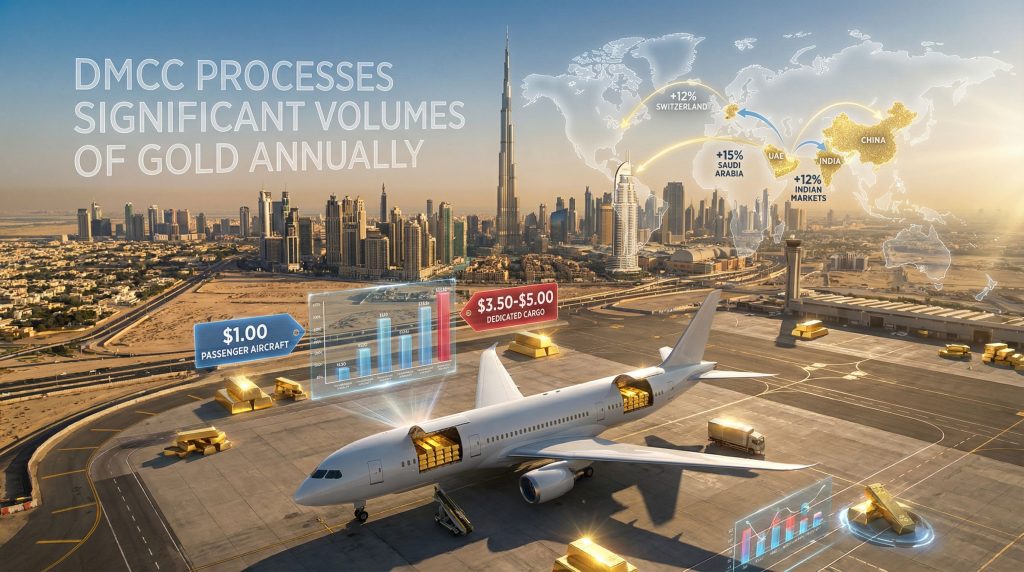
The United Arab Emirates has developed into a critical nexus point for precious metals trade, particularly through Dubai's specialised infrastructure. The Dubai Multi Commodities Centre processes substantial volumes of gold annually, serving as both a refining center and redistribution hub that connects Western suppliers with Asian demand markets.
This positioning allows Dubai to capture value from multiple stages of the precious metals supply chain. Material typically originates from established refining centers in Switzerland and London before being processed or repackaged for distribution to buyers across India, China, and Southeast Asia. Furthermore, the emirate's strategic geographic location and developed logistics infrastructure have made it indispensable to regional trade flows.
Recent disruptions highlight the concentration risk inherent in this model. When Iranian missile attacks prompted partial closure of UAE airspace in early March 2026, Dubai airport operations were halted, creating immediate bottlenecks for precious metals shipments. Traders and logistics companies reported indefinite pauses in metal shipments through Dubai, with rerouting efforts initiated for consignments intended for transit through the emirate.
The Economics of Air Transport for High-Value Cargo
The precious metals industry relies heavily on passenger aircraft cargo holds for transportation between major trading centers, primarily due to the optimal balance between cost efficiency and security protocols. Gold can be economically moved between trading hubs via passenger aircraft for less than one dollar per ounce per trip, making this method the backbone of regional distribution networks.
Transportation Cost Analysis by Method:
| Transport Method | Security Level | Speed | Primary Limitations |
|---|---|---|---|
| Passenger Aircraft Cargo | High | Fast | Insurance valuation caps |
| Dedicated Cargo Flights | Very High | Fast | Significantly higher costs |
| Maritime Shipping | Moderate | Very Slow | Extended transit times |
| Overland Transport | Variable | Slow | Border crossing complexities |
However, the volume a single flight can carry is constrained by insurance caps on tonnage rather than physical aircraft capacity. This creates natural bottlenecks during normal operations that become critical chokepoints during disruptions. In addition, insurance frameworks for precious metals cargo typically impose strict value limits that effectively restrict shipment sizes regardless of available space.
Crisis Response Patterns and Market Disruption Cascades
The suspension of commercial flights triggered by US and Israeli actions against Iran affected more than 12,300 flights globally, demonstrating how regional conflicts can generate worldwide logistics disruptions. These cascade effects extend far beyond the immediate geographic area of tension, creating supply chain stress across multiple continents. For instance, the gold market performance has been significantly influenced by such geopolitical developments.
Regional Premium Development During Supply Constraints
Market participants respond to supply disruptions through immediate pricing adjustments that reflect availability concerns. Philip Newman, Managing Director of Metals Focus, noted that "premiums for bullion in Saudi Arabia witnessed increases following the initial disruptions", indicating market concerns about product availability in the affected regions.
The development of regional premiums follows predictable patterns:
- Immediate reaction phase: Premiums spike within 24-48 hours of confirmed disruptions
- Assessment period: Market participants evaluate alternative supply options
- Adjustment phase: Premiums stabilise at elevated levels reflecting new supply realities
- Resolution: Gradual normalisation as disruptions resolve or alternatives are established
Alternative Transportation Route Limitations
When primary air routes become unavailable, precious metals traders face significant challenges in implementing alternative transportation methods. Lars Johansson, a consultant and veteran of the precious metals logistics industry, emphasised that "overland transportation introduces complex challenges, especially when crossing international borders".
Key Challenges with Overland Transportation:
• Regulatory compliance complexity across multiple jurisdictions
• Extended processing times at border checkpoints
• Higher vulnerability to theft during extended transit periods
• Limited insurance coverage for high-value overland cargo
• Requirement for armed escort services significantly increasing costs
Transporting high-value cargo overland to other regional airports poses significant risks, making it an unfeasible alternative during acute disruptions. Consequently, the security infrastructure and documentation requirements for cross-border precious metals movement are not designed to accommodate sudden redirections of air cargo volumes.
Insurance Framework Vulnerabilities During Geopolitical Tensions
The precious metals logistics industry operates under strict insurance frameworks that become particularly vulnerable during regional conflicts. Standard cargo insurance policies often contain exclusions or limitations for shipments through areas experiencing active conflict or elevated security threats. This is particularly evident in how tariffs' market impact affects global commodity flows.
Insurance valuation caps represent the primary constraint on precious metals shipment volumes, creating bottlenecks that become critical during disruptions when demand for alternative routing increases.
During normal operations, these insurance limitations create manageable constraints within established logistics networks. However, when primary routes become unavailable, the inability to scale alternative methods quickly creates severe supply bottlenecks.
Maritime and Overland Insurance Challenges
Alternative transportation methods face distinct insurance profile challenges. Maritime transport offers lower per-unit transportation costs but extended exposure periods, with weather dependency reducing schedule reliability. Port security concerns in conflict-adjacent regions create additional complications, alongside higher minimum shipment volumes unsuitable for responsive supply management.
Overland transport presents variable security levels across different border crossings, complex multi-jurisdictional insurance requirements, and higher theft risk during extended transit times. Furthermore, this method demonstrates dependency on regional political stability that may not be reliable during periods of middle east tensions gold shipments Dubai disruptions.
Market Structure Evolution and Resilience Building
The recurring nature of Middle East logistics disruptions is prompting structural changes within the precious metals industry. Market participants are increasingly recognising that geopolitical stability cannot be assumed in global supply chain planning, particularly for commodities that serve both industrial and store-of-value functions.
Hub Diversification Strategies
Industry responses to recurring disruptions include geographic diversification of processing and distribution centres, enhanced strategic stockpiling by major trading houses, development of redundant transportation networks, and investment in regional storage infrastructure to reduce transport frequency.
The development of alternative precious metals trading centres in Singapore and Hong Kong reflects this diversification trend. These locations offer similar regulatory frameworks and logistics infrastructure while reducing dependency on single-region routing. This trend aligns with broader mining industry evolution patterns.
Technology Integration for Supply Chain Resilience
Modern precious metals trading increasingly incorporates advanced tracking and documentation systems designed to support multiple routing scenarios:
- Real-time shipment monitoring across alternative transportation methods
- Automated documentation systems streamlining cross-border processes
- Dynamic route optimisation tools responding to changing security conditions
- Blockchain-based verification reducing documentation complexity
Long-term Implications for Global Precious Metals Markets
The frequency of supply chain disruptions since 2020 has prompted institutional investors to incorporate geopolitical risk premiums into their precious metals allocation models. This represents a fundamental shift from treating regional conflicts as temporary disruptions toward recognising supply chain vulnerability as a permanent market feature.
Institutional Response Patterns
Investment Behaviour During Regional Disruptions:
| Participant Type | Response Timeline | Strategic Adjustment |
|---|---|---|
| Central Banks | Long-term | Enhanced strategic reserve policies |
| Trading Houses | Immediate | Accelerated contract hedging |
| Retail Investors | Immediate | Increased physical holdings preference |
| Industrial Users | Medium-term | Forward contract acceleration |
The impact of broader geopolitical developments, including US–China trade impact on global markets, further complicates these institutional strategies.
Structural Market Changes
The precious metals industry is evolving toward a more distributed model that prioritises resilience over pure cost optimisation. This transformation includes infrastructure development across multiple processing facilities in different geographic regions, enhanced security protocols designed for high-value cargo, and redundant transportation networks reducing single-point failures.
Market mechanism evolution encompasses more sophisticated risk-sharing mechanisms in contract structures, dynamic pricing models incorporating geopolitical risk factors, and enhanced transparency through real-time supply chain visibility systems.
Investment strategy adaptations involve higher strategic inventory levels across the supply chain, geographic diversification of supplier relationships, and technology-enabled supply chain monitoring and optimisation. These changes reflect the broader critical minerals strategy developments occurring globally.
The next major ASX story will hit our subscribers first
Global Impact Assessment and Future Preparedness
According to industry analysts, Dubai's gold pipeline faces significant disruption due to regional tensions, affecting approximately 20% of global bullion flows. This substantial impact demonstrates the vulnerability of concentrated trading hubs to geopolitical disruptions.
The precious metals market has shown resilience patterns during previous conflict periods, with gold gaining amid Middle East tensions as investors seek safe-haven assets. However, the physical delivery constraints create unique challenges that financial market gains cannot address directly.
This structural evolution reflects broader recognition that modern global commodity markets must balance efficiency considerations with resilience requirements. For precious metals specifically, the dual role as both industrial input and store-of-value asset creates additional complexity in managing supply chain vulnerabilities.
The March 2026 middle east tensions gold shipments Dubai crisis provides a clear case study of these dynamics in action. As regional conflicts continue to affect global logistics networks, the precious metals industry's adaptation strategies will likely serve as templates for other high-value commodity sectors facing similar challenges.
Disclaimer: This analysis is based on publicly available information and expert commentary as reported in industry publications. Market conditions and geopolitical situations remain fluid, and past disruption patterns may not predict future events. Readers should conduct independent research and consider professional advice when making investment or business decisions related to precious metals markets.
Want to Capitalise on Precious Metals Market Volatility?
Discovery Alert's proprietary Discovery IQ model delivers instant notifications about significant ASX precious metals discoveries, empowering investors to identify actionable opportunities before broader market recognition. Experience why major mineral discoveries can generate substantial returns during periods of supply chain uncertainty and geopolitical tension—begin your 14-day free trial today to position yourself ahead of market movements.