
August 7, 2026
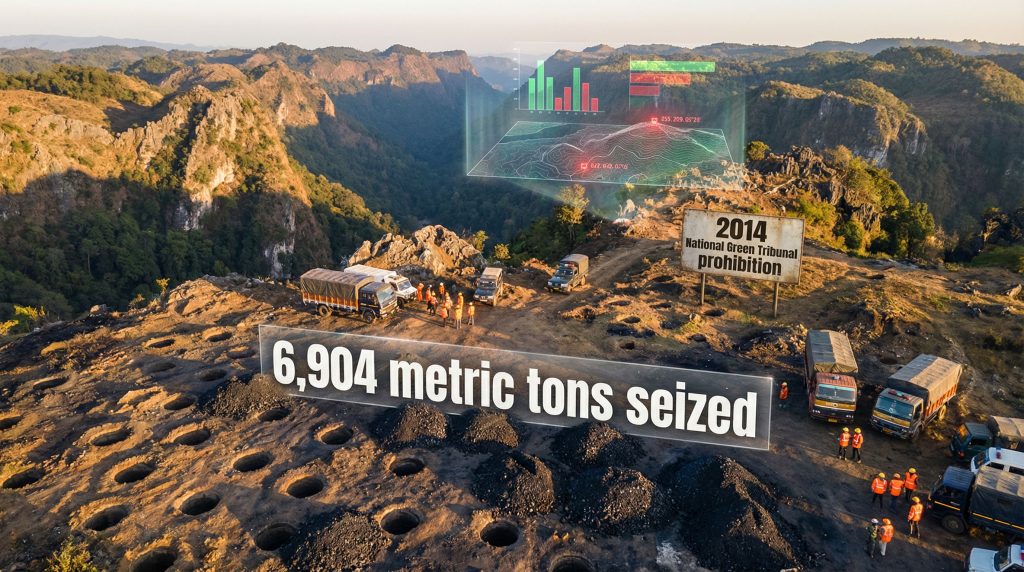
The challenges surrounding illegal coal mining Meghalaya operations represent a complex intersection of regulatory failures, economic necessities, and enforcement limitations that demand comprehensive policy reformation. Understanding mining permitting basics becomes crucial when examining how legitimate frameworks can prevent unauthorized extraction activities.
Understanding the Persistence of Unauthorized Coal Extraction Networks
How Regulatory Frameworks Fail at Implementation Level
The 2014 National Green Tribunal prohibition established a comprehensive ban on rat-hole mining and unscientific extraction practices across Meghalaya, yet unauthorized operations continue to flourish despite this federal mandate. The regulatory framework's enforcement gaps become evident through recent incidents, including the February 2026 explosion in East Jaintia Hills that claimed 25 lives in the Mynsyngat-Thangskai area.
State-level mining legislation operates under conflicting pressures between federal environmental compliance and regional economic necessities. The jurisdictional challenges between federal environmental law and state economic interests create enforcement blind spots that illegal operators systematically exploit.
Economic Incentives That Sustain Violation Networks
Market demand factors continue driving illegal extraction networks despite regulatory prohibitions. The cost-benefit analysis reveals enforcement penalties remain insufficient deterrents compared to potential returns from illicit coal trade. Local employment dependencies on mining activities create additional pressure against strict enforcement implementation.
Regional economic structures built around coal extraction resist transition to alternative economic models. When legitimate mining restrictions eliminate legal employment opportunities, communities may tacitly support unauthorized operations as economic survival mechanisms. Furthermore, the broader mining industry evolution demonstrates how technological advances could provide safer alternatives to traditional methods.
When big ASX news breaks, our subscribers know first
Traditional Enforcement Approaches and Their Systematic Limitations
Detection Technology Gaps in Remote Operations
Joint operation teams face significant technological limitations when monitoring remote extraction sites across mountainous terrain. The 6,904 metric tons of coal seized across 21 recent raid locations represents only a fraction of estimated total illegal production volumes, highlighting detection inefficiencies.
Rat-hole mining operations exploit detection vulnerabilities through:
- Minimal surface footprint: 3-4 foot pit diameters reduce aerial surveillance effectiveness
- Underground positioning: Subsurface operations evade satellite monitoring systems
- Remote location advantages: Mountainous terrain limits routine patrol frequency
- Operational concealment: Natural vegetation and topographic features provide cover
Legal Framework Enforcement Challenges
Section 21 of the Mines and Minerals Development and Regulation Act faces systematic prosecution difficulties. Conviction rates remain low due to evidence collection challenges in remote operational sites and limited judicial resources for processing mining violation cases.
Recent enforcement actions demonstrate multi-agency coordination protocols:
| Enforcement Component | Recent Implementation | Jurisdictional Authority |
|---|---|---|
| Investigation Protocol | FIR under BNS, MMDR Act, Explosives Act | State Police |
| Rescue Operations | NDRF and SDRF deployment | Federal-State Coordination |
| Arrest Authority | 2 individuals apprehended | Local Police Jurisdiction |
| Ongoing Investigation | Network participant identification | Multi-agency coordination |
In addition, AI in mining operations could potentially revolutionise detection capabilities if properly implemented across enforcement agencies.
Geographic and Geological Factors Complicating Regulatory Oversight
Terrain-Based Enforcement Obstacles
East Jaintia Hills topography presents documented regulatory enforcement challenges through mountainous terrain with limited road accessibility. Remote locations reduce routine patrol effectiveness whilst dense vegetation provides natural operational concealment for unauthorized miners.
The February 2026 incident location demonstrates these enforcement complications, where unauthorized operators maintained active extraction despite the 12-year prohibition. Recovery and investigation required specialised teams from the National Disaster Response Force and State Disaster Response Force, indicating significant accessibility constraints.
Rat-Hole Mining Method Advantages for Regulatory Evasion
Traditional rat-hole mining techniques offer systematic advantages for avoiding detection:
- Excavation specifications: Manual labour-intensive, shallow-depth underground shafts
- Minimal environmental disturbance: Smaller operational footprint compared to large-scale mining
- Underground concealment: Subsurface positioning prevents surface-level monitoring
- Safety infrastructure absence: Typically lacks ventilation, drainage, and support systems
These operational characteristics contribute to both detection difficulties and catastrophic safety failures, as demonstrated by the recent explosion that required emergency response deployment. According to recent reports, illegal coal mining in Meghalaya has been linked to dangerous rat-hole practices that continue despite official bans.
Recent Enforcement Data and Violation Scale Analysis
Pattern Recognition in Illegal Mining Distribution
Recent enforcement activity reveals widespread operational networks across multiple jurisdictions. The coordination of raids across 21 sites suggests organised distribution systems rather than isolated violations. Geographic clustering analysis indicates systematic operational planning that exploits enforcement coverage gaps.
Transportation seizures demonstrate organised logistics networks:
- Vehicle confiscations: Multiple transport units seized across operations
- Distribution coordination: Multi-location simultaneous enforcement required
- Network organisation: Two-person arrests suggest larger operational structure
- Investigation expansion: Ongoing identification of additional network participants
Cross-Border Smuggling Route Implications
Multi-location enforcement activity suggests sophisticated smuggling corridors extending beyond state boundaries. The scale of recent seizures indicates interstate coordination requirements for effective enforcement, yet current inter-agency protocols appear insufficient for comprehensive network disruption.
The organised nature of violations demonstrates operational sophistication that challenges traditional enforcement approaches designed for isolated incidents rather than systematic criminal networks. However, these challenges are compounded by broader coal supply challenges affecting the entire industry.
State-Federal Policy Conflicts in Environmental Enforcement
Economic Dependency Versus Environmental Compliance Tensions
Meghalaya's historical coal revenue dependence creates inherent policy tensions with federal environmental mandates. State government arguments for alternative extraction methods reflect political economy pressures that may constrain enforcement commitment at local levels.
The persistence of illegal coal mining Meghalaya operations despite comprehensive prohibitions suggests enforcement prioritisation conflicts between immediate economic needs and long-term environmental protection requirements. Moreover, government intervention in mining continues to evolve as authorities grapple with these competing interests.
Multi-Agency Coordination Protocol Weaknesses
Information sharing protocols between enforcement agencies reveal systematic coordination challenges:
- Police-mining department liaison gaps: Limited real-time operational intelligence sharing
- Transport authority coordination: Insufficient integration with mining enforcement operations
- Resource allocation disparities: Uneven deployment of monitoring capabilities across jurisdictions
- Jurisdictional boundary confusion: Unclear authority demarcation for cross-district operations
Recent incidents demonstrate emergency coordination effectiveness through NDRF and SDRF deployment, yet preventive enforcement coordination appears systematically inadequate.
Technological Innovation in Mining Surveillance Systems
Smart Monitoring System Implementation Challenges
The Meghalaya Mineral Truck Scanning System represents technological advancement in enforcement monitoring, yet faces implementation challenges in remote terrain. Document verification protocols encounter systematic evasion methods as operators adapt to technological surveillance capabilities.
Real-time monitoring systems require substantial operational costs that may exceed sustainable enforcement budgets, particularly for comprehensive coverage across mountainous regions with limited infrastructure.
Digital Tracking System Vulnerabilities
Inter-agency data sharing protocols face integration challenges across multiple technological platforms. Technology adoption barriers in remote enforcement zones limit comprehensive surveillance implementation whilst digital tracking systems encounter sophisticated evasion techniques.
Current surveillance capabilities demonstrate effectiveness for vehicle interdiction but remain insufficient for detecting underground operational activities that characterise rat-hole mining methods.
The next major ASX story will hit our subscribers first
Environmental Degradation and Public Health Consequences
Acid Mine Drainage and Long-Term Contamination Impacts
Unregulated extraction operations create systematic groundwater contamination that extends far beyond immediate operational sites. Agricultural land degradation from illegal mining affects regional food security and rural economic stability, compounding enforcement challenges through community economic dependence.
Remediation cost estimates significantly exceed current enforcement investment levels, suggesting long-term environmental damage that outlasts temporary operational cessation.
Healthcare System Burden from Unregulated Operations
The 25 fatalities from the February 2026 explosion represent acute healthcare impacts from inadequate safety regulation compliance. Community exposure risks from unregulated extraction extend beyond immediate operational personnel to include respiratory and environmental health effects on surrounding populations.
Environmental justice implications disproportionately affect rural communities with limited healthcare access and political representation in enforcement priority determination. Furthermore, recent mine blast incidents highlight the deadly consequences of inadequate safety measures.
Judicial Intervention and Enforcement Strategy Evolution
High Court Directive Implementation Challenges
The February 7, 2026 Meghalaya High Court comprehensive ban order represents judicial activism in environmental law enforcement, yet implementation faces the same coordination challenges that limited previous regulatory effectiveness.
Prohibitory gathering restrictions raise constitutional considerations regarding assembly rights versus environmental protection enforcement, creating additional legal complexity for operational implementation.
Independent Monitoring and Compliance Assessment
The 2022 court-appointed panel findings documented systematic enforcement failures that persist despite judicial oversight mechanisms. Recommended enforcement improvements face resource allocation and jurisdictional coordination challenges that judicial directives cannot independently resolve.
Judicial oversight effectiveness depends on executive branch implementation capacity that remains constrained by the same technological and geographic limitations affecting routine enforcement.
Alternative Regulatory Models for Mining Crisis Resolution
Comparative Global Small-Scale Mining Governance
Successful regulatory frameworks in similar geological contexts demonstrate formalisation strategies for artisanal mining operations that balance environmental protection with community economic needs. Community-based resource management models offer alternatives to prohibition-enforcement cycles that have proven insufficient.
International examples suggest graduated compliance mechanisms that provide legal extraction pathways whilst maintaining environmental safeguards and safety protocols.
Economic Transition Strategies for Mining-Dependent Communities
Alternative livelihood development programmes require substantial investment coordination between federal development agencies and state implementation authorities. Sustainable extraction technology options may provide compromise solutions that address both environmental concerns and community economic dependency.
Revenue-sharing mechanisms for compliant operations could incentivise voluntary compliance whilst maintaining community economic participation in regulated extraction activities.
Future Regulatory Challenges and Technological Integration
Emerging Surveillance Technology for Remote Monitoring
Satellite surveillance capabilities for illegal mining detection continue advancing, yet implementation costs and technical expertise requirements challenge comprehensive deployment across remote operational areas. Drone-based patrol systems offer enhanced coverage capabilities but require regulatory framework adaptation and operator training investment.
Artificial intelligence applications in pattern recognition for violations may improve detection efficiency, yet require substantial data integration infrastructure and inter-agency coordination protocols currently absent from enforcement systems.
Sustainable Enforcement Policy Integration Requirements
Federal-state coordination mechanisms require comprehensive restructuring to address jurisdictional gaps and resource allocation inefficiencies. Community engagement strategies for voluntary compliance may prove more effective than purely punitive enforcement approaches that ignore underlying economic dependencies.
Long-term regulatory sustainability requires resource commitment levels that exceed current enforcement budgets whilst addressing root economic causes rather than symptoms of illegal coal mining Meghalaya operations. Successful policy integration must balance environmental protection mandates with realistic economic transition pathways for affected communities.
Disclaimer: This analysis contains projections and assessments based on current regulatory trends and enforcement data. Enforcement effectiveness and policy outcomes may vary based on resource allocation, technological advancement, and political priority changes. Readers should consult official government publications and legal counsel for specific compliance requirements and current regulatory status.
Ready to Capitalise on the Next Major Mineral Discovery?
Discovery Alert's proprietary Discovery IQ model delivers real-time alerts on significant ASX mineral discoveries, instantly transforming complex geological announcements into actionable investment insights. Understand why historic mineral discoveries can generate substantial returns and begin your 14-day free trial today to position yourself ahead of the market.